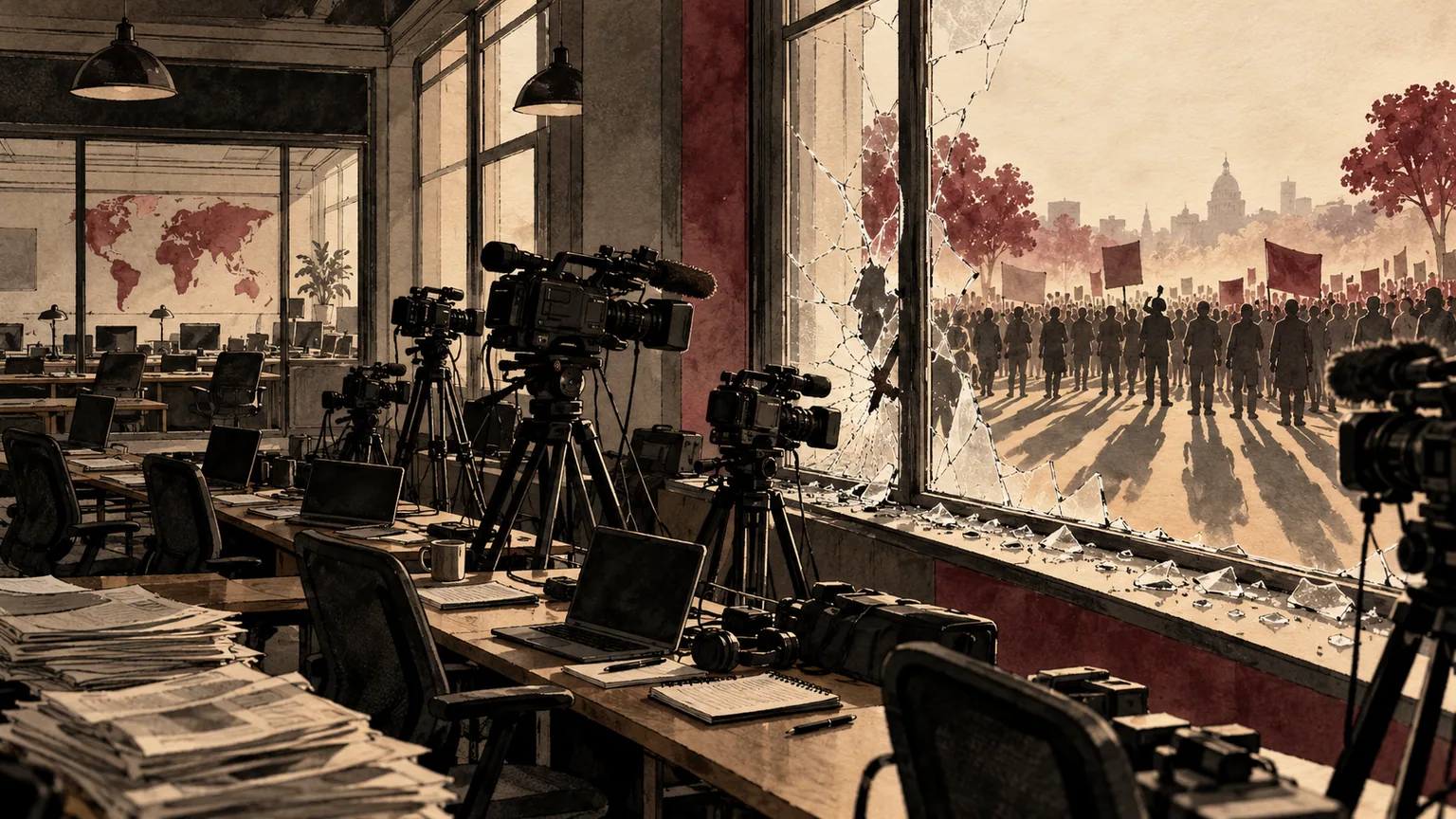
A camera can show a street in flames. It cannot, by itself, tell you why thousands of different people arrived on that street. I run a newsroom, so I understand the pressure of an image that seems to explain everything in a second. I also know how often it explains too little.
Violence and damage should be reported plainly. People who lose a business or feel unsafe are not props in somebody else’s political argument. But a serious report should not stop at the most dramatic frame. It should ask who marched peacefully, what they demanded, what officials answered and what happens when the cameras leave.
The easy story is rarely the whole story
Politicians can turn a crowd into a threat. Activists can turn every crowd into a moral victory. Both shortcuts spare their audiences the difficult work of separating people, motives and actions. Journalism has a duty to resist both.
I remember Gezi in 2013. The experience did not give me a universal template for every protest since. It gave me a suspicion of anyone who claims to understand a movement after watching one clip.
Stay after the spectacle
The hardest reporting begins the following morning. Did anyone listen? Was any demand specific enough to act on? What changed, and what was only promised? Those are less exciting questions than a confrontation. They matter more.
News Beast should be able to show the dramatic moment and then remain curious when the street is quiet. Otherwise we have covered an event without covering its meaning.
This column represents the author's view. It is separate from News Beast's automated, source-backed news reports.