Emily Ratajkowski's Body of Work: The Architecture Beneath the Image
There is a version of the Emily Ratajkowski story that gets told constantly, and it is the wrong one.
There is a version of the Emily Ratajkowski story that gets told constantly, and it is the wrong one. It goes like this: beautiful girl, famous body, lucky breaks, controversial choices. It moves in a straight line from *Blurred Lines* to now and calls that a trajectory. What it misses — what it almost always misses — is that Ratajkowski has been doing something considerably more interesting than existing beautifully for public consumption. She has been using fashion the way fashion actually works when someone understands it: as a controlled argument about who gets to own what.
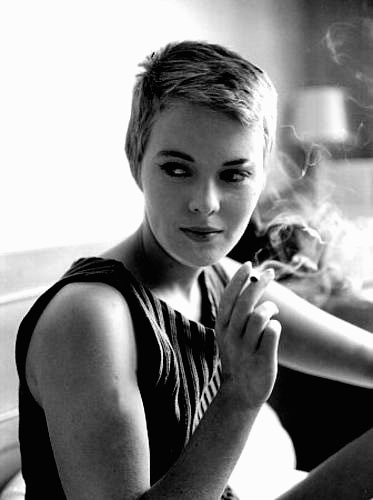
The transformation narrative that follows her — the before-and-after framing, the hair changes catalogued like evidence — is itself part of what she's commenting on. Every time she cuts her hair, somebody writes about it as though she has done something to herself. Every time she wears something structurally aggressive or deliberately unglamorous, it reads as a statement. And it is. That's the point. She knows the camera is always doing an autopsy, so she keeps rearranging what it finds.
What makes her interesting as a fashion subject rather than just a fashion object is the gap between what she's supposed to represent and what she actually chooses to put on her body. The expected move for someone built the way she is would be to dress in service of that — to confirm the image, to be legible. Instead, her style history is full of deliberate friction. Oversized tailoring that obscures. Minimal silhouettes that deflect. The occasional maximalist moment that feels less like vanity and more like controlled explosion. She studied art history at UCLA before the world decided she was a body first and a person second, and that education is visible if you look past the surface.
The before-and-after photo genre is, culturally, one of the more condescending formats we have. It implies that time moves in one direction and that the most interesting thing about a woman is the delta between versions of her face. Ratajkowski has written and spoken about this dynamic with more precision than most critics who cover her. The clothes are part of that conversation — always have been. She is not transforming. She is iterating. There is a difference, and the difference is agency.
Fashion at its most functional is not decoration. It is the first draft of a position statement. Hers has always said: *I am reading every assumption you have about me, and I am several steps ahead of it.*