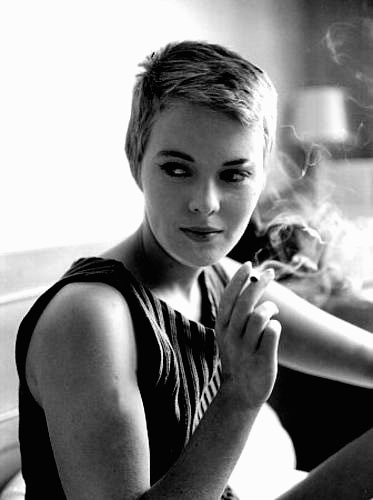
Vittoria Ceretti Owns Milan: Vogue World's Best Move
New York Fashion Week fills every feed, every after-party recap, every morning inbox — and yet the image that keeps pulling focus this September belongs somewhere else entirely.
New York Fashion Week fills every feed, every after-party recap, every morning inbox — and yet the image that keeps pulling focus this September belongs somewhere else entirely. Vittoria Ceretti, shot for Vogue World: Milano by director Bardia Zeinali, exists in a frame that makes every runway photograph feel suddenly flat. Not because the clothes are louder. Because she understands, at a level most models never reach, that fashion is never really about the clothes.
Zeinali's video preview for Vogue World: Milano does something quietly radical — it frames technology not as spectacle but as instrument, a tool placed in service of something that cannot be manufactured: presence. Ceretti has always had it. She is the rare model who makes a photograph feel inhabited rather than posed, and in Zeinali's hands that quality becomes the argument the whole project rests on. The camera doesn't flatter her. It simply points, and she fills it completely.
This matters beyond aesthetics. The fashion industry is spending an enormous amount of energy right now trying to convince itself that artificial intelligence and generative tools can coexist with craft, that the pipeline from concept to image doesn't lose something essential every time a human step gets automated away. What Vogue World: Milano is actually arguing — through Ceretti, through Zeinali, through the specific choice to make technology *assist* rather than replace — is that the humanity is the point. Surrealism works in fashion precisely because the human body at the centre of it is legible, recognisable, irreducible. Remove that and you have a render. Beautiful, perhaps. Empty, certainly.
Ceretti at the middle of this is not accidental. She has become the industry's most articulate visual argument for itself — the reason Donatella Versace's maximalism reads as conviction rather than noise, the reason Bottega Veneta's quiet luxury registers as whisper rather than silence. She doesn't wear fashion. She reasons with it. That is extraordinarily rare.
While New York spends September mediating between Ralph Lauren's American tradition and the city's restless, shape-shifting youth — a negotiation that has been happening on Seventh Avenue for sixty years, give or take — Milan is making a different kind of statement. It is saying that the future of this industry is not the algorithm. It is the woman who makes you forget you are looking at an image at all.
Vittoria Ceretti, to be clear, is not just the most beautiful woman in the room. She is the most interesting one. There is a difference. Only one of them matters.