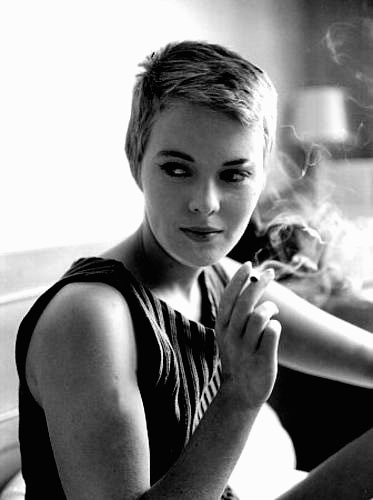
Screen & Sound: Jane Fonda Lit a Road on Fire
She took a van, a camera, Katie Camosy's directorial debut, and a Greenpeace production credit, and she drove.
There is a version of this story where Jane Fonda, at eighty-eight, takes the comfortable booking — the lifetime achievement reel, the soft interview, the retrospective that asks nothing of her. She did not take that version. She took a van, a camera, Katie Camosy's directorial debut, and a Greenpeace production credit, and she drove. *Gaslit* is the documentary that resulted, and the fact that it exists at all says more about Fonda's particular brand of refusal than any profile written about her ever could.
Camosy is not a name most people know yet. She will be. Getting Jane Fonda for your first feature is not luck — it is a conversation that went a certain way, a pitch that landed because the subject recognised something real in it. Documentary filmmaking at its best is a negotiation between subject and lens, and *Gaslit* sounds like one where neither party blinked first.
Meanwhile, Tom Holland is doing something quietly interesting. He has a Marvel film arriving and is simultaneously circling a long-form project with Thomas Vinterberg — the director who made *Another Round*, which is still one of the finest films about men unravelling in slow motion that I have seen. The details are being kept close. That secrecy is, frankly, the most exciting thing about it. Holland has been careful about what he does between Spider-Man entries and Vinterberg is not a filmmaker who wastes time on things that don't matter. Whatever this is, it is worth watching the announcement.
And then there is Buddy Guy turning ninety in October, with a concert featuring Eric Clapton and John Mayer that is either a celebration or a very specific kind of testimony — the kind where the blues tradition physically gathers around one man and says *still here*. Guy appeared in Ryan Coogler's *Sinners* and it was not a cameo, it was a reckoning. If you have not seen that film, fix it this week. The concert will follow naturally.
Oprah, at Cannes Lions, told the story of Whitney Houston falling off the stage during a taping of her show — and immediately turning to the audience and asking them to say nothing. That detail does not belong in a panel about philanthropy. It belongs in a film. It is a thirty-second scene that tells you everything about what it costs to be watched by everyone, all the time, with no margin for being human.
Some people protect their subjects. Some people protect their platforms. Oprah, in that moment, understood they were the same thing.