Celine Bet the Farm: Jesse Rinderknecht Proved It Right
There is a version of the fashion industry's origin myth that goes like this: a scout spots a beautiful face in an unexpected place, a contract follows, and the rest is editorial.
There is a version of the fashion industry's origin myth that goes like this: a scout spots a beautiful face in an unexpected place, a contract follows, and the rest is editorial. It's the story fashion tells about itself when it wants to seem romantic. Jesse Rinderknecht is that story — Swiss, discovered essentially by accident, transferred from agricultural life in rural Switzerland to the face of Celine — and the reason it doesn't feel like a cliché is because Hedi Slimane clearly didn't cast him for the romance of it. He cast him for something harder to name.
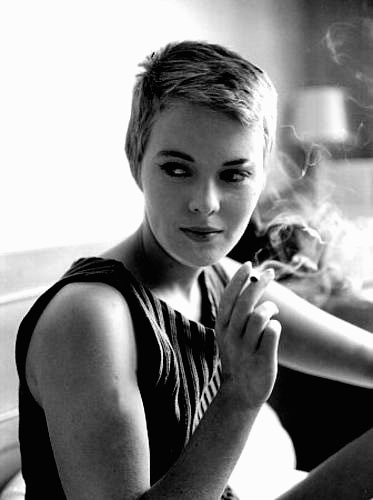
Celine under Slimane has always been a precise argument about masculinity — lean, literary, slightly cold, the kind of handsome that looks better in black-and-white than in colour. Rinderknecht fits that argument without appearing to try, which is exactly the point. The farm-to-runway narrative is convenient, but the more interesting question is what Slimane saw: not a backstory, but a quality. A stillness. The ability to hold a frame without performing for it.
This is what separates a campaign face from a model who actually moves clothes. Anyone can look beautiful in controlled lighting. The rarer thing is presence — the capacity to make a garment feel inhabited rather than displayed. Rinderknecht has it, and Celine's latest imagery knows it, building entire visual arguments around his absence of self-consciousness in a way that would collapse if the person wearing the clothes wanted you to look at them too much.
The Swiss detail is worth holding for a moment. Swiss fashion culture is not Paris, not Milan, not London — it is precise, it is understated, it has no patience for excess. There is something appropriate about Celine, a house that has spent years insisting on the intellectual weight of simplicity, choosing a face that comes from a country that treats restraint as a national identity.
What makes the Rinderknecht story actually worth paying attention to is not that he came from nowhere — plenty of faces come from nowhere. It's that Celine didn't try to sand the nowhere off him. The origin stayed visible. Fashion is most interesting when it doesn't apologise for what it chose.