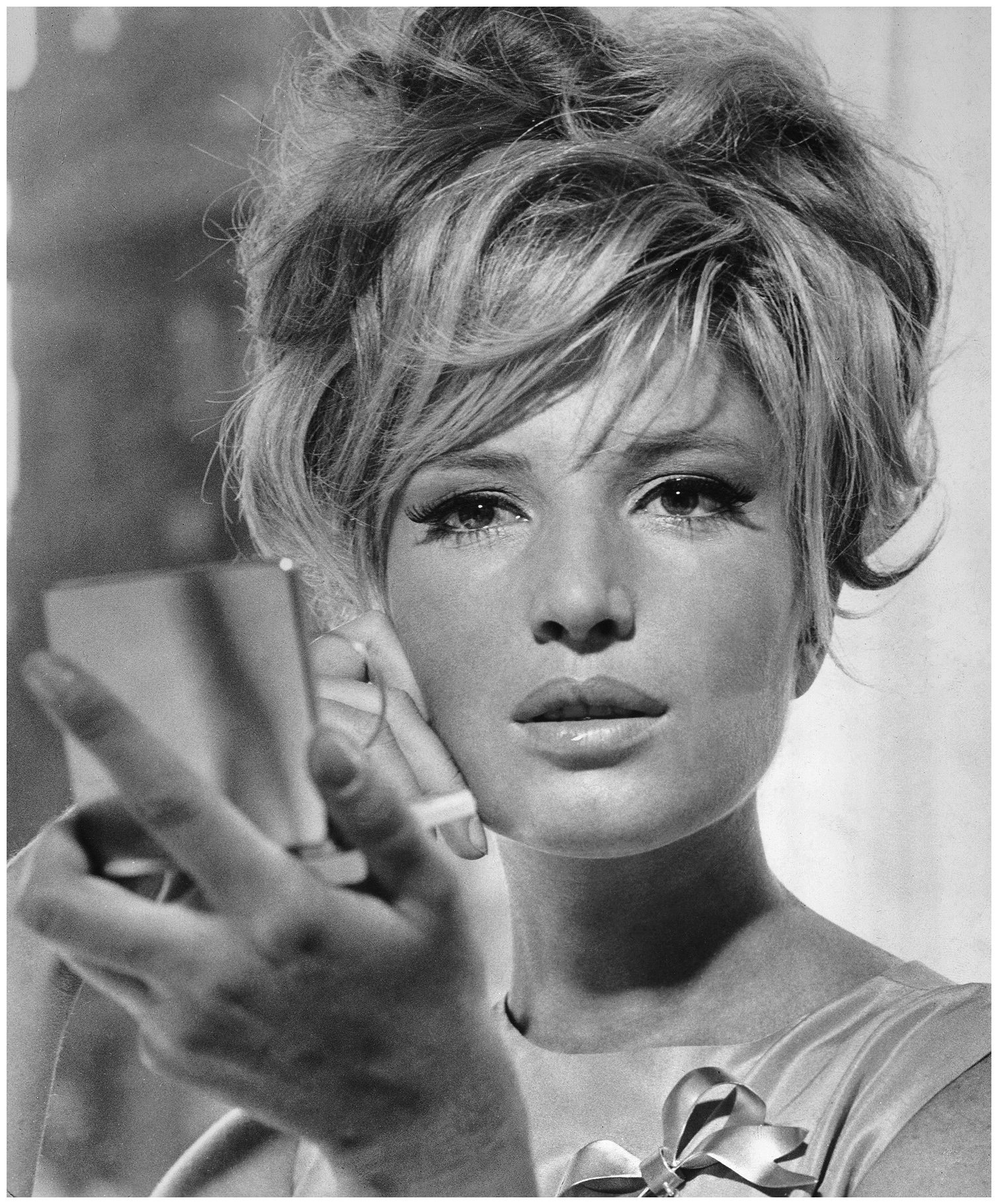
You're Not Distant: You Just Stopped Being Chosen
By Elena Vella | Love, Life & Relationships --- There is a particular kind of loneliness that happens inside a relationship.
By Elena Vella | Love, Life & Relationships
---
There is a particular kind of loneliness that happens inside a relationship. Not the clean, simple loneliness of being alone — that one at least has dignity, has its own shape. This is the loneliness of sitting across from someone at dinner and realising that neither of you has said anything real in three weeks. You have discussed logistics. You have coordinated. You have, in the most clinical sense, coexisted. But you have not chosen each other. Not lately. Maybe not in a long time.
I see it in the clinic more than I see almost anything else. Two people arrive and describe the same marriage in completely different languages. One says they feel invisible. The other says they feel constantly criticised. Both are right. Both are also, in a specific and uncomfortable way, describing the same thing: they stopped making the small, deliberate act of choosing each other — and then blamed the other person for the distance that followed.
Psychologists call this *mutual withdrawal*, though I have always thought that phrase makes it sound more symmetrical than it usually is. In reality, one person withdraws first. They do it quietly, reasonably, often for a very understandable reason — a hurt that wasn't acknowledged, a need that was dismissed one too many times, an argument that ended in ceasefire rather than resolution. They pull back just a fraction. And the other person, feeling the shift without understanding it, either chases anxiously or mirrors the distance. Within months, you have architecture. You have a whole system built on the original unaddressed wound, and neither of you can quite remember what the wound was anymore.
What I have noticed — and this is the part nobody wants to hear — is that the withdrawal usually feels virtuous to the person doing it. It feels like self-protection. It feels like maturity, even. *I'm not going to keep throwing myself at someone who doesn't appreciate me.* Which is fair. Except that what reads as dignity on the inside reads as rejection on the outside. Your partner isn't experiencing your measured restraint. They are experiencing your absence. And they are responding to your absence, not to you.
I worked with a woman a few years ago — I'll call her M — who described her husband as emotionally unavailable in a way that was so precise, so detailed, so fully evidenced, that I found myself almost convinced. Then her husband came in alone for a session, and he described a woman who had stopped looking at him when he walked into a room. He said: *She used to light up a little. Just a little. And then one day she didn't, and she hasn't since.* He had spent two years trying to earn back a reaction he didn't know he'd lost. She had spent two years waiting for him to notice her pain. They were both, in their own way, desperate. They had simply become desperate in opposite directions.
This is what mutual withdrawal actually looks like from the inside: two people who still love each other, performing indifference with increasing skill, waiting for the other one to break first and prove that it's worth it.
The research on *relationship maintenance behaviours* — the small, daily acts that signal to a partner that they are still chosen — is fairly clear about what happens when these stop. John Gottman's longitudinal work showed that couples who stopped engaging in what he called *bids for connection* (a touch on the shoulder, a glance across a room, the sharing of something small and unimportant) showed measurable physiological stress responses to each other's presence within two years. You are not imagining the tension. Your body is reading the data that your mind is still rationalising.
And here is what nobody says loudly enough: intimacy is not a state you arrive at and then maintain. It is a practice. It requires the daily, slightly vulnerable act of turning toward someone and saying — without words, sometimes — *I still pick you*. Most of us stop doing this not because we have fallen out of love, but because we are tired, or hurt, or because the last three times we reached out it landed awkwardly and we decided the risk wasn't worth it.
The risk is always worth it. Not because it will always work — it won't. Not because your partner will always respond the way you need them to — they won't. But because the alternative is a slow solidification into roommates who share a mortgage and remember, dimly, that there was once something else.
I have been the one who withdrew. I understand the logic