
HubSpot Made a Mistake. Dharmesh Said So Publicly. On LinkedIn, That's Now Considered Suspicious.
HubSpot quietly changed its terms to share customer data. Got caught. Reversed the decision in four days. Its co-founder said "sorry, we were wrong" on LinkedIn. And people spent the next week debatin

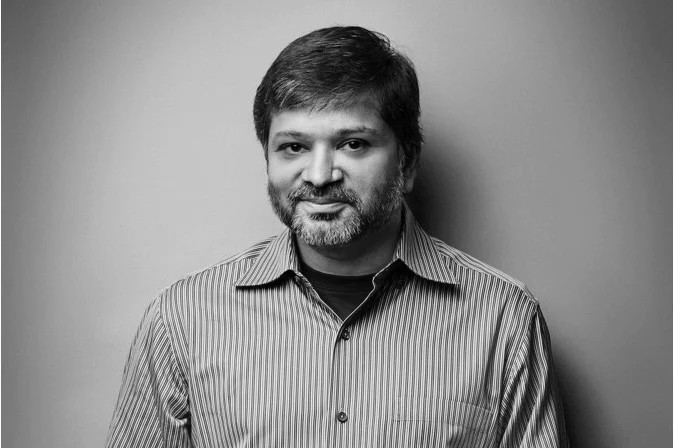
On July 1, 2026, HubSpot sent an email to customers using its enrichment features. The email announced that starting August 4, the company would expand its data-sharing capabilities — specifically, that enrichment data like business contact details and email deliverability signals might be shared with other HubSpot customers to power a new prospecting network.
The email included an opt-out. It did not include a clear explanation of what customers were actually consenting to by doing nothing.
By July 5, HubSpot had reversed the decision entirely.
Duncan Lennox, HubSpot's Chief Product and Technology Officer, wrote in a community post: "We made a mistake. Nothing matters more to us than the trust of our customers, and with our recent terms of service update we let you down. We are sorry about that. We will not move forward with the terms of service changes we communicated on July 1, 2026."And then Dharmesh Shah — co-founder and CTO, billionaire, one of the most recognisable names in marketing technology — responded directly to a customer who had complained on LinkedIn. <cite index="11-1">"Sorry. You are right. We made a mistake and are reversing that decision."</cite>
Four days. Public acknowledgment. Clean reversal. No spin.
I want to talk about what happened next, because what happened next is more interesting than the HubSpot story.
Who Dharmesh Shah actually is
Before we get to LinkedIn, let me tell you about the man.
Dharmesh Shah was born in a small town in Gujarat, India — no paved streets, no traffic lights, no hospital. He was delivered by a midwife. He switched schools 18 times across India, the US, and Canada. He was, by his own account, the last person his family expected to start a company. He started his first company, Pyramid Digital Solutions, in 1994 at age 24 — in Birmingham, Alabama, which is not, as he put it, "the startup center of the universe." He bootstrapped it, grew it, and sold it to SunGard Data Systems in 2005.Then he went to MIT Sloan to figure out what to do next. <cite index="25-1">He promised his wife he was done with startups. A decade of long hours, startup sacrifices, the particular kind of exhaustion that comes from building something from nothing — he told her he was finished. Then he met Brian Halligan. "I convinced my wife that I had one more startup at-bat left," he says.</cite>
That was HubSpot. Founded 2006. IPO 2014. Market cap that has at various points exceeded $20 billion. Dharmesh owns about 3% — which, at that valuation, makes him a billionaire by any reasonable measure.
He is also, by every account from people who have worked with him, an introvert who thinks carefully before speaking, writes internal blog posts rather than making public declarations, and has spent twenty years building a culture document that more people have read than most business books.
He is not a man who apologises for performance. He is a man who apologises when he believes an apology is warranted.
What LinkedIn did with that apology
I have been on LinkedIn long enough to remember when it was a place where people posted CVs and occasionally shared industry articles. That era is over.
LinkedIn is now a platform built on a specific kind of fiction: the fiction that the person posting has done something remarkable, learned something profound, or possesses an insight so valuable that 847 people should stop what they're doing to read it. The format is almost always the same. Short sentences. Line breaks after every two words. A story that ends with a lesson. The lesson always reflects well on the person telling it.
"I said no to a $50K contract. Here's why."
"My co-founder and I almost quit. Then this happened."
"I got fired at 43. The best thing that ever happened to me."
The tragedy of LinkedIn is not the lying, exactly. The tragedy is that the lying has become so endemic that genuine behaviour has become indistinguishable from performance. When Dharmesh Shah writes "sorry, we were wrong" in two sentences on a public platform, a significant portion of the response is not "thank you for the accountability" but "interesting that they're managing this so publicly" and "the apology reverses the terms but not the strategy."
Both of those observations are, incidentally, correct. <cite index="13-1">Clark Barron, founder of GTM threat intelligence firm Blackout, traced HubSpot's enrichment language through archived terms and found that the authorization to copy enrichment data into HubSpot's commercial dataset had been sitting in Product Specific Terms since September 18, 2024 — 652 days before customers were notified.</cite>
That's a legitimate criticism. The apology came after a data practice that had been running quietly for nearly two years.
And yet — and this is the part that matters — the question of whether Dharmesh Shah's "sorry" was genuine is not actually complicated. The man has spent twenty years building a company around inbound marketing, a philosophy explicitly predicated on earning trust rather than interrupting attention. His public persona is consistent with his private one. His wife talked him into one more startup. He writes internal blog posts that employees can opt into. He is not performing humility on LinkedIn.
He has humility.
The platform has made that impossible to see clearly.
The thing nobody wants to say about LinkedIn
I am going to say it anyway, because I live in Malta and I have watched this play out from a sufficient distance to find it darkly amusing.
LinkedIn is a place where people perform versions of themselves that bear a calculable relationship to reality. Not lies, exactly — but edited. The struggles are curated. The lessons are retroactive. The "I almost quit" stories always end with the person not quitting and the company subsequently succeeding. The vulnerability is strategic. The humility is produced.
I know this because I have been tempted to do it myself. There is a version of the FreeMalta story that writes as a LinkedIn post — the late nights, the court cases, the moment someone in the US converted through an Apollo.io affiliate link at 2am on a Sunday. It would get engagement. It would follow the format. It would be true, technically, and curated, fundamentally.
I don't write it, because I find it exhausting, and because the people I respect don't write it either.
Dharmesh Shah doesn't write those posts. He writes "sorry, we were wrong" when his company is wrong. And the platform has reached a point of such thorough self-parody that people spend three days debating whether that's sincere.
Nobody in Taxbiex stays up debating whether their friend is sincerely apologising. You know, because you know the person. LinkedIn has created the experience of intimacy — thousands of "connections," first-name responses, the illusion of knowing someone — without any of its substance.
You can have 30,000 followers on LinkedIn and not know a single person who would recognise you on the street.
What HubSpot actually did and what it means
The underlying strategy — a shared enrichment dataset that improves through network effects — is not wrong. <cite index="13-1">"The only durable data moat is a network effect, a dataset that improves because customers use it,"</cite> as one analyst put it. HubSpot's intent was to build better prospecting data by pooling business-card-level professional information across its customer base.
The execution was wrong. Opt-out rather than opt-in. Language buried in a terms update email. No clear explanation of what customers were contributing versus what they were receiving. <cite index="11-1">Some pointed out that HubSpot had previously stated it wouldn't share data with other accounts — then removed that language from its documentation.</cite>
That's a trust problem. The apology addressed it. The strategy will likely return, with clearer consent mechanics and better communication, because the underlying logic is sound. <cite index="13-1">Lennox committed that future enrichment capabilities would provide "clear, upfront control over whether you participate."</cite>
For Malta-based businesses using CRM tools: the HubSpot episode is a reminder that data consent mechanics matter, that opt-out defaults are different from opt-in defaults, and that reading the terms email from your SaaS provider occasionally is not paranoid — it is, in fact, exactly what those emails are for.
FreeMalta's outbound and CRM stack covers Apollo for lead generation, Lemlist for sequencing, and Nutshell for pipeline management — the tools that work alongside or instead of HubSpot depending on what you're building.
Ilhan Irem Yuce
Founder of FreeMalta and MaltaInsider. Living and building in Malta for 12 years. These pieces come from asking questions, making things and paying attention to what the polished version leaves out.
Explore the work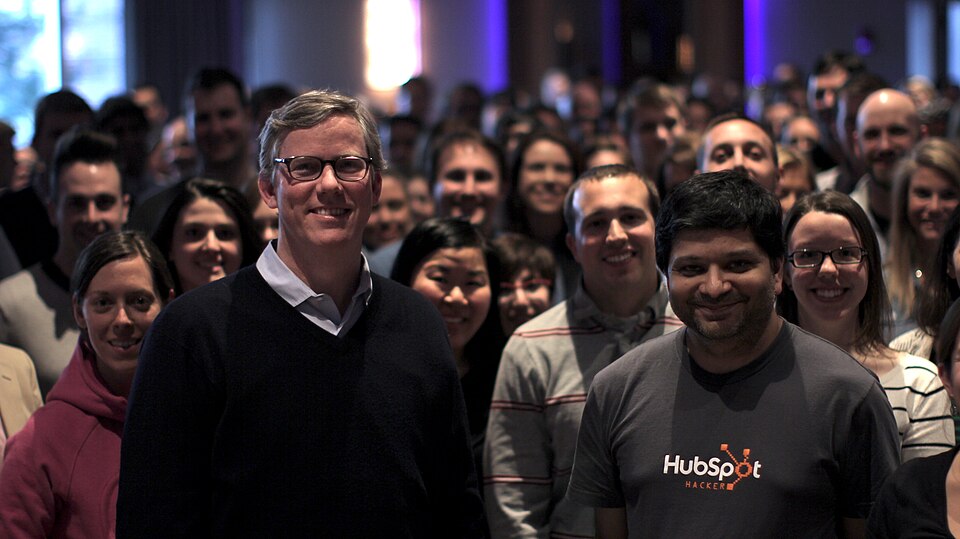
HubSpot Is Changing. Nearly 660 People Are Losing Their Jobs.
I admire Dharmesh Shah. I was an early YouSpot user. That makes this story more uncomfortable, not less. I like Dharmesh Shah. Let me put that at the beginning, before this becomes...
Claude Helped Me Build Four Platforms. Today, I Asked for More Than Credits.
Today I applied to Claude Startups. A few hours earlier, I was joking that Claude should go and make tea. Both things can be true. I have no interest in turning a software subscription...
LinkedIn Is Selling You Three Things. None of Them Work.
LinkedIn has a remarkable ability to make you feel like you are doing something productive while you are actually doing something that benefits LinkedIn. You are posting content to...
Something worth
saying belongs here.
Bring the experience, the decision and the evidence. Paid stories are labelled; the reader should never have to guess.
Discuss a partner story