
markets · Off The Record
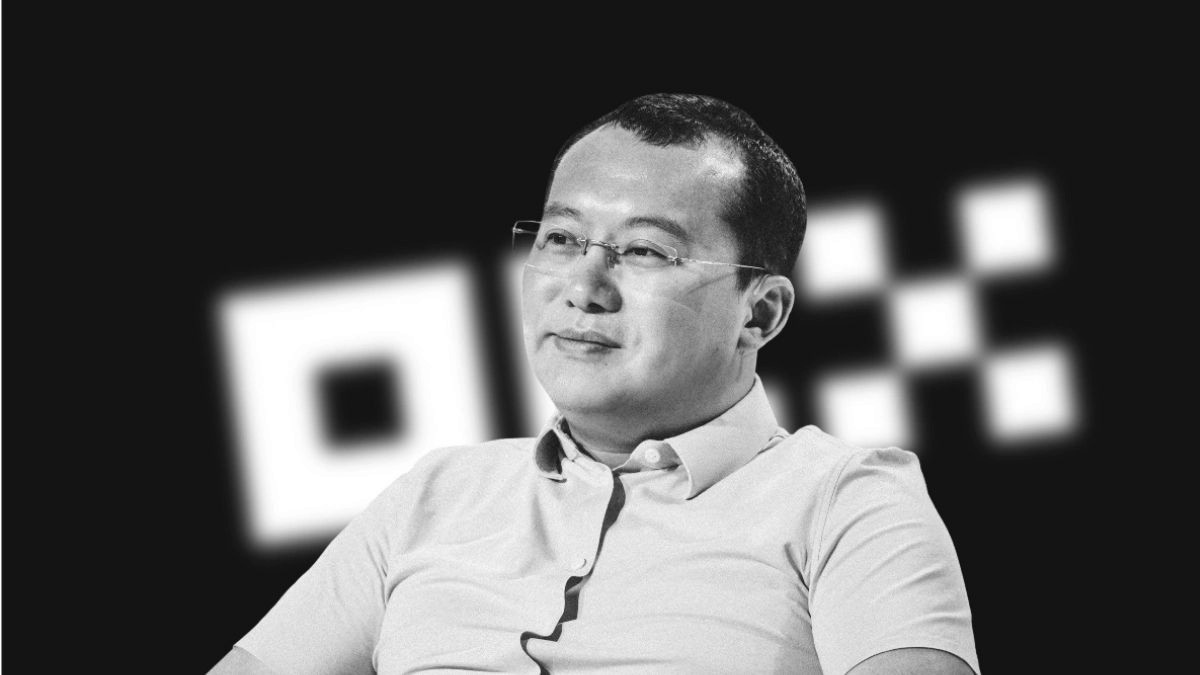
MiCA's Winners and Losers: OKX Got Malta's Licence, Binance Got Nothing

MiCA's Winners and Losers: OKX Got Malta's Licence, Binance Got Nothing
The music stopped today. The EU's MiCA grace period expired at midnight, and the crypto industry just found out who'd been dancing without a chair. The final tally, per ESMA's register as of June 26: 244 crypto-asset service providers secured MiCA authorisation across EU member states. The world's largest exchange by trading volume — Binance — is not among them. The world's second-largest — OKX — got its licence from Malta in January 2025. That sentence alone tells you most of what you need to know about how this played out.The scoreboard nobody's publishing clearly
Germany's BaFin leads with 57 approvals — nearly a quarter of the total. France's AMF and the Netherlands AFM are tied at 26 each. Then comes Malta's MFSA with 17. Consider what that means for a jurisdiction with a population of 520,000. Malta's MFSA approved 17 MiCA licences — the same count as the Netherlands, a country twenty-five times larger. Among the names that secured approval: OKX (January 2025), FalconX (ahead of the July 1 deadline), and OpenPayd. That's not an accident. That's the institutional infrastructure Malta built over two decades of iGaming and fintech regulation showing up, again, when a new category needed a credible home.What happened to Binance, in sequence
This wasn't a surprise that appeared overnight. The timeline is worth reading in order because it reveals a company that consistently miscalculated the political temperature: January 2026: Binance files its MiCA application in Greece, having established a Greek holding company the previous December. Co-CEO Richard Teng describes Greece as a "good base for us to expand in Europe." June 16: Reuters reports that the Hellenic Capital Market Commission is preparing to reject the application. Binance's spokesperson says the HCMC has given "no formal indication" of this — which is technically accurate and entirely beside the point. June 24: Binance officially withdraws its Greek application. Says it will pursue authorisation in "another EU Member State" without naming one. $1.5 billion leaves Binance in a single day. June 25: Reuters reports Binance had approached four or five regulators including Ireland and Latvia, and "faced resistance" due to its history of money laundering penalties, complex international structure and what regulators viewed as a "risk-taking culture." Binance's EU/UK head Gillian Lynch, who joined the company a year ago, expresses bewilderment at Greece's apparent rejection. June 26: CZ tweets that it's "sad to see EU cutting their users off from the best liquidity in the world." OKX founder Star Xu tweets that Binance "appears to have intentionally disregarded MiCA requirements." OKX Europe CEO Erald Ghoos offers Binance customers 8% on new deposits if they transfer to OKX. June 29: CZ appears on The Starting Block and suggests that "one or two" regulators told Binance its application was "fully compliant" with MiCA but that "other forces were against it" — declining to confirm or deny whether those forces included ECB president Christine Lagarde. July 1: France is now the reported destination for Binance's next application attempt. Users in France, Italy, Poland and Spain have received emails on how to withdraw assets. The pattern is clear: a company that optimised for market share over regulatory relationships spent the first half of 2026 discovering that EU regulators don't treat scale as a mitigating factor.The customer acquisition war that broke out immediately
Nothing clarifies competitive intent like a licensing cliff. The moment Binance's situation became undeniable, its MiCA-compliant rivals moved with a speed that suggested they'd had the campaign ready for some time. OKX offered 8% on new deposits from Binance and Bybit customers. Coinbase CEO Brian Armstrong offered 5% — but only to Coinbase One subscribers in eight specific countries. Bitpanda founder Eric Demuth went philosophical, tweeting that "while others optimised for speed, we optimised for trust," which is either a principled statement or the smoothest competitive jab of the quarter, depending on your perspective. Bybit, facing its own MiCA problems, warned customers that "certain services will be progressively limited" in the EEA — which makes OKX's 8% offer suddenly available to two sets of displaced customers simultaneously. BitGo, which received its MiCA approval from Germany's BaFin in May 2025, went business-to-business rather than retail: CEO Mike Belshe pitched BitGo Europe as infrastructure for firms that needed a compliant custody and trading partner while their own licences remained pending. Over the seven days surrounding the announcement, Binance saw $967 million in outflows. OKX saw inflows of roughly the same amount. The market is settling accounts in real time.Tether walked away from the table
One detail that deserves its own paragraph: Tether opted out of MiCA compliance entirely. USDT — the largest stablecoin by market cap, the dollar-pegged token that underpins an enormous portion of global crypto trading volume — is not MiCA-compliant. EU exchanges have been delisting it ahead of the deadline. The EBA is now consulting on how to calculate penalties for significant stablecoin issuers under MiCA's framework, with maximum fines reaching 10-12.5% of annual turnover or twice the profits gained through non-compliance. For active EU crypto traders, the loss of USDT liquidity may be more immediately disruptive than the loss of Binance itself. The stablecoin you trade through matters as much as the exchange you trade on.The honest question MiCA hasn't answered yet
244 licences sounds like a functioning regulated market. The question nobody can answer until volume data comes in is whether those 244 licensed providers have the collective depth — the order books, the stablecoin pairs, the asset coverage — to absorb the displacement without meaningfully widening spreads for EU users. CZ's argument — that liquidity is itself consumer protection — is self-interested, but it's not structurally wrong. A retail user who moves from Binance to a thinner licensed venue may be "protected" in the regulatory sense while facing worse execution on every trade they make. Whether that tradeoff is temporary (as licensed venues build depth) or structural (as the deepest global liquidity remains concentrated on offshore platforms) is the question MiCA's architects need July and August to answer. If you want to follow how this reshapes the prediction markets and crypto landscape in Malta specifically, the Markets & Investing section is where we track it. FalconX just got its MFSA licence. OKX has held its Malta MiCA approval since January. The island is, quietly, on the right side of this particular historical moment. --- Sources: CoinGeek, CryptoSlate, Reuters, Financial Times, ESMA register as of June 26 2026.
Want to reach Malta's most engaged business audience?
Media Kit
Tools used in this piece
The Network

Malta Insider
Official OpenAI Select Partner. Enterprise AI deployment, Fractional CAIO and business consulting for Malta.
maltainsider.com →
Gambity
The first AI-native newsroom for prediction markets. Eight AI journalists. 30+ daily articles.
Explore Gambity →
News Beast
Malta's AI-native newsroom. 10 personas, 22 categories, updated every hour. Cloudflare Worker on the edge.
Read News Beast →