
They Named a $11 Billion Company After Harvey Specter. Then They Hired the Actor Who Played Him.
A former junior lawyer and a DeepMind researcher were LA roommates who watched Suits and thought: what if that was real? Three years later, Harvey AI is worth $11 billion and just partnered with Gabri

It's July 5, 2026. America's 250th birthday. I'm on my third coffee, looking at Manoel Island from across the water, Valletta behind it doing what Valletta does — sitting there like it's been there forever, which it has. The air is actually cool for once. A good morning to think about things that matter and things that don't, and the increasingly interesting question of where the line between them falls.
I've watched Suits six times. I know how that sounds. I'm going to tell you anyway.
The first time was normal — good show, compelling character, Harvey Specter as the template for a certain kind of professional identity. The second time, I was in the middle of a situation that required more of that template than I had naturally. The third through sixth times, I stopped counting and started taking notes. Fifteen lawsuits and over 150 court hearings has a way of turning entertainment into curriculum.
What nobody tells you about Harvey Specter is that the character isn't about law. It's about knowing things other people don't, preparing more than anyone thinks is necessary, and delivering an answer before the other side has finished asking the question. The law is just the domain. The disposition is transferable.
Two people in Los Angeles figured this out and built an $11 billion company around it.
The roommates
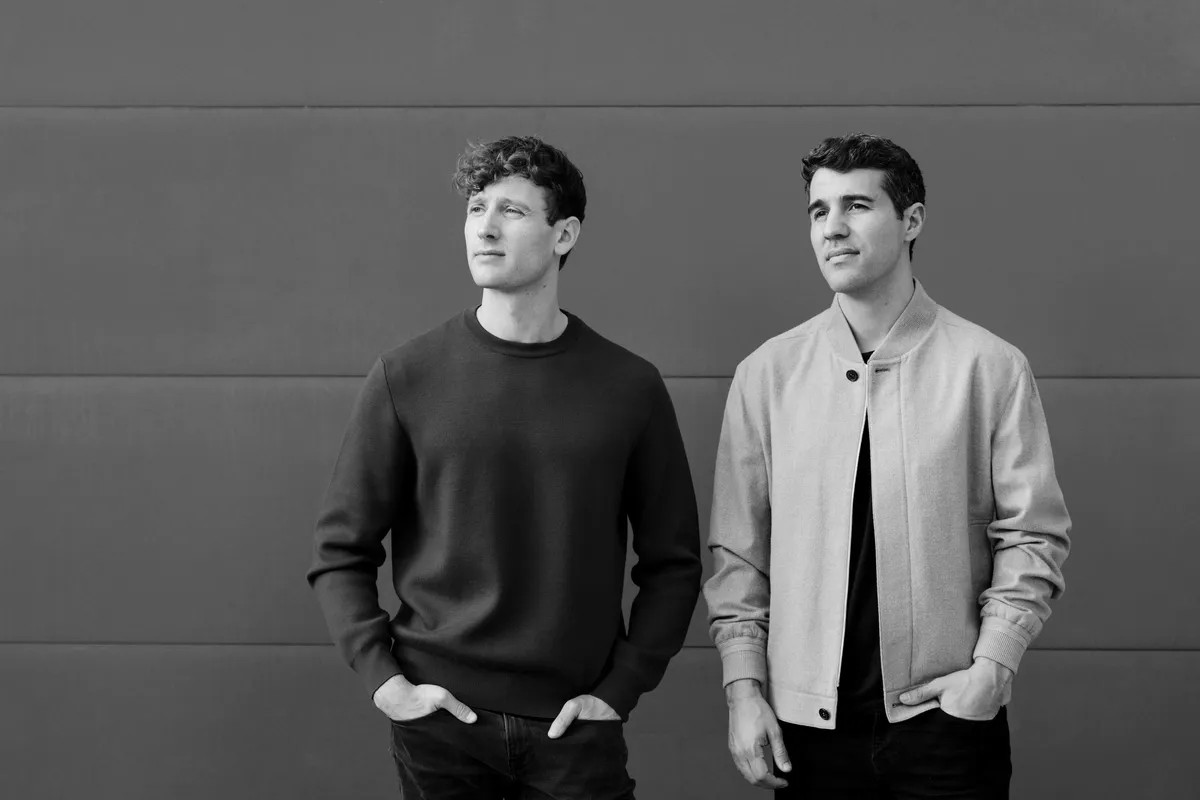
Winston Weinberg was a first-year securities and antitrust litigator at O'Melveny & Myers. Gabriel Pereyra was a research scientist at Google DeepMind. They were roommates in LA.
Pereyra was brainstorming startup ideas with his research colleagues. He showed Weinberg OpenAI's GPT-3 text-generating system, and Weinberg realised it could be used to improve legal workflows. They developed an early chain-of-thought prompt based on GPT-3, focused on California landlord-tenant statutes.The test they ran is worth understanding precisely. <cite index="7-1">They grabbed 100 questions from r/legaladvice on Reddit and ran the prompt over them, then gave the question-answer pairs to three landlord-tenant attorneys without mentioning AI. They just said: a potential customer asked this question, here's the answer — would you make any edits or would you send this as is? On 86 of the 100 samples, two out of three attorneys said they would send it with zero edits.</cite>
That was the moment. Not the valuation, not the funding announcement, not the Forbes profile. 86 out of 100 California landlord-tenant answers, good enough to send, generated by two roommates and a Reddit thread.
They named the company Harvey. After Harvey Specter. A fictional television character who embodied the idea that preparation, knowledge and delivery are not separable things — that knowing the answer and being able to use it are the same skill, practised together.
The cold email
They cold-emailed Sam Altman and Jason Kwon, who was the general counsel at OpenAI. They figured they had to email a lawyer because otherwise the person wouldn't know if the outputs were right.This is the detail that distinguishes a good founder story from an interesting one. They didn't email the most powerful person they could find. They emailed the most relevant person they could find — a lawyer who happened to work at OpenAI, who could actually evaluate what they'd built. <cite index="9-1">The OpenAI Startup Fund led Harvey's first $5 million round in November 2022.</cite>
What followed is one of the faster ascents in enterprise software history. <cite index="1-1">Zero revenue in 2022. $10 million ARR by end of 2023. $65.8 million by end of 2024. $100 million ARR crossed in August 2025. $300 million ARR by May 2026.</cite> Three years. From a Reddit thread to the majority of the top 10 US law firms.
Clients now include 100,000+ lawyers across 1,300 organisations in over 60 countries, including NBCUniversal, HSBC, and half of the Am Law 100.The valuation trajectory is equally compressed: <cite index="3-1">$200 million raised in March 2026 at an $11 billion valuation, co-led by GIC and Sequoia Capital.</cite> Total capital raised: $1.2 billion. The company that started with a GPT-3 prompt and a Reddit thread is now worth more than most law firms it serves.
Then they hired the actor
In February 2026, Harvey announced its first brand partnership: <cite index="9-1">Gabriel Macht, the actor who portrayed Harvey Specter in Suits, to launch the company's Instagram page.</cite>
This is either the most self-aware marketing decision in legal tech history or an extremely good joke that got funded to $11 billion. Possibly both.
The fictional character inspired the company name. The company built real technology. Then they went back and hired the man who made the character famous, to help explain what the technology does, to an audience of lawyers who — statistically — have almost certainly watched Suits.
The circularity is either intentional genius or an accidental metaphor for how AI is beginning to blur the line between the things we imagined and the things we built.
What Harvey actually does
The product is less dramatic than the origin story and more consequential than most legal tech that came before it. <cite index="5-1">Harvey recruited attorneys from elite firms including White & Case, Latham & Watkins, Skadden and Paul Weiss — not as token hires, but as people working directly on product development, explaining to engineers the process of how to actually create different work products.</cite>
The result is a system that handles contract analysis, document review, due diligence, regulatory research and litigation support at a level of accuracy that practising attorneys — not benchmarks, actual attorneys — are comfortable with. The 86-out-of-100 test from the Reddit thread scaled.
Harvey also announced a Memory feature — instead of each interaction starting from scratch, the platform retains context from previous work, including matter details, drafting styles and established precedent. The AI that remembers how you work, the cases you've handled, the clauses you prefer — and applies all of that before you ask.This is the part Harvey Specter would actually use. Not the chatbot. The one that already knows.
The real question
I've been in 150+ court sessions. I know what it looks like when one side is genuinely prepared and the other is performing preparation. I know the difference between someone who knows the answer and someone who is finding it in real time. Harvey Specter, as a character, was always the former. That was the fantasy.
Harvey, as a company, is building the technology that makes the former available to anyone with a seat licence. Not the charisma. Not the suits. The preparation. The knowing. The answer before the question is finished.
Whether that democratises legal expertise or simply redistributes it to the clients who can afford $11 billion worth of AI infrastructure is a question the next decade will answer.
The coffee's finished. Valletta is still there. The water between here and Manoel Island looks exactly the same as it did when the Knights of St John used it, when the Arabs before them used it, when whoever was here before the Arabs looked at it and thought about what was on the other side.
Some questions take longer than others.
Harvey is one of FreeMalta's featured partners in the Web Intelligence stack — alongside Perplexity for research and Firecrawl for data extraction. The tools that know things before you ask.
Ilhan Irem Yuce
Founder of FreeMalta and MaltaInsider. Living and building in Malta for 12 years. These pieces come from asking questions, making things and paying attention to what the polished version leaves out.
Explore the work
The School Silicon Valley Built for Itself
a16z is not simply opening an academy. It is bringing the companies remaking work into the room where the next generation learns how to do it.

Google Is Paying Publishers for AI Training Data. The Debate About Zero-Click Is Already the Wrong Debate.
Google is paying for inference, not clicks. Publishers still arguing about zero-click traffic are solving last year's problem.
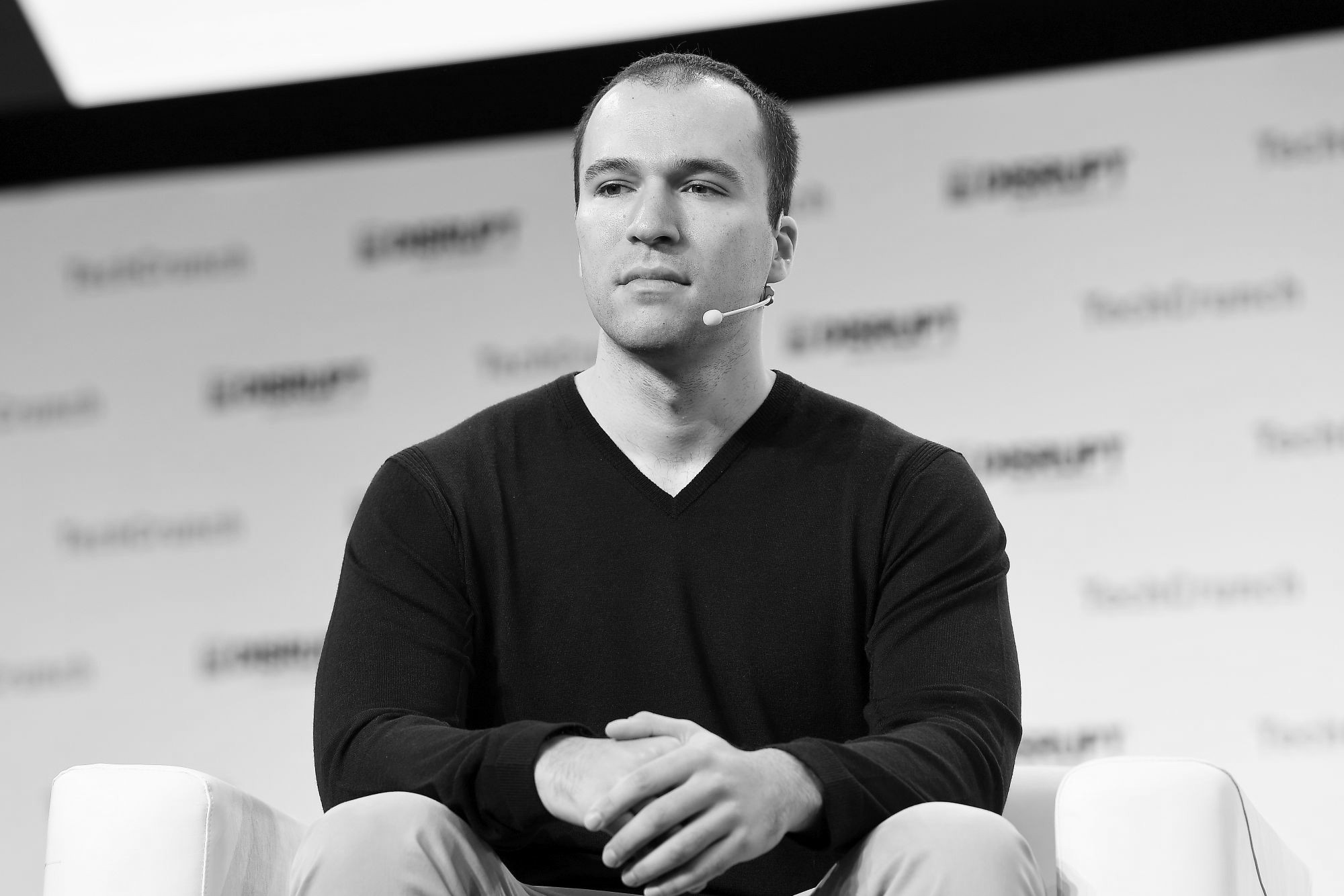
He Wrote "How Do I Get to $1 Billion?" in His Diary. He Was Off by $24.5 Billion.
Greg Brockman co-founded OpenAI, built ChatGPT's infrastructure, and is worth $25.5 billion. Sam Altman is worth $3.3 billion. You've heard of Altman. This is the other one.
Something worth
saying belongs here.
Bring the experience, the decision and the evidence. Paid stories are labelled; the reader should never have to guess.
Discuss a partner story