
Chipotle Mexican Grill vs Subway
Founding story, key facts and history — side by side.
Chipotle Mexican Grill
A CIA culinary grad opened a burrito shop to fund his fine dining restaurant. McDonald's invested. Then McDonald's left. Then a food safety crisis nearly destroyed it. Then $3,000 became $140,000.
| Founded | 1993 |
| Founders | Steve Ells |
| HQ | Newport Beach, California (formerly Denver, Colorado) |
| Symbol | CMG (NYSE) |
VS
Subway
A 17-year-old borrowed $1,000 to pay for college. Built the world's largest restaurant chain. Sold it 60 years later for $9.6 billion.
| Founded | 1965 |
| Founders | Fred DeLuca, Peter Buck |
| HQ | Milford, Connecticut |
| Symbol | Private (Roark Capital, acquired 2024) |
The Story — Side by Side
1993
A CIA grad, a burrito shop, and a plan to open a fine dining restaurant
Steve Ells graduated from the Culinary Institute of America and moved to San Francisco to apprentice under Jeremiah Tower at Stars — then one of America's most acclaimed restaurants. He saved enough to move to Denver, Colorado, where he planned to open an upscale restaurant. He needed capital first. The plan: open a burrito shop, sell enough to fund the real restaurant. On July 13, 1993, the first Chipotle Mexican Grill opened in a former Dolly Madison ice cream shop on East Evans Avenue in Denver, near the University of Denver. Ells calculated he needed to sell 107 burritos a day to break even. The first day he sold 1,000.
1998
McDonald's invests — and Chipotle becomes an empire
McDonald's became a major investor in Chipotle in 1998, eventually owning a majority stake. The investment gave Chipotle McDonald's operational expertise, real estate access, and financial backing that enabled rapid expansion from 16 locations in 1998 to over 500 by 2006. The partnership was uneasy culturally — Chipotle's commitment to "Food with Integrity" (sourcing higher-quality ingredients, antibiotic-free meat, humanely raised animals) sat awkwardly with McDonald's supply chain philosophy. Chipotle went public in January 2006 at $22 per share; the stock doubled on the first day. McDonald's fully divested by 2006.
2015
E. coli, norovirus, Salmonella — and the food safety catastrophe
Between 2015 and 2016, Chipotle was hit by a series of foodborne illness outbreaks — E. coli across 11 states, norovirus at a Boston location that sickened 140 people, and Salmonella in Minnesota. The outbreaks were catastrophic for a brand whose identity was built entirely on food quality and transparency. Comparable sales fell over 20% in early 2016. The company's market capitalisation fell from approximately $23 billion to under $10 billion. Steve Ells stepped back as CEO, and the board hired Brian Niccol — formerly CEO of Taco Bell — to lead the recovery.
2018
Brian Niccol and the digital transformation
Brian Niccol arrived at Chipotle in March 2018 with a mandate to restore the brand and accelerate growth. His strategy: digital ordering, the "digital make line" (a separate assembly process for mobile orders), loyalty programme (Chipotle Rewards, launched 2019), drive-through "Chipotlanes" for digital order pickup, and menu innovation. The Lifestyle Bowls, Queso, and Carne Asada drove new customers. Digital sales, which were negligible before Niccol, reached $3.7 billion by 2023 — approximately 37% of all revenue. The stock recovered from its post-food-safety lows and began a decade-long appreciation that made early investors extraordinary returns.
2024
$11.3 billion revenue — $3,000 IPO to $140,000 — world's most profitable restaurant chain per store
Chipotle reported $11.3 billion in total revenue for 2024, with restaurant-level operating margin of 26.2%. The company operated approximately 3,700 restaurants — almost entirely in the US — with a development pipeline of over 100 new openings annually. A $3,000 investment at the $22 IPO price in January 2006 had grown to approximately $140,000 by mid-2025. Brian Niccol departed in August 2024 to become CEO of Starbucks — the move Chipotle's investors found alarming but Starbucks desperately needed. The burrito shop that Steve Ells had opened to fund a fine dining restaurant had become the most valuable restaurant brand in the United States.
1965
$1,000, a handshake, and Pete's Super Submarines
Fred DeLuca was 17 years old in 1965, working minimum wage at a hardware store in Bridgeport, Connecticut, trying to figure out how to pay for college. He asked a family friend — Dr. Peter Buck, a nuclear physicist — for advice. Buck didn't offer tuition money. He offered $1,000 to open a submarine sandwich shop together. They shook hands. On August 28, 1965, they opened Pete's Super Submarines in Bridgeport, selling 312 sandwiches the first day. The first location failed. DeLuca's biggest regret was choosing a bad spot. The third location, in a high-visibility position, worked. The name changed to Subway in 1968.
1974
Franchising and the assembly-line sandwich
By 1974, DeLuca and Buck had opened 16 Connecticut locations. They began franchising — a decision that launched extraordinary growth. The Subway model was built for replication: low startup costs ($15,000-$30,000 vs. hundreds of thousands for McDonald's), simple operations, a customisable assembly-line sandwich that required no cooking equipment beyond a toaster oven, and aggressive international expansion. DeLuca was known for pushing franchisees to open additional stores near their existing ones — sometimes across the street — creating a density that no competitor matched.
2002
The world's largest restaurant chain — more locations than McDonald's
In 2002, Subway became the largest fast-food chain in the United States by number of outlets, surpassing McDonald's. At its peak, Subway operated nearly 44,000 locations across more than 100 countries — more restaurants than any chain in history. The growth was built on a simple value proposition for franchisees: lower investment, lower risk, and a brand that had become synonymous with "healthy fast food" through years of effective marketing, including the famous "Jared" campaign featuring a customer who claimed to have lost 245 pounds eating at Subway.
2015
Fred DeLuca dies — and the decline begins
Fred DeLuca was diagnosed with leukaemia in 2013 and died on September 14, 2015, at age 67 — just weeks after Subway's 50th anniversary. Control passed to his sister Suzanne Greco, then to John Chidsey, the first non-family CEO, in 2019. Net store count had been falling since 2015 — approximately 7,000 locations closed between 2015 and 2023, primarily due to poor unit economics for franchisees in a market where Chipotle, Jersey Mike's, and delivery platforms were taking customers. The Jared scandal (his conviction for child sex offences in 2015) had damaged the brand's marketing legacy.
2024
$9.6 billion sale to Roark Capital — 37,000 stores — the PE turnaround begins
Subway was sold to Roark Capital Group — a private equity firm specialising in franchise brands (also owning Dunkin', Arby's, Jimmy John's, Sonic, Buffalo Wild Wings) — for $9.6 billion in a deal completed in April 2024, ending 60 years of DeLuca family ownership. Subway operated approximately 37,000 restaurants globally and generated about $9.5 billion in US systemwide sales in 2024. The "Fresh Forward 2.0" restaurant redesign was unveiled in late 2024, with a global rollout planned for 2025. The 17-year-old who had borrowed $1,000 to pay for college had built a restaurant system now owned by private equity.
Tools & Platforms
For Investors
The market doesn't care about your feelings.
But your broker's fees do.
But your broker's fees do.
Most people have a brokerage account. Fewer understand what it really costs them — in spreads, in fees, in missed instruments. Malta-regulated, direct market access, 600,000+ instruments.
Exante
Malta MFSA · 50 exchanges
Tickmill
Forex from 0.0 pips
Vantage
Multi-asset trading
Polymarket
Prediction markets
For Entrepreneurs
Opening a US company costs $300.
Most people think it's complicated. It isn't.
Most people think it's complicated. It isn't.
Most founders spend weeks on formation, banking and payments. The ones who move fast know which tools to use before they start. A US LLC, a real business account, and a way to pay people — in that order.
Mercury
Business finance · 300K+ founders
Doola
US LLC formation · YC backed
Melio
B2B payments
Xero 95% OFF
Accounting · 6 months
For C-Suite
Your competitor pays $200 less per month for EOR.
You're still on a spreadsheet.
You're still on a spreadsheet.
BVNK hired 20% of its workforce through Deel. The smartest operators aren't managing payroll complexity — they're outsourcing it. EOR in 150+ countries, multi-currency accounts, workforce payments at $200 less per month than competitors.
Deel
EOR · 150+ countries
Payoneer
$399/mo EOR · Save $200
Wise Business
40+ currencies · No hidden fees
Gusto
US payroll & benefits
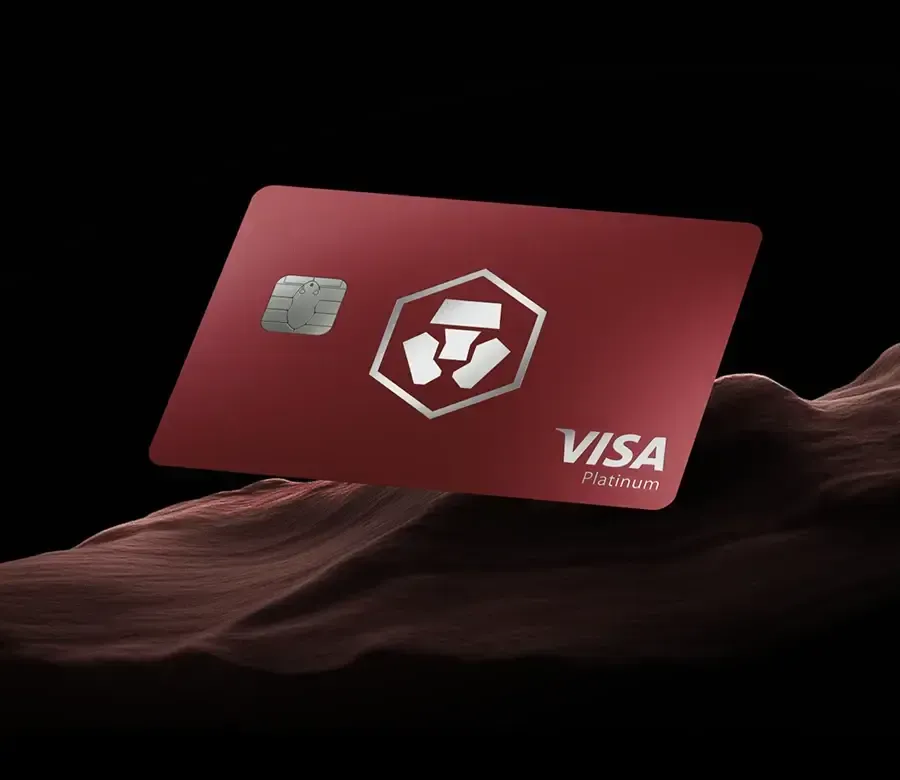
PLUS
2.0%
back in crypto · on every spend
€3.99 / month
or €39.90/year (€3.32/month)
Zero trading fees up to $20K/month
2.0% back in crypto on card spend
0% foreign exchange fees
EUR Cash Yield up to 1.35% p.a.
CRO Yield up to 2.00% p.a.
Virtual Visa card · Flexible cancel
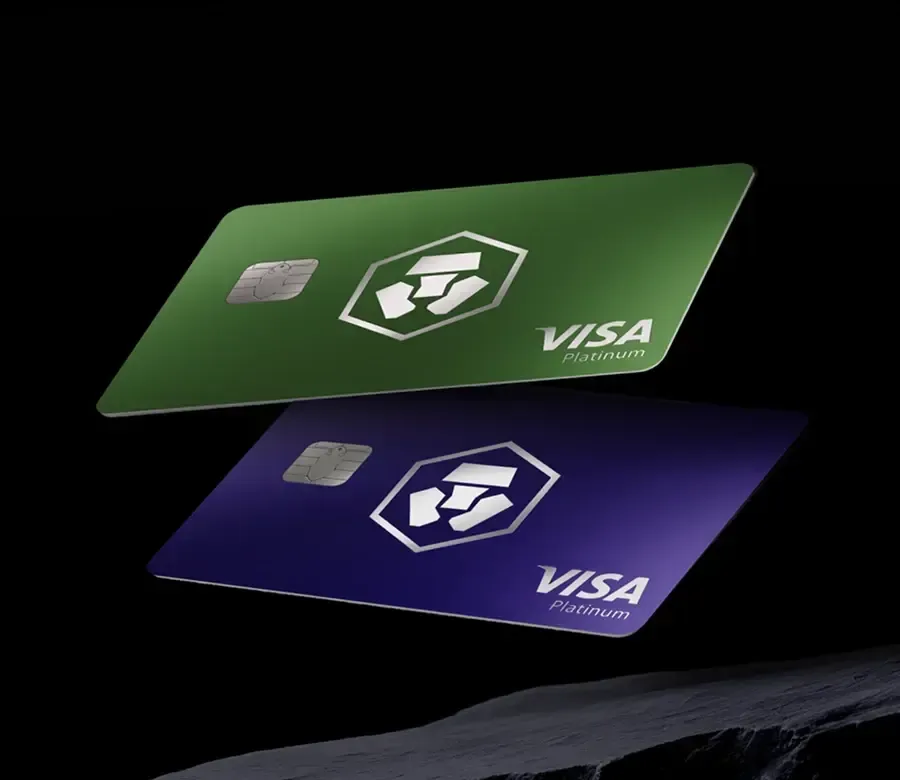
PRO
3.0%
back in crypto · on every spend
€24.99 / month
or €249.90/year (€20.82/month)
Zero trading fees up to $50K/month
3.0% back in crypto on card spend
0% foreign exchange fees
EUR Cash Yield up to 1.70% p.a.
CRO Yield up to 2.50% p.a.
Airport lounge access (Priority Pass)
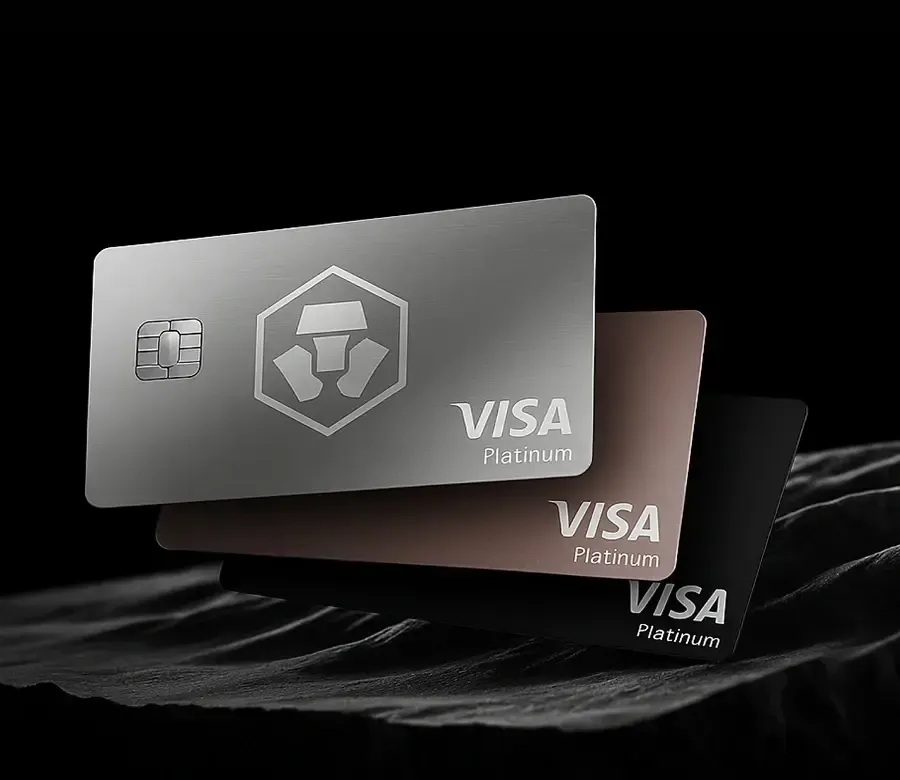
PRIVATE
4–6%
back in crypto · on every spend
CRO Lockup from €45,000
8.5% yield · 12-month staking · €450K tier at 9.5%
Zero trading fees · Unlimited volume
4.0%–6.0% back in crypto
0% foreign exchange fees
EUR Cash Yield up to 1.80% p.a.
Extra 1% p.a. on Earn allocations in CRO
VIP events · Exclusive experiences
8.5% CRO lockup rewards