
Tinder (Match Group) vs OnlyFans
Founding story, key facts and history — side by side.
Tinder (Match Group)
Sean Rad launched it at a USC frat party in 2012. The right swipe became the defining gesture of a generation. 75 million active users. $1.9 billion a year.
| Founded | 2012 |
| Founders | Sean Rad, Justin Mateen, Jonathan Badeen, Joe Munoz, Dinesh Moorjani, Chris Gylczynski, Whitney Wolfe Herd |
| HQ | Los Angeles, California |
| Symbol | MTCH (Nasdaq) |
VS
OnlyFans
Tim Stokely started it with a £10,000 loan from his father. Sold 75% to a Ukrainian-American internet entrepreneur. COVID made it a phenomenon. $7.22 billion in 2024.
| Founded | 2016 |
| Founders | Tim Stokely |
| HQ | London, United Kingdom |
| Symbol | Private (Leonid Radvinsky) |
The Story — Side by Side
2012
A USC frat party and the swipe that changed dating
Tinder was created inside Hatch Labs — a startup incubator backed by IAC (Barry Diller's company) — in 2012 by a founding team that included Sean Rad, Justin Mateen, Jonathan Badeen (who invented the swipe gesture), and others including Whitney Wolfe Herd, who would later found Bumble. The app launched at a University of Southern California party, where everyone in attendance was invited to download it. The innovation was the interface: rather than completing lengthy compatibility questionnaires (Match.com's model) or sending cold messages (OkCupid's model), Tinder showed users a photo and asked a single question: left swipe (no) or right swipe (yes). You only matched with someone if both users swiped right. The mutual match requirement removed the asymmetry of cold messages and eliminated the fear of rejection from initial engagement.
2014
The swipe becomes cultural shorthand
By 2014, Tinder had been downloaded 10 million times and was processing 1 billion swipes per day. The right swipe had become cultural vocabulary — newspapers used it as shorthand for approval of anything from presidential candidates to restaurant menus. The app had been adopted first by college students (where the density of users in a small geographic area produced rapid matching), then by young urban professionals, then by progressively older demographics. The gender balance — initially skewed heavily male — improved as the female user experience was refined. Tinder became the dominant global dating app: across 196 countries, in cultures where dating norms varied enormously, the same basic mechanic produced dates.
2017
Gold, Boost, Super Like — the monetisation architecture
Tinder built a freemium model where the core matching experience was free but supplementary features required payment: Tinder Plus and Tinder Gold offered unlimited likes, the ability to see who had liked you before matching, and "Passport" access to profiles in other cities. Tinder Boost temporarily elevated your profile to the top of nearby users' queues. Super Like visibly signalled extra interest to a potential match. The monetisation was effective because of the fundamental psychology: users who were seriously invested in finding a relationship would pay meaningful sums for incremental advantages in a game where millions of others were competing. The average Tinder Plus subscriber paid approximately $15-20 per month.
2019
Match Group, #MeToo, and the co-founders' lawsuit
Tinder's launch inside IAC meant that ownership was complicated from the beginning. IAC created Match Group to consolidate its dating assets (Match.com, OkCupid, Tinder, Hinge). The founding team had been granted stock options but disputed the valuation at which those options had been priced — arguing that IAC had deliberately understated Tinder's value to reduce the size of the payouts. Sean Rad and other co-founders filed a lawsuit claiming $2 billion in damages. The case was settled in 2022 for undisclosed terms. Whitney Wolfe Herd had sued Justin Mateen for sexual harassment in 2014, settled, and gone on to found Bumble, which would become Tinder's most significant competitor.
2024
75 million monthly active users — $1.9 billion revenue — declining among Gen Z
Tinder generated approximately $1.9 billion in revenue for 2024, making it the largest single app within Match Group's portfolio. Monthly active users stood at approximately 75 million. The app faced a strategic challenge that threatened its long-term position: Gen Z users — who had grown up with Tinder — were using it less. Research suggested that the swipe-based model had created dating fatigue and unrealistic expectations. A perception that the app was primarily useful for casual sex rather than relationships deterred some users. Match Group's response was investment in "Tinder Explore" features and AI-powered matching improvements. The right swipe — the gesture that had replaced the blind date and the bar approach for an entire generation — remained the dominant model for digital dating globally.
2016
A £10,000 loan, a family business, and a platform for any creator
Tim Stokely was born in Harlow, Essex, the youngest son of Guy Stokely, a retired Barclays investment banker who told him "Tim, this is going to be the last one" before advancing the £10,000 loan that funded OnlyFans' launch in November 2016. Stokely had previously built adult subscription sites — GlamWorship, Customs4U — and understood the demand for direct-to-fan content monetisation. The founding premise of OnlyFans was deliberately broad: any creator — fitness coaches, musicians, chefs, adult performers — could set a subscription price, and fans would pay monthly for exclusive content. The 80/20 split (creators kept 80%, the platform took 20%) was more favourable than anything Patreon or YouTube offered.
2018
Radvinsky acquires 75% — and the adult content pivot that wasn't planned
In 2018, Leonid Radvinsky — a Ukrainian-American entrepreneur who had previously built MyFreeCams.com, a highly profitable webcam site — acquired a 75% majority stake in OnlyFans' parent company Fenix International for a reported $30 million. Tim Stokely stayed on as CEO. The platform had about 1 million monthly users and $50-100 million in gross revenue. Adult content was permitted from day one but OnlyFans wasn't originally designed as an adult platform. Under Radvinsky's ownership — with adult content creators discovering that the 80/20 split was far more lucrative than any previous model — the platform became predominantly an adult content platform by volume, even as it continued to attract other creators.
2020
COVID, lockdowns, and the explosion
The COVID-19 pandemic was the defining moment for OnlyFans. Lockdowns sent millions of people home — both consumers with more time and less money than before, and potential content creators suddenly seeking alternative income. By July 2020, OnlyFans had 50 million users and 660,000 creators. By year end, gross revenue reached $2.2 billion — a 630% increase from 2019. Pre-tax profits jumped from $7 million to $60 million. The platform became a mainstream cultural reference: musicians, athletes, and celebrities joined to add brand authenticity; Bella Thorne earned $1 million in the first 24 hours of joining; the phrase "I have an OnlyFans" became a social shorthand.
2021
The porn ban that lasted a week — and $4.8 billion in gross revenue
In August 2021, OnlyFans announced it would ban sexually explicit content from October 1, citing pressure from banking partners and payment processors who were uncomfortable with the association. The announcement was catastrophic PR: creators who had built livelihoods on the platform threatened to leave, adult content industry organisations mobilised, and mainstream media covered the story intensively. Within a week, OnlyFans reversed the decision — claiming it had "secured assurances" from banking partners. The episode revealed the platform's central tension: its most valuable creators were adult performers, but banks and payment networks found adult content compliance expensive and reputationally risky. Full year 2021 gross revenue reached $4.8 billion with $464 million in profit.
2024
$7.22 billion gross revenue — 40 employees — $1.9M/day to Radvinsky
OnlyFans reported gross revenue of $7.22 billion for fiscal 2024 — all flowing through a company of approximately 40 full-time employees, implying revenue per employee of over $37 million. The net revenue retained by the platform (20% of gross) was approximately $1.44 billion, with pre-tax profit of approximately $684 million. Leonid Radvinsky paid himself $693 million in dividends in 2024 — approximately $1.9 million per day. OnlyFans had 377.5 million registered fan accounts and 4.634 million creator accounts. The platform had paid $25 billion cumulatively to creators since founding. In early 2026, Fenix International entered exclusive talks to sell a 60% stake to Architect Capital at a valuation of approximately $5.5 billion.
Tools & Platforms
For Investors
The market doesn't care about your feelings.
But your broker's fees do.
But your broker's fees do.
Most people have a brokerage account. Fewer understand what it really costs them — in spreads, in fees, in missed instruments. Malta-regulated, direct market access, 600,000+ instruments.
Exante
Malta MFSA · 50 exchanges
Tickmill
Forex from 0.0 pips
Vantage
Multi-asset trading
Polymarket
Prediction markets
For Entrepreneurs
Opening a US company costs $300.
Most people think it's complicated. It isn't.
Most people think it's complicated. It isn't.
Most founders spend weeks on formation, banking and payments. The ones who move fast know which tools to use before they start. A US LLC, a real business account, and a way to pay people — in that order.
Mercury
Business finance · 300K+ founders
Doola
US LLC formation · YC backed
Melio
B2B payments
Xero 95% OFF
Accounting · 6 months
For C-Suite
Your competitor pays $200 less per month for EOR.
You're still on a spreadsheet.
You're still on a spreadsheet.
BVNK hired 20% of its workforce through Deel. The smartest operators aren't managing payroll complexity — they're outsourcing it. EOR in 150+ countries, multi-currency accounts, workforce payments at $200 less per month than competitors.
Deel
EOR · 150+ countries
Payoneer
$399/mo EOR · Save $200
Wise Business
40+ currencies · No hidden fees
Gusto
US payroll & benefits

PLUS
2.0%
back in crypto · on every spend
€3.99 / month
or €39.90/year (€3.32/month)
Zero trading fees up to $20K/month
2.0% back in crypto on card spend
0% foreign exchange fees
EUR Cash Yield up to 1.35% p.a.
CRO Yield up to 2.00% p.a.
Virtual Visa card · Flexible cancel

PRO
3.0%
back in crypto · on every spend
€24.99 / month
or €249.90/year (€20.82/month)
Zero trading fees up to $50K/month
3.0% back in crypto on card spend
0% foreign exchange fees
EUR Cash Yield up to 1.70% p.a.
CRO Yield up to 2.50% p.a.
Airport lounge access (Priority Pass)
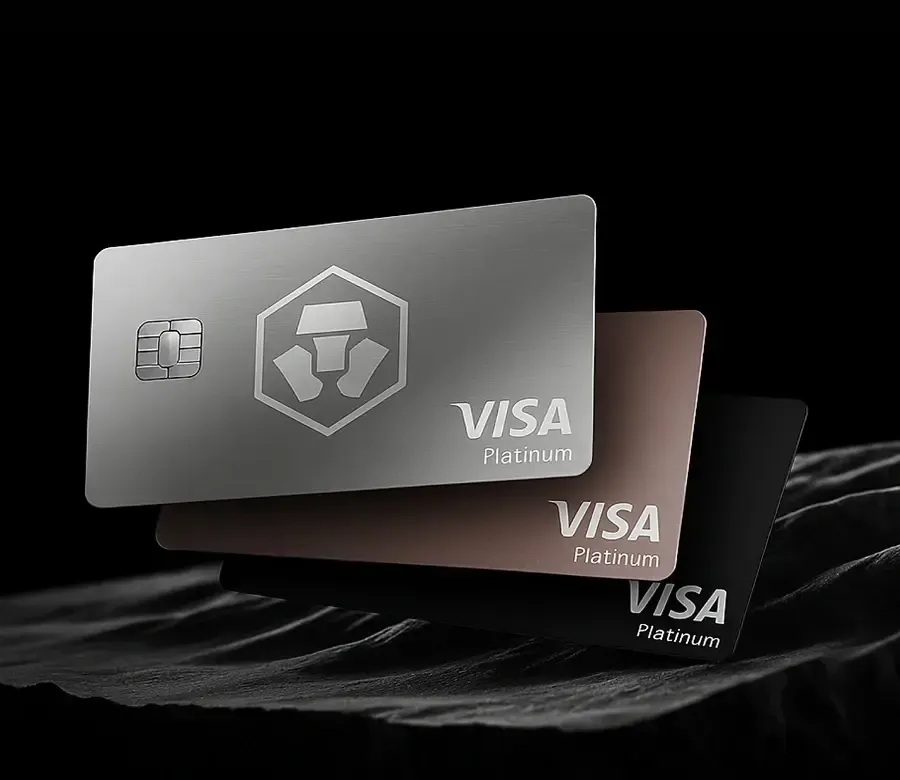
PRIVATE
4–6%
back in crypto · on every spend
CRO Lockup from €45,000
8.5% yield · 12-month staking · €450K tier at 9.5%
Zero trading fees · Unlimited volume
4.0%–6.0% back in crypto
0% foreign exchange fees
EUR Cash Yield up to 1.80% p.a.
Extra 1% p.a. on Earn allocations in CRO
VIP events · Exclusive experiences
8.5% CRO lockup rewards