
CDI.PA · Paris, France
Christian Dior
One collection changed fashion history in 1947. He had ten years to build his empire. Then died at 52.
Live Price
—
Today
—
Symbol
CDI.PA
1905
A shy boy who wanted to be an architect
Christian Dior was born in 1905 in Granville, Normandy, the son of a prosperous fertiliser manufacturer. His parents wanted him to be a diplomat; he wanted to be an architect. They compromised on nothing — Dior drifted through his twenties in Paris, selling fashion illustrations from a small gallery and nearly starving. His family fortune was lost in the Great Depression. He was 41 when he founded his own house.
1947
The New Look and the revolution
Christian Dior presented his first collection on February 12, 1947. Harper's Bazaar editor Carmel Snow looked at the long full skirts, nipped waists, and rounded shoulders and said: "It's quite a revolution, dear Christian. Your dresses have such a new look." The name stuck. After years of wartime austerity, the New Look was an explosion of femininity and luxury. Women queued around the block. Some demonstrators threw tomatoes at models wearing the dresses, arguing the extravagance was obscene when Europe was still rebuilding. Dior ignored them.
1947
The model that funded the luxury industry
Dior launched Miss Dior perfume alongside his first collection. The commercial infrastructure — licensing, perfume, accessories — that Dior's business partner Marcel Boussac insisted upon became the template for the modern luxury fashion house. Dior was not merely designing clothes; he was building a brand that could be extended across product categories. The perfume and accessories subsidised the couture, which served as advertising. This model, pioneered at Dior, is now the foundation of every major luxury group.
1957
Ten years, then nothing
Christian Dior died of a heart attack in October 1957, aged 52, ten years after founding his house. He had completed ten collections. His successor was a 21-year-old assistant named Yves Saint Laurent, whom Dior had personally chosen. Laurent's first Dior collection saved the house. His second provoked outrage. He was replaced while completing his military service. Laurent went on to found his own house. Dior continued under a series of talented designers — Marc Bohan, Gianfranco Ferré, John Galliano, Raf Simons, and Maria Grazia Chiuri — each reinterpreting Dior's founding vision for a new generation.
1984
LVMH acquires control — and Dior becomes the cornerstone of an empire
Bernard Arnault acquired a controlling stake in Christian Dior in 1984 — the transaction that launched Arnault's construction of the LVMH luxury empire. Dior became the cornerstone of a group that eventually included Louis Vuitton, Givenchy, Bulgari, Tiffany, and over seventy other luxury brands. LVMH became the most valuable luxury group in history, with a peak market capitalisation exceeding €300 billion. The shy boy from Normandy who had spent his twenties nearly starving had inadvertently created the architecture of global luxury. He had ten years to do it. It turned out to be enough.
The Numbers
market cap
$134.1B (July 2026)
revenue
$93.2B (FY2025 - consolidated)
net income
$16.1B (FY2025 - consolidated)
employees
210,000 (Group-wide)
ipo year
1947
ipo price
N/A
current ceo
Delphine Arnault
revenue forecast
$98.5B (2026 analyst consensus)
Who Owns Christian Dior
Arnault Family Group (Semyrhamis)
Almost entirely held by the Arnault family, acting as the main vehicle for controlling LVMH
Public float
Extremely small public trading availability
Frequently Asked Questions
Who founded Christian Dior?
Christian Dior was founded by Christian Dior.
When was Christian Dior founded?
Christian Dior was founded in 1946.
Where was Christian Dior founded?
Christian Dior was headquartered in Paris, France.
Why was Christian Dior created?
Christian Dior was born in 1905 in Granville, Normandy, the son of a prosperous fertiliser manufacturer. His parents wanted him to be a diplomat; he wanted to be an architect. They compromised on nothing — Dior drifted through his twenties in Paris, selling fashion illustrations from a small gallery and nearly starving. His family fortune was lost in the Great Depression. He was 41 when he founded his own house.
What does Christian Dior do?
One collection changed fashion history in 1947. He had ten years to build his empire. Then died at 52. Christian Dior changed fashion with one collection in 1947. He had ten years and then died at 52. Bernard Arnault bought the house and built LVMH around it. The full story.
How did Christian Dior grow?
Bernard Arnault acquired a controlling stake in Christian Dior in 1984 — the transaction that launched Arnault's construction of the LVMH luxury empire. Dior became the cornerstone of a group that eventually included Louis Vuitton, Givenchy, Bulgari, Tiffany, and over seventy other luxury brands. LVMH became the most valuable luxury group in history, with a peak market capitalisation exceeding €300 billion. The shy boy from Normandy who had spent his twenties nearly starving had inadvertently created the architecture of global luxury. He had ten years to do it. It turned out to be enough.
Who owns Christian Dior?
Arnault Family Group (Semyrhamis) owns 97.5%. Public float owns 2.5% (Almost entirely held by the Arnault family, acting as the main vehicle for controlling LVMH)
How much of Christian Dior does Arnault Family Group (Semyrhamis) own?
Arnault Family Group (Semyrhamis) owns 97.5% (Almost entirely held by the Arnault family, acting as the main vehicle for controlling LVMH)
When did Christian Dior go public?
Christian Dior had its IPO in 1947, with an initial share price of N/A.
How many employees does Christian Dior have?
Christian Dior has approximately 210,000 (Group-wide) employees.
What is Christian Dior's revenue?
Christian Dior generated $93.2B (FY2025 - consolidated) in revenue. Analysts forecast $98.5B (2026 analyst consensus).
What is Christian Dior's market cap?
Christian Dior has a market capitalisation of $134.1B (July 2026).
Who is the CEO of Christian Dior?
The current CEO of Christian Dior is Delphine Arnault.
Tools & Platforms
For Investors
The market doesn't care about your feelings.
But your broker's fees do.
But your broker's fees do.
Most people have a brokerage account. Fewer understand what it really costs them — in spreads, in fees, in missed instruments. Malta-regulated, direct market access, 600,000+ instruments.
Exante
Malta MFSA · 50 exchanges
Tickmill
Forex from 0.0 pips
Vantage
Multi-asset trading
Polymarket
Prediction markets
For Entrepreneurs
Opening a US company costs $300.
Most people think it's complicated. It isn't.
Most people think it's complicated. It isn't.
Most founders spend weeks on formation, banking and payments. The ones who move fast know which tools to use before they start. A US LLC, a real business account, and a way to pay people — in that order.
Mercury
Business finance · 300K+ founders
Doola
US LLC formation · YC backed
Melio
B2B payments
Xero 95% OFF
Accounting · 6 months
For C-Suite
Your competitor pays $200 less per month for EOR.
You're still on a spreadsheet.
You're still on a spreadsheet.
BVNK hired 20% of its workforce through Deel. The smartest operators aren't managing payroll complexity — they're outsourcing it. EOR in 150+ countries, multi-currency accounts, workforce payments at $200 less per month than competitors.
Deel
EOR · 150+ countries
Payoneer
$399/mo EOR · Save $200
Wise Business
40+ currencies · No hidden fees
Gusto
US payroll & benefits

PLUS
2.0%
back in crypto · on every spend
€3.99 / month
or €39.90/year (€3.32/month)
Zero trading fees up to $20K/month
2.0% back in crypto on card spend
0% foreign exchange fees
EUR Cash Yield up to 1.35% p.a.
CRO Yield up to 2.00% p.a.
Virtual Visa card · Flexible cancel

PRO
3.0%
back in crypto · on every spend
€24.99 / month
or €249.90/year (€20.82/month)
Zero trading fees up to $50K/month
3.0% back in crypto on card spend
0% foreign exchange fees
EUR Cash Yield up to 1.70% p.a.
CRO Yield up to 2.50% p.a.
Airport lounge access (Priority Pass)
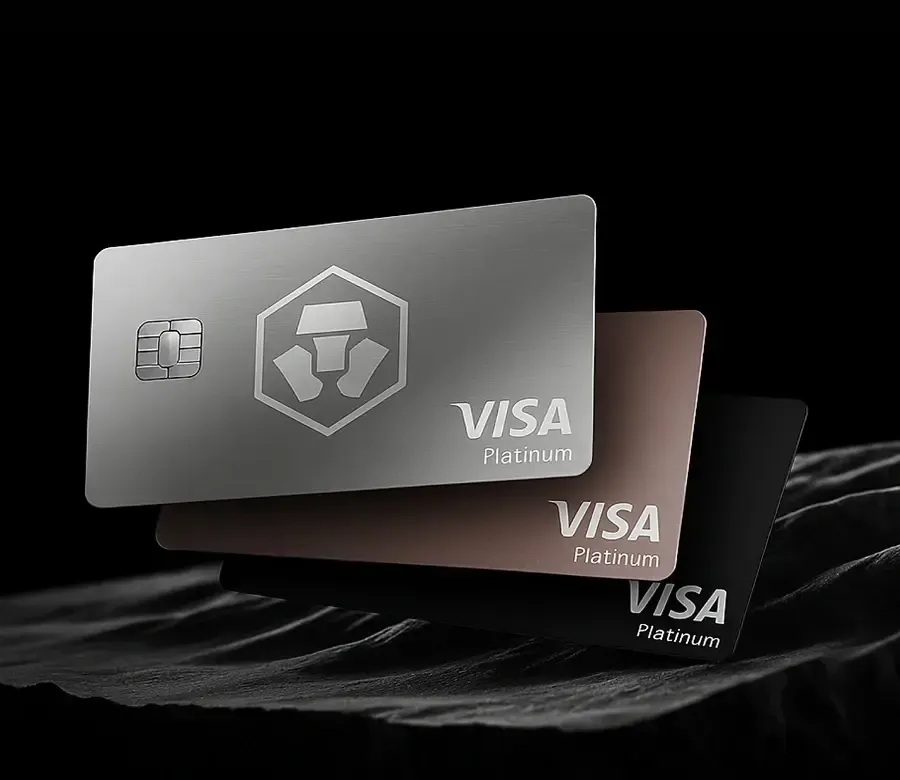
PRIVATE
4–6%
back in crypto · on every spend
CRO Lockup from €45,000
8.5% yield · 12-month staking · €450K tier at 9.5%
Zero trading fees · Unlimited volume
4.0%–6.0% back in crypto
0% foreign exchange fees
EUR Cash Yield up to 1.80% p.a.
Extra 1% p.a. on Earn allocations in CRO
VIP events · Exclusive experiences
8.5% CRO lockup rewards