
PLTR · Denver, Colorado
Palantir
Named after the all-seeing stone in Lord of the Rings. Founded with CIA money. Revenue up 56% in 2025.
Live Price
—
Today
—
Symbol
PLTR
2003
CIA seed money and a Tolkien name
Palantir was founded in 2003 by Peter Thiel and four co-founders with seed funding from In-Q-Tel — the CIA's venture capital arm. The name comes from the palantíri, the seeing stones in J.R.R. Tolkien's Lord of the Rings that allowed their users to see events happening anywhere in the world. The choice was deliberate: Palantir's software was designed to integrate disparate data sources and find patterns invisible to human analysts. The CIA needed better tools for connecting terrorist networks after September 11. Palantir was built to provide them.
2008
From Osama bin Laden to Allen Stanford
Palantir's software was reportedly used by the intelligence community to help identify the courier network that led to Osama bin Laden's compound in Abbottabad, Pakistan. The company has never officially confirmed its role, and the CIA has never acknowledged it. Separately, Palantir's pattern-recognition capabilities were used by the SEC to help identify Allen Stanford's $7 billion Ponzi scheme — demonstrating that the technology worked outside pure intelligence applications. Palantir began marketing to financial regulators and law enforcement, expanding beyond the intelligence community that had funded its creation.
2020
The IPO and the controversial contracts
Palantir went public through a direct listing in September 2020, having been profitable for two years — unusual for a high-growth technology company at IPO. Palantir's success had been built primarily on government contracts: immigration enforcement with ICE, military targeting systems, COVID-19 tracking platforms. Human rights organisations criticised several of these contracts, arguing that Palantir's data integration capabilities enabled surveillance at a scale incompatible with civil liberties. CEO Alex Karp responded that democracies need powerful tools to survive. The debate about where to draw the line has never been resolved.
2023
The AI pivot: AIP and the stock revival
Palantir launched its Artificial Intelligence Platform in April 2023, positioning the company as an AI infrastructure provider for both government and commercial clients. The AIP allowed organisations to deploy large language models on their own data — with Palantir's integration and security infrastructure managing the complexity. The stock, which had fallen over 80% from its 2021 peak, rose dramatically as investors revalued Palantir as an AI company. The company that had spent twenty years building data integration infrastructure found itself unexpectedly well-positioned for the AI era.
2025
$3.97 billion in revenue — up 56% — and a $10 billion Army contract
Palantir reported full-year 2025 revenue of approximately $3.97 billion — up 56% from 2024 — with U.S. commercial revenue growing 121% in Q3 2025 alone, driven by AIP bootcamps that compressed months-long enterprise sales cycles into five-day intensive trials. In August 2025, Palantir signed a $10 billion Army Enterprise Agreement consolidating 75 separate contracts. Q4 2025 revenue grew 70% year-on-year to $1.41 billion — its first quarter above $1 billion. The company issued 2026 revenue guidance of at least 61% growth. Palantir had entered 2020 as a secretive government contractor with an unclear commercial future; by 2026, it had become one of the fastest-growing software companies in the world, with the AI infrastructure cycle turning the CIA's 2003 investment into a public market phenomenon.
The Numbers
market cap
$118.6B (July 2026)
revenue
$2.85B (FY2025)
net income
$420M (FY2025)
employees
4,100
ipo year
2020 (Direct Listing)
ipo price
$7.25 (Reference Price)
current ceo
Alex Karp
revenue forecast
$3.42B (2026 analyst consensus)
Who Owns Palantir
Peter Thiel
Co-founder; holds significant voting class B/F shares
Vanguard Group
Largest institutional stakeholder
BlackRock
Institutional investor
Public float
Remaining shares publicly traded
Frequently Asked Questions
Who founded Palantir?
Palantir was founded by Peter Thiel, Alex Karp, Joe Lonsdale, Stephen Cohen, Nathan Gettings.
When was Palantir founded?
Palantir was founded in 2003.
Where was Palantir founded?
Palantir was headquartered in Denver, Colorado.
Why was Palantir created?
Palantir was founded in 2003 by Peter Thiel and four co-founders with seed funding from In-Q-Tel — the CIA's venture capital arm. The name comes from the palantíri, the seeing stones in J.R.R. Tolkien's Lord of the Rings that allowed their users to see events happening anywhere in the world. The choice was deliberate: Palantir's software was designed to integrate disparate data sources and find patterns invisible to human analysts. The CIA needed better tools for connecting terrorist networks after September 11. Palantir was built to provide them.
What does Palantir do?
Named after the all-seeing stone in Lord of the Rings. Founded with CIA money. Revenue up 56% in 2025. Palantir was founded with CIA money and named after the all-seeing stone in Lord of the Rings. Revenue up 56% in 2025. The full story of the world's most secretive tech company.
How did Palantir grow?
Palantir reported full-year 2025 revenue of approximately $3.97 billion — up 56% from 2024 — with U.S. commercial revenue growing 121% in Q3 2025 alone, driven by AIP bootcamps that compressed months-long enterprise sales cycles into five-day intensive trials. In August 2025, Palantir signed a $10 billion Army Enterprise Agreement consolidating 75 separate contracts. Q4 2025 revenue grew 70% year-on-year to $1.41 billion — its first quarter above $1 billion. The company issued 2026 revenue guidance of at least 61% growth. Palantir had entered 2020 as a secretive government contractor with an unclear commercial future; by 2026, it had become one of the fastest-growing software companies in the world, with the AI infrastructure cycle turning the CIA's 2003 investment into a public market phenomenon.
Who owns Palantir?
Peter Thiel owns ~8.2%. Vanguard Group owns 9.5%. BlackRock owns 6.8%. Public float owns ~75.5% (Co-founder; holds significant voting class B/F shares)
How much of Palantir does Peter Thiel own?
Peter Thiel owns ~8.2% (Co-founder; holds significant voting class B/F shares)
When did Palantir go public?
Palantir had its IPO in 2020 (Direct Listing), with an initial share price of $7.25 (Reference Price).
How many employees does Palantir have?
Palantir has approximately 4,100 employees.
What is Palantir's revenue?
Palantir generated $2.85B (FY2025) in revenue. Analysts forecast $3.42B (2026 analyst consensus).
What is Palantir's market cap?
Palantir has a market capitalisation of $118.6B (July 2026).
Who is the CEO of Palantir?
The current CEO of Palantir is Alex Karp.
Tools & Platforms
For Investors
The market doesn't care about your feelings.
But your broker's fees do.
But your broker's fees do.
Most people have a brokerage account. Fewer understand what it really costs them — in spreads, in fees, in missed instruments. Malta-regulated, direct market access, 600,000+ instruments.
Exante
Malta MFSA · 50 exchanges
Tickmill
Forex from 0.0 pips
Vantage
Multi-asset trading
Polymarket
Prediction markets
For Entrepreneurs
Opening a US company costs $300.
Most people think it's complicated. It isn't.
Most people think it's complicated. It isn't.
Most founders spend weeks on formation, banking and payments. The ones who move fast know which tools to use before they start. A US LLC, a real business account, and a way to pay people — in that order.
Mercury
Business finance · 300K+ founders
Doola
US LLC formation · YC backed
Melio
B2B payments
Xero 95% OFF
Accounting · 6 months
For C-Suite
Your competitor pays $200 less per month for EOR.
You're still on a spreadsheet.
You're still on a spreadsheet.
BVNK hired 20% of its workforce through Deel. The smartest operators aren't managing payroll complexity — they're outsourcing it. EOR in 150+ countries, multi-currency accounts, workforce payments at $200 less per month than competitors.
Deel
EOR · 150+ countries
Payoneer
$399/mo EOR · Save $200
Wise Business
40+ currencies · No hidden fees
Gusto
US payroll & benefits

PLUS
2.0%
back in crypto · on every spend
€3.99 / month
or €39.90/year (€3.32/month)
Zero trading fees up to $20K/month
2.0% back in crypto on card spend
0% foreign exchange fees
EUR Cash Yield up to 1.35% p.a.
CRO Yield up to 2.00% p.a.
Virtual Visa card · Flexible cancel

PRO
3.0%
back in crypto · on every spend
€24.99 / month
or €249.90/year (€20.82/month)
Zero trading fees up to $50K/month
3.0% back in crypto on card spend
0% foreign exchange fees
EUR Cash Yield up to 1.70% p.a.
CRO Yield up to 2.50% p.a.
Airport lounge access (Priority Pass)
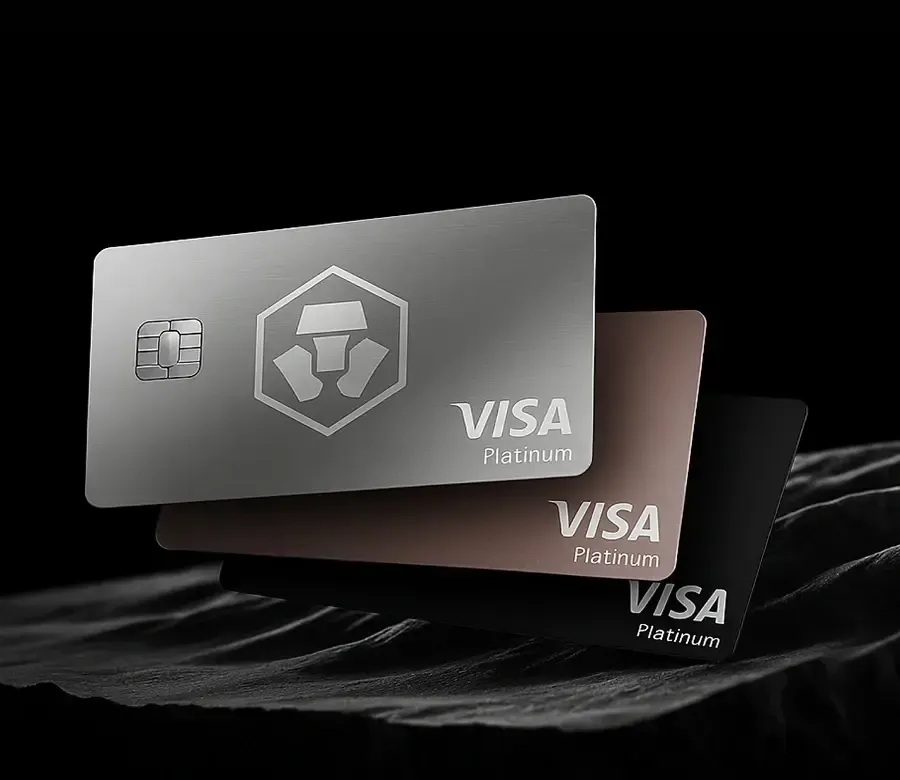
PRIVATE
4–6%
back in crypto · on every spend
CRO Lockup from €45,000
8.5% yield · 12-month staking · €450K tier at 9.5%
Zero trading fees · Unlimited volume
4.0%–6.0% back in crypto
0% foreign exchange fees
EUR Cash Yield up to 1.80% p.a.
Extra 1% p.a. on Earn allocations in CRO
VIP events · Exclusive experiences
8.5% CRO lockup rewards