
Hub
Off The Record
Everyone Thinks Jensen Huang Went From Denny's to Nvidia. There's a Bit They're Leaving Out.
automation · Off The Record
Everyone Thinks Jensen Huang Went From Denny's to Nvidia. There's a Bit They're Leaving Out.

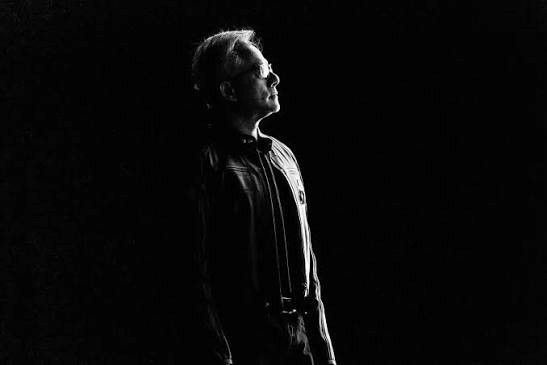
Everyone Thinks Jensen Huang Went From Denny's to Nvidia. There's a Bit They're Leaving Out.
Another day on LinkedIn. People saving the world, companies learning big lessons, founders showcasing their humility. Lies, half-truths, and carefully edited realities. And this week's most popular story: Jensen Huang washed dishes, founded Nvidia, became the world's most important CEO. Clean. Inspirational. And missing a few details that are considerably more interesting. There is a version of Jensen Huang's story that circulates on LinkedIn approximately every three weeks. It goes like this: Jensen washed dishes at Denny's. Jensen founded Nvidia. Jensen is now worth $142 billion and wears a leather jacket to everything. The moral is usually something about humble beginnings and never giving up. It is true. It is also missing several chapters that are considerably more interesting than the inspirational poster version. Let me tell you the real story.First, Kentucky
Before the dishes, before AMD, before Nvidia, before the leather jacket — Jensen Huang arrived in the United States at age nine with his older brother. Their parents, a chemical engineer and a schoolteacher from Taiwan, sent them ahead to live with an uncle in Tacoma, Washington, while the family made its way from Thailand. The uncle sent them to a boarding school in Kentucky — one which turned out to be a reform school for "difficult" children, rather than the prestigious prep school the uncle had intended. Huang was forced to clean toilets every day while his brother worked on a tobacco farm. The boys were relentlessly bullied, called ethnic slurs, and threatened with knives. He was nine years old. He cleaned toilets. He learned table tennis — placing third in junior doubles at the U.S. Open — and, by his own account, developed the work ethic that would define everything that followed. This is the part LinkedIn leaves out. Not because it's not inspiring — it's arguably the most inspiring part — but because "cleaned toilets at a reform school in Kentucky at age nine after being separated from his parents" doesn't fit as neatly into a bullet point as "dishwasher at Denny's."Then AMD. Yes, AMD.
Here is what LinkedIn reliably omits from the Jensen Huang narrative: before Nvidia, there was AMD. After graduating from Oregon State in 1984, Jensen Huang began his career at AMD as a chip designer. He stayed for approximately one year before moving to LSI Logic. One year at AMD. The same AMD that Jensen Huang's company has been competing with, directly and aggressively, for thirty years. The same AMD that is currently run by Lisa Su — who is, Jensen Huang's first cousin. Let that sit for a moment. The two most important semiconductor executives on earth are cousins. One runs Nvidia, worth $3.6 trillion. The other runs AMD, Nvidia's closest competitor. They are both originally from Taiwan, share family ties, but did not know each other growing up and it appears they see each other mainly as competitors rather than cousins. Imagine the family dinners. Imagine the seating arrangements. Imagine someone's grandmother trying to get both of them to stop talking about GPUs for five minutes and just eat. Jensen spent a year at AMD learning chip design, then moved to LSI Logic, where he rose to become Director of CoreWare. He studied for his Stanford master's degree at night while working full time. Then, in 1993, he co-founded Nvidia with two colleagues from LSI, at a Denny's booth in San Jose, with $600 in total startup capital — $200 each. He had worked at the restaurant as a dishwasher at age 15. He founded his company there at 30. The symbolism is either beautiful or extremely convenient, depending on how cynical you are feeling.The Japanese billionaire who missed Moby Dick
Now we get to Masayoshi Son. The head of SoftBank. A man who does not do things in half measures and whose relationship with Nvidia is one of the great financial tragedies of the modern era. SoftBank bought a 4.9% stake in Nvidia in 2017 for about $4 billion. Then the crypto mining bubble imploded and took Nvidia's stock down 50%. Son decided to sell. He made a $3 billion profit and moved on. Reasonable. Except that stake would have been worth $150 billion by 2024. Son himself called it "missing a big fish." This is, as one analyst correctly noted, an extraordinary understatement. He missed Moby Dick. So he bought back in around 2020, rebuilt a position worth $3 to $5 billion, and held it long enough to fund his next obsession. Then he sold again. In 2025, SoftBank sold its entire $5.8 billion Nvidia stake to go all-in on AI infrastructure. He sold Nvidia to invest in AI. Nvidia is AI. This is the financial equivalent of selling your tickets to the concert to buy a poster of the band. Masayoshi Son has sold Nvidia twice. He has watched the position he sold appreciate to $150 billion once and counting. He is, by any measure, one of the most extraordinary investors in technology history. And his relationship with Jensen Huang's company is the thing that will follow him in financial history forever.What Nvidia actually is
The LinkedIn story treats Nvidia as the inevitable outcome of Jensen's vision. It was not. In its early years, Nvidia nearly collapsed. Several product failures almost led to the company's demise. Huang made a bold choice: he shifted Nvidia toward programmable graphics. This decision resulted in the creation of the GPU. The GPU was not the plan. The GPU was the pivot. The company that is now the most valuable semiconductor business in history and the first to reach a $5 trillion market cap was, in the early 1990s, a company that wasn't sure it would survive its first product cycle. Nvidia became the first company to reach a market capitalisation of over $5 trillion in October 2025. Jensen Huang, who owns approximately 3.5% of the company, has a net worth of around $142 billion. He earned his Stanford master's degree attending night classes while working full time. He started a company with $600 at a restaurant where he had once washed dishes. His cousin runs his biggest competitor. His former biggest investor sold his position twice and missed $150 billion. And every three weeks, LinkedIn discovers that he used to wash dishes and concludes that this is the important part of the story. --- Nvidia's GPUs power every AI model that FreeMalta uses — including Claude, which runs the News Beast newsroom and the Off The Record editorial layer. The Web Intelligence page covers the AI infrastructure stack. The Prediction Markets page is where you can bet on what Nvidia's market cap will be by the end of 2026 — if you're feeling bold.
Want to reach Malta's most engaged business audience?
Media Kit
Tools used in this piece
The Network

Malta Insider
Official OpenAI Select Partner. Enterprise AI deployment, Fractional CAIO and business consulting for Malta.
maltainsider.com →
Gambity
The first AI-native newsroom for prediction markets. Eight AI journalists. 30+ daily articles.
Explore Gambity →

News Beast
Malta's AI-native newsroom. 10 personas, 22 categories, updated every hour. Cloudflare Worker on the edge.
Read News Beast →