
Google Search Console Last Update: 50 Hours Ago. Why Isn’t It Updating?
Google Knows Everything. Except What Happened to My Website Yesterday. Google Search Console currently has something to tell me. Last update: 50.5 hours ago. Thank you, Google. Very...

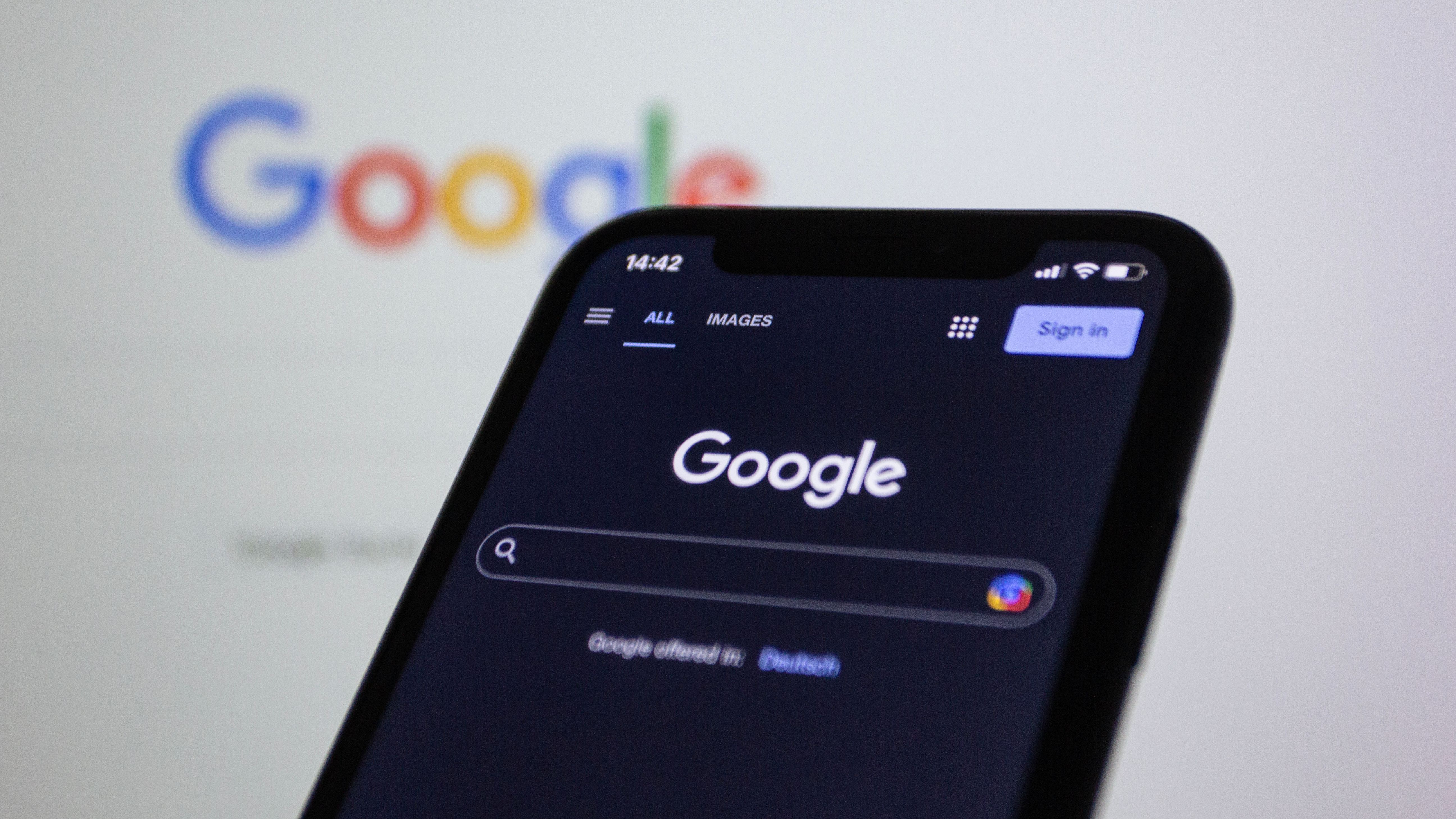
Google Knows Everything. Except What Happened to My Website Yesterday.
Google Search Console currently has something to tell me.
Last update: 50.5 hours ago.
Thank you, Google. Very specific.
I appreciate the half hour. It adds a certain scientific precision to having absolutely no fresh information.
I run FreeMalta on my own. I write, build, research, fix things and occasionally discover that two perfectly respectable English words have decided to become one word on mobile.
There is always something to do.
And after doing it, I like to see what happened. Which pages people found. Which questions brought them here. Whether something I spent hours improving has started reaching anyone.
For that, I open Search Console.
Apparently, Search Console is still thinking about Thursday.
Fifty hours gives you plenty of time to invent a disaster
A dashboard goes quiet and your imagination becomes remarkably productive.
Was it something I changed?
Did Google stop indexing?
Did the spam update hit me?
Should I touch something? Should I absolutely not touch anything?
This is how a small timestamp manages to become the most influential person in the room.
If you arrived here after searching “Google Search Console last update 50 hours ago” or “why is Google Search Console not updating,” I understand the question.
But the timestamp alone cannot tell us whether a website has lost rankings or received a penalty.
Google’s Search Console documentation explains that data is collected continuously but published at intervals, with collected data normally available within two to three days.
Meanwhile, the newer 24-hour performance view was designed to show recent information with only a few hours of delay.
So there is an important distinction between waiting for processed daily data and wondering why the fresher view has gone quiet.
Fifty hours feels long when you are accustomed to seeing something newer. It still needs context before it becomes a diagnosis.
My dashboard showed 50.5 hours when I checked on 11 October. I can report that. I cannot use it to announce that Google has broken everybody’s reporting.
Although I would appreciate Google providing a little more explanation before my imagination starts managing the company.
The spam update took almost two weeks. Google said it might.
The timing makes the question more interesting.
Google’s September 2026 spam update began on 24 September and finished on 8 October. It applied globally and across all languages.
The official announcement said the rollout could take up to two weeks.
That is approximately how long it took.
Why nearly two weeks this time?
Google has not explained the specific operational reasons in its public rollout notice. We have the dates and the announced window. We do not have a detailed account of what occupied the days between them.
I know. An unsatisfying answer.
A more exciting one would involve a secret AI purge, an enormous recalculation and somebody inside Google pressing a button labelled “small publishers.”
Unfortunately, I have no evidence for the button.
Nor have I found an official explanation connecting this particular Search Console delay to the spam update. The dates are close together. That makes the connection tempting. It does not establish it.
I would rather leave that question open than publish a confident explanation I manufactured to fill the silence.
There is already quite enough of that online.
What is Google actually trying to remove?
Google describes a spam update as a significant improvement to its systems for detecting search spam.
Those systems operate all the time. An announced update marks a notable change in how they work. One of them, SpamBrain, uses AI.
Which makes the familiar “Google versus AI” storyline slightly more entertaining.
The underlying problem is straightforward: search results become less useful when people manufacture pages primarily to capture rankings, with little worthwhile waiting behind the click.
Google’s spam policies cover practices including link spam, doorway pages, expired-domain abuse and scaled content abuse.
That last one deserves attention.
Its definition concerns large amounts of unoriginal, low-value content created primarily to manipulate rankings. The production method does not provide an exemption. AI, human labour or some combination of the two can produce it.
You can employ twenty people to write rubbish.
The payroll does not make the rubbish more useful.
And you can use AI to help produce something worth reading. The presence of a model in the workflow does not automatically turn the result into spam.
The question is what you made, why you made it and what someone gains by arriving there.
Yes, I use AI. You may have noticed.
FreeMalta would look very different without it.
I use AI for research, writing, development and the endless small jobs that appear when one person decides to build considerably more than one person should sensibly attempt.
I also spend time correcting it.
A beautiful sentence can contain a terrible claim. A source can be real without supporting the conclusion attached to it. A polished article can repeat itself so elegantly that you almost fail to notice it has said the same thing four times.
The work still needs judgement.
Google’s published guidance on AI-generated content allows appropriate use of AI and automation. Using it primarily to manipulate search rankings falls under its spam policies.
That distinction makes sense to me.
I want people to discover FreeMalta through search. Of course I do. I am writing an article that answers a question people might type into Google.
Wanting to be found is perfectly compatible with having something useful waiting when somebody finds you.
What bothers me is the assumption that using AI tells you everything you need to know about the work.
It tells you something about the tools.
You still have to read the page.
Please give me a reason before I start fixing things
For now, I am not treating a stale timestamp as instructions to dismantle my website.
I would check the report’s available dates, property and filters first. A separate concern about a particular page deserves a separate investigation.
Google also maintains a Search Console data anomalies page. When I checked it for this article, there was no October notice explaining this particular delay.
So the explanation remains open.
That is frustrating, especially after a ranking update. You want to understand what happened while the dashboard is asking you to be patient without actually asking.
For a large company, two days of uncertainty might disappear into the weekly report.
For someone building alone, those two days contain quite a lot of work.
A page improved. A story published. Something finally made to behave properly on a phone.
You want to know whether people are finding it.
And I think Google could make that waiting easier with a little more communication. Tell me the report is delayed. Tell me which data is affected. Give me a useful sentence beside the precise number.
I can handle waiting.
I would just prefer not to spend the waiting period interviewing every possible disaster.
The website is still here. There is still work I want to do.
Search Console can join us whenever it is ready.
Ilhan Irem Yuce
Founder of FreeMalta and MaltaInsider. Living and building in Malta for 12 years. These pieces come from asking questions, making things and paying attention to what the polished version leaves out.
Explore the work
SEO Is Not Dead. It Just Stopped Being Enough.
I was in Taxbiex. It was evening. I was sitting at the marina — the kind of evening where the water is flat and the light is doing something specific that only happens in Malta at that...

Hugging Face Is Worth $13 Billion. Here Is What You Are Actually Buying.
There is a website where three million AI models live. Researchers upload them there. Developers download them from there. Companies build products on top of them. Startups test their...

Wyoming vs Delaware: The Real Cost Difference for Non-US Founders
Delaware is the name everyone's heard. Wyoming is the one that actually saves non-resident founders money. Here's the real five-year math, not the marketing version.
Something worth
saying belongs here.
Bring the experience, the decision and the evidence. Paid stories are labelled; the reader should never have to guess.
Discuss a partner story