
AliExpress vs Temu
Founding story, key facts and history — side by side.
AliExpress
The global consumer pipeline of the Alibaba empire, bypassing wholesale middlemen to link worldwide households directly to Chinese manufacturing hubs.
| Founded | 2010 |
| Founders | Jack Ma (Via Alibaba Group) |
| HQ | Hangzhou, Zhejiang, China |
| Symbol | BABA |
VS
Temu
A $2 phone case. "Shop Like a Billionaire." Three Super Bowl ads. Factory-direct from China. 900 million downloads. Then one US customs rule change almost broke the whole model.
| Founded | 2022 |
| Founders | PDD Holdings / Colin Huang (founder) |
| HQ | Boston, Massachusetts (parent: Shanghai, China) |
| Symbol | PDD (Nasdaq) |
The Story — Side by Side
2010
The B2C cross-border wholesale monetization push
AliExpress was launched by corporate internet titan Alibaba Group as a dedicated retail marketplace designed to help small Chinese factories sell directly to individual consumers worldwide. Unlike its domestic sister site Taobao, AliExpress barred domestic buyers within China, focusing exclusively on capturing international transactional volumes. The platform grew exponentially in developing markets like Russia and Brazil, where consumers willingly traded long shipping times for absolute factory-floor pricing.
2018
The Cainiao international smart logistics grid weaponization
To accelerate its global delivery speeds and compete with Amazon Prime, AliExpress leveraged Alibaba's logistics arm, Cainiao, to construct a massive global infrastructure network. The firm established dedicated automated sorting hubs in Liege, Madrid, and Moscow, operating regular chartered flights to bypass traditional air freight constraints. This infrastructure investment transformed the platform from a slow, unpredictable mailing service into a reliable, trackable global shipping engine.
2023
The Choice service launch and the global advertising blitz
To counter the meteoric competitive rise of Temu, AliExpress launched its premium "Choice" service tier globally, taking absolute operational control over merchant pricing, shipping, and customer returns. The company launched massive multi-million dollar global marketing campaigns, securing historic sponsorships like UEFA Euro 2024 to reposition its corporate image. This business model shift insulated the firm against low-quality marketplace complaints by guaranteeing 5-day global shipping.
2026
The record international cross-border volume and AI integration
By mid-2026, AliExpress served as the primary international growth vector for Alibaba Group, driving cross-border e-commerce orders to record volumes worldwide. Under the strategic direction of Alibaba International Digital Commerce CEO Jiang Fan, the platform successfully integrated advanced generative AI translation and localized live-stream shopping tools across Europe and the Americas. The platform defended its high global transaction margins despite intense cross-border regulatory tariff scrutinies.
2015
Pinduoduo — group buying for rural China — and Colin Huang's origin
Temu's origin story begins with Pinduoduo, founded in 2015 by Colin Huang — a Chinese entrepreneur who had worked at Microsoft and Google in the US before returning to China. Huang identified a market no one was serving well: China's rural and lower-income consumers who felt excluded from Alibaba and JD.com's urban-premium orientation. His model was social group buying: consumers recruited friends to buy the same product together, unlocking lower prices through bulk. The mechanism spread virally through WeChat. By 2021, Pinduoduo had over 800 million active users — surpassing Alibaba in annual active buyers — and was generating billions in profit from Chinese domestic commerce. Those profits funded what came next.
2022
Temu launches in America — "Team Up, Price Down"
PDD Holdings launched Temu in the United States in September 2022. The name reportedly derived from "Team Up, Price Down" — a reference to Pinduoduo's group-buying roots, though Temu operated as a direct marketplace. The model was structurally radical: rather than buying inventory and reselling it (Amazon's model), Temu connected consumers directly to Chinese manufacturers, eliminating every middleman in the retail chain. A $2 phone case. A $5 summer dress. Electronics at prices that American retailers found literally impossible to match. The reason was regulatory: the US de minimis exemption allowed packages valued under $800 to enter duty-free. Temu shipped individual packages directly from Chinese factories, paying 0% import duty while American retailers sourcing the same products paid 7.5-25%.
2023
Most downloaded app in 15 countries — and $8-9 billion in losses
By end of 2023, Temu had been downloaded over 250 million times and was the most downloaded shopping app in 15 countries simultaneously — including the US, UK, Germany, Japan, and Brazil. Internally, PDD knew the growth was purchased at a loss: Temu lost an estimated $8-9 billion in 2023, selling many products at or below cost to acquire users. The logic was classic land-grab economics: acquire users at any cost now, optimise margins when the flywheel turns. Pinduoduo's domestic Chinese profits subsidised the losses. In February 2024, Temu ran three 30-second Super Bowl ads and two additional spots — one of the largest Super Bowl advertising investments in history — with the slogan "Shop Like a Billionaire."
2024
416 million monthly active users — PDD parent $54 billion revenue
By end of 2024, Temu had been downloaded over 483 million times globally, with 416 million monthly active users. PDD Holdings reported total revenue of $54 billion for fiscal 2024 — a 59% increase — with net income of $15.4 billion, making it one of the most profitable technology companies in China. Temu's contribution to this figure was not separately disclosed but estimated at $15-18 billion. Colin Huang, PDD's founder, briefly became the richest person in China. Temu expanded to 90+ markets, competed directly with Amazon in every major Western country, and drove Forever 21 — which explicitly named Temu and Shein — to bankruptcy for the second time.
2025
The de minimis exemption ends — and Temu adapts
In May 2025, the US government closed the de minimis exemption for imports from China — the regulatory loophole that had powered Temu's entire US model. Temu's prices doubled overnight on many products. The app fell from #3 to #85 in the App Store within two weeks. US daily users fell approximately 48% compared to March 2025. Temu responded by transitioning US orders to local warehouse fulfilment, recruiting non-Chinese sellers, and refocusing growth on European markets where the de minimis equivalent remained open until mid-2026. PDD Holdings' stock fell roughly 30% from its peak. The regulatory arbitrage that had powered three years of hypergrowth was over; the question was whether Temu had acquired enough loyal users to sustain a higher-cost model.
Tools & Platforms
For Investors
The market doesn't care about your feelings.
But your broker's fees do.
But your broker's fees do.
Most people have a brokerage account. Fewer understand what it really costs them — in spreads, in fees, in missed instruments. Malta-regulated, direct market access, 600,000+ instruments.
Exante
Malta MFSA · 50 exchanges
Tickmill
Forex from 0.0 pips
Vantage
Multi-asset trading
Polymarket
Prediction markets
For Entrepreneurs
Opening a US company costs $300.
Most people think it's complicated. It isn't.
Most people think it's complicated. It isn't.
Most founders spend weeks on formation, banking and payments. The ones who move fast know which tools to use before they start. A US LLC, a real business account, and a way to pay people — in that order.
Mercury
Business finance · 300K+ founders
Doola
US LLC formation · YC backed
Melio
B2B payments
Xero 95% OFF
Accounting · 6 months
For C-Suite
Your competitor pays $200 less per month for EOR.
You're still on a spreadsheet.
You're still on a spreadsheet.
BVNK hired 20% of its workforce through Deel. The smartest operators aren't managing payroll complexity — they're outsourcing it. EOR in 150+ countries, multi-currency accounts, workforce payments at $200 less per month than competitors.
Deel
EOR · 150+ countries
Payoneer
$399/mo EOR · Save $200
Wise Business
40+ currencies · No hidden fees
Gusto
US payroll & benefits
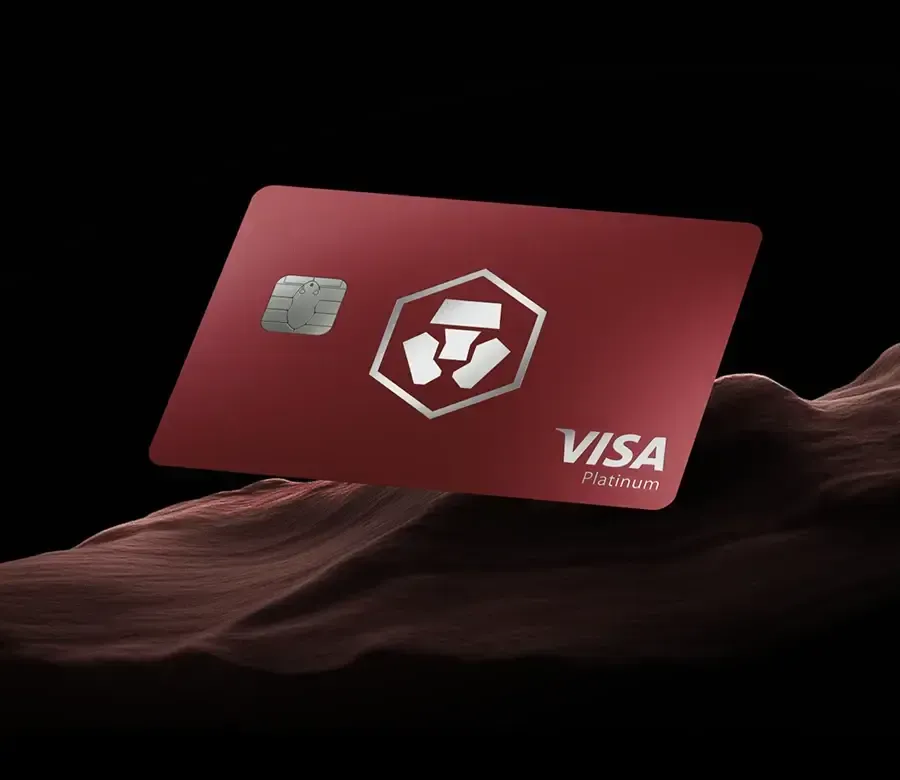
PLUS
2.0%
back in crypto · on every spend
€3.99 / month
or €39.90/year (€3.32/month)
Zero trading fees up to $20K/month
2.0% back in crypto on card spend
0% foreign exchange fees
EUR Cash Yield up to 1.35% p.a.
CRO Yield up to 2.00% p.a.
Virtual Visa card · Flexible cancel

PRO
3.0%
back in crypto · on every spend
€24.99 / month
or €249.90/year (€20.82/month)
Zero trading fees up to $50K/month
3.0% back in crypto on card spend
0% foreign exchange fees
EUR Cash Yield up to 1.70% p.a.
CRO Yield up to 2.50% p.a.
Airport lounge access (Priority Pass)
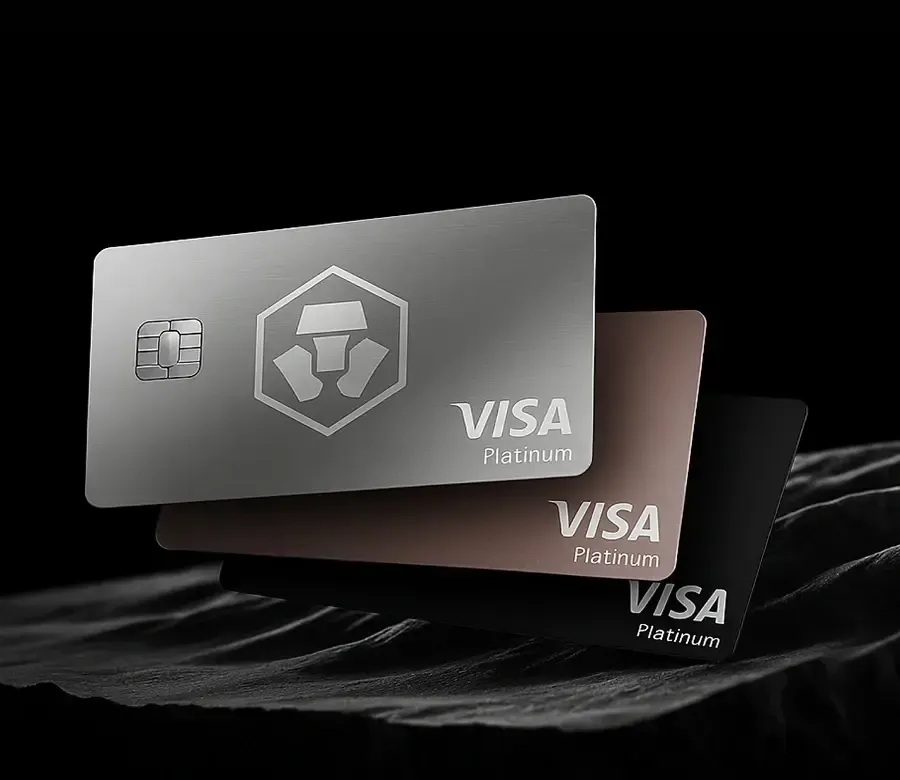
PRIVATE
4–6%
back in crypto · on every spend
CRO Lockup from €45,000
8.5% yield · 12-month staking · €450K tier at 9.5%
Zero trading fees · Unlimited volume
4.0%–6.0% back in crypto
0% foreign exchange fees
EUR Cash Yield up to 1.80% p.a.
Extra 1% p.a. on Earn allocations in CRO
VIP events · Exclusive experiences
8.5% CRO lockup rewards