
Arm Holdings vs NVIDIA
Founding story, key facts and history — side by side.
Arm Holdings
Founded in a barn in Cambridge. Never manufactured a single chip. Its architecture is inside every smartphone on Earth.
| Founded | 1990 |
| Founders | Robin Saxby, Hermann Hauser, Acorn Computers, Apple, VLSI Technology |
| HQ | Cambridge, United Kingdom |
| Symbol | ARM |
VS
NVIDIA
Designed for gaming. Accidentally built the engine of the AI revolution.
| Founded | 1993 |
| Founders | Jensen Huang, Chris Malachowsky, Curtis Priem |
| HQ | Santa Clara, California |
| Symbol | NVDA |
The Story — Side by Side
1990
A barn in Cambridge and three unlikely partners
ARM — Advanced RISC Machines — was founded in November 1990 as a joint venture between Acorn Computers, Apple, and VLSI Technology in a barn in Cambridge, England. Apple needed an energy-efficient processor for its Newton personal digital assistant; Acorn had developed the ARM processor architecture but lacked resources to commercialise it alone; VLSI provided manufacturing expertise. The company began with 12 employees, no revenue, and an architecture that would eventually run inside more devices than any other processor design in history.
1993
The licensing model that changed semiconductors
ARM adopted a business model unusual in the semiconductor industry: rather than manufacturing chips, ARM licensed its processor architecture to other companies who incorporated it into their own chip designs. ARM earned royalties on every chip sold using its architecture. As the mobile phone market grew from millions to billions of devices, the royalty stream became extraordinary. ARM's design appeared in Nokia phones, Apple iPhones, Samsung Galaxys, and virtually every other smartphone.
1998
IPO and the mobile revolution bet
ARM went public in April 1998 simultaneously on the London Stock Exchange and NASDAQ. The IPO raised £170 million. ARM's stock rose over 1,000% during the dot-com boom as investors recognised that every mobile device would need an energy-efficient processor — and ARM's architecture was uniquely positioned to provide it. The company had bet on mobile computing before most investors understood what mobile computing would become.
2016
SoftBank acquires ARM for £24 billion
Masayoshi Son's SoftBank acquired ARM in July 2016 for £24.3 billion — at the time the largest ever acquisition of a European technology company. Son described ARM as the "brain" of the internet of things. British politicians worried about a national technology champion passing into foreign ownership. Son promised to double ARM's UK workforce. ARM continued to operate with significant autonomy under SoftBank ownership. Nvidia subsequently attempted to acquire ARM from SoftBank for $40 billion in 2020, but regulators in the United States, United Kingdom, European Union, and China all raised concerns, and the deal collapsed in February 2022.
2023
$4 billion in FY2025 revenue — and 50% of data center CPUs
ARM went public on NASDAQ in September 2023 in the largest technology IPO of the year, valuing the company at approximately $55 billion. Full-year FY2025 revenue (ending March 2025) reached a record $4.007 billion — up 20.6% — with net profit rising 313%, as ARM crossed the $1 billion quarterly revenue milestone for the first time. ARM expected that approximately 50% of all new server chips shipped to top hyperscalers in 2025 would be ARM-based — a dramatic shift from the Intel/AMD dominance of prior decades. Google, Microsoft, and Amazon were all building data center chips using ARM architecture. The barn in Cambridge had become one of the most valuable technology companies in the world — having never manufactured a single chip.
1993
Founded at a Denny's diner
Jensen Huang, Chris Malachowsky, and Curtis Priem founded NVIDIA in 1993. The founding meeting took place at a Denny's restaurant in San Jose — a detail Huang has since made famous in dozens of interviews. The company's original mission was simple: build better graphics chips for video games. Nobody at that table was thinking about artificial intelligence.
1995
First chip, first failure
NVIDIA's first product, the NV1, was a commercial disaster. It used a quadratic texture mapping approach that was incompatible with the emerging Direct3D standard from Microsoft. Sega, NVIDIA's primary customer, cancelled its contract. The company nearly went under. Jensen Huang has said that the near-death experience of the NV1 taught NVIDIA to make bets that were irreversible — and to make them early.
1999
The GPU is born
NVIDIA introduced the GeForce 256 in 1999 and coined the term "GPU" — Graphics Processing Unit. The GeForce 256 could perform 50 million triangles per second, a figure that had previously required a supercomputer. NVIDIA went public the same year at $12 per share. Nobody predicted what the GPU would eventually become.
2006
CUDA: the accidental revolution
NVIDIA released CUDA in 2006 — a programming platform that allowed developers to use the GPU for general computation, not just graphics. Almost nobody cared at first. Then researchers used CUDA to train a neural network called AlexNet in 2012, dramatically outperforming every other approach in an image recognition contest. The AI era had begun, and NVIDIA had accidentally built its engine.
2024
The Blackwell era: $215 billion in a single year
NVIDIA's Blackwell GPU architecture, launched in 2024, became the most in-demand piece of hardware in history. Every major cloud provider — Amazon, Google, Microsoft, Meta — was queuing for Blackwell chips. In fiscal year 2026 (ending January 2026), NVIDIA generated $215.9 billion in revenue, up 65% from the prior year. Data centre revenue alone hit $62.3 billion in a single quarter. Jensen Huang announced visibility into $500 billion in Blackwell and Rubin revenue through end of 2026.
2025
$3 trillion and the most valuable company on earth
By late 2025, NVIDIA had crossed $3 trillion in market capitalisation, briefly overtaking Apple and Microsoft as the world's most valuable company. The H200 and Blackwell chips were sold out across every major cloud provider. Q3 fiscal 2026 revenue hit a record $57 billion — up 62% year-over-year — with Jensen Huang declaring: "Blackwell sales are off the charts, and cloud GPUs are sold out. We've entered the virtuous cycle of AI." The company that had been founded to make video game graphics had become the backbone of the entire AI industry.
Tools & Platforms
For Investors
The market doesn't care about your feelings.
But your broker's fees do.
But your broker's fees do.
Most people have a brokerage account. Fewer understand what it really costs them — in spreads, in fees, in missed instruments. Malta-regulated, direct market access, 600,000+ instruments.
Exante
Malta MFSA · 50 exchanges
Tickmill
Forex from 0.0 pips
Vantage
Multi-asset trading
Polymarket
Prediction markets
For Entrepreneurs
Opening a US company costs $300.
Most people think it's complicated. It isn't.
Most people think it's complicated. It isn't.
Most founders spend weeks on formation, banking and payments. The ones who move fast know which tools to use before they start. A US LLC, a real business account, and a way to pay people — in that order.
Mercury
Business finance · 300K+ founders
Doola
US LLC formation · YC backed
Melio
B2B payments
Xero 95% OFF
Accounting · 6 months
For C-Suite
Your competitor pays $200 less per month for EOR.
You're still on a spreadsheet.
You're still on a spreadsheet.
BVNK hired 20% of its workforce through Deel. The smartest operators aren't managing payroll complexity — they're outsourcing it. EOR in 150+ countries, multi-currency accounts, workforce payments at $200 less per month than competitors.
Deel
EOR · 150+ countries
Payoneer
$399/mo EOR · Save $200
Wise Business
40+ currencies · No hidden fees
Gusto
US payroll & benefits
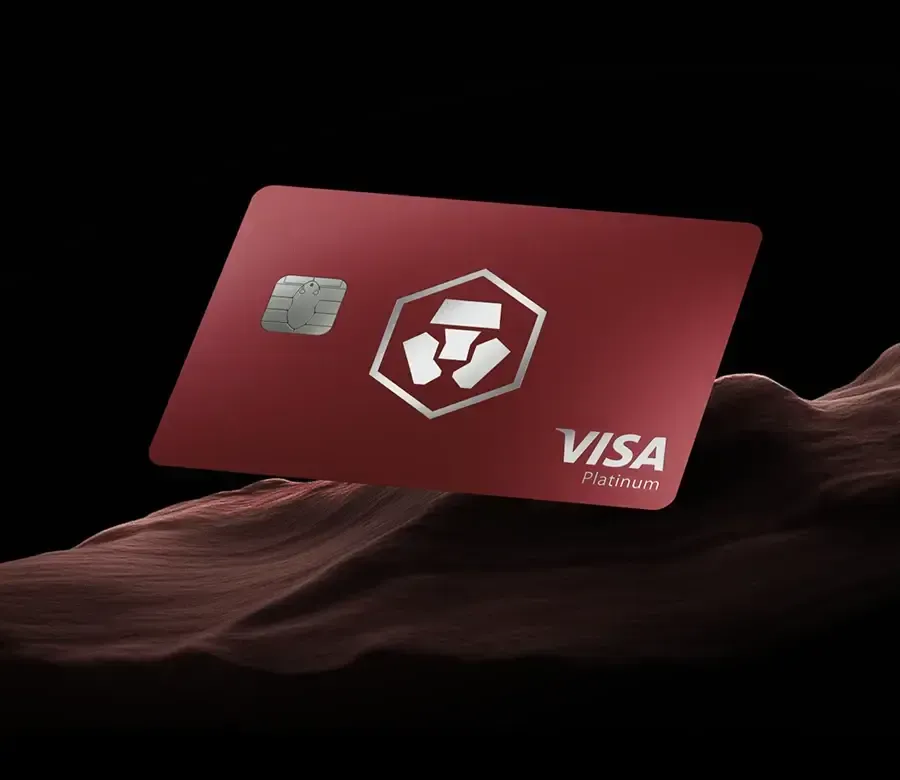
PLUS
2.0%
back in crypto · on every spend
€3.99 / month
or €39.90/year (€3.32/month)
Zero trading fees up to $20K/month
2.0% back in crypto on card spend
0% foreign exchange fees
EUR Cash Yield up to 1.35% p.a.
CRO Yield up to 2.00% p.a.
Virtual Visa card · Flexible cancel
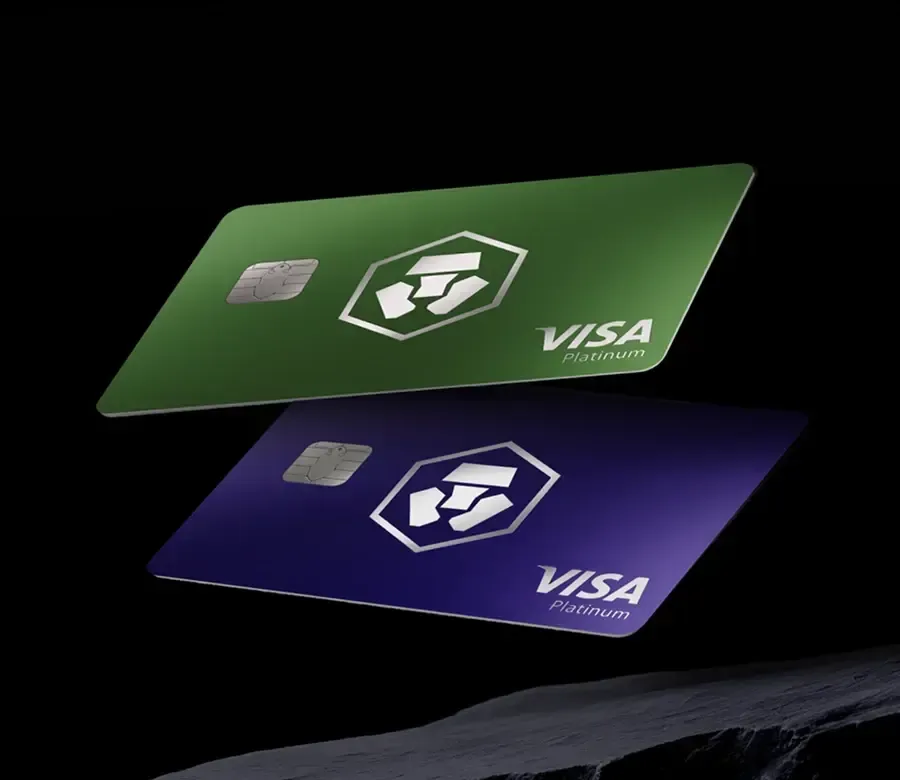
PRO
3.0%
back in crypto · on every spend
€24.99 / month
or €249.90/year (€20.82/month)
Zero trading fees up to $50K/month
3.0% back in crypto on card spend
0% foreign exchange fees
EUR Cash Yield up to 1.70% p.a.
CRO Yield up to 2.50% p.a.
Airport lounge access (Priority Pass)
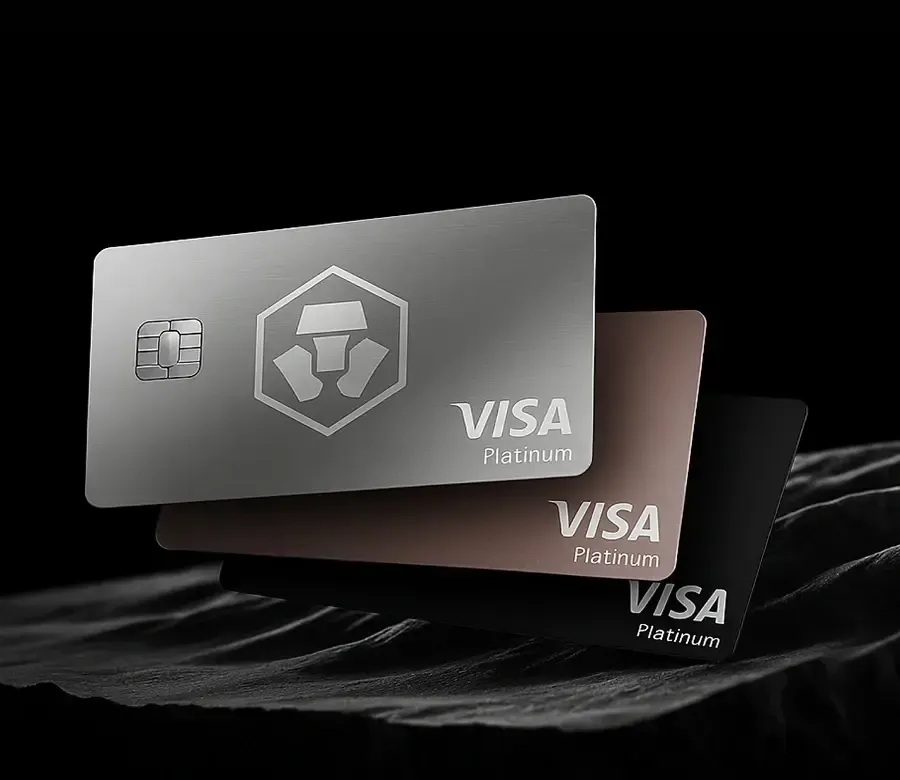
PRIVATE
4–6%
back in crypto · on every spend
CRO Lockup from €45,000
8.5% yield · 12-month staking · €450K tier at 9.5%
Zero trading fees · Unlimited volume
4.0%–6.0% back in crypto
0% foreign exchange fees
EUR Cash Yield up to 1.80% p.a.
Extra 1% p.a. on Earn allocations in CRO
VIP events · Exclusive experiences
8.5% CRO lockup rewards