
Bayer vs Roche Holding
Founding story, key facts and history — side by side.
Bayer
The German scientific industrial giant that survived two world wars, created Aspirin, and then risked everything on a controversial agricultural mega-merger.
| Founded | 1863 |
| Founders | Friedrich Bayer, Johann Friedrich Weskott |
| HQ | Leverkusen, Germany |
| Symbol | BAYN |
VS
Roche Holding
The Swiss pharmaceutical titan that merged oncology dominance with high-end diagnostics to build a closed-loop medical data empire.
| Founded | 1896 |
| Founders | Fritz Hoffmann-La Roche |
| HQ | Basel, Switzerland |
| Symbol | ROG |
The Story — Side by Side
1863
The synthetic dye and aspirin origins
Bayer started as a small German synthetic dye manufacturer. In the late 19th century, the company’s chemists discovered that many of the chemical properties used in dyes were also useful in medicine. This research eventually led to the 1899 patenting of Aspirin, the most famous drug in history. Aspirin made Bayer a global household name and established the company as a pillar of the early German chemical and pharmaceutical export machine.
2018
The Monsanto mega-merger and the regulatory disaster
In the most controversial corporate move of the decade, Bayer spent $63 billion to acquire the American agricultural giant Monsanto. The goal was to unify Bayer’s chemical expertise with Monsanto’s massive footprint in seeds and pesticides, creating a global leader in "life sciences." However, the deal was an immediate public relations and legal disaster. Monsanto brought with it massive, long-term liabilities related to its weed-killer Roundup, which faced thousands of lawsuits alleging it caused cancer.
2021
The litigation avalanche and the shareholder revolt
The Roundup litigation spiraled into an existential corporate crisis. Bayer’s stock price plummeted as it was forced to pay out billions of dollars in settlements. The company’s management team faced a fierce revolt from activist investors who argued that the Monsanto deal had been a catastrophic strategic failure. The firm was forced to slash its dividend, initiate massive workforce reductions, and undergo a total operational restructuring to pay down the debt incurred by the acquisition.
2024
The structural reorganization and the focus on biotech
Under intense pressure, Bayer began a multi-year effort to stabilize its balance sheet. It exited several non-core business lines and focused heavily on scaling its high-growth, specialized biotech R&D programs, specifically in cardiovascular and rare-disease therapies. The company’s strategy shifted to proving that its core pharmaceutical research was still elite, despite the massive, ongoing weight of the agricultural litigation.
2026
The stabilized, diversified life-sciences conglomerate
By mid-2026, Bayer has emerged from its most turbulent period in decades. While the company still deals with the tail-end of its agricultural legal liabilities, its pharmaceutical and health-science divisions are operating with high efficiency. The firm remains a unique, sprawling conglomerate that successfully bridged the gap between complex pharmaceutical research and global agricultural supply, maintaining its status as a vital, if historically controversial, industrial institution.
1896
The Basel industrial foundation
Roche was founded in Basel, Switzerland, at the dawn of the pharmaceutical age. From the beginning, the company focused on industrial-scale manufacturing of high-quality medicinal chemicals. Its location in Basel, a historic center of the chemical trade, provided Roche with early access to elite scientific talent, allowing it to rapidly grow from a small facility into a diversified, global, science-based manufacturing giant.
2002
The Genentech integration and the oncology mastery
Roche executed one of the most brilliant long-term corporate maneuvers in history by acquiring a controlling stake in the American biotech pioneer Genentech. Genentech was the birthplace of modern biotechnology, and integrating its deep research capabilities gave Roche an insurmountable lead in oncology (cancer) research. For two decades, Roche’s portfolio of cancer drugs became the "gold standard" for hospital protocols worldwide.
2015
The diagnostics-pharmaceutical closed-loop thesis
Recognizing that drug efficacy relies on accurate detection, Roche aggressively built a massive, multi-billion-dollar diagnostics division. By owning the machines that detect the disease and the drugs that treat it, Roche created a "closed-loop" ecosystem. Doctors who used Roche’s diagnostic machines were pushed toward Roche’s therapeutic drugs, giving the company a profound, structural advantage over competitors that only focused on one side of the ledger.
2024
The AI-driven data precision medicine transition
Roche invested heavily in integrating its massive database of patient diagnostic information with artificial intelligence. By using AI to analyze patterns in patient data across its massive installed base of laboratory machines, the company began predicting disease progression with staggering accuracy. This shift toward "precision medicine" allowed Roche to develop highly targeted, low-side-effect drugs for specific patient genetic profiles.
2026
The global leader in personalized healthcare infrastructure
By mid-2026, Roche operates as a data-first healthcare institution. With its combination of elite therapeutics and global diagnostic leadership, the firm has become the essential infrastructure for modern hospital oncology and neurology departments. Under the direction of its Swiss board, Roche continues to defend its global leadership through superior data science and manufacturing precision.
Tools & Platforms
For Investors
The market doesn't care about your feelings.
But your broker's fees do.
But your broker's fees do.
Most people have a brokerage account. Fewer understand what it really costs them — in spreads, in fees, in missed instruments. Malta-regulated, direct market access, 600,000+ instruments.
Exante
Malta MFSA · 50 exchanges
Tickmill
Forex from 0.0 pips
Vantage
Multi-asset trading
Polymarket
Prediction markets
For Entrepreneurs
Opening a US company costs $300.
Most people think it's complicated. It isn't.
Most people think it's complicated. It isn't.
Most founders spend weeks on formation, banking and payments. The ones who move fast know which tools to use before they start. A US LLC, a real business account, and a way to pay people — in that order.
Mercury
Business finance · 300K+ founders
Doola
US LLC formation · YC backed
Melio
B2B payments
Xero 95% OFF
Accounting · 6 months
For C-Suite
Your competitor pays $200 less per month for EOR.
You're still on a spreadsheet.
You're still on a spreadsheet.
BVNK hired 20% of its workforce through Deel. The smartest operators aren't managing payroll complexity — they're outsourcing it. EOR in 150+ countries, multi-currency accounts, workforce payments at $200 less per month than competitors.
Deel
EOR · 150+ countries
Payoneer
$399/mo EOR · Save $200
Wise Business
40+ currencies · No hidden fees
Gusto
US payroll & benefits

PLUS
2.0%
back in crypto · on every spend
€3.99 / month
or €39.90/year (€3.32/month)
Zero trading fees up to $20K/month
2.0% back in crypto on card spend
0% foreign exchange fees
EUR Cash Yield up to 1.35% p.a.
CRO Yield up to 2.00% p.a.
Virtual Visa card · Flexible cancel

PRO
3.0%
back in crypto · on every spend
€24.99 / month
or €249.90/year (€20.82/month)
Zero trading fees up to $50K/month
3.0% back in crypto on card spend
0% foreign exchange fees
EUR Cash Yield up to 1.70% p.a.
CRO Yield up to 2.50% p.a.
Airport lounge access (Priority Pass)
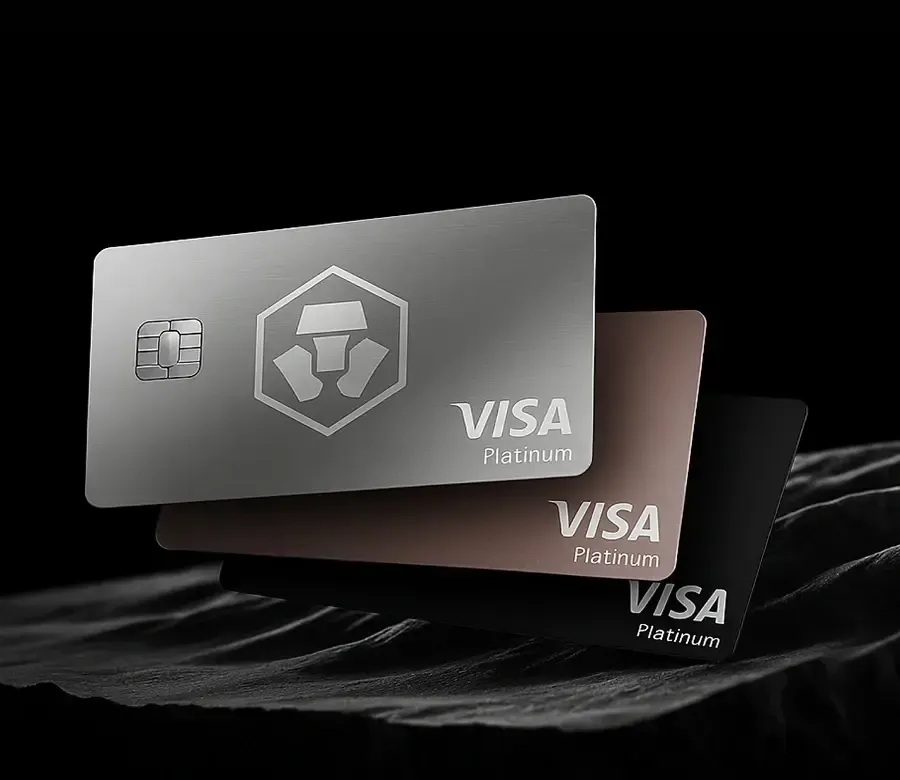
PRIVATE
4–6%
back in crypto · on every spend
CRO Lockup from €45,000
8.5% yield · 12-month staking · €450K tier at 9.5%
Zero trading fees · Unlimited volume
4.0%–6.0% back in crypto
0% foreign exchange fees
EUR Cash Yield up to 1.80% p.a.
Extra 1% p.a. on Earn allocations in CRO
VIP events · Exclusive experiences
8.5% CRO lockup rewards