
Burger King vs KFC
Founding story, key facts and history — side by side.
Burger King
Started as a Jacksonville grill in 1953. Changed owners six times. The Brazilians from 3G Capital bought it. Then merged it with Tim Hortons. Now a $40 billion empire.
| Founded | 1953 |
| Founders | Keith Cramer, Matthew Burns (Insta-Burger King); James McLamore, David Edgerton (Burger King) |
| HQ | Miami-Dade County, Florida |
| Symbol | QSR (NYSE / TSX) |
VS
KFC
Colonel Sanders was rejected over 1,000 times. Started franchising at 65. Built a fried chicken empire. Then sold it for $2 million and spent the rest of his life complaining about the gravy.
| Founded | 1952 |
| Founders | Colonel Harland Sanders |
| HQ | Plano, Texas (formerly Louisville, Kentucky) |
| Symbol | YUM (NYSE) |
The Story — Side by Side
1953
Insta-Burger King and the Insta-Broiler
The predecessor to Burger King was founded on July 23, 1953 in Jacksonville, Florida by Keith Cramer and his stepfather Matthew Burns — who had visited the McDonald brothers' original restaurant in San Bernardino, California and wanted to replicate the concept. Their key differentiator was the Insta-Broiler, a mechanical flame-broiling device that cooked burger patties over a gas flame rather than frying them. The result was a distinctive smoky flavour that everything from $0.18 hamburgers to modern Whoppers has retained. Financial difficulties hit by 1954, and two Miami-based franchisees — James McLamore and David Edgerton — purchased the company and renamed it Burger King. They introduced the Whopper in 1957 for $0.37 and expanded to 250 locations before selling to Pillsbury in 1967.
1967
Six owners and the revolving door of corporate dysfunction
Burger King became a case study in ownership instability. Pillsbury acquired it in 1967 for $18 million. Grand Metropolitan bought Pillsbury in 1989 for $5.7 billion (inheriting Burger King). Grand Metropolitan merged with Guinness in 1997 to form Diageo (the spirits company) — which found itself owning a fast food chain. Diageo sold Burger King to a TPG Capital, Bain Capital, and Goldman Sachs consortium for $1.5 billion in 2002, who took it public. 3G Capital of Brazil — the same firm that built AB InBev and would later buy Heinz — acquired a majority stake for $3.26 billion in 2010. Each ownership change promised a revitalisation that McDonald's continued to render moot.
2014
Tim Hortons, Restaurant Brands International — and the tax inversion
3G Capital engineered a merger between Burger King and Tim Hortons — the iconic Canadian coffee and doughnut chain — in 2014, creating Restaurant Brands International (RBI) in a deal valued at $11.4 billion. Warren Buffett's Berkshire Hathaway provided $3 billion in financing. The deal was structured as a tax inversion, moving the combined company's legal domicile to Canada. RBI subsequently added Popeyes Louisiana Kitchen (2017, $1.8 billion) and Firehouse Subs (2021, $1 billion), creating a portfolio of four franchise-heavy quick-service brands.
2019
The Whopper and the flame-grilled identity
Under 3G Capital's ownership, Burger King invested in a "Reclaim the Flame" strategy: a $400 million plan to renovate restaurants, upgrade technology, and strengthen franchisee economics. The Whopper — introduced in 1957 — remained the brand's most recognisable product globally, available in nearly 100 countries. Burger King's willingness to innovate around the Whopper (plant-based Impossible Whopper in 2019, regional variations globally) gave it brand flexibility that McDonald's Big Mac could not easily match.
2024
19,666 restaurants — $40B+ system sales — Carrols acquisition for remodelling
Restaurant Brands International generated system-wide sales across its four brands exceeding $40 billion in 2024. Burger King alone operated 19,666 restaurants globally, with over 90% franchised. In 2024, RBI completed the $1 billion acquisition of Carrols Restaurant Group — Burger King's largest US franchisee — specifically to execute a remodelling programme across 600 locations and then sell them back to new franchisees. US systemwide Burger King sales reached approximately $11 billion. The chain that had been owned by a spirits company, a leveraged buyout firm, and Brazilian private equity had become the anchor of one of the world's largest fast food holding companies.
1890
The man who failed at everything — until he didn't
Harland David Sanders was born in 1890 in Henryville, Indiana. His father died when Harland was 6, leaving him to cook for his younger siblings. He dropped out of school at 12, left home at 13, and spent the following decades accumulating an extraordinary record of failed ventures: railroad worker, streetcar conductor, insurance salesman (fired), ferry boat operator (made obsolete by a bridge), oil lamp manufacturer (obsoleted by electricity), lawyer (disbarred after a courtroom fight with his own client). In 1930, aged 40, he converted a Shell filling station in Corbin, Kentucky, into a small diner, cooking for travellers who stopped for petrol. His fried chicken, pressure-cooked using his own recipe, became locally famous.
1952
Rejected 1,009 times — then the first franchise
When Interstate 75 bypassed his Corbin restaurant in the mid-1950s, Sanders was left with nearly nothing at age 65 — too old to start again in most people's estimation. He drove across the United States, stopping at restaurants, offering to cook his chicken recipe for the owner and negotiate a royalty of 5 cents per piece sold if they liked it. The legend is that he was rejected over 1,000 times. The first success came in 1952: Pete Harman, a restaurant owner in South Salt Lake, Utah, agreed to try the recipe. First-year sales tripled. Harman's sign painter, Don Anderson, coined the name "Kentucky Fried Chicken." Harman also invented the bucket.
1964
600 locations — sold for $2 million — and the complaint letters begin
By 1963, the Colonel had 600 KFC franchises across the US, Canada, the UK, Mexico, and Jamaica. The growth had outrun his ability to manage it. In 1964, at age 73, he sold Kentucky Fried Chicken Corporation to a group of investors led by John Y. Brown Jr. and Jack C. Massey for $2 million (approximately $20 million today). Sanders retained a lifetime salary, remained the brand ambassador, and immediately began sending complaint letters to franchisees about changes to his recipe. He called the gravy "pure wallpaper paste," consistently criticised the chain's quality, and was sued (unsuccessfully) for defamation by a KFC franchisee whose food he had publicly criticised.
1986
PepsiCo, Tricon, Yum — the corporate ownership carousel
KFC changed hands multiple times after Sanders' 1964 sale: Brown and Massey sold to Heublein in 1971 for $285 million; R.J. Reynolds acquired Heublein in 1982; PepsiCo acquired KFC in 1986. In 1997, PepsiCo spun off its restaurant businesses — KFC, Pizza Hut, and Taco Bell — into a separate company called Tricon Global Restaurants, later renamed Yum! Brands. Under Yum!, KFC expanded aggressively in China — where the Colonel's image resonated powerfully — becoming one of the most profitable foreign brands in the Chinese market with thousands of locations.
2024
30,000 restaurants — 147 countries — Saucy concept launch
KFC operated approximately 30,000 restaurants in over 147 countries as of 2024, making it the world's second-largest restaurant chain by number of locations after McDonald's. Yum! Brands as a whole generated approximately $7.1 billion in total revenue for 2024. In late 2024, KFC launched "Saucy" — a new restaurant concept in Orlando, Florida, featuring chicken tenders, 11 dipping sauces (a nod to the 11 herbs and spices), and a bright pink colour scheme replacing the classic red and white. In February 2025, the company announced KFC headquarters would relocate from Louisville, Kentucky — where the Colonel had built his empire — to Plano, Texas. Kentucky was not pleased.
Tools & Platforms
For Investors
The market doesn't care about your feelings.
But your broker's fees do.
But your broker's fees do.
Most people have a brokerage account. Fewer understand what it really costs them — in spreads, in fees, in missed instruments. Malta-regulated, direct market access, 600,000+ instruments.
Exante
Malta MFSA · 50 exchanges
Tickmill
Forex from 0.0 pips
Vantage
Multi-asset trading
Polymarket
Prediction markets
For Entrepreneurs
Opening a US company costs $300.
Most people think it's complicated. It isn't.
Most people think it's complicated. It isn't.
Most founders spend weeks on formation, banking and payments. The ones who move fast know which tools to use before they start. A US LLC, a real business account, and a way to pay people — in that order.
Mercury
Business finance · 300K+ founders
Doola
US LLC formation · YC backed
Melio
B2B payments
Xero 95% OFF
Accounting · 6 months
For C-Suite
Your competitor pays $200 less per month for EOR.
You're still on a spreadsheet.
You're still on a spreadsheet.
BVNK hired 20% of its workforce through Deel. The smartest operators aren't managing payroll complexity — they're outsourcing it. EOR in 150+ countries, multi-currency accounts, workforce payments at $200 less per month than competitors.
Deel
EOR · 150+ countries
Payoneer
$399/mo EOR · Save $200
Wise Business
40+ currencies · No hidden fees
Gusto
US payroll & benefits
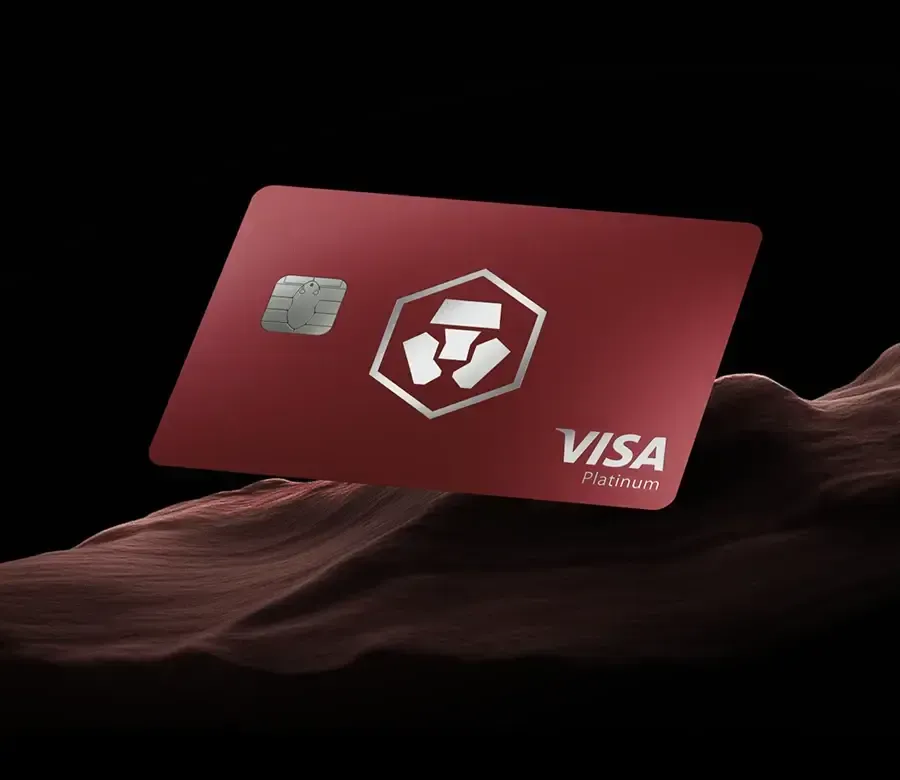
PLUS
2.0%
back in crypto · on every spend
€3.99 / month
or €39.90/year (€3.32/month)
Zero trading fees up to $20K/month
2.0% back in crypto on card spend
0% foreign exchange fees
EUR Cash Yield up to 1.35% p.a.
CRO Yield up to 2.00% p.a.
Virtual Visa card · Flexible cancel
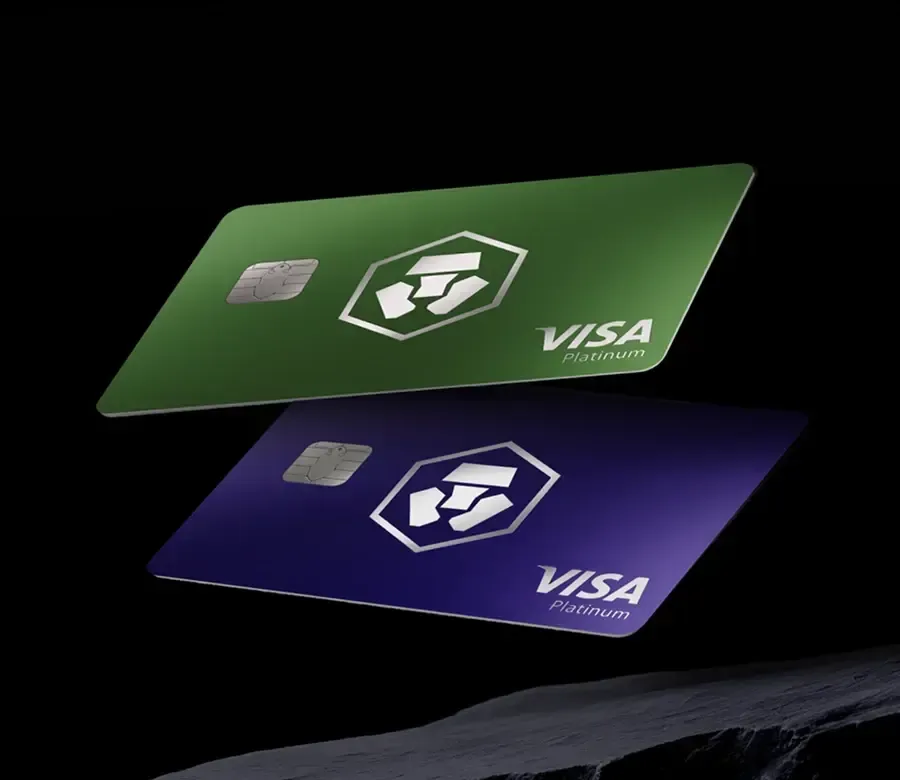
PRO
3.0%
back in crypto · on every spend
€24.99 / month
or €249.90/year (€20.82/month)
Zero trading fees up to $50K/month
3.0% back in crypto on card spend
0% foreign exchange fees
EUR Cash Yield up to 1.70% p.a.
CRO Yield up to 2.50% p.a.
Airport lounge access (Priority Pass)
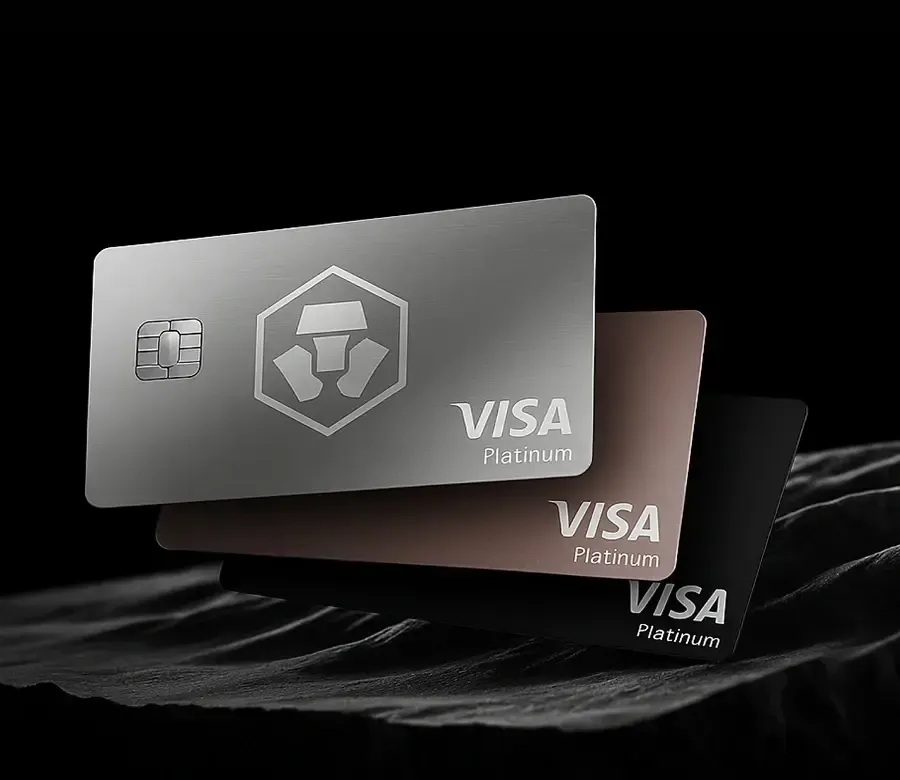
PRIVATE
4–6%
back in crypto · on every spend
CRO Lockup from €45,000
8.5% yield · 12-month staking · €450K tier at 9.5%
Zero trading fees · Unlimited volume
4.0%–6.0% back in crypto
0% foreign exchange fees
EUR Cash Yield up to 1.80% p.a.
Extra 1% p.a. on Earn allocations in CRO
VIP events · Exclusive experiences
8.5% CRO lockup rewards