
Citigroup vs Goldman Sachs
Founding story, key facts and history — side by side.
Citigroup
A highly complex, global cross-border banking network, processing massive corporate liquidity flows across dozens of emerging economies.
| Founded | 1812 (As City Bank of New York) |
| Founders | Samuel Osgood |
| HQ | New York, New York |
| Symbol | NYSE: C |
VS
Goldman Sachs
The premier global investment banking titan, defining elite Wall Street dealmaking and institutional market-making infrastructure.
| Founded | 1869 |
| Founders | Marcus Goldman, Samuel Sachs |
| HQ | New York, New York |
| Symbol | NYSE: GS |
The Story — Side by Side
1812
The early mercantile financing and national charter expansion
The company was established as the City Bank of New York to finance the merchant communities of the growing Eastern seaboard. It quickly transformed into a major institutional player under the National Banking Acts, eventually building the first comprehensive international banking branches.
1998
The historic Travelers merger and the creation of Citigroup
Sandy Weill orchestrated a monumental $140 billion merger between banking titan Citicorp and insurance conglomerate Travelers Group, creating the world's largest financial super-company. The massive corporate tie-up deliberately challenged and shattered the remaining foundational pillars of the Glass-Steagall Act.
2008
The absolute subprime toxicity and massive federal bailouts
Citigroup suffered catastrophic structural losses due to over-exposure to toxic collateralized debt obligations CDOs during the mortgage bust. The bank required an unprecedented $45 billion direct cash infusion alongside hundreds of billions in federal toxic asset backstops to ensure survival.
2026
The historic "Project Bora Bora" structural corporate overhaul
By mid-2026, Citigroup completed its most aggressive corporate reorganization in a generation, code-named Project Bora Bora. Guided by CEO Jane Fraser, the group aggressively divested structural retail banking units globally to focus purely on high-margin commercial banking assets.
1869
The lower Manhattan commercial paper genesis
Marcus Goldman founded a small business in lower Manhattan, pioneering the trading of commercial paper—short-term promissory notes used by small businesses to secure working capital. Joined by his son-in-law Samuel Sachs in 1882, the partnership institutionalized corporate debt underwriting.
1999
The historic public offering and modern trading transition
After operating as a private partnership owned by its managing directors for 130 years, Goldman Sachs executed its historic initial public offering IPO on the NYSE, raising $3.66 billion. The capital influx transformed the firm into a corporate juggernaut, aggressively scaling its fixed income, currency, and commodities (FICC) trading segments.
2008
The subprime financial collapse and bank holding transition
Amid the peak systemic contagion of the subprime mortgage meltdown, Goldman Sachs avoided insolvency by converting into a traditional bank holding company under Federal Reserve oversight. This structural pivot granted the elite investment bank emergency access to direct discount window liquidity support.
2026
The core advisory defense and asset management apex
By mid-2026, Goldman Sachs successfully scaled back its costly retail consumer experiments to double down on its ultra-high-margin institutional roots. Under CEO David Solomon, the investment bank maintained its undisputed absolute dominance at the peak of global M&A advisory leagues.
Tools & Platforms
For Investors
The market doesn't care about your feelings.
But your broker's fees do.
But your broker's fees do.
Most people have a brokerage account. Fewer understand what it really costs them — in spreads, in fees, in missed instruments. Malta-regulated, direct market access, 600,000+ instruments.
Exante
Malta MFSA · 50 exchanges
Tickmill
Forex from 0.0 pips
Vantage
Multi-asset trading
Polymarket
Prediction markets
For Entrepreneurs
Opening a US company costs $300.
Most people think it's complicated. It isn't.
Most people think it's complicated. It isn't.
Most founders spend weeks on formation, banking and payments. The ones who move fast know which tools to use before they start. A US LLC, a real business account, and a way to pay people — in that order.
Mercury
Business finance · 300K+ founders
Doola
US LLC formation · YC backed
Melio
B2B payments
Xero 95% OFF
Accounting · 6 months
For C-Suite
Your competitor pays $200 less per month for EOR.
You're still on a spreadsheet.
You're still on a spreadsheet.
BVNK hired 20% of its workforce through Deel. The smartest operators aren't managing payroll complexity — they're outsourcing it. EOR in 150+ countries, multi-currency accounts, workforce payments at $200 less per month than competitors.
Deel
EOR · 150+ countries
Payoneer
$399/mo EOR · Save $200
Wise Business
40+ currencies · No hidden fees
Gusto
US payroll & benefits

PLUS
2.0%
back in crypto · on every spend
€3.99 / month
or €39.90/year (€3.32/month)
Zero trading fees up to $20K/month
2.0% back in crypto on card spend
0% foreign exchange fees
EUR Cash Yield up to 1.35% p.a.
CRO Yield up to 2.00% p.a.
Virtual Visa card · Flexible cancel

PRO
3.0%
back in crypto · on every spend
€24.99 / month
or €249.90/year (€20.82/month)
Zero trading fees up to $50K/month
3.0% back in crypto on card spend
0% foreign exchange fees
EUR Cash Yield up to 1.70% p.a.
CRO Yield up to 2.50% p.a.
Airport lounge access (Priority Pass)
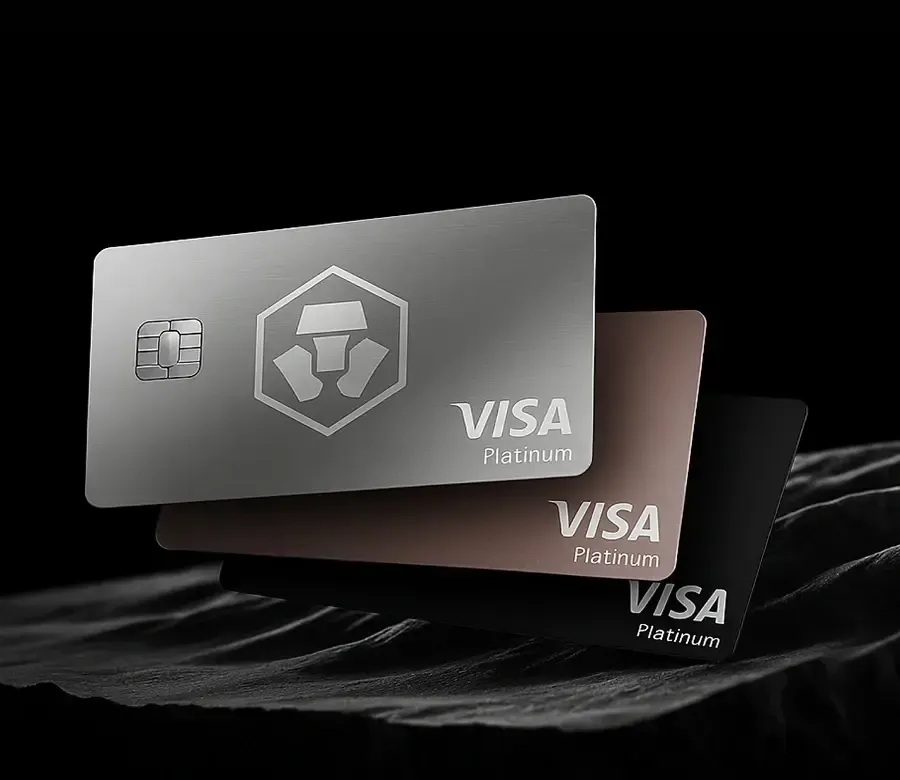
PRIVATE
4–6%
back in crypto · on every spend
CRO Lockup from €45,000
8.5% yield · 12-month staking · €450K tier at 9.5%
Zero trading fees · Unlimited volume
4.0%–6.0% back in crypto
0% foreign exchange fees
EUR Cash Yield up to 1.80% p.a.
Extra 1% p.a. on Earn allocations in CRO
VIP events · Exclusive experiences
8.5% CRO lockup rewards