
Enron Corporation (defunct) vs Wirecard (defunct)
Founding story, key facts and history — side by side.
Enron Corporation (defunct)
America's seventh largest company. Named most innovative six years running. Entirely fictional.
| Founded | 1985 |
| Founders | Kenneth Lay |
| HQ | Houston, Texas |
| Symbol | Bankrupt |
VS
Wirecard (defunct)
Germany's national fintech champion. The €1.9 billion never existed. The COO is hiding in Russia.
| Founded | 1999 |
| Founders | Markus Braun |
| HQ | Munich, Germany |
| Symbol | Bankrupt |
The Story — Side by Side
1985
A gas pipeline company with ambitions
Enron was formed in 1985 through the merger of Houston Natural Gas and InterNorth. Kenneth Lay became CEO and, with the help of Jeffrey Skilling, transformed Enron from a regulated utility into an energy trading company. Skilling's idea was radical: treat natural gas not as a physical commodity but as a financial instrument, and trade it like stocks and bonds. For a time, it worked brilliantly. Enron's stock rose over 1,000% in the 1990s.
1996
Six consecutive years as America's most innovative company
Fortune Magazine named Enron America's "Most Innovative Company" for six consecutive years from 1996 to 2001. Enron was celebrated as a model of the new economy — asset-light, trading-focused, staffed by brilliant people compensated with enormous bonuses. The company expanded from gas into electricity, water, broadband, and eventually weather derivatives. Every consultant who visited left impressed. Almost none of them looked at the actual cash flows.
1999
Mark-to-market accounting and the illusion of profit
Enron used an accounting technique called "mark-to-market" that allowed it to book the estimated future profits of long-term contracts immediately, as current revenue. When Enron signed a 20-year contract to supply broadband, it could book the estimated profit from all 20 years in the current quarter — regardless of whether the broadband network existed or the contract was ever fulfilled. This created the appearance of massive, growing profits while actual cash flows were negative.
2001
The analyst who asked a simple question
In March 2001, Bethany McLean of Fortune Magazine published an article asking a simple question: "Is Enron Overpriced?" She noted that Enron's financial statements were incomprehensible and that the company could not explain precisely how it made money. Enron CEO Jeffrey Skilling called McLean "unethical." Within months, the financial structure McLean had questioned began to collapse. Enron's CFO Andrew Fastow had created hundreds of off-balance-sheet entities to hide over $1 billion in debt from investors and regulators.
2001
The largest bankruptcy in U.S. history
Enron filed for bankruptcy on December 2, 2001 — the largest corporate bankruptcy in U.S. history at the time, with $63 billion in assets. Twenty thousand employees lost their jobs and their pension savings, which had been invested in Enron stock that became worthless. Kenneth Lay died of a heart attack before sentencing. Jeffrey Skilling was convicted of fraud and conspiracy and sentenced to 24 years in prison, later reduced to 14 years. The scandal led directly to the Sarbanes-Oxley Act — the most significant overhaul of corporate accounting rules in U.S. history. Arthur Andersen, one of the world's largest accounting firms and Enron's auditor, was also destroyed.
1999
Processing payments for adult websites
Wirecard was founded in 1999 as a payment processor for high-risk industries — primarily online gambling and adult content — that conventional banks refused to serve. CEO Markus Braun gradually repositioned Wirecard as a mainstream fintech company, attracting institutional investors and eventually joining Germany's prestigious DAX index in 2018, replacing Commerzbank. Few investors asked too many questions about the company's origins or its opaque Asian partnerships.
2015
The Financial Times starts asking questions
Financial Times journalist Dan McCrum began investigating Wirecard in 2015 after receiving tips about accounting irregularities. Wirecard's response was aggressive: the company hired private investigators who tracked McCrum's movements, lobbied German regulators to investigate the FT for market manipulation, and filed criminal complaints against journalists. German regulator BaFin temporarily banned short selling in Wirecard shares, effectively penalising investors who had correctly identified a fraud. The German state was protecting a company it had mistaken for a champion.
2020
The €1.9 billion that never existed
In June 2020, Wirecard's auditor EY refused to sign off on the company's accounts because it could not verify €1.9 billion in cash supposedly held in bank accounts in the Philippines and Singapore. Wirecard announced the money "may not exist." The Philippine central bank confirmed Wirecard had never held any money in the country. The accounts were fictitious. Wirecard had been booking revenues from a network of fictitious partners in Asia for years. The entire business model was fraudulent.
2020
The CEO arrested, the COO vanishes
Markus Braun was arrested on June 22, 2020 and charged with market manipulation and accounting fraud. His trial began in Munich in 2022 and was still proceeding years later due to the complexity of the fraud. Chief Operating Officer Jan Marsalek — who had overseen the Asian business that proved fictitious — disappeared before he could be arrested. A German parliamentary inquiry found that Marsalek had cultivated connections with intelligence services across Europe. He was later reported to be living in Russia under FSB protection, making him one of the most wanted fugitives in European corporate history.
2022
Germany's regulatory failure — and the reform it triggered
A German parliamentary inquiry concluded that BaFin had failed catastrophically in its oversight of Wirecard — taking the company's word on financial matters, suppressing short sellers who had identified problems, and failing to act on multiple credible warnings over years. Germany's willingness to defend a perceived national champion had allowed a fraud to continue far longer than it should have. The Wirecard scandal prompted the most significant reform of German financial regulation since the Second World War. EY, Wirecard's auditor, received a regulatory ban from new audit engagements and faced investor lawsuits seeking billions in damages. The COO remains at large.
Tools & Platforms
For Investors
The market doesn't care about your feelings.
But your broker's fees do.
But your broker's fees do.
Most people have a brokerage account. Fewer understand what it really costs them — in spreads, in fees, in missed instruments. Malta-regulated, direct market access, 600,000+ instruments.
Exante
Malta MFSA · 50 exchanges
Tickmill
Forex from 0.0 pips
Vantage
Multi-asset trading
Polymarket
Prediction markets
For Entrepreneurs
Opening a US company costs $300.
Most people think it's complicated. It isn't.
Most people think it's complicated. It isn't.
Most founders spend weeks on formation, banking and payments. The ones who move fast know which tools to use before they start. A US LLC, a real business account, and a way to pay people — in that order.
Mercury
Business finance · 300K+ founders
Doola
US LLC formation · YC backed
Melio
B2B payments
Xero 95% OFF
Accounting · 6 months
For C-Suite
Your competitor pays $200 less per month for EOR.
You're still on a spreadsheet.
You're still on a spreadsheet.
BVNK hired 20% of its workforce through Deel. The smartest operators aren't managing payroll complexity — they're outsourcing it. EOR in 150+ countries, multi-currency accounts, workforce payments at $200 less per month than competitors.
Deel
EOR · 150+ countries
Payoneer
$399/mo EOR · Save $200
Wise Business
40+ currencies · No hidden fees
Gusto
US payroll & benefits

PLUS
2.0%
back in crypto · on every spend
€3.99 / month
or €39.90/year (€3.32/month)
Zero trading fees up to $20K/month
2.0% back in crypto on card spend
0% foreign exchange fees
EUR Cash Yield up to 1.35% p.a.
CRO Yield up to 2.00% p.a.
Virtual Visa card · Flexible cancel

PRO
3.0%
back in crypto · on every spend
€24.99 / month
or €249.90/year (€20.82/month)
Zero trading fees up to $50K/month
3.0% back in crypto on card spend
0% foreign exchange fees
EUR Cash Yield up to 1.70% p.a.
CRO Yield up to 2.50% p.a.
Airport lounge access (Priority Pass)
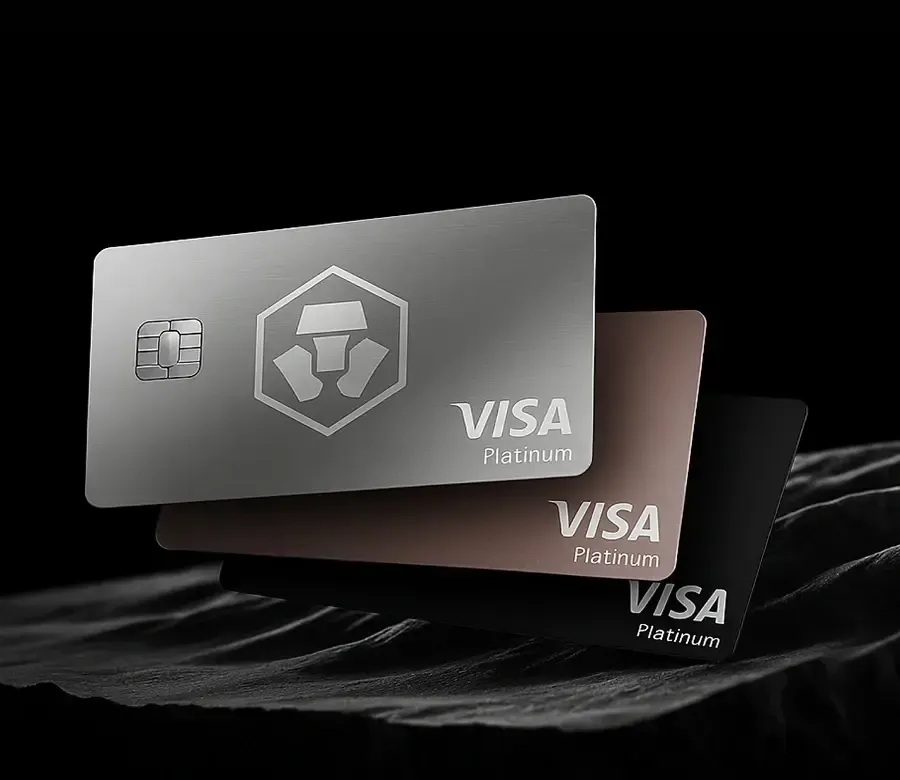
PRIVATE
4–6%
back in crypto · on every spend
CRO Lockup from €45,000
8.5% yield · 12-month staking · €450K tier at 9.5%
Zero trading fees · Unlimited volume
4.0%–6.0% back in crypto
0% foreign exchange fees
EUR Cash Yield up to 1.80% p.a.
Extra 1% p.a. on Earn allocations in CRO
VIP events · Exclusive experiences
8.5% CRO lockup rewards