
Four Seasons Hotels and Resorts vs Hilton Worldwide
Founding story, key facts and history — side by side.
Four Seasons Hotels and Resorts
A 29-year-old architect's son opened a motor hotel in a Toronto red-light district in 1961 with no hotel experience. Built the world's most admired luxury hotel brand on a single principle: the Golden Rule.
| Founded | 1961 |
| Founders | Isadore Sharp |
| HQ | Toronto, Ontario, Canada |
| Symbol | Private (Bill Gates 71%, Prince Alwaleed 24%) |
VS
Hilton Worldwide
Conrad Hilton bought his first hotel in 1919 with borrowed money. Built the most recognisable hotel brand on Earth. Went private for $26 billion. Came back as the world's second-largest hotel company.
| Founded | 1919 |
| Founders | Conrad Hilton |
| HQ | McLean, Virginia |
| Symbol | HLT (NYSE) |
The Story — Side by Side
1961
A red-light district, a courtyard, and a 29-year-old with no hotel experience
Isadore "Issy" Sharp was the son of Polish Jewish immigrants who had settled in Toronto. His father Max was a plasterer who built houses; Issy studied architectural technology at Ryerson and worked in his father's construction business. In 1958, he acquired a parcel of land in a run-down area of downtown Toronto — near a sports arena, in what was functionally a red-light district — and built a hotel. The Four Seasons Motor Hotel opened on March 21, 1961, with 125 rooms. To distract guests from the surrounding neighbourhood, Sharp arranged the rooms around an inner courtyard. He earned forty dollars a week. He had never run a hotel. He had never studied hospitality. He had a single principle he would eventually articulate simply: treat people the way you would like to be treated yourself.
1970
London — the decision to be the world's best, not the world's biggest
When a developer approached Four Seasons about building a hotel in London, Sharp faced a choice: try to compete on price with the mass-market brands, or build a property that competed with Claridge's and The Connaught. He chose the latter. The Inn on the Park opened in 1970 in London's Mayfair, directly competing with London's most prestigious hotels. Its success established Four Seasons' positioning as a luxury service brand rather than a volume hospitality company. Sharp made the decision that would define every subsequent opening: Four Seasons would never own its hotels. It would only manage them, collecting management fees. This kept capital requirements minimal and allowed the brand to grow in prime locations that only wealthy developers could finance.
1985
The service standards that redefined luxury hospitality
By the mid-1980s, Four Seasons had established a set of service standards that competitors spent decades attempting to replicate: same-day laundry service; 24-hour room service; twice-daily housekeeping; staff who addressed guests by name after the first encounter; bathrobes in every room (which Four Seasons was among the first to introduce); concierges who actually solved problems rather than deflecting them. The standards were built on Sharp's conviction that employees who were treated well would treat guests well. Four Seasons became one of Fortune's first "100 Best Companies to Work For" when that list began in 1998 and has appeared on it nearly every year since.
2007
Bill Gates and Prince Alwaleed — taken private for $3.8 billion
In November 2006, Bill Gates (through Cascade Investment) and Saudi Prince Al-Waleed bin Talal (through Kingdom Holding Company) made an offer to take Four Seasons Hotels private for $3.4 billion. The deal was structured with Gates and Al-Waleed each holding approximately 47.5% and Sharp retaining 5%. Sharp remained as chairman. The going-private removed the pressure of quarterly earnings reporting, allowing Four Seasons to continue its deliberate expansion focused on quality locations over volume. In 2021, Cascade acquired half of Kingdom Holding's stake for $2.21 billion, giving Gates 71.25% and establishing Four Seasons's enterprise value at approximately $10 billion.
2024
133 hotels — 47 countries — yacht, private jet, and the $5.1 billion year
Four Seasons operated 133 hotels and 56 residential properties in 47 countries as of 2024, with annual estimated revenue of approximately $5.1 billion — the company's best year on record. The brand had extended into adjacent luxury categories: the Four Seasons Private Jet Experience (an Airbus A321 with 48 first-class seats, carrying guests across multi-destination itineraries); Four Seasons Yachts (a 95-suite superyacht launched in early 2026); and branded residential properties generating $2.1 billion in gross sales in 2024. The company planned to operate 180 properties by 2033. The architect's son who had opened a hotel in a Toronto red-light district with no experience had built the brand that defined the global standard for luxury hospitality.
1919
A bank deal that fell through and a Texas hotel purchased instead
Conrad Nicholson Hilton was born in 1887 in San Antonio, New Mexico, the son of a Norwegian immigrant merchant. He served in World War I and came home to buy a bank in Cisco, Texas in 1919. The deal fell through at the last minute. Instead, he encountered the owner of the Mobley Hotel — also in Cisco — who was so overwhelmed with demand from the Texas oil boom that he was renting beds in shifts. Hilton borrowed $50,000 from family and friends and purchased the Mobley for $40,000. The 40-room hotel was so profitable that he reinvested in buying more Texas properties. He had his formula: buy undervalued properties with excess demand.
1943
The Stevens, the New Yorker — and the definition of the grand hotel
Hilton expanded aggressively through the 1920s and 1930s, surviving the Depression by selling off properties and renegotiating leases. His post-war ambition was to own the grand hotels of American cities. He purchased the Stevens Hotel in Chicago — at the time the world's largest hotel with 3,000 rooms — in 1945, renaming it the Conrad Hilton. The Palmer House, the Waldorf-Astoria (1949, for $3 million), and the Plaza in New York followed. The Waldorf-Astoria became the most iconic hotel in the world under Hilton's ownership — the address of presidents, royalty, and the most significant diplomatic events of the 20th century.
1954
International expansion — Hilton goes global
Conrad Hilton was passionate about international expansion, believing hotels could serve as ambassadors for American values during the Cold War. Hilton International was established in 1946, and the company opened its first international hotel in San Juan, Puerto Rico in 1949. Hotels followed in Istanbul, Madrid, Cairo, Montreal, and across Europe and Latin America through the 1950s. "Each of our hotels is a little America," Hilton said. His book "Be My Guest" (1957) became one of the bestselling business autobiographies of its era.
2007
Blackstone pays $26 billion — the largest leveraged buyout in history
The Blackstone Group acquired Hilton Hotels Corporation in 2007 for $26 billion — at the time the largest leveraged buyout in history. The timing looked catastrophic: the financial crisis hit months later, hotel demand collapsed, and Hilton's debt load was enormous. But Blackstone held its nerve, brought in a new CEO (Christopher Nassetta), restructured operations, and eventually listed Hilton on the NYSE in December 2013 in the largest hotel IPO in US history. Blackstone's investment ultimately returned approximately $14 billion in profit — one of the most profitable private equity deals ever.
2024
8,300 properties — 24 brands — Hilton Honors 200 million members
Hilton Worldwide reported total revenue of $10.2 billion for 2024, with approximately 8,300 properties and 1.26 million rooms across 24 brands in 138 countries. The Hilton Honors loyalty programme had approximately 200 million members. The brand portfolio ranged from ultra-luxury (Waldorf Astoria, Conrad) through upper upscale (DoubleTree, Curio, Embassy Suites) to midscale (Hampton Inn, Hilton Garden Inn) and extended stay (Homewood Suites, Home2 Suites). The Texas boy who had borrowed money to buy a hotel in 1919 had built the second-largest hotel company on Earth.
Tools & Platforms
For Investors
The market doesn't care about your feelings.
But your broker's fees do.
But your broker's fees do.
Most people have a brokerage account. Fewer understand what it really costs them — in spreads, in fees, in missed instruments. Malta-regulated, direct market access, 600,000+ instruments.
Exante
Malta MFSA · 50 exchanges
Tickmill
Forex from 0.0 pips
Vantage
Multi-asset trading
Polymarket
Prediction markets
For Entrepreneurs
Opening a US company costs $300.
Most people think it's complicated. It isn't.
Most people think it's complicated. It isn't.
Most founders spend weeks on formation, banking and payments. The ones who move fast know which tools to use before they start. A US LLC, a real business account, and a way to pay people — in that order.
Mercury
Business finance · 300K+ founders
Doola
US LLC formation · YC backed
Melio
B2B payments
Xero 95% OFF
Accounting · 6 months
For C-Suite
Your competitor pays $200 less per month for EOR.
You're still on a spreadsheet.
You're still on a spreadsheet.
BVNK hired 20% of its workforce through Deel. The smartest operators aren't managing payroll complexity — they're outsourcing it. EOR in 150+ countries, multi-currency accounts, workforce payments at $200 less per month than competitors.
Deel
EOR · 150+ countries
Payoneer
$399/mo EOR · Save $200
Wise Business
40+ currencies · No hidden fees
Gusto
US payroll & benefits
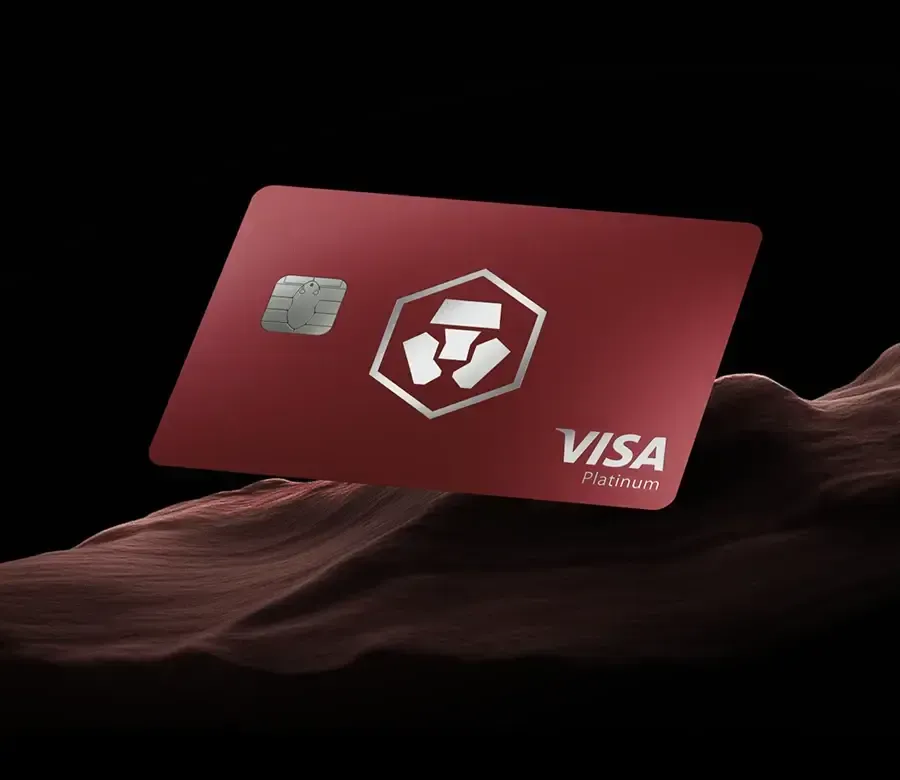
PLUS
2.0%
back in crypto · on every spend
€3.99 / month
or €39.90/year (€3.32/month)
Zero trading fees up to $20K/month
2.0% back in crypto on card spend
0% foreign exchange fees
EUR Cash Yield up to 1.35% p.a.
CRO Yield up to 2.00% p.a.
Virtual Visa card · Flexible cancel
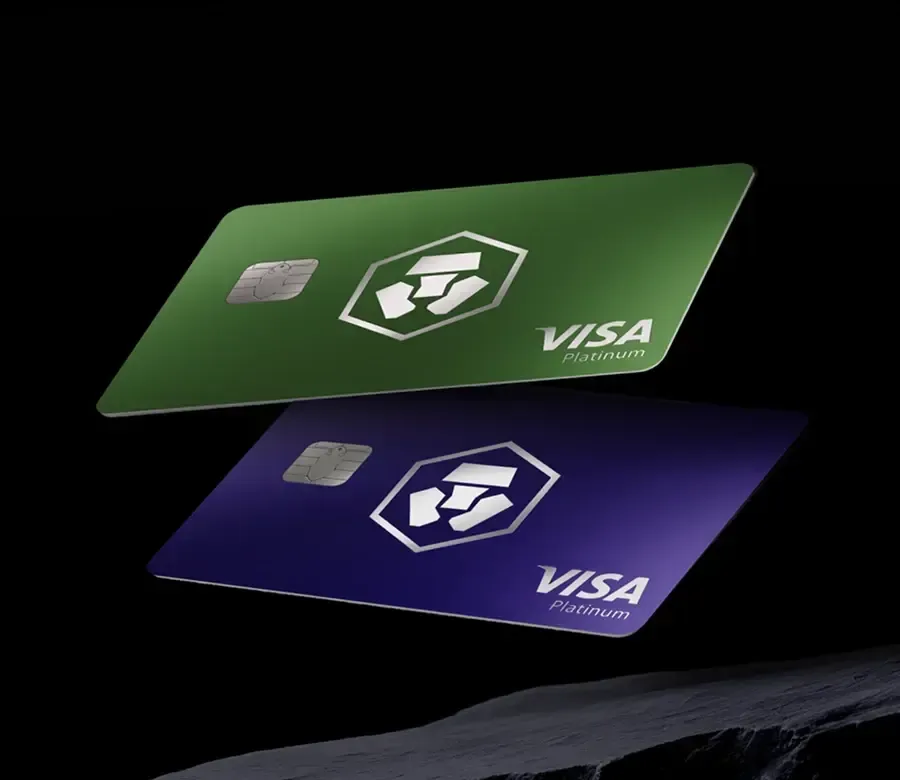
PRO
3.0%
back in crypto · on every spend
€24.99 / month
or €249.90/year (€20.82/month)
Zero trading fees up to $50K/month
3.0% back in crypto on card spend
0% foreign exchange fees
EUR Cash Yield up to 1.70% p.a.
CRO Yield up to 2.50% p.a.
Airport lounge access (Priority Pass)
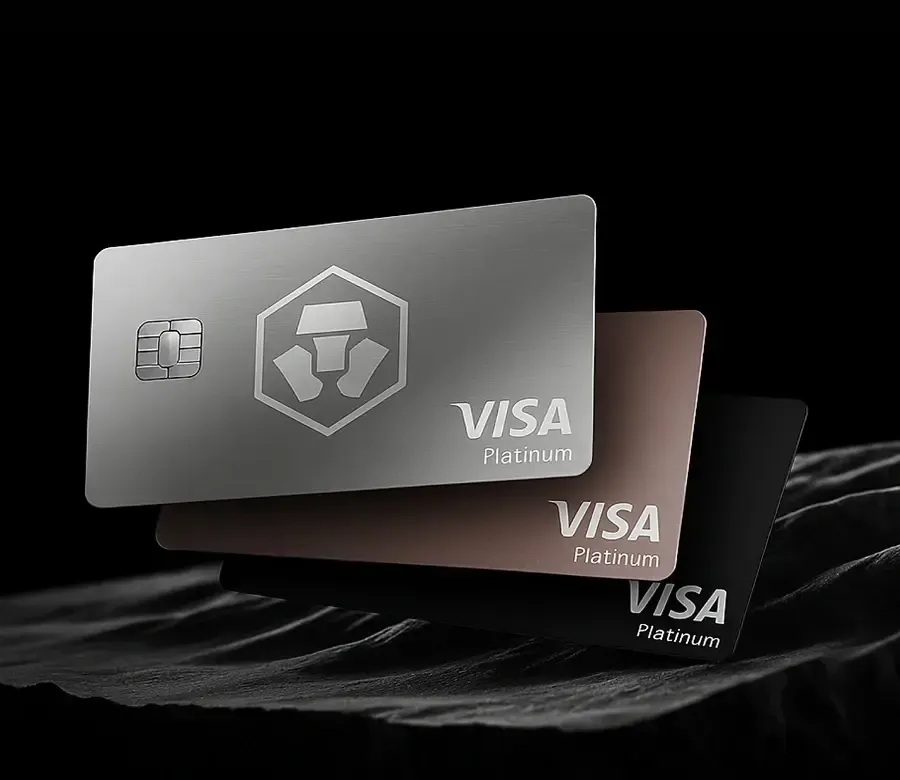
PRIVATE
4–6%
back in crypto · on every spend
CRO Lockup from €45,000
8.5% yield · 12-month staking · €450K tier at 9.5%
Zero trading fees · Unlimited volume
4.0%–6.0% back in crypto
0% foreign exchange fees
EUR Cash Yield up to 1.80% p.a.
Extra 1% p.a. on Earn allocations in CRO
VIP events · Exclusive experiences
8.5% CRO lockup rewards