
Google Pixel vs Nothing Technology
Founding story, key facts and history — side by side.
Google Pixel
Google sold Motorola for a loss. Then decided to build phones anyway. Created the best camera in a smartphone. Proved the AI phone is a real product category.
| Founded | 2016 |
| Founders | Google LLC (Sundar Pichai, hardware team) |
| HQ | Mountain View, California |
| Symbol | GOOGL (Nasdaq) |
VS
Nothing Technology
Carl Pei co-founded OnePlus. Left at the peak. Started Nothing to prove you could still make technology that excited people. $1 billion in lifetime sales in three years.
| Founded | 2021 |
| Founders | Carl Pei |
| HQ | London, United Kingdom |
| Symbol | Private |
The Story — Side by Side
2011
The Motorola experiment — $12.5 billion spent and then sold for $2.9 billion
Google acquired Motorola Mobility in 2011 for $12.5 billion — ostensibly for the patent portfolio, but widely understood as an attempt to build deeper hardware capability. The experiment did not work as planned. Motorola continued to struggle in the market; the patent value was less decisive than expected; and the acquisition created tension with Android hardware partners who worried Google was competing with them. In 2014, Google sold Motorola to Lenovo for $2.9 billion — a loss of approximately $9.5 billion. The lesson: owning an existing phone brand was not the path to hardware success. The alternative was starting from scratch.
2016
Pixel — the "Made by Google" phone with the world's best camera
Google launched the first Pixel smartphone in October 2016 under the leadership of Rick Osterloh, with the explicit purpose of showcasing what Android could do without hardware constraints. The defining characteristic was computational photography: Google's HDR+ algorithm used machine learning to process multiple exposures and produce images that reviewers consistently ranked as the best available from any smartphone camera — even at a time when Google was using a single camera rather than the multi-lens arrays competitors were deploying. The achievement was entirely software: where Samsung and Huawei added more lenses, Google trained neural networks to extract more information from fewer photons.
2019
Night Sight, astrophotography, and the computational photography standard
Pixel's Night Sight feature — launched in 2018 — transformed low-light smartphone photography. The feature used a burst of very short exposures and a neural network to combine them into a single bright, sharp, low-noise image that was dramatically better than competitors' low-light outputs. Astrophotography mode, launched in 2019, enabled handheld photography of stars. The features demonstrated that Google's machine learning capabilities — trained on billions of images — gave it a hardware advantage that no amount of lens hardware could easily replicate. DxOMark, the camera benchmarking authority, consistently placed Pixel among the top-rated smartphone cameras globally.
2023
Tensor — Google's own chip — and the on-device AI strategy
Google launched its proprietary Tensor chip in the Pixel 6 in 2021 — the first major move by a non-Apple or non-Samsung smartphone maker to design its own processor. The Tensor chips were not designed for peak benchmark performance but for on-device AI processing: voice recognition, translation, photography, and the AI features that Google was building into Android. The strategy gave Google the ability to run sophisticated AI models directly on the device without a network connection. The Pixel 8 Pro introduced temperature sensors and, with Gemini AI, demonstrated the first commercially available real-time voice translation system that ran substantially on-device.
2024
Pixel 9 Pro — Gemini Live — Google proves the AI phone is real
The Pixel 9 series launched in August 2024 with Google Gemini AI deeply integrated: Gemini Live enabled real-time conversational AI responses that could see what the phone's camera was seeing and answer questions about it. The Pixel 9 Pro achieved top-tier camera rankings from DxOMark, Wirecutter, and professional photographers. Pixel global market share remained small — typically 1-3% in a Samsung-Apple dominated market — but the brand's influence on Android development and computational photography was disproportionate to its volume. Alphabet's hardware segment, which includes Pixel, generated approximately $10.8 billion in revenue in 2024. Google had spent $12.5 billion to learn how to build phones at Motorola and applied those lessons to create the smartphone that best demonstrated what AI could do on a device.
2013
OnePlus — the "never settle" company that Carl Pei helped build
Carl Pei was born in Beijing in 1989, grew up in Stockholm after his family relocated, briefly attended the Stockholm School of Economics, and dropped out to work at Nokia, Meizu, and Oppo. In 2013, he co-founded OnePlus with Pete Lau — a Chinese startup that sold flagship-quality Android phones at a fraction of Samsung and Apple's prices, using an invite-only system that created scarcity and community energy. The OnePlus One sold nearly 1.5 million units in its first year. Pei became the face of OnePlus globally — the marketer who built its distinctive culture and international brand voice. By 2020, OnePlus had shipped tens of millions of devices.
2020
Carl Pei leaves OnePlus — and finds the problem with tech
In October 2020, Carl Pei resigned from OnePlus — the company he had helped build over seven years. His explanation: OnePlus had begun to feel corporate; the original disruptor energy had been absorbed into its parent company Oppo's ecosystem. The smartphone industry had become predictable and joyless: every new phone was a rectangle of glass with incrementally better specs and no personality. Pei wanted to make technology that excited people again. He founded Nothing in January 2021 and spent the following months raising $7 million from investors including Apple co-founder Steve Wozniak, Tony Fadell (inventor of the iPod), Casey Neistat, and Kevin Lin (Twitch co-founder). His thesis: design and transparency could differentiate a hardware brand in a commoditised market.
2021
The Ear (1) — transparent design and the 900 LEDs
Nothing's first product — Ear (1) wireless earbuds — launched in July 2021 at $99. The defining characteristic was visual: a transparent case and transparent earbuds that exposed internal components — speakers, antennas, circuit boards — creating an aesthetic that was simultaneously industrial and oddly beautiful. The design borrowed from Braun, from Dieter Rams, from the tradition of making the mechanism visible rather than hiding it. The Nothing Phone (1) followed in July 2022, featuring a "Glyph Interface" — 900 white LED lights on the back of the phone that responded to notifications, charging status, and ringtones in customisable patterns. The glyph became Nothing's signature — a genuinely novel use of a smartphone's rear surface.
2024
$1 billion in lifetime sales — fastest-growing brand in multiple markets
By 2024, Nothing had surpassed $1 billion in lifetime cumulative sales, with annual revenue exceeding $500 million and over 7 million devices shipped. In India — the world's most competitive smartphone market — Nothing became the fastest-growing brand with over 577% year-on-year growth. The CMF by Nothing sub-brand, launched at a lower price point, was spun off as a separate company in 2025. Nothing raised additional funding at a valuation above $1 billion, making Pei a unicorn-founder in under four years. The Phone (3), launched in July 2025, targeted a higher price tier — competing more directly with Samsung and Apple — while retaining the distinctive glyph design and transparent aesthetic that no competitor had successfully imitated.
2025
Phone (3), Headphone (1) — and the question of what comes next
Nothing's Phone (3) launched in July 2025 alongside the Headphone (1) — over-ear headphones with audio by KEF, maintaining the transparent industrial aesthetic. The company's CMF sub-brand was expanding internationally, providing a volume product line that subsidised the flagship development costs. Nothing OS — the company's custom Android skin — had developed a growing feature set around AI integration, particularly "Essential Space," a second-memory AI tool. The broader question for Nothing remained the same one all hardware challengers face: how to maintain design distinctiveness and cultural relevance against competitors who had unlimited resources to copy any successful idea. Carl Pei's record — building two distinct phone brands from scratch — suggested he had a better answer to that question than most.
Tools & Platforms
For Investors
The market doesn't care about your feelings.
But your broker's fees do.
But your broker's fees do.
Most people have a brokerage account. Fewer understand what it really costs them — in spreads, in fees, in missed instruments. Malta-regulated, direct market access, 600,000+ instruments.
Exante
Malta MFSA · 50 exchanges
Tickmill
Forex from 0.0 pips
Vantage
Multi-asset trading
Polymarket
Prediction markets
For Entrepreneurs
Opening a US company costs $300.
Most people think it's complicated. It isn't.
Most people think it's complicated. It isn't.
Most founders spend weeks on formation, banking and payments. The ones who move fast know which tools to use before they start. A US LLC, a real business account, and a way to pay people — in that order.
Mercury
Business finance · 300K+ founders
Doola
US LLC formation · YC backed
Melio
B2B payments
Xero 95% OFF
Accounting · 6 months
For C-Suite
Your competitor pays $200 less per month for EOR.
You're still on a spreadsheet.
You're still on a spreadsheet.
BVNK hired 20% of its workforce through Deel. The smartest operators aren't managing payroll complexity — they're outsourcing it. EOR in 150+ countries, multi-currency accounts, workforce payments at $200 less per month than competitors.
Deel
EOR · 150+ countries
Payoneer
$399/mo EOR · Save $200
Wise Business
40+ currencies · No hidden fees
Gusto
US payroll & benefits
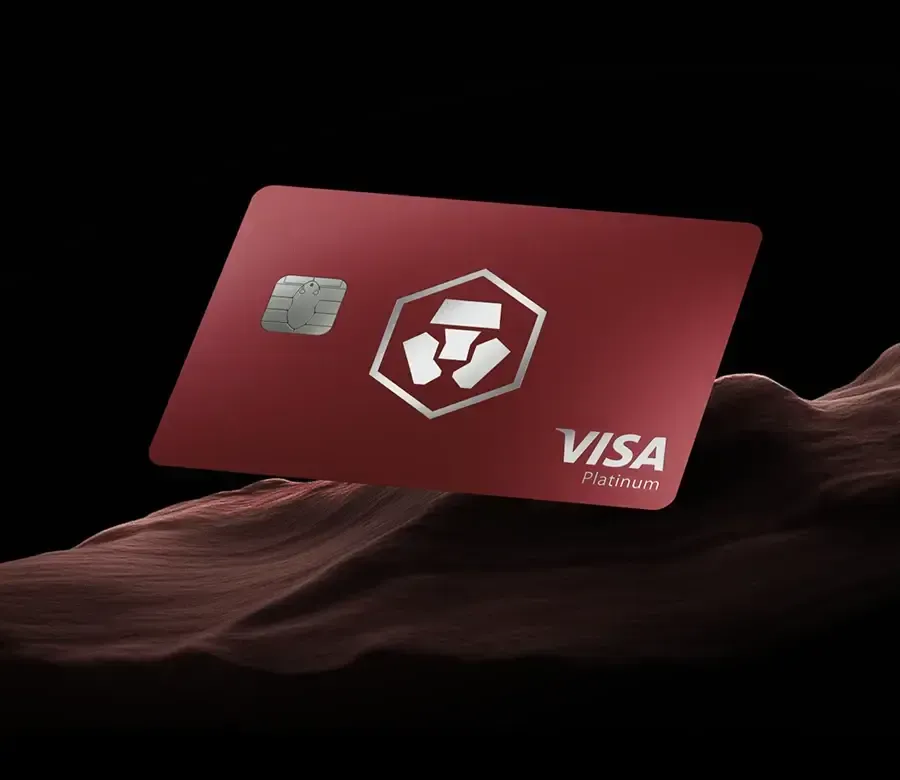
PLUS
2.0%
back in crypto · on every spend
€3.99 / month
or €39.90/year (€3.32/month)
Zero trading fees up to $20K/month
2.0% back in crypto on card spend
0% foreign exchange fees
EUR Cash Yield up to 1.35% p.a.
CRO Yield up to 2.00% p.a.
Virtual Visa card · Flexible cancel
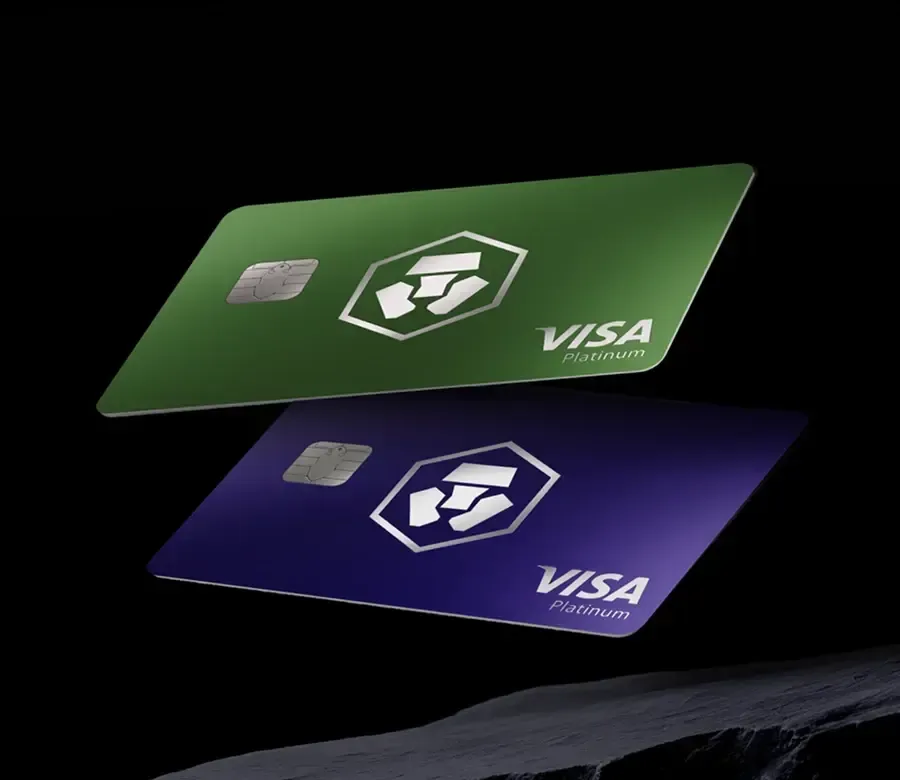
PRO
3.0%
back in crypto · on every spend
€24.99 / month
or €249.90/year (€20.82/month)
Zero trading fees up to $50K/month
3.0% back in crypto on card spend
0% foreign exchange fees
EUR Cash Yield up to 1.70% p.a.
CRO Yield up to 2.50% p.a.
Airport lounge access (Priority Pass)
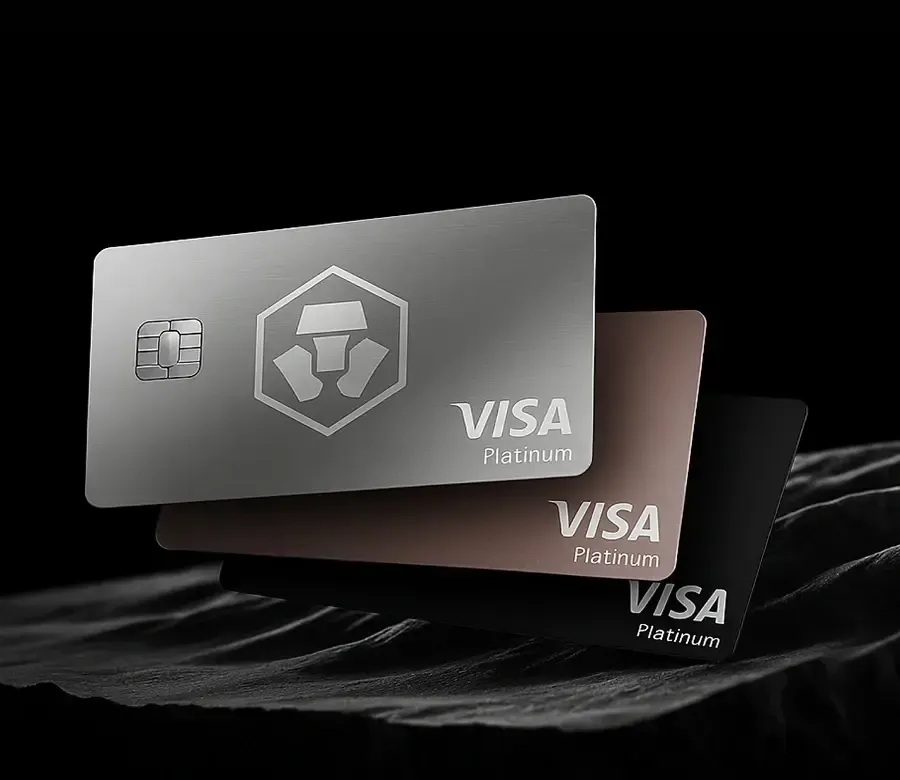
PRIVATE
4–6%
back in crypto · on every spend
CRO Lockup from €45,000
8.5% yield · 12-month staking · €450K tier at 9.5%
Zero trading fees · Unlimited volume
4.0%–6.0% back in crypto
0% foreign exchange fees
EUR Cash Yield up to 1.80% p.a.
Extra 1% p.a. on Earn allocations in CRO
VIP events · Exclusive experiences
8.5% CRO lockup rewards