
Hermès vs Louis Vuitton
Founding story, key facts and history — side by side.
Hermès
Started making horse harnesses. The horse is gone. The Birkin bag waiting list is not. Outperformed gold for 30 years.
| Founded | 1837 |
| Founders | Thierry Hermès |
| HQ | Paris, France |
| Symbol | RMS.PA |
VS
Louis Vuitton
Bernard Arnault bought a failing textile company for one franc because it contained Dior. Then built the world's largest luxury empire.
| Founded | 1987 |
| Founders | Bernard Arnault |
| HQ | Paris, France |
| Symbol | MC.PA |
The Story — Side by Side
1837
Harnesses for the horses of European nobility
Thierry Hermès founded a harness workshop in Paris in 1837, making bridles, saddles, and equestrian equipment for European nobility at a time when the horse was the primary means of transport for the wealthy. The quality of Hermès harnesses became legendary; the company supplied equipment to several royal households. Thierry's son Charles-Émile moved the workshop to its current location on Rue du Faubourg Saint-Honoré in 1880, where Hermès remains today.
1900
The automobile and the pivot to leather goods
The automobile gradually replaced the horse in the early twentieth century, threatening the harness business. The Hermès family expanded into leather luggage and accessories for motorists — bags, gloves, and eventually clothing. The pivot preserved the craft traditions of the harness workshop while applying them to new products. Hermès introduced the iconic Kelly bag — originally called the Sac à Dépêches — in the 1930s. When Grace Kelly was photographed using the bag to hide her pregnancy in 1956, Hermès renamed it in her honour.
1984
The Birkin bag and the accidental icon
In 1984, Hermès CEO Jean-Louis Dumas was seated next to actress Jane Birkin on a flight from Paris to London. Birkin's straw bag fell open and her belongings scattered across the cabin floor. She complained that she could never find a leather weekend bag she liked. Dumas sketched a design on an air sickness bag during the flight and promised to make it for her. The Birkin bag became the most sought-after handbag in the world and, by most measures, the best-performing investment asset in luxury goods over thirty years.
2010
LVMH tries to acquire Hermès — and fails
In October 2010, LVMH announced it had quietly accumulated a 14.2% stake in Hermès — widely seen as the prelude to a hostile takeover attempt. Bernard Arnault denied any hostile intent. The Hermès family, which retained approximately 73% of the company, rallied together: family members pooled their shares into a holding company to make a takeover impossible. LVMH eventually sold its Hermès stake in 2014 after reaching a settlement with French market regulators. The attempted acquisition increased Hermès's profile and, arguably, reinforced its independence as a brand value.
2023
A Birkin bag outperforms gold — and €13.4 billion in revenue
Academic research published in multiple financial journals has consistently found that Birkin bags have outperformed gold, the S&P 500, and most traditional asset classes over thirty years as investments. Hermès produces Birkin and Kelly bags in deliberately limited quantities and allocates them through a relationship-based system that requires clients to establish purchasing histories before being offered one — creating scarcity that drives secondary market prices to multiples of retail. Hermès reported revenues of €13.4 billion in 2023, with an operating margin of approximately 42% — one of the highest in global luxury — and continued to outperform every major luxury conglomerate during the 2024-2025 slowdown. The company that made harnesses for horses had become the most resilient luxury business in the world.
1984
The engineer who saw an empire
Bernard Arnault was a civil engineer who had made money in property development in the United States when he returned to France in 1984. He identified a failing textile conglomerate called Boussac Saint-Frères that owned, buried among its assets, Christian Dior. Arnault convinced the French government — worried about unemployment at Boussac's factories — to allow him to acquire the group for one franc, with a commitment to invest in the textile operations. He invested briefly in the textiles, sold most of them, and kept Dior. French businessmen called him "the wolf in cashmere."
1989
The hostile takeover of LVMH
Louis Vuitton had merged with Moët Hennessy in 1987 to create LVMH. The Vuitton and Hennessy families, alarmed at their vulnerability to takeover, invited Arnault to take a minority stake as a friendly shareholder. Arnault agreed, then quietly purchased enough shares on the open market to take control of LVMH entirely, manoeuvring around the founding families through a complex series of transactions. When the families realised what had happened, it was too late. Arnault became chairman of LVMH in 1989. The founding families sued and lost.
2000
Building the empire: 75 brands and counting
Arnault spent the 1990s and 2000s acquiring luxury brands at a pace that had no precedent in the industry: Givenchy, Bulgari, TAG Heuer, Loewe, Céline, Kenzo, Fendi, Berluti, and dozens more. His strategy was consistent: acquire iconic brands with heritage that had been mismanaged, invest in quality and distribution, position them at the top of their respective markets. Arnault's reputation for acquiring companies and ruthlessly restructuring them made him one of the most feared figures in European business.
2021
Tiffany for $15.8 billion — the largest luxury acquisition in history
LVMH acquired Tiffany & Co. in January 2021 for $15.8 billion — the largest acquisition in luxury history. The deal had been contested: LVMH had tried to withdraw after COVID-19 hit, Tiffany sued, and the acquisition was completed at a slightly reduced price after settlement. Arnault hired his son Alexandre to oversee Tiffany's transformation. Within two years, Tiffany's revenues had grown 50% and the brand had been repositioned as a genuine competitor to Cartier in high jewellery. The fine jewellery business tripled in four years under LVMH ownership.
2025
€80.8 billion and the luxury slowdown
LVMH reported 2025 revenue of €80.8 billion — down 5% on a reported basis and 1% organically from 2024's €84.7 billion — as the post-pandemic luxury spending boom continued to fade. Profit from recurring operations fell 9% to €17.8 billion, with operating margin contracting to 22%. Fashion & Leather Goods revenue fell from €41 billion to €37.8 billion, though the margin remained high at 35%. The second half of 2025 showed improvement, with 1% organic growth — and Arnault expressed cautious optimism for 2026. His five children all held senior roles at LVMH; the succession question was the most watched in European business. Arnault's net worth remained among the highest in the world. In April 2025, LVMH's board voted 99.18% to extend his retirement age to 85. He said: "We're a family group. We're not riveted to quarterly results."
Tools & Platforms
For Investors
The market doesn't care about your feelings.
But your broker's fees do.
But your broker's fees do.
Most people have a brokerage account. Fewer understand what it really costs them — in spreads, in fees, in missed instruments. Malta-regulated, direct market access, 600,000+ instruments.
Exante
Malta MFSA · 50 exchanges
Tickmill
Forex from 0.0 pips
Vantage
Multi-asset trading
Polymarket
Prediction markets
For Entrepreneurs
Opening a US company costs $300.
Most people think it's complicated. It isn't.
Most people think it's complicated. It isn't.
Most founders spend weeks on formation, banking and payments. The ones who move fast know which tools to use before they start. A US LLC, a real business account, and a way to pay people — in that order.
Mercury
Business finance · 300K+ founders
Doola
US LLC formation · YC backed
Melio
B2B payments
Xero 95% OFF
Accounting · 6 months
For C-Suite
Your competitor pays $200 less per month for EOR.
You're still on a spreadsheet.
You're still on a spreadsheet.
BVNK hired 20% of its workforce through Deel. The smartest operators aren't managing payroll complexity — they're outsourcing it. EOR in 150+ countries, multi-currency accounts, workforce payments at $200 less per month than competitors.
Deel
EOR · 150+ countries
Payoneer
$399/mo EOR · Save $200
Wise Business
40+ currencies · No hidden fees
Gusto
US payroll & benefits
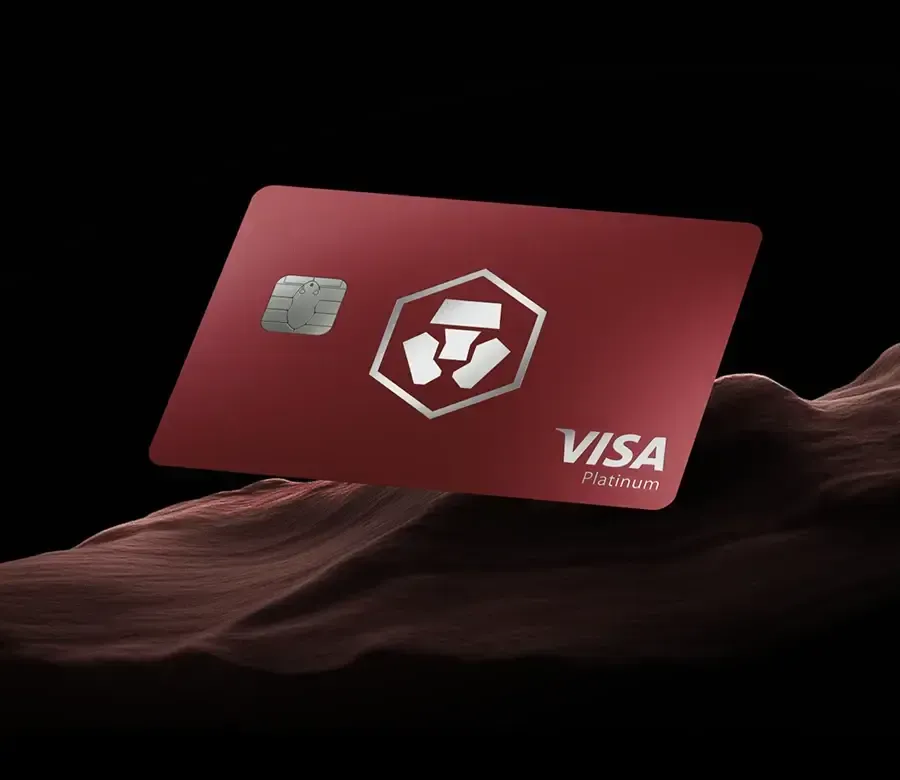
PLUS
2.0%
back in crypto · on every spend
€3.99 / month
or €39.90/year (€3.32/month)
Zero trading fees up to $20K/month
2.0% back in crypto on card spend
0% foreign exchange fees
EUR Cash Yield up to 1.35% p.a.
CRO Yield up to 2.00% p.a.
Virtual Visa card · Flexible cancel

PRO
3.0%
back in crypto · on every spend
€24.99 / month
or €249.90/year (€20.82/month)
Zero trading fees up to $50K/month
3.0% back in crypto on card spend
0% foreign exchange fees
EUR Cash Yield up to 1.70% p.a.
CRO Yield up to 2.50% p.a.
Airport lounge access (Priority Pass)
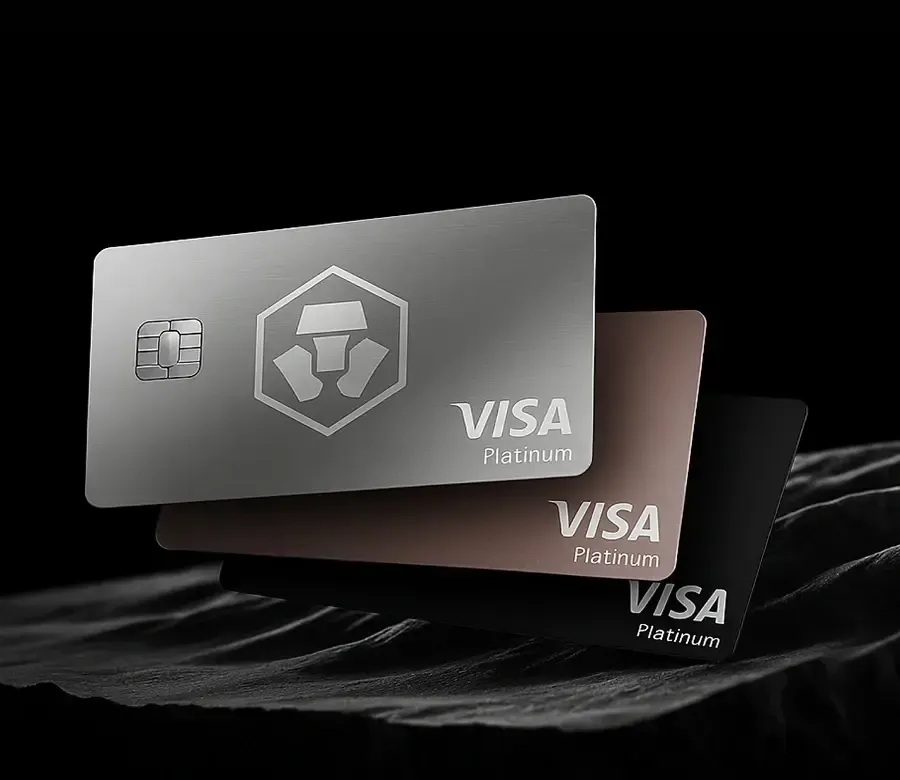
PRIVATE
4–6%
back in crypto · on every spend
CRO Lockup from €45,000
8.5% yield · 12-month staking · €450K tier at 9.5%
Zero trading fees · Unlimited volume
4.0%–6.0% back in crypto
0% foreign exchange fees
EUR Cash Yield up to 1.80% p.a.
Extra 1% p.a. on Earn allocations in CRO
VIP events · Exclusive experiences
8.5% CRO lockup rewards