
Khan Academy vs Coursera
Founding story, key facts and history — side by side.
Khan Academy
Started as a remote math tutorial for a single cousin. Now a global non-profit shielding education from commercialization.
| Founded | 2008 |
| Founders | Sal Khan |
| HQ | Mountain View, California |
| Symbol | NONPROFIT |
VS
Coursera
Born from a viral Stanford AI experiment. Now monetizing elite university credentials for millions.
| Founded | 2012 |
| Founders | Andrew Ng, Daphne Koller |
| HQ | Mountain View, California |
| Symbol | COUR |
The Story — Side by Side
2004
The remote Yahoo Doodle origin
In 2004, Sal Khan was working as a hedge fund analyst in Boston when his young cousin Nadia in New Orleans asked for help with her unit conversion math homework. Khan began tutoring her remotely using Yahoo's primitive Doodle notepad software, but as word spread, other family members demanded help. To save time, Khan began uploading simple, unedited video tutorials to YouTube in 2006, recording the voiceovers in his closet. The videos quickly attracted an accidental global audience of millions, forcing Khan to quit his lucrative hedge fund job in 2009 to turn the project into a formal entity.
2010
The Bill Gates and Google rescue checks
Operating as a radical, zero-revenue non-profit, Khan Academy was on the absolute brink of financial insolvency by mid-2010, with Sal Khan burning through his personal savings to keep the servers online. The project was saved by two massive coincidences: Bill Gates publicly announced at a tech conference that he used Khan Academy to teach his own children math, and Google subsequently injected a massive $2 million grant into the organization. These high-profile endorsements unlocked hundreds of millions in global philanthropic capital.
2015
Disrupting the SAT testing cartel
In 2015, Khan Academy executed a massive structural strike against the multi-billion dollar commercial test-prep industry by partnering directly with the College Board. The organization launched the world's first official, completely free SAT preparation platform, providing customized learning paths for students who couldn't afford expensive corporate tutors. This historic partnership completely broken the pricing monopoly held by commercial test-prep cartels, leveling the academic playing field for millions of low-income students worldwide.
2023
The OpenAI GPT-4 flagship partnership
Khan Academy stunned the global tech and educational establishments in March 2023 by emerging as OpenAI's primary launch partner for GPT-4. The non-profit unveiled Khanmigo, a revolutionary AI-powered student tutor and teacher assistant that does not give students answers, but instead acts as a Socratic guide to walk them through complex math and coding logic. This rapid implementation placed Khan Academy lightyears ahead of commercial EdTech competitors, who were still struggling with basic text chat interfaces.
2026
The public education operating system
By mid-2026, Khan Academy transformed from a simple online video archive into the default digital operating system for global public school infrastructure. Supported by massive annual philanthropic budgets exceeding $105 million from institutional donors, the platform's mastery-based learning systems were officially integrated into the public curricula of over 45 US states and 15 countries. Operating entirely free from commercial advertising or subscription paywalls, the non-profit successfully protected the personal data of over 160 million registered students worldwide.
2011
The viral Stanford classroom experiment
In the fall of 2011, Stanford computer science professors Andrew Ng and Daphne Koller decided to put their advanced machine learning courses online for free. To their absolute astonishment, Ng's course attracted over 100,000 students from 190 countries within weeks, revealing a massive, global thirst for high-end education. Realizing that traditional brick-and-mortar universities could not scale to meet this demand, both professors walked away from their prestigious tenured Stanford positions in early 2012 to launch Coursera, raising an initial $16 million in venture capital.
2013
The pivot away from free education
Coursera originally launched under the utopian promise of MOOCs (Massive Open Online Courses), offering elite university education completely free to anyone with an internet connection. However, the business model suffered from an abysmal 5% course completion rate, forcing the company into a sharp capitalistic pivot. In 2013, Coursera introduced Signature Track, charging students $30 to $100 for verified digital certificates. This monetized the human desire for resume credentials, transforming the platform from an open educational experiment into a highly commercialized global testing center.
2019
The enterprise pivot to save the business
Recognizing that individual consumer retail monetization was not generating enough recurring revenue, CEO Jeff Maggioncalda aggressively pivoted Coursera toward the enterprise B2B market. The company launched Coursera for Business, Coursera for Government, and Coursera for Campus, selling large-scale enterprise subscription packages directly to corporations looking to upskill their workforces. This enterprise push drastically stabilized the company's underlying financials, turning employee retraining into the absolute engine of Coursera's revenue growth.
2021
The pandemic IPO and the $7 billion peak
The outbreak of the pandemic triggered an unprecedented surge in traffic as millions of locked-down workers rushed to acquire digital skills. Coursera capitalized on this massive momentum by going public on the New York Stock Exchange in March 2021, with its valuation soaring past $7 billion on its first day of trading. However, as global economies reopened and people returned to physical offices, the retail consumer growth metrics slowed down drastically, causing the stock to tank over 75% from its peak and forcing deep cost-cutting measures.
2026
The AI certificate boom and enterprise recovery
By mid-2026, Coursera successfully stabilized its business model by capitalizing heavily on the massive global corporate panic surrounding generative AI retraining. The company partnered exclusively with tech giants like Google, Microsoft, and OpenAI to launch high-margin Professional Certificates in AI engineering, which saw enrollment numbers jump by 140% year-over-year. Total corporate revenue climbed past $780 million, driven almost entirely by their high-margin enterprise subscription tiers, which locked in multi-year learning contracts with over 1,500 global corporations and governments.
Tools & Platforms
For Investors
The market doesn't care about your feelings.
But your broker's fees do.
But your broker's fees do.
Most people have a brokerage account. Fewer understand what it really costs them — in spreads, in fees, in missed instruments. Malta-regulated, direct market access, 600,000+ instruments.
Exante
Malta MFSA · 50 exchanges
Tickmill
Forex from 0.0 pips
Vantage
Multi-asset trading
Polymarket
Prediction markets
For Entrepreneurs
Opening a US company costs $300.
Most people think it's complicated. It isn't.
Most people think it's complicated. It isn't.
Most founders spend weeks on formation, banking and payments. The ones who move fast know which tools to use before they start. A US LLC, a real business account, and a way to pay people — in that order.
Mercury
Business finance · 300K+ founders
Doola
US LLC formation · YC backed
Melio
B2B payments
Xero 95% OFF
Accounting · 6 months
For C-Suite
Your competitor pays $200 less per month for EOR.
You're still on a spreadsheet.
You're still on a spreadsheet.
BVNK hired 20% of its workforce through Deel. The smartest operators aren't managing payroll complexity — they're outsourcing it. EOR in 150+ countries, multi-currency accounts, workforce payments at $200 less per month than competitors.
Deel
EOR · 150+ countries
Payoneer
$399/mo EOR · Save $200
Wise Business
40+ currencies · No hidden fees
Gusto
US payroll & benefits
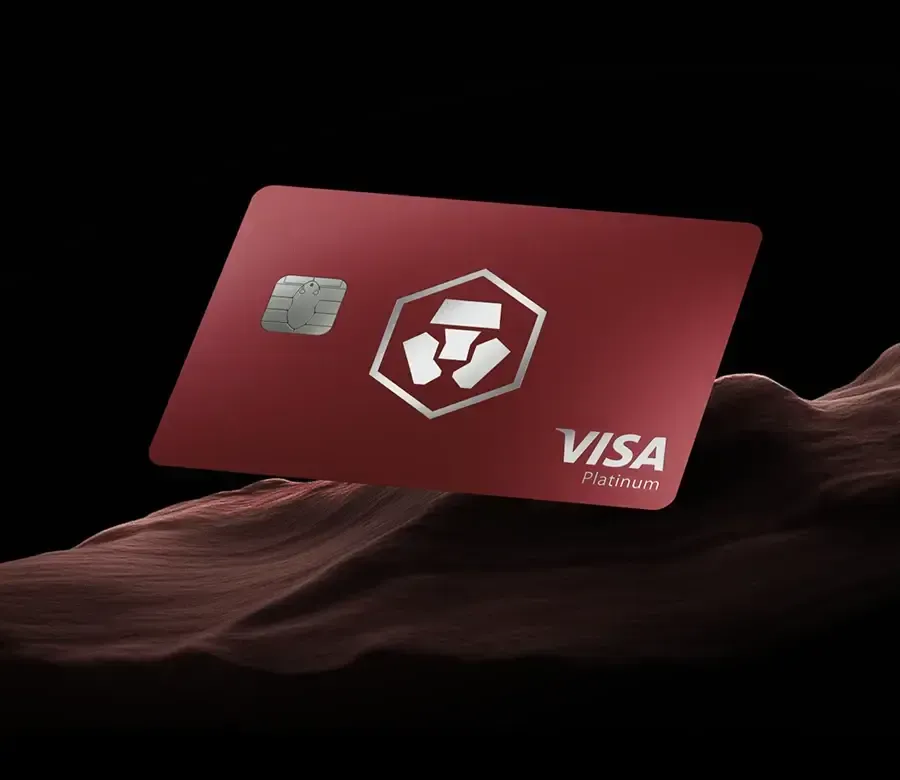
PLUS
2.0%
back in crypto · on every spend
€3.99 / month
or €39.90/year (€3.32/month)
Zero trading fees up to $20K/month
2.0% back in crypto on card spend
0% foreign exchange fees
EUR Cash Yield up to 1.35% p.a.
CRO Yield up to 2.00% p.a.
Virtual Visa card · Flexible cancel
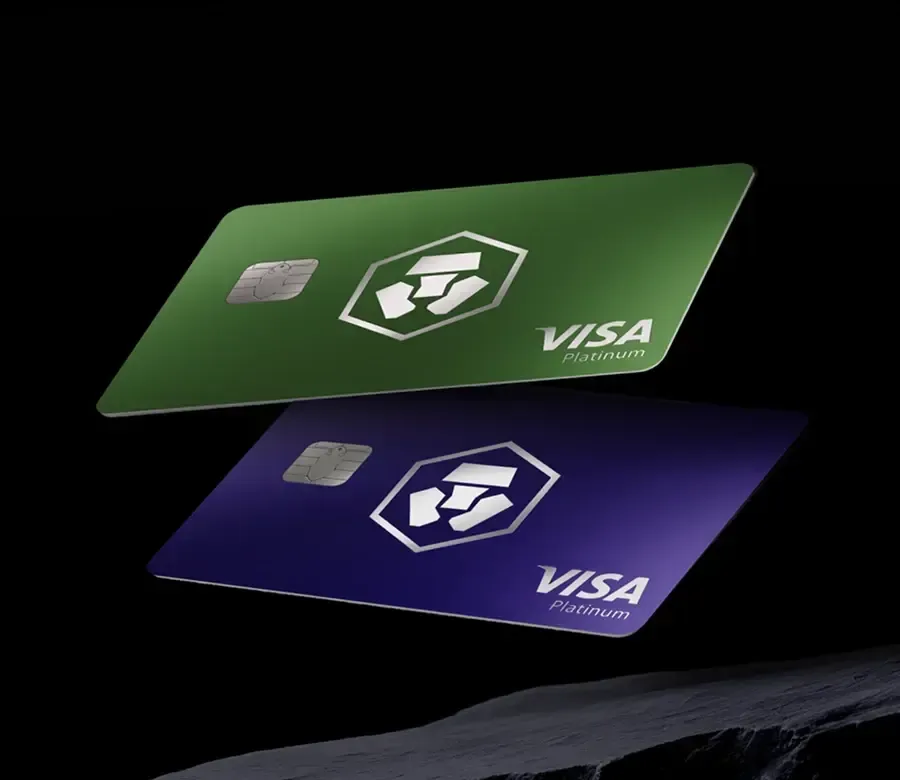
PRO
3.0%
back in crypto · on every spend
€24.99 / month
or €249.90/year (€20.82/month)
Zero trading fees up to $50K/month
3.0% back in crypto on card spend
0% foreign exchange fees
EUR Cash Yield up to 1.70% p.a.
CRO Yield up to 2.50% p.a.
Airport lounge access (Priority Pass)

PRIVATE
4–6%
back in crypto · on every spend
CRO Lockup from €45,000
8.5% yield · 12-month staking · €450K tier at 9.5%
Zero trading fees · Unlimited volume
4.0%–6.0% back in crypto
0% foreign exchange fees
EUR Cash Yield up to 1.80% p.a.
Extra 1% p.a. on Earn allocations in CRO
VIP events · Exclusive experiences
8.5% CRO lockup rewards