
Leonardo vs BAE Systems
Founding story, key facts and history — side by side.
Leonardo
Italy's primary industrial defense engine, transforming a sprawling post-war state holding company into a hyper-focused aerospace player.
| Founded | 1948 (As Finmeccanica) |
| Founders | Italian Institute for Industrial Reconstruction |
| HQ | Rome, Italy |
| Symbol | BIT: LDO |
VS
BAE Systems
Britain's defence industry consolidated into one company. Now the Western world's most important defence contractor outside the United States. Ukraine changed everything.
| Founded | 1999 |
| Founders | British Aerospace + Marconi Electronic Systems merger |
| HQ | London, United Kingdom |
| Symbol | BA..L (LSE) |
The Story — Side by Side
1948
The post-war mechanical holding company genesis
The company was originally created as Finmeccanica, a massive industrial state holding group formed by the Italian government to manage the reconstruction of the nation's shattered heavy engineering, automotive, and shipyard industries following the absolute economic destruction of World War II.
2016
The historic One Company corporate consolidation collapse
CEO Mauro Moretti executed a radical, highly aggressive corporate turnaround plan, completely dissolving independent subsidiary brands like AgustaWestland helicopters and Alenia Aermacchi. The holding entity collapsed these fragmented silos into a single, unified operational corporate structure.
2017
The permanent renaming to honor polymath Leonardo da Vinci
To mark the complete, successful conclusion of its structural industrial restructuring, Finmeccanica officially changed its name to Leonardo S.p.A. The corporate rebranding directly evoked the spirit of the legendary Italian Renaissance polymath Leonardo da Vinci, highlighting the firm's focus on high-technology engineering.
2026
The €1.6 billion Iveco Defence acquisition and €21 billion revenue guidance
By mid-2026, Leonardo S.p.A. successfully finalized its landmark €1.6 billion acquisition of Iveco Defence Vehicles (IDV), dramatically expanding its European footprint in armored land platforms. Backed by an order backlog exceeding €56 billion, corporate leadership confirmed annual revenue targets climbing toward €21 billion.
1960
British Aerospace and the electronics consolidation
BAE Systems' heritage spans multiple British defence companies that were nationalised and consolidated through the 20th century. British Aerospace was formed in 1977 from the nationalisation of British Aircraft Corporation, Hawker Siddeley Aviation, and Scottish Aviation — bringing together the manufacturers of the Tornado, the Harrier jump jet, and the BAC 1-11 civil aircraft. It was privatised by Margaret Thatcher in 1981. Marconi Electronic Systems, the defence electronics division of GEC, represented a parallel stream of British military technology including radars, electronic warfare systems, and naval combat management.
1999
The merger that created Britain's defence champion
BAE Systems was formed in November 1999 through the merger of British Aerospace and Marconi Electronic Systems — the largest defence merger in European history at the time. The combined entity created a company capable of competing with Lockheed Martin, Raytheon, and Boeing for major defence contracts, integrating aircraft, submarines, ships, armoured vehicles, and electronics under a single corporate umbrella. BAE retained major programmes including Typhoon combat aircraft (with Airbus and Leonardo), the Astute-class nuclear submarines, and the Hawk trainer aircraft used by the Red Arrows.
2005
The US pivot — ship repair, electronics, and the American market
BAE Systems pursued an aggressive US market strategy through acquisitions: United Defense Industries (2005, $4.2 billion) gave BAE the Bradley fighting vehicle, artillery systems, and the Paladin self-propelled howitzer — critical US Army programmes. Subsequent acquisitions in ship repair (BAE Systems Norfolk Ship Repair, San Diego Ship Repair) and electronic warfare systems built a US revenue base that eventually exceeded BAE's UK revenues. The company structured its US operations under US-person management compliant with International Traffic in Arms Regulations, enabling it to bid on classified US defence programmes as a domestic contractor.
2022
Ukraine, Europe rearms, and the order book explosion
Russia's full-scale invasion of Ukraine in February 2022 transformed the European defence market. NATO members were forced to acknowledge that their defence spending had fallen critically below the requirements of actual warfighting. BAE Systems' order book — already substantial — began growing at an accelerating pace as governments ordered more artillery shells, armoured vehicles, F-35 jets (which BAE manufactures significant portions of), and electronic warfare systems. BAE's share price more than doubled between 2022 and 2025, reflecting investor recognition that defence spending in Europe would remain elevated for a generation.
2024
£28.3 billion in sales — the largest order book in history — $1.2 billion US Army howitzer
BAE Systems reported sales of £28.3 billion in 2024, with an order backlog exceeding £74 billion — the largest in the company's history. The US Army's $1.2 billion contract for M109A8 Paladin howitzers reflected BAE's indispensable position in American artillery modernisation. The F-35 programme — where BAE manufactures the aft fuselage, empennage, and electronic warfare suite — continued to generate multi-decade revenue. Typhoon sales to Saudi Arabia and additional European operators and the Tempest/GCAP next-generation fighter development programme with Japan and Italy provided long-term programme revenue visibility. BAE was the essential non-American partner for Western defence.
Tools & Platforms
For Investors
The market doesn't care about your feelings.
But your broker's fees do.
But your broker's fees do.
Most people have a brokerage account. Fewer understand what it really costs them — in spreads, in fees, in missed instruments. Malta-regulated, direct market access, 600,000+ instruments.
Exante
Malta MFSA · 50 exchanges
Tickmill
Forex from 0.0 pips
Vantage
Multi-asset trading
Polymarket
Prediction markets
For Entrepreneurs
Opening a US company costs $300.
Most people think it's complicated. It isn't.
Most people think it's complicated. It isn't.
Most founders spend weeks on formation, banking and payments. The ones who move fast know which tools to use before they start. A US LLC, a real business account, and a way to pay people — in that order.
Mercury
Business finance · 300K+ founders
Doola
US LLC formation · YC backed
Melio
B2B payments
Xero 95% OFF
Accounting · 6 months
For C-Suite
Your competitor pays $200 less per month for EOR.
You're still on a spreadsheet.
You're still on a spreadsheet.
BVNK hired 20% of its workforce through Deel. The smartest operators aren't managing payroll complexity — they're outsourcing it. EOR in 150+ countries, multi-currency accounts, workforce payments at $200 less per month than competitors.
Deel
EOR · 150+ countries
Payoneer
$399/mo EOR · Save $200
Wise Business
40+ currencies · No hidden fees
Gusto
US payroll & benefits

PLUS
2.0%
back in crypto · on every spend
€3.99 / month
or €39.90/year (€3.32/month)
Zero trading fees up to $20K/month
2.0% back in crypto on card spend
0% foreign exchange fees
EUR Cash Yield up to 1.35% p.a.
CRO Yield up to 2.00% p.a.
Virtual Visa card · Flexible cancel

PRO
3.0%
back in crypto · on every spend
€24.99 / month
or €249.90/year (€20.82/month)
Zero trading fees up to $50K/month
3.0% back in crypto on card spend
0% foreign exchange fees
EUR Cash Yield up to 1.70% p.a.
CRO Yield up to 2.50% p.a.
Airport lounge access (Priority Pass)
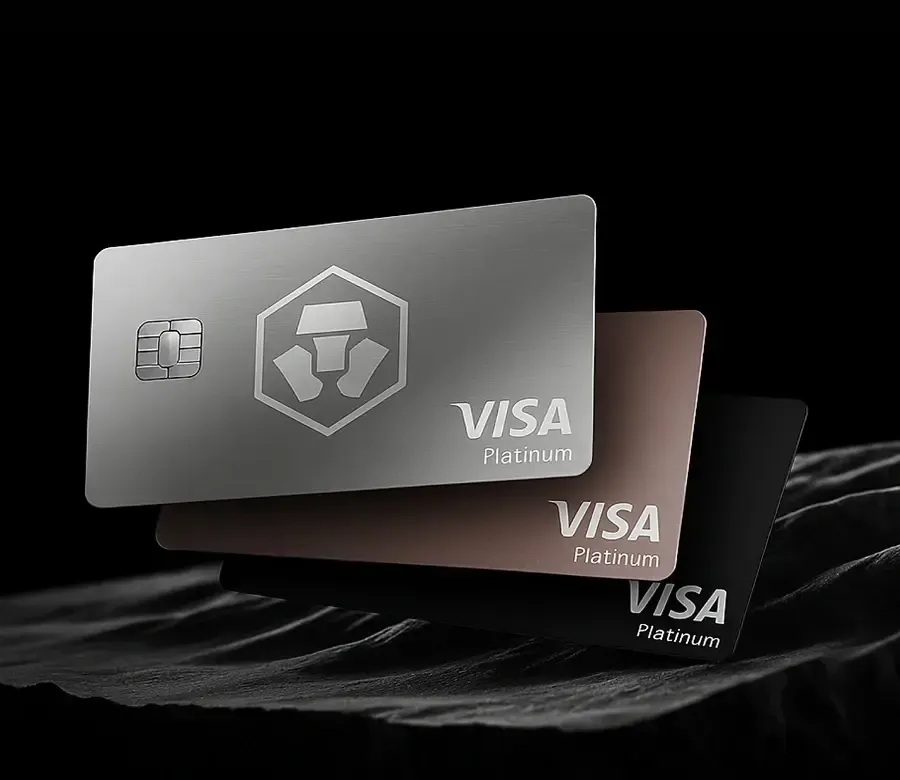
PRIVATE
4–6%
back in crypto · on every spend
CRO Lockup from €45,000
8.5% yield · 12-month staking · €450K tier at 9.5%
Zero trading fees · Unlimited volume
4.0%–6.0% back in crypto
0% foreign exchange fees
EUR Cash Yield up to 1.80% p.a.
Extra 1% p.a. on Earn allocations in CRO
VIP events · Exclusive experiences
8.5% CRO lockup rewards