
Lions Gate Entertainment vs Warner Bros.
Founding story, key facts and history — side by side.
Lions Gate Entertainment
A Canadian mining shell corporation turned indie Hollywood assassin, built entirely on blood-soaked horror franchises and predatory mid-budget scaling.
| Founded | 1997 |
| Founders | Frank Giustra |
| HQ | Santa Monica, California |
| Symbol | LION |
VS
Warner Bros.
A century-old cinematic institution perpetually traded like an over-leveraged commodity through catastrophic multi-billion dollar corporate mergers.
| Founded | 1923 |
| Founders | Harry, Albert, Sam, and Jack Warner |
| HQ | New York, New York |
| Symbol | WBD |
The Story — Side by Side
1997
The tax-sheltered Canadian mining shell company pivot
Lionsgate was founded by Canadian investment banker Frank Giustra, who utilized a dormant corporate mining shell company listed on the Vancouver Stock Exchange to aggressively roll up independent film assets. Taking advantage of highly lucrative Canadian tax shelter frameworks and low-cost production infrastructure in British Columbia, Giustra bypassed traditional Hollywood studio overhead. The company focused ruthlessly on edgier, low-budget content that major corporate studios considered too risky or commercially unviable.
2004
The Saw franchise acquisition and the low-cost horror factory
In 2004, Lionsgate made a defining strategic move by acquiring a tiny Australian indie horror film named Saw for just over $1 million. The studio transformed the raw property into a highly mechanized multi-million dollar annual franchise, releasing a new sequel every single Halloween for seven consecutive years. Operating with hyper-strict, fixed production budgets under $10 million per film, the franchise generated over $1 billion globally, providing the studio with predictable, non-cyclical cash flow.
2012
The predatory Summit Entertainment acquisition and the YA juggernaut
Lionsgate executed its largest corporate expansion by orchestrating a predatory $412.5 million acquisition of rival independent mini-major Summit Entertainment. The high-risk integration gave Lionsgate absolute ownership of the global Twilight Saga franchise right before launching its own home-grown blockbuster intellectual property, The Hunger Games. These two young-adult cinematic engines generated billions in highly lucrative box office revenue, briefly elevating the indie studio to challenge the big five legacy Hollywood cartels.
2016
The over-leveraged $4.4 billion Starz network premium acquisition trap
Seeking to secure a dedicated premium cable and global digital streaming distribution pipeline, Lionsgate acquired Starz for a massive, heavily leveraged $4.4 billion in cash and stock. The massive corporate debt load heavily constrained the studio's operational cash reserves just as the global streaming wars accelerated content costs. The strategic mismatch severely depressed the company's equity valuation, forcing the board to seek an urgent corporate separation strategy.
2026
The historic corporate split-off and the pure-play studio launch
By mid-2026, Lions Gate Entertainment officially finalized its long-delayed structural corporate split-off, cleanly separating its film and television studio business from the Starz streaming platform. The newly independent, pure-play entity traded under the LION ticker, boasting a massive 20,000-title content library and highly profitable recurring cash flows from the John Wick universe. The lean operation positioned itself as the premier independent content supplier to content-starved global streaming platforms.
1927
The audio technology gamble that killed the silent film industry
Facing absolute bankruptcy in the mid-1920s, the Warner brothers gambled their remaining capital on the "Vitaphone" sound-on-disc technology, producing The Jazz Singer in 1927. The historic gamble completely shattered the global silent film market overnight, rendering millions of dollars of rival studio assets obsolete and establishing Warner Bros. as a major Hollywood superpower. Tragically, Sam Warner died from a severe brain abscess just one day before the film's triumphant premiere, never witnessing the empire he saved.
2000
The AOL disaster and the greatest corporate wealth destruction in history
In January 2000, at the absolute height of the dot-com bubble, AOL acquired Warner Bros. (Time Warner) for a staggering $164 billion in an ill-fated internet convergence play. The integration quickly transformed into an absolute operational disaster as dial-up internet collapsed, leading to a historic $99 billion quarterly write-down in 2002. This catastrophic merger permanently erased hundreds of billions of dollars in shareholder value, crippling the studio's capital structure for over a decade.
2021
The Project Popcorn shockwave and the destruction of talent relations
Under the ownership of telecom giant AT&T, WarnerMedia CEO Jason Kilar executed a shocking corporate maneuver code-named "Project Popcorn" during the height of the global pandemic. Kilar unilaterally bypassed traditional theatrical release windows, sending Warner's entire 2021 theatrical film slate directly to HBO Max on the same day as their theater debuts. The hyper-aggressive streaming push deeply alienated elite Hollywood directors, forcing the studio to pay out over $200 million in back-end profit compensation.
2022
The $43 billion leverage buyout and the shelfing of completed films
In 2022, AT&T abruptly spun off WarnerMedia, merging it with Discovery Inc. to form Warner Bros. Discovery, saddling the new entity with a crushing $43 billion debt load. Under the aggressive leadership of CEO David Zaslav, the studio shocked the industry by permanently shelving completely finished movies, including the $90 million Batgirl film, purely to claim immediate corporate tax write-offs. This unprecedented financial maneuvering sparked widespread union outrage and deep structural revolts across the creative community.
2026
The brutal debt deleveraging peak and the live-sports licensing war
By mid-2026, Warner Bros. Discovery aggressively fought to manage its volatile capital structure, reporting consolidated annual revenues near $41.2 billion while fighting intense linear cord-cutting trends. Following the devastating loss of long-term NBA domestic broadcasting rights, the corporation aggressively pivoted its Max streaming engine toward global live-sports integration and hyper-focused IP exploitation. The management team executed deep structural corporate layoffs to prioritize positive free cash flow over raw content volume.
Tools & Platforms
For Investors
The market doesn't care about your feelings.
But your broker's fees do.
But your broker's fees do.
Most people have a brokerage account. Fewer understand what it really costs them — in spreads, in fees, in missed instruments. Malta-regulated, direct market access, 600,000+ instruments.
Exante
Malta MFSA · 50 exchanges
Tickmill
Forex from 0.0 pips
Vantage
Multi-asset trading
Polymarket
Prediction markets
For Entrepreneurs
Opening a US company costs $300.
Most people think it's complicated. It isn't.
Most people think it's complicated. It isn't.
Most founders spend weeks on formation, banking and payments. The ones who move fast know which tools to use before they start. A US LLC, a real business account, and a way to pay people — in that order.
Mercury
Business finance · 300K+ founders
Doola
US LLC formation · YC backed
Melio
B2B payments
Xero 95% OFF
Accounting · 6 months
For C-Suite
Your competitor pays $200 less per month for EOR.
You're still on a spreadsheet.
You're still on a spreadsheet.
BVNK hired 20% of its workforce through Deel. The smartest operators aren't managing payroll complexity — they're outsourcing it. EOR in 150+ countries, multi-currency accounts, workforce payments at $200 less per month than competitors.
Deel
EOR · 150+ countries
Payoneer
$399/mo EOR · Save $200
Wise Business
40+ currencies · No hidden fees
Gusto
US payroll & benefits

PLUS
2.0%
back in crypto · on every spend
€3.99 / month
or €39.90/year (€3.32/month)
Zero trading fees up to $20K/month
2.0% back in crypto on card spend
0% foreign exchange fees
EUR Cash Yield up to 1.35% p.a.
CRO Yield up to 2.00% p.a.
Virtual Visa card · Flexible cancel

PRO
3.0%
back in crypto · on every spend
€24.99 / month
or €249.90/year (€20.82/month)
Zero trading fees up to $50K/month
3.0% back in crypto on card spend
0% foreign exchange fees
EUR Cash Yield up to 1.70% p.a.
CRO Yield up to 2.50% p.a.
Airport lounge access (Priority Pass)
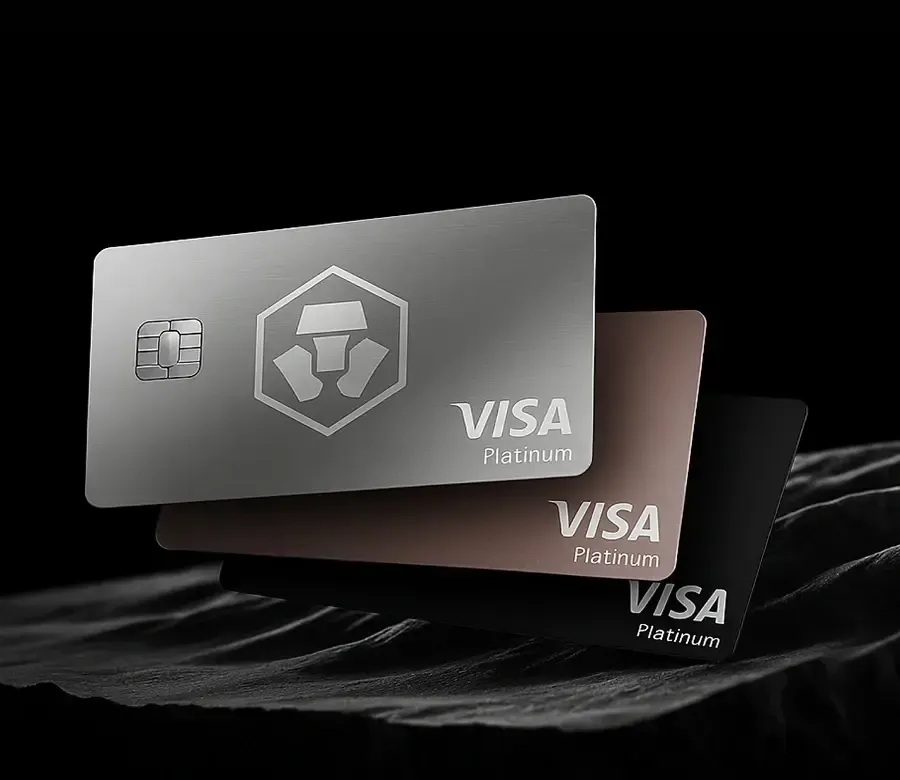
PRIVATE
4–6%
back in crypto · on every spend
CRO Lockup from €45,000
8.5% yield · 12-month staking · €450K tier at 9.5%
Zero trading fees · Unlimited volume
4.0%–6.0% back in crypto
0% foreign exchange fees
EUR Cash Yield up to 1.80% p.a.
Extra 1% p.a. on Earn allocations in CRO
VIP events · Exclusive experiences
8.5% CRO lockup rewards