
Liverpool FC vs Arsenal FC
Founding story, key facts and history — side by side.
Liverpool FC
Saved from a toxic boardroom civil war by Boston Moneyball executives, it rebuilt its historic European empire on advanced data analytics.
| Founded | 1892 |
| Founders | John Houlding |
| HQ | Liverpool, United Kingdom |
| Symbol | PRIVATE |
VS
Arsenal FC
Financially handcuffed for a decade by building a new stadium, it broke a long corporate stagnation to challenge the elite once again.
| Founded | 1886 |
| Founders | Royal Arsenal Munitions Workers |
| HQ | London, United Kingdom |
| Symbol | PRIVATE |
The Story — Side by Side
1959
Bill Shankly and the working-class bastion blueprint
Liverpool FC was born out of a stadium rental dispute in 1892, but its modern structural identity as a European powerhouse was forged by legendary manager Bill Shankly in 1959. Taking over a decaying second-division club, Shankly transformed Anfield into an absolute fortress, converted a small storage room into the famous tactical "Boot Room," and built a deep, emotional connection between the working-class fan base and the team's collective identity.
2010
The toxic Hicks-Gillett near-administration crisis
In the late 2000s, Liverpool fell into an absolute nightmare era under American owners Tom Hicks and George Gillett, who had purchased the club with high-interest loans. The duo engaged in a toxic internal boardroom civil war, starving the team of capital and loading the club with unsustainable debts. By October 2010, the Royal Bank of Scotland forced the club into the High Court to trigger a sale, narrowly rescuing Liverpool from entering bankruptcy administration.
2010
The Fenway Sports Group acquisition and the Moneyball pivot
In October 2010, John W. Henry's New England Sports Ventures (now Fenway Sports Group, owners of the Boston Red Sox) purchased the broken club for £300 million. FSG deployed an incredibly strict, data-driven "Moneyball" recruitment strategy. Instead of paying hyper-inflated premium fees for established superstars, the club utilized advanced data analytics models to identify undervalued talent like Mohamed Salah and Sadio Mané, building a world-class roster.
2020
The Klopp sporting peak and the Main Stand infrastructure scale-up
Under the magnetic leadership of manager Jürgen Klopp, Liverpool achieved a historic sporting renaissance, winning the Champions League in 2019 and breaking a 30-year drought to secure the Premier League title in 2020. Simultaneously, FSG rejected calls to move to a new stadium, choosing instead to execute a highly lucrative, multi-million dollar expansion of Anfield's historic Main Stand and Anfield Road Ends, dramatically boosting matchday gate revenues.
2026
The post-Klopp structural transition and the multi-club expansion
By mid-2026, Liverpool FC successfully completed a high-stakes structural transition following the emotional departure of Jürgen Klopp. Under the leadership of FSG CEO of Football Michael Edwards, the organization stabilized its financial model, pushing annual revenue past £615 million. FSG expanded its corporate layout into a multi-club model, leveraging its optimized data infrastructure to secure global talent while maintaining a self-sustaining balance sheet.
1886
The South London munitions workers foundation
Arsenal was founded by munitions workers at the Royal Arsenal in Woolwich in 1886, originally playing under the name Dial Square. The club made a radical, highly controversial decision in 1913, relocating across London to Highbury in North London under the bold guidance of Sir Henry Norris. This geographic migration established the club in one of the capital's wealthiest residential zones, laying the foundation for its long-term commercial status.
1996
The Arsène Wenger revolution and the Invincibles era
The appointment of French manager Arsène Wenger in 1996 completely revolutionized British football. Wenger introduced modern nutritional science, international scouting networks, and an ultra-fluid tactical style that culminated in the legendary 2003-04 "Invincibles" season, where Arsenal won the Premier League without losing a single match, transforming the London club into a premier international sporting brand.
2006
The multi-million pound Emirates Stadium financial handcuffs
To compete with Europe's largest clubs over long-term gate revenues, Arsenal made the high-stakes decision to leave Highbury and construct the state-of-the-art, £390 million Emirates Stadium. The massive construction project forced the club to take on heavy bank debt, placing the team in strict financial handcuffs for over a decade. Wenger was forced to sell elite captains and stars every single summer just to service the stadium loans, triggering a long sporting decline.
2018
The Stan Kroenke full buyout takeover closure
Following a multi-year, hostile shareholder deadlock between American sports tycoon Stan Kroenke and Russian billionaire Alisher Usmanov, Kroenke's Kroenke Sports & Entertainment (KSE) successfully launched a full buyout in August 2018. KSE bought out Usmanov for £550 million to take 100% private ownership of the club. This privatization ended years of toxic boardroom fractional fighting, allowing KSE to streamline capital allocation and debt restructuring.
2026
The Arteta sporting renaissance and record commercial returns
By mid-2026, Arsenal FC firmly re-established itself as an elite global contender under the unified sporting direction of Mikel Arteta. Supported by aggressive, targeted capital injections from KSE, the club's annual operational revenue surged past a record £480 million, fueled by consecutive Champions League runs and lucrative commercial brand renewals. The club successfully moved past its stadium debt era, maintaining a highly valuable young asset roster.
Tools & Platforms
For Investors
The market doesn't care about your feelings.
But your broker's fees do.
But your broker's fees do.
Most people have a brokerage account. Fewer understand what it really costs them — in spreads, in fees, in missed instruments. Malta-regulated, direct market access, 600,000+ instruments.
Exante
Malta MFSA · 50 exchanges
Tickmill
Forex from 0.0 pips
Vantage
Multi-asset trading
Polymarket
Prediction markets
For Entrepreneurs
Opening a US company costs $300.
Most people think it's complicated. It isn't.
Most people think it's complicated. It isn't.
Most founders spend weeks on formation, banking and payments. The ones who move fast know which tools to use before they start. A US LLC, a real business account, and a way to pay people — in that order.
Mercury
Business finance · 300K+ founders
Doola
US LLC formation · YC backed
Melio
B2B payments
Xero 95% OFF
Accounting · 6 months
For C-Suite
Your competitor pays $200 less per month for EOR.
You're still on a spreadsheet.
You're still on a spreadsheet.
BVNK hired 20% of its workforce through Deel. The smartest operators aren't managing payroll complexity — they're outsourcing it. EOR in 150+ countries, multi-currency accounts, workforce payments at $200 less per month than competitors.
Deel
EOR · 150+ countries
Payoneer
$399/mo EOR · Save $200
Wise Business
40+ currencies · No hidden fees
Gusto
US payroll & benefits
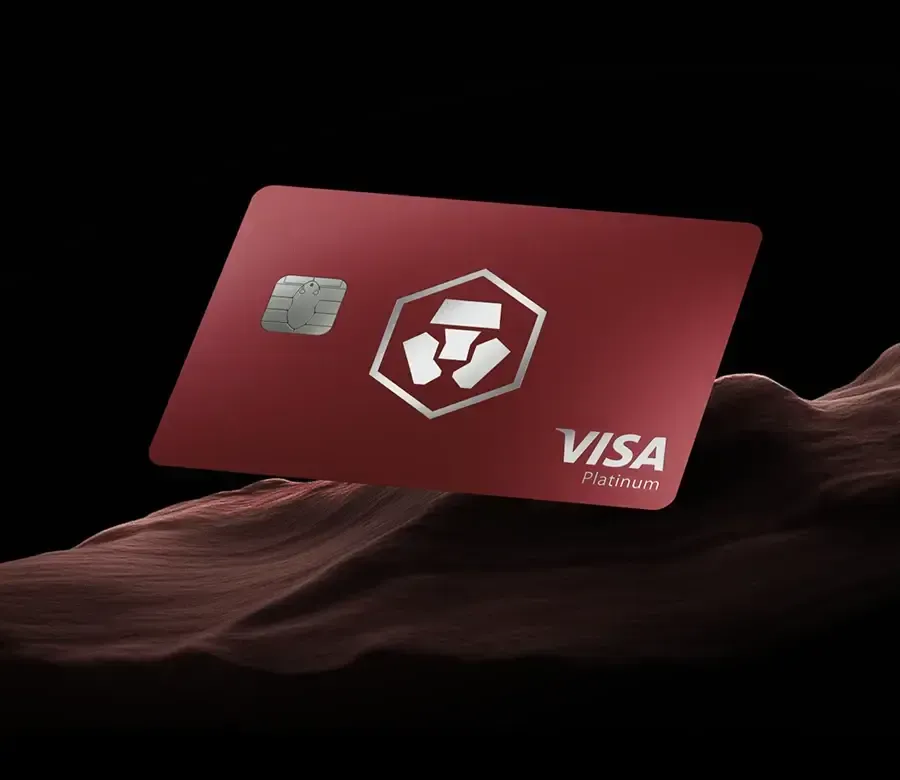
PLUS
2.0%
back in crypto · on every spend
€3.99 / month
or €39.90/year (€3.32/month)
Zero trading fees up to $20K/month
2.0% back in crypto on card spend
0% foreign exchange fees
EUR Cash Yield up to 1.35% p.a.
CRO Yield up to 2.00% p.a.
Virtual Visa card · Flexible cancel

PRO
3.0%
back in crypto · on every spend
€24.99 / month
or €249.90/year (€20.82/month)
Zero trading fees up to $50K/month
3.0% back in crypto on card spend
0% foreign exchange fees
EUR Cash Yield up to 1.70% p.a.
CRO Yield up to 2.50% p.a.
Airport lounge access (Priority Pass)

PRIVATE
4–6%
back in crypto · on every spend
CRO Lockup from €45,000
8.5% yield · 12-month staking · €450K tier at 9.5%
Zero trading fees · Unlimited volume
4.0%–6.0% back in crypto
0% foreign exchange fees
EUR Cash Yield up to 1.80% p.a.
Extra 1% p.a. on Earn allocations in CRO
VIP events · Exclusive experiences
8.5% CRO lockup rewards