
Manchester United vs Manchester City FC
Founding story, key facts and history — side by side.
Manchester United
Hijacked by an American leveraged buyout that loaded it with half a billion in debt, it survived decade-long decay to enter the Ineos chemical era.
| Founded | 1878 |
| Founders | Lancashire and Yorkshire Railway Company |
| HQ | Manchester, United Kingdom |
| Symbol | MANU |
VS
Manchester City FC
Transformed from a comedic second-tier joke into a multi-club global empire, facing a historic 115 financial charge battle.
| Founded | 1880 |
| Founders | St. Mark's (West Gorton) Church members |
| HQ | Manchester, United Kingdom |
| Symbol | PRIVATE |
The Story — Side by Side
1958
The Munich air disaster and the Sir Matt Busby rebuild
Founded as Newton Heath LYR, the club renamed itself Manchester United in 1902. The foundational emotional narrative of the modern club was forged in the ashes of the February 1958 Munich air disaster, which claimed the lives of 23 people, including 8 players from the legendary "Busby Babes" roster. Manager Sir Matt Busby survived his severe injuries to painstakingly rebuild the club, culminating in an emotional 1968 European Cup triumph that established United as a symbol of resilience.
1991
The London Stock Exchange listing and the Sir Alex Ferguson monopoly
In 1991, Manchester United became one of the first major football clubs to list publicly on the London Stock Exchange, capitalizing on commercial infrastructure growth. Under the managerial guidance of Sir Alex Ferguson, the club entered an era of unprecedented sporting dominance. Ferguson's teams won 13 Premier League titles and a historic continental treble in 1999, turning the club into the most dominant global commercial brand in British sports history.
2005
The predatory $1.4 billion Glazer leveraged buyout
In 2005, American sports tycoon Malcolm Glazer completed a hostile, highly controversial takeover of Manchester United for £790 million. Glazer pulled off a classic predatory leveraged buyout, loading roughly £525 million of the purchase debt directly onto the debt-free club's own balance sheet. This structural financial engineering forced the club to bleed over £1 billion in interest, bank fees, and dividends over the next two decades, triggering fierce, long-running fan protests.
2024
Sir Jim Ratcliffe and the £1.3 billion Ineos restructuring
Following a multi-year, exhausting strategic review that saw the Glazer family refuse to fully sell the club, British petrochemical billionaire Sir Jim Ratcliffe and his company Ineos successfully acquired a 27.7% minority stake for roughly £1.3 billion in early 2024. Crucially, Ratcliffe secured complete structural control over all football and sporting operations, immediately launching an aggressive corporate restructuring to repair years of systemic cultural and stadium infrastructure decay.
2026
The New Old Trafford project blueprint and operational recovery
By mid-2026, Manchester United successfully stabilized its commercial metrics under the Ineos executive leadership, pushing annual revenues past a record £660 million. The club officially finalized the multi-billion dollar master plan for a state-of-the-art, 100,000-capacity "New Old Trafford" stadium complex, designed to anchor a massive urban regeneration zone. Despite carrying residual debt lines on the NYSE, the club aggressively cleared structural overhead to build a sustainable, modern competitive roster.
1998
The dark third-tier depression era
For most of its modern history, Manchester City was trapped in the shadow of cross-town rivals Manchester United, plagued by chaotic management and comical on-pitch collapses known as "Cityitis." The absolute absolute nadir occurred in May 1998, when the club was officially relegated to the third tier of English football (Division Two) for the first time in its history, playing matches against small regional clubs while United was preparing to win the European treble.
2008
The transformative Abu Dhabi sovereign wealth takeover
The trajectory of global football changed forever in September 2008 when the Abu Dhabi United Group, led by billionaire Sheikh Mansour bin Zayed Al Nahyan, purchased Manchester City for £210 million from controversial Thai politician Thaksin Shinawatra. The new state-backed owners immediately injected billions into elite player transfers, world-class training facilities, and local community infrastructure, transforming the historic underdogs into an overnight superpower.
2013
Building the City Football Group multi-club empire
Under the corporate leadership of CEO Ferran Soriano, the club established the City Football Group (CFG), a revolutionary corporate holding entity that designed a global multi-club ownership model. CFG aggressively acquired and built satellite football clubs across major global markets—including New York City FC, Melbourne City, Girona, and Yokohama F. Marinos—allowing the parent brand to share scouting data, commercial sponsorships, and corporate software across the planet.
2023
The historic Treble triumph and the 115 Premier League charges
Under the football management of Pep Guardiola, Manchester City achieved its ultimate sporting objective in 2023, winning a historic Premier League, FA Cup, and Champions League treble. However, the club's commercial achievements were hit by a severe existential cloud when the Premier League hit the club with 115 historic charges for allegedly breaching strict financial fair play regulations over a nine-year period, triggering a massive legal war.
2026
The historic financial verdict and ongoing global commercial dominance
By mid-2026, City Football Group crossed a record £850 million in annual consolidated revenue, maintaining absolute sporting dominance across the Premier League structure. Following the conclusion of the monumental, multi-year legal tribunal regarding the 115 financial allegations, the club systematically adjusted its corporate sponsorship framework to comply with tight, updated associated-party transaction rules, continuing to anchor its multi-club empire out of East Manchester.
Tools & Platforms
For Investors
The market doesn't care about your feelings.
But your broker's fees do.
But your broker's fees do.
Most people have a brokerage account. Fewer understand what it really costs them — in spreads, in fees, in missed instruments. Malta-regulated, direct market access, 600,000+ instruments.
Exante
Malta MFSA · 50 exchanges
Tickmill
Forex from 0.0 pips
Vantage
Multi-asset trading
Polymarket
Prediction markets
For Entrepreneurs
Opening a US company costs $300.
Most people think it's complicated. It isn't.
Most people think it's complicated. It isn't.
Most founders spend weeks on formation, banking and payments. The ones who move fast know which tools to use before they start. A US LLC, a real business account, and a way to pay people — in that order.
Mercury
Business finance · 300K+ founders
Doola
US LLC formation · YC backed
Melio
B2B payments
Xero 95% OFF
Accounting · 6 months
For C-Suite
Your competitor pays $200 less per month for EOR.
You're still on a spreadsheet.
You're still on a spreadsheet.
BVNK hired 20% of its workforce through Deel. The smartest operators aren't managing payroll complexity — they're outsourcing it. EOR in 150+ countries, multi-currency accounts, workforce payments at $200 less per month than competitors.
Deel
EOR · 150+ countries
Payoneer
$399/mo EOR · Save $200
Wise Business
40+ currencies · No hidden fees
Gusto
US payroll & benefits

PLUS
2.0%
back in crypto · on every spend
€3.99 / month
or €39.90/year (€3.32/month)
Zero trading fees up to $20K/month
2.0% back in crypto on card spend
0% foreign exchange fees
EUR Cash Yield up to 1.35% p.a.
CRO Yield up to 2.00% p.a.
Virtual Visa card · Flexible cancel

PRO
3.0%
back in crypto · on every spend
€24.99 / month
or €249.90/year (€20.82/month)
Zero trading fees up to $50K/month
3.0% back in crypto on card spend
0% foreign exchange fees
EUR Cash Yield up to 1.70% p.a.
CRO Yield up to 2.50% p.a.
Airport lounge access (Priority Pass)
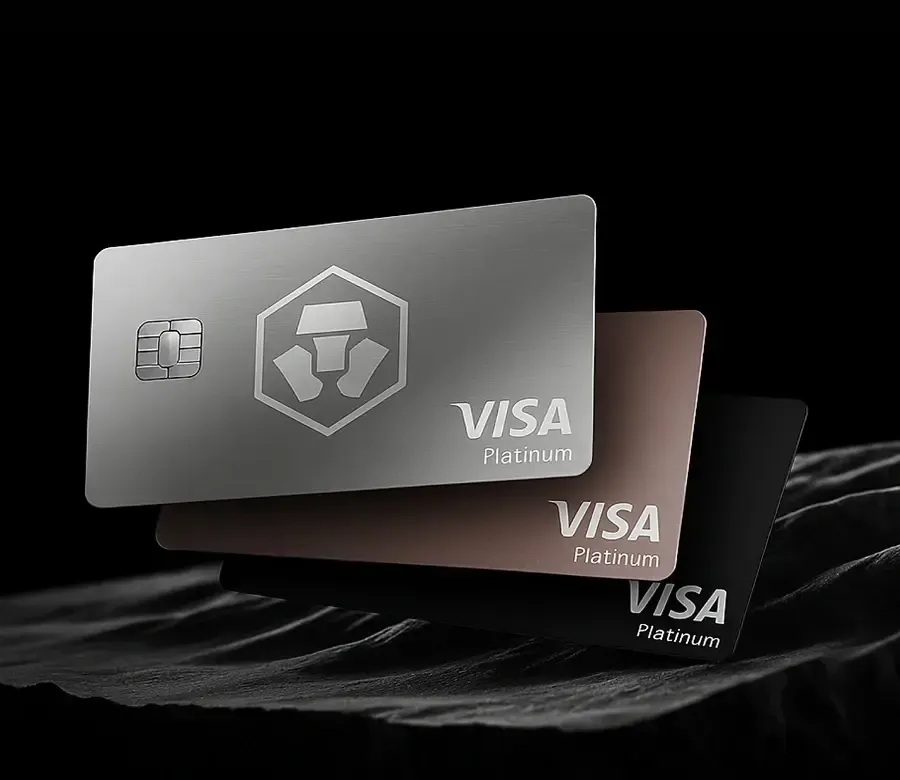
PRIVATE
4–6%
back in crypto · on every spend
CRO Lockup from €45,000
8.5% yield · 12-month staking · €450K tier at 9.5%
Zero trading fees · Unlimited volume
4.0%–6.0% back in crypto
0% foreign exchange fees
EUR Cash Yield up to 1.80% p.a.
Extra 1% p.a. on Earn allocations in CRO
VIP events · Exclusive experiences
8.5% CRO lockup rewards