
McDonald's vs KFC
Founding story, key facts and history — side by side.
McDonald's
Ray Kroc was 52, selling milkshake machines, when he found the restaurant that changed the world.
| Founded | 1940 |
| Founders | Richard McDonald, Maurice McDonald, Ray Kroc |
| HQ | Chicago, Illinois |
| Symbol | MCD |
VS
KFC
Colonel Sanders was rejected over 1,000 times. Started franchising at 65. Built a fried chicken empire. Then sold it for $2 million and spent the rest of his life complaining about the gravy.
| Founded | 1952 |
| Founders | Colonel Harland Sanders |
| HQ | Plano, Texas (formerly Louisville, Kentucky) |
| Symbol | YUM (NYSE) |
The Story — Side by Side
1940
Two brothers and a barbecue stand
Richard and Maurice McDonald opened a barbecue restaurant in San Bernardino, California in 1940. After analysing their sales data, they discovered that hamburgers, french fries, and milkshakes accounted for 80% of their revenue. In 1948, they closed the restaurant for three months, fired their carhops, and reopened with a radically simplified menu of nine items. The Speedee Service System — an assembly-line kitchen based on Henry Ford's manufacturing principles — could produce a hamburger in 30 seconds. Prices were cut by 50%. Lines formed around the block.
1954
Ray Kroc and the milkshake machine
Ray Kroc was a 52-year-old milkshake machine salesman when he noticed that a single McDonald's restaurant in San Bernardino had ordered eight of his Multi-Mixer machines — enough to make 40 milkshakes simultaneously. Curious, he drove to California and was astonished by the operation he found: fast, consistent, and enormously popular. He proposed franchising. The McDonald brothers were content with their single successful restaurant. Kroc eventually convinced them and signed a franchise agreement in 1954.
1961
Buying out the brothers for $2.7 million
Kroc bought the McDonald's name and concept from the brothers in 1961 for $2.7 million. The brothers retained their original San Bernardino restaurant, which they renamed "The Big M." Kroc opened a McDonald's directly across the street and drove them out of business. He later said he was not proud of it. Richard McDonald died in 1998 with a net worth of approximately $1.8 million — a fraction of what his name had generated. The original brothers received nothing from the subsequent growth of the McDonald's empire.
2004
Super Size Me and the reinvention
Morgan Spurlock's documentary Super Size Me, released in 2004, depicted the health consequences of eating McDonald's three times a day for a month and triggered a global conversation about fast food and obesity. McDonald's discontinued the Super Size option within six weeks of the film's release. The company subsequently invested heavily in menu diversification — salads, wraps, fruit, and coffee — transforming from a burger-only operation into a broader fast food restaurant. The McCafé concept, launched in Australia in 1993 and expanded globally, made McDonald's one of the world's largest coffee retailers.
2025
$26.9 billion revenue — 175 million loyalty members
McDonald's reported full-year 2025 revenues of $26.9 billion — up 3.7% — with systemwide sales growing 7% across its 43,000+ locations in over 100 countries. Global comparable sales increased 3.1%, with the U.S. increasing 2.1% and International Operated Markets increasing 3.2%. The company had 175 million active loyalty members across 60 markets, with systemwide loyalty sales of approximately $30 billion in 2024 — growing 30% year-over-year. Q4 2025 saw U.S. comparable sales increase 6.8%, reflecting recovery from a prior-year period that had been hurt by a widely reported E. coli outbreak linked to the Quarter Pounder. The company that Ray Kroc had built from a milkshake machine discovery was serving roughly 70 million customers per day across the planet.
1890
The man who failed at everything — until he didn't
Harland David Sanders was born in 1890 in Henryville, Indiana. His father died when Harland was 6, leaving him to cook for his younger siblings. He dropped out of school at 12, left home at 13, and spent the following decades accumulating an extraordinary record of failed ventures: railroad worker, streetcar conductor, insurance salesman (fired), ferry boat operator (made obsolete by a bridge), oil lamp manufacturer (obsoleted by electricity), lawyer (disbarred after a courtroom fight with his own client). In 1930, aged 40, he converted a Shell filling station in Corbin, Kentucky, into a small diner, cooking for travellers who stopped for petrol. His fried chicken, pressure-cooked using his own recipe, became locally famous.
1952
Rejected 1,009 times — then the first franchise
When Interstate 75 bypassed his Corbin restaurant in the mid-1950s, Sanders was left with nearly nothing at age 65 — too old to start again in most people's estimation. He drove across the United States, stopping at restaurants, offering to cook his chicken recipe for the owner and negotiate a royalty of 5 cents per piece sold if they liked it. The legend is that he was rejected over 1,000 times. The first success came in 1952: Pete Harman, a restaurant owner in South Salt Lake, Utah, agreed to try the recipe. First-year sales tripled. Harman's sign painter, Don Anderson, coined the name "Kentucky Fried Chicken." Harman also invented the bucket.
1964
600 locations — sold for $2 million — and the complaint letters begin
By 1963, the Colonel had 600 KFC franchises across the US, Canada, the UK, Mexico, and Jamaica. The growth had outrun his ability to manage it. In 1964, at age 73, he sold Kentucky Fried Chicken Corporation to a group of investors led by John Y. Brown Jr. and Jack C. Massey for $2 million (approximately $20 million today). Sanders retained a lifetime salary, remained the brand ambassador, and immediately began sending complaint letters to franchisees about changes to his recipe. He called the gravy "pure wallpaper paste," consistently criticised the chain's quality, and was sued (unsuccessfully) for defamation by a KFC franchisee whose food he had publicly criticised.
1986
PepsiCo, Tricon, Yum — the corporate ownership carousel
KFC changed hands multiple times after Sanders' 1964 sale: Brown and Massey sold to Heublein in 1971 for $285 million; R.J. Reynolds acquired Heublein in 1982; PepsiCo acquired KFC in 1986. In 1997, PepsiCo spun off its restaurant businesses — KFC, Pizza Hut, and Taco Bell — into a separate company called Tricon Global Restaurants, later renamed Yum! Brands. Under Yum!, KFC expanded aggressively in China — where the Colonel's image resonated powerfully — becoming one of the most profitable foreign brands in the Chinese market with thousands of locations.
2024
30,000 restaurants — 147 countries — Saucy concept launch
KFC operated approximately 30,000 restaurants in over 147 countries as of 2024, making it the world's second-largest restaurant chain by number of locations after McDonald's. Yum! Brands as a whole generated approximately $7.1 billion in total revenue for 2024. In late 2024, KFC launched "Saucy" — a new restaurant concept in Orlando, Florida, featuring chicken tenders, 11 dipping sauces (a nod to the 11 herbs and spices), and a bright pink colour scheme replacing the classic red and white. In February 2025, the company announced KFC headquarters would relocate from Louisville, Kentucky — where the Colonel had built his empire — to Plano, Texas. Kentucky was not pleased.
Tools & Platforms
For Investors
The market doesn't care about your feelings.
But your broker's fees do.
But your broker's fees do.
Most people have a brokerage account. Fewer understand what it really costs them — in spreads, in fees, in missed instruments. Malta-regulated, direct market access, 600,000+ instruments.
Exante
Malta MFSA · 50 exchanges
Tickmill
Forex from 0.0 pips
Vantage
Multi-asset trading
Polymarket
Prediction markets
For Entrepreneurs
Opening a US company costs $300.
Most people think it's complicated. It isn't.
Most people think it's complicated. It isn't.
Most founders spend weeks on formation, banking and payments. The ones who move fast know which tools to use before they start. A US LLC, a real business account, and a way to pay people — in that order.
Mercury
Business finance · 300K+ founders
Doola
US LLC formation · YC backed
Melio
B2B payments
Xero 95% OFF
Accounting · 6 months
For C-Suite
Your competitor pays $200 less per month for EOR.
You're still on a spreadsheet.
You're still on a spreadsheet.
BVNK hired 20% of its workforce through Deel. The smartest operators aren't managing payroll complexity — they're outsourcing it. EOR in 150+ countries, multi-currency accounts, workforce payments at $200 less per month than competitors.
Deel
EOR · 150+ countries
Payoneer
$399/mo EOR · Save $200
Wise Business
40+ currencies · No hidden fees
Gusto
US payroll & benefits
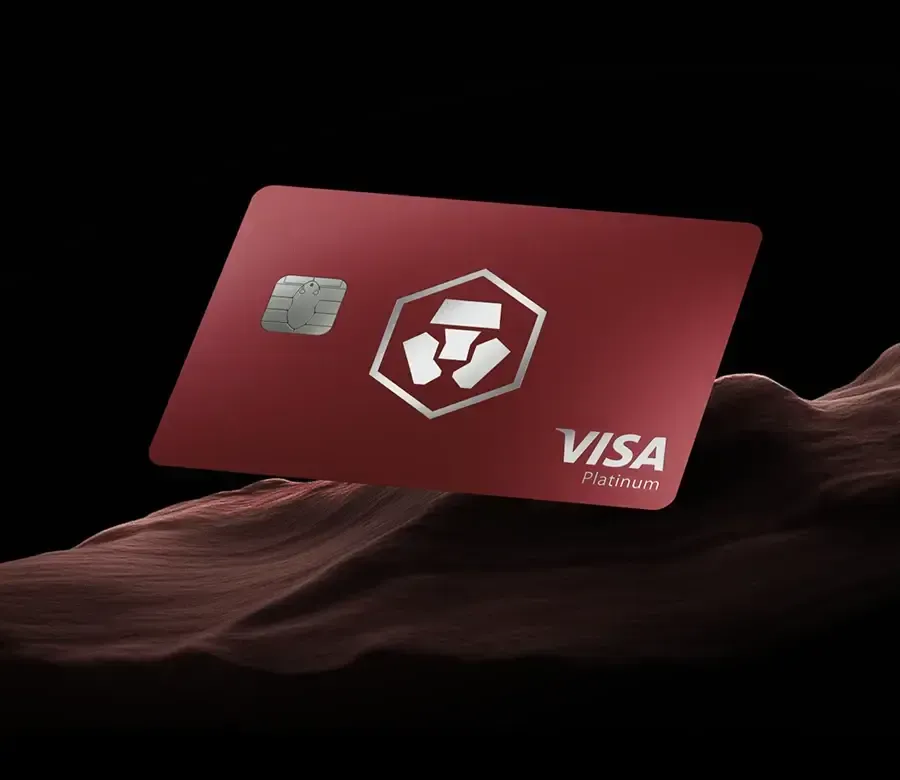
PLUS
2.0%
back in crypto · on every spend
€3.99 / month
or €39.90/year (€3.32/month)
Zero trading fees up to $20K/month
2.0% back in crypto on card spend
0% foreign exchange fees
EUR Cash Yield up to 1.35% p.a.
CRO Yield up to 2.00% p.a.
Virtual Visa card · Flexible cancel
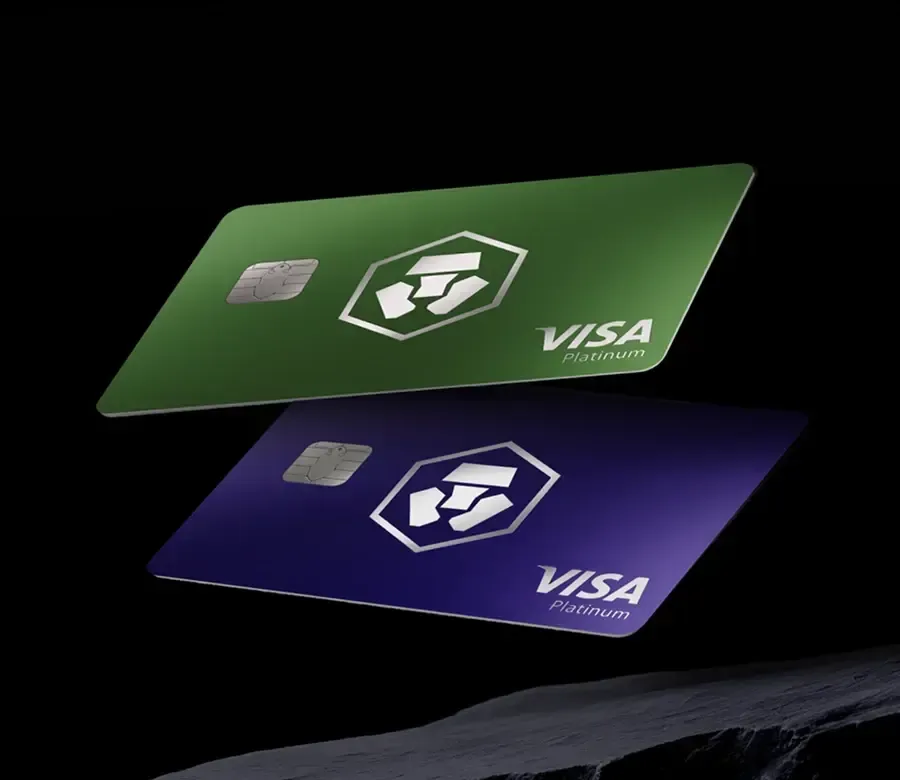
PRO
3.0%
back in crypto · on every spend
€24.99 / month
or €249.90/year (€20.82/month)
Zero trading fees up to $50K/month
3.0% back in crypto on card spend
0% foreign exchange fees
EUR Cash Yield up to 1.70% p.a.
CRO Yield up to 2.50% p.a.
Airport lounge access (Priority Pass)
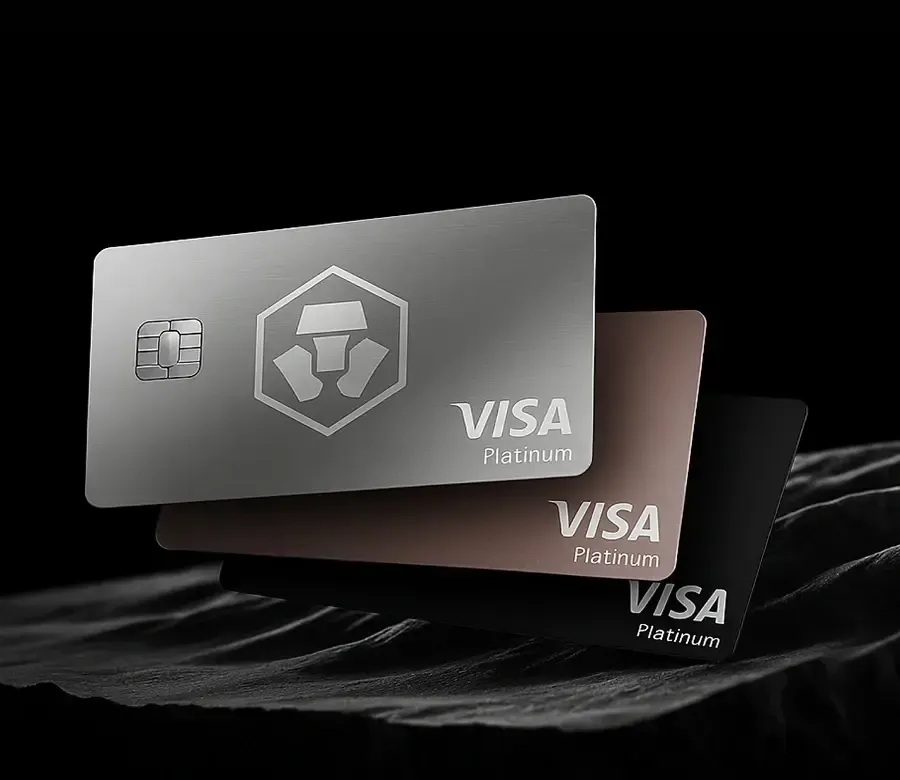
PRIVATE
4–6%
back in crypto · on every spend
CRO Lockup from €45,000
8.5% yield · 12-month staking · €450K tier at 9.5%
Zero trading fees · Unlimited volume
4.0%–6.0% back in crypto
0% foreign exchange fees
EUR Cash Yield up to 1.80% p.a.
Extra 1% p.a. on Earn allocations in CRO
VIP events · Exclusive experiences
8.5% CRO lockup rewards