
Mistral AI vs OpenAI
Founding story, key facts and history — side by side.
Mistral AI
The European open-weights darling that raised hundreds of millions on a notepad to challenge Silicon Valley supremacy.
| Founded | 2023 |
| Founders | Arthur Mensch, Guillaume Lample, Timothée Lacroix |
| HQ | Paris, France |
| Symbol | PRIVATE |
VS
OpenAI
Founded to prevent AI apocalypse. Built the technology that started it. Now worth $852 billion.
| Founded | 2015 |
| Founders | Sam Altman, Elon Musk, Greg Brockman, Ilya Sutskever, Wojciech Zaremba, John Schulman |
| HQ | San Francisco, California |
| Symbol | Private |
The Story — Side by Side
2023
The spectacular 4-week, €105 million seed slide deck heist
Mistral AI was founded in May 2023 by Arthur Mensch (formerly of Google DeepMind) alongside Guillaume Lample and Timothée Lacroix (both alumni of Meta's AI research group). In one of the most astonishing corporate fundraising maneuvers in European technology history, the trio raised a staggering €105 million seed round just four weeks after incorporating the company, operating with a bare-bones presentation deck and zero actual software code, purely on their elite research reputations.
2023
The open-weights torrent link drop that shocked the valley
In late 2023, Mistral AI executed a brilliant guerrilla marketing campaign that completely disrupted the global AI engineering community. Instead of publishing a polished corporate press release, the team casually tweeted a raw BitTorrent download link to Mistral 7B, a highly compact, incredibly efficient open-weights model that completely outperformed models twice its size. This open-weights framework immediately won over developers worldwide by offering elite compute efficiency.
2024
The €2 billion valuation surge and the Microsoft distribution alliance
In less than a single calendar year, Mistral AI secured an absolute elite funding tier, closing a massive investment round that valued the young Parisian startup at over €2 billion. Simultaneously, the company pulled off a highly strategic corporate pivot, partnering with Microsoft to host its premium proprietary model family, Mistral Large, on the Azure cloud infrastructure. This alliance drew intense political debate inside the European Union regarding sovereign technology independence.
2025
The enterprise marketplace expansion and on-device optimization
Mistral scaled its monetization strategy by rolling out "Le Chat," an enterprise-grade conversational web assistant, alongside customized developer platforms targeting French and pan-European corporate infrastructure. The engineering team focused heavily on pushing the absolute physical limits of small, highly optimized models capable of running directly on consumer laptops and edge hardware devices, cutting corporate reliance on massive expensive server farms.
2026
The global commercial scale and pan-European sovereign engine
By mid-2026, Mistral AI solidified its position as the undisputed flag-bearer for European technological sovereignty, driving annual enterprise software and API platform revenues past €90 million. Operating under the leadership of Arthur Mensch, the firm successfully maintained its unique dual model portfolio, offering open-weights to developers while selling high-security, custom enterprise inference models to major European government agencies.
2015
A non-profit to save humanity
OpenAI was founded in December 2015 as a non-profit research laboratory with a $1 billion pledge from its founders — including Elon Musk, Sam Altman, and Peter Thiel. The stated mission was to ensure that artificial general intelligence benefits all of humanity rather than being controlled by any single company or government. Musk later said he co-founded OpenAI specifically because he was terrified of what Google might build.
2019
The "capped profit" pivot and the Microsoft billions
OpenAI converted from a non-profit to a "capped profit" structure in 2019, allowing investors returns up to 100 times their investment. Microsoft invested $1 billion. Critics argued this was a non-profit in name only. By 2023, Microsoft had invested $10 billion in total, securing exclusive access to GPT-4 and integrating it across Word, Excel, Teams, and Bing. OpenAI had become the most commercially significant AI company in history — while still nominally describing itself as a safety-focused research lab.
2022
ChatGPT: 100 million users in 60 days
OpenAI launched ChatGPT on November 30, 2022 as "a research preview." It reached one million users in five days. It reached 100 million users in two months — the fastest consumer product adoption in history. Google declared an internal code red. The AI era had visibly, undeniably begun. Elon Musk, who had left OpenAI's board in 2018, watched from the outside and would soon found a competitor.
2023
The boardroom coup that shocked Silicon Valley
On November 17, 2023, OpenAI's board fired CEO Sam Altman without warning. Within 48 hours, nearly 700 OpenAI employees signed a letter threatening to resign unless Altman was reinstated. Five days later, Altman returned as CEO. Three of the four board members who had fired him were replaced. It was the most dramatic corporate governance crisis in Silicon Valley history — and it changed nothing about OpenAI's trajectory.
2025
$20 billion revenue, $852 billion valuation — and a profitability question
OpenAI ended 2025 with over $20 billion in annualised revenue — growing at a rate the technology industry had never seen before. In March 2026, it raised $122 billion in fresh capital at an $852 billion post-money valuation, making it the most valuable private technology company in history. Sam Altman, the CEO who built all of this, owns 0% of the company. The Wall Street Journal reported in April 2026 that OpenAI had missed internal revenue targets for early 2026 and that CFO Sarah Friar had raised concerns about whether revenue could support the $1.4 trillion in AI infrastructure commitments the company had signed. OpenAI disputed the report. The tension between its commercial ambitions and its safety mission — which had led its founders to leave Anthropic — remained unresolved.
Tools & Platforms
For Investors
The market doesn't care about your feelings.
But your broker's fees do.
But your broker's fees do.
Most people have a brokerage account. Fewer understand what it really costs them — in spreads, in fees, in missed instruments. Malta-regulated, direct market access, 600,000+ instruments.
Exante
Malta MFSA · 50 exchanges
Tickmill
Forex from 0.0 pips
Vantage
Multi-asset trading
Polymarket
Prediction markets
For Entrepreneurs
Opening a US company costs $300.
Most people think it's complicated. It isn't.
Most people think it's complicated. It isn't.
Most founders spend weeks on formation, banking and payments. The ones who move fast know which tools to use before they start. A US LLC, a real business account, and a way to pay people — in that order.
Mercury
Business finance · 300K+ founders
Doola
US LLC formation · YC backed
Melio
B2B payments
Xero 95% OFF
Accounting · 6 months
For C-Suite
Your competitor pays $200 less per month for EOR.
You're still on a spreadsheet.
You're still on a spreadsheet.
BVNK hired 20% of its workforce through Deel. The smartest operators aren't managing payroll complexity — they're outsourcing it. EOR in 150+ countries, multi-currency accounts, workforce payments at $200 less per month than competitors.
Deel
EOR · 150+ countries
Payoneer
$399/mo EOR · Save $200
Wise Business
40+ currencies · No hidden fees
Gusto
US payroll & benefits
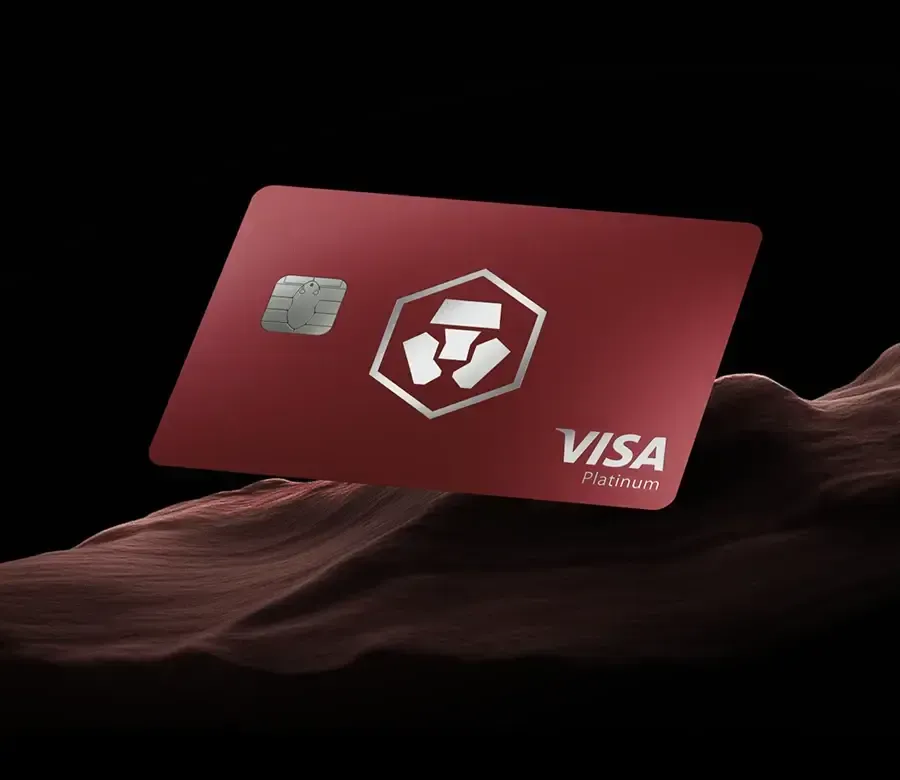
PLUS
2.0%
back in crypto · on every spend
€3.99 / month
or €39.90/year (€3.32/month)
Zero trading fees up to $20K/month
2.0% back in crypto on card spend
0% foreign exchange fees
EUR Cash Yield up to 1.35% p.a.
CRO Yield up to 2.00% p.a.
Virtual Visa card · Flexible cancel
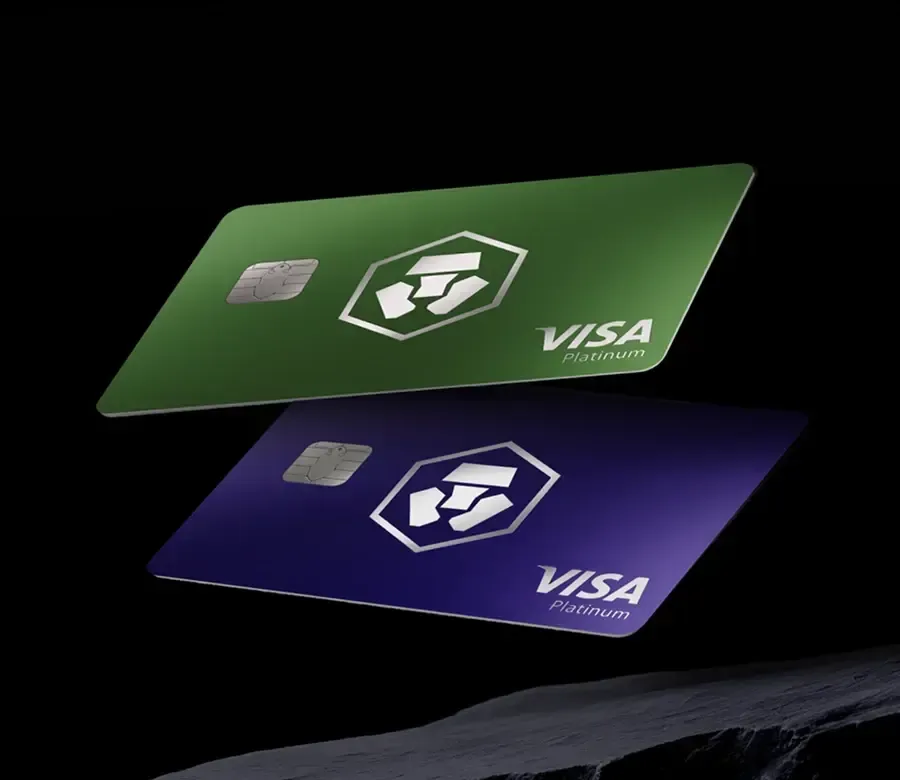
PRO
3.0%
back in crypto · on every spend
€24.99 / month
or €249.90/year (€20.82/month)
Zero trading fees up to $50K/month
3.0% back in crypto on card spend
0% foreign exchange fees
EUR Cash Yield up to 1.70% p.a.
CRO Yield up to 2.50% p.a.
Airport lounge access (Priority Pass)
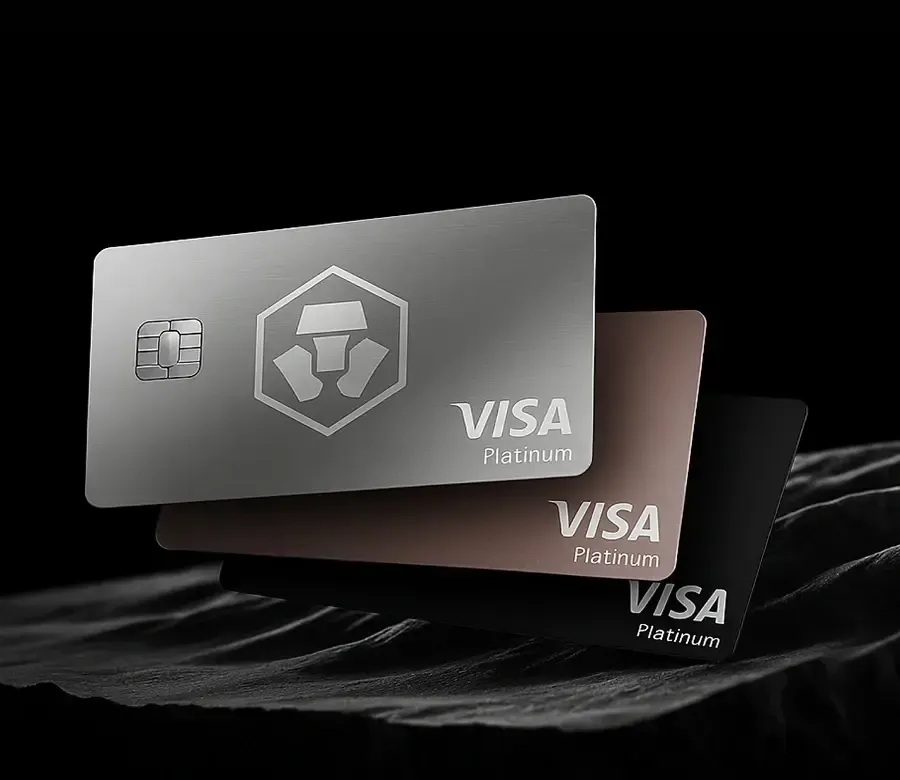
PRIVATE
4–6%
back in crypto · on every spend
CRO Lockup from €45,000
8.5% yield · 12-month staking · €450K tier at 9.5%
Zero trading fees · Unlimited volume
4.0%–6.0% back in crypto
0% foreign exchange fees
EUR Cash Yield up to 1.80% p.a.
Extra 1% p.a. on Earn allocations in CRO
VIP events · Exclusive experiences
8.5% CRO lockup rewards