
Motorola vs Samsung
Founding story, key facts and history — side by side.
Motorola
Invented the mobile phone in 1973. Lost it to Nokia. Then to everyone else.
| Founded | 1928 |
| Founders | Paul Galvin, Joseph Galvin |
| HQ | Chicago, Illinois |
| Symbol | MSI |
VS
Samsung
Started selling dried fish. Now makes the chips inside your iPhone. Q4 2025 profit tripled on AI demand.
| Founded | 1938 |
| Founders | Lee Byung-chul |
| HQ | Suwon, South Korea |
| Symbol | 005930.KS |
The Story — Side by Side
1928
Car radios in the Great Depression
Paul Galvin and his brother Joseph founded the Galvin Manufacturing Corporation in Chicago in 1928 with $565 in capital. Their breakthrough came with car radios. They named the product Motorola — a portmanteau of "motor" and "Victrola" — suggesting music in motion. The name became so associated with quality that the company adopted it as its corporate name in 1947.
1973
The first mobile phone call in history
On April 3, 1973, Motorola engineer Martin Cooper made the first mobile phone call in history from a street corner in New York City. The device weighed 1.1 kilograms and offered 30 minutes of talk time before requiring 10 hours of recharging. Cooper called Joel Engel, his counterpart at AT&T Bell Labs — Motorola's rival in the race to build a portable phone. "Joel," Cooper said, "I'm calling you from a cellular phone, and it's a real cellular phone, a handheld, portable, real cellular phone."
1996
The StarTAC and peak Motorola
Motorola launched the StarTAC in 1996 — the world's first clamshell mobile phone, weighing just 88 grams. It was the must-have device of the late 1990s. Motorola held over 50% of the U.S. mobile phone market. The company was at its peak. Within a decade, it would be unrecognisable.
1998
The Iridium disaster
Motorola invested $5 billion in Iridium — a satellite phone network requiring 66 low-earth orbit satellites. The concept was visionary: a phone that worked anywhere on earth. The execution was disastrous. By the time Iridium launched in 1998, terrestrial mobile networks had expanded to cover most places where people actually lived. The $3,000 handsets were heavy and could not be used indoors. Iridium filed for bankruptcy in 1999, fourteen months after launch. The U.S. military eventually bought the network for $25 million.
2011
Google buys Motorola for patents — then sells it to Lenovo
Google acquired Motorola Mobility in 2011 for $12.5 billion — primarily to obtain Motorola's 17,000 mobile patents, which Google needed to defend Android against Apple and Microsoft lawsuits. Google sold Motorola to Lenovo three years later for $2.91 billion, having extracted the patents it needed. The company that had invented the mobile phone was sold for less than a quarter of what Google had paid. Motorola Solutions — the public safety and enterprise communications division — continued separately, becoming a profitable $20 billion company serving police, emergency services, and government agencies. The consumer phone brand lived on as a Lenovo subsidiary, producing budget Android phones with declining relevance.
1938
Dried fish and noodles
Lee Byung-chul founded Samsung — meaning "three stars" in Korean — in 1938 in Suwon, South Korea as a small trading company selling dried fish, vegetables, and noodles. The company had 40 employees. Korea was under Japanese colonial rule. Lee expanded into sugar refining, wool, and insurance in the 1940s and 1950s, building Samsung into one of Korea's first major conglomerates — known as a chaebol — through relationships with the postwar South Korean government.
1969
Electronics and the government partnership
Samsung entered the electronics business in 1969, initially making black-and-white televisions under licence from Japanese manufacturers. The South Korean government's industrial policy actively supported chaebol expansion into strategic industries, providing cheap loans and trade protection. Samsung Electronics grew rapidly by producing consumer electronics for export — initially as an OEM manufacturer for foreign brands. The relationship between Samsung and the South Korean state has remained close and occasionally controversial ever since.
1983
The semiconductor bet that changed everything
Lee Byung-chul announced Samsung would enter the semiconductor business in 1983 — a decision that Korean banking analysts considered reckless. Samsung had no semiconductor expertise, no technology, and would be competing against Japanese and American companies with decades of advantage. Lee invested $100 million of his personal fortune and sent engineers to study American chip manufacturers. Within a decade, Samsung was the world's largest producer of DRAM memory chips. The bet became one of the most successful industrial strategy decisions in economic history.
2016
The Apple supplier that became Apple's rival — then the Note 7 exploded
Samsung had manufactured components for Apple — processors, displays, and memory — since the original iPhone. In 2010, Samsung launched the Galaxy S smartphone directly competing with the iPhone, while remaining Apple's largest supplier. The two companies spent years simultaneously as each other's biggest customer and biggest competitor. In 2016, Samsung launched the Galaxy Note 7 to acclaim — until batteries began catching fire. Samsung recalled 2.5 million devices, replaced them, then recalled the replacements when they also caught fire. Airlines banned the Note 7. Samsung permanently discontinued it, writing off $5.3 billion. CEO Lee Jae-yong was arrested on bribery charges months later.
2025
KRW 333.6 trillion revenue — and AI chips triple the profit
Samsung reported full-year 2025 revenues of KRW 333.6 trillion — approximately $230 billion — and operating profit of KRW 43.6 trillion, up 33% from 2024. The Q4 2025 performance was historic: quarterly revenue of KRW 93.8 trillion and operating profit of KRW 20.1 trillion — tripling year-on-year — driven by surging AI data center demand for memory chips. Samsung's chip division alone generated KRW 16.4 trillion in Q4 operating profit. Samsung had finally received Nvidia approval for its HBM3E high-bandwidth memory chips after lagging behind SK Hynix, and had begun sampling its next-generation HBM4. The company that had started selling dried fish in 1938 was now the world's largest memory chip manufacturer, supplying the AI infrastructure that was remaking the global economy.
Tools & Platforms
For Investors
The market doesn't care about your feelings.
But your broker's fees do.
But your broker's fees do.
Most people have a brokerage account. Fewer understand what it really costs them — in spreads, in fees, in missed instruments. Malta-regulated, direct market access, 600,000+ instruments.
Exante
Malta MFSA · 50 exchanges
Tickmill
Forex from 0.0 pips
Vantage
Multi-asset trading
Polymarket
Prediction markets
For Entrepreneurs
Opening a US company costs $300.
Most people think it's complicated. It isn't.
Most people think it's complicated. It isn't.
Most founders spend weeks on formation, banking and payments. The ones who move fast know which tools to use before they start. A US LLC, a real business account, and a way to pay people — in that order.
Mercury
Business finance · 300K+ founders
Doola
US LLC formation · YC backed
Melio
B2B payments
Xero 95% OFF
Accounting · 6 months
For C-Suite
Your competitor pays $200 less per month for EOR.
You're still on a spreadsheet.
You're still on a spreadsheet.
BVNK hired 20% of its workforce through Deel. The smartest operators aren't managing payroll complexity — they're outsourcing it. EOR in 150+ countries, multi-currency accounts, workforce payments at $200 less per month than competitors.
Deel
EOR · 150+ countries
Payoneer
$399/mo EOR · Save $200
Wise Business
40+ currencies · No hidden fees
Gusto
US payroll & benefits
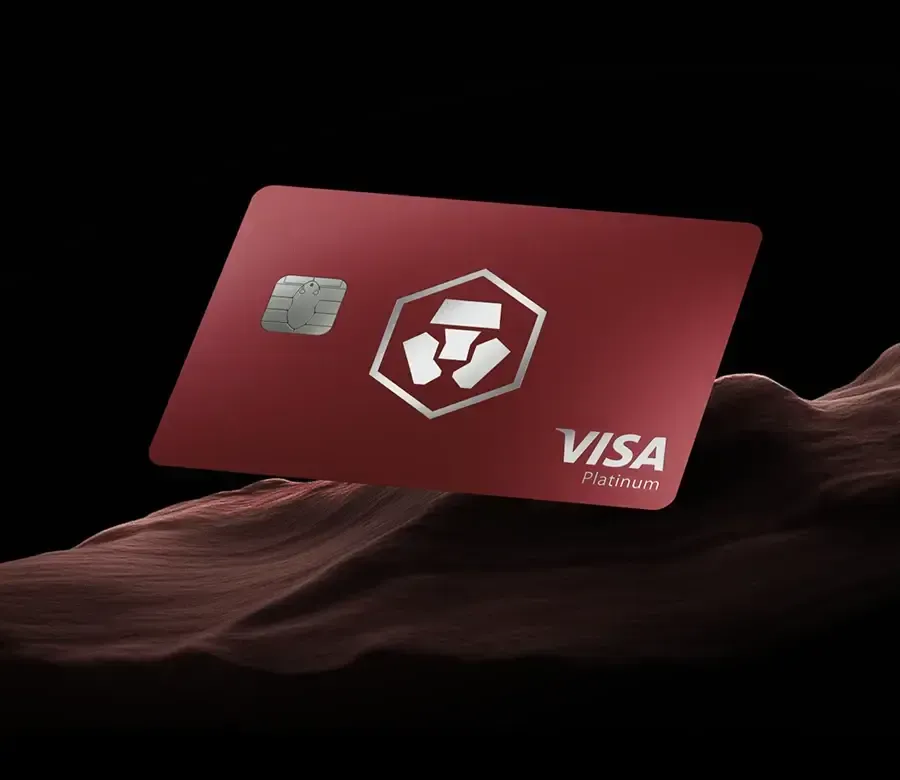
PLUS
2.0%
back in crypto · on every spend
€3.99 / month
or €39.90/year (€3.32/month)
Zero trading fees up to $20K/month
2.0% back in crypto on card spend
0% foreign exchange fees
EUR Cash Yield up to 1.35% p.a.
CRO Yield up to 2.00% p.a.
Virtual Visa card · Flexible cancel
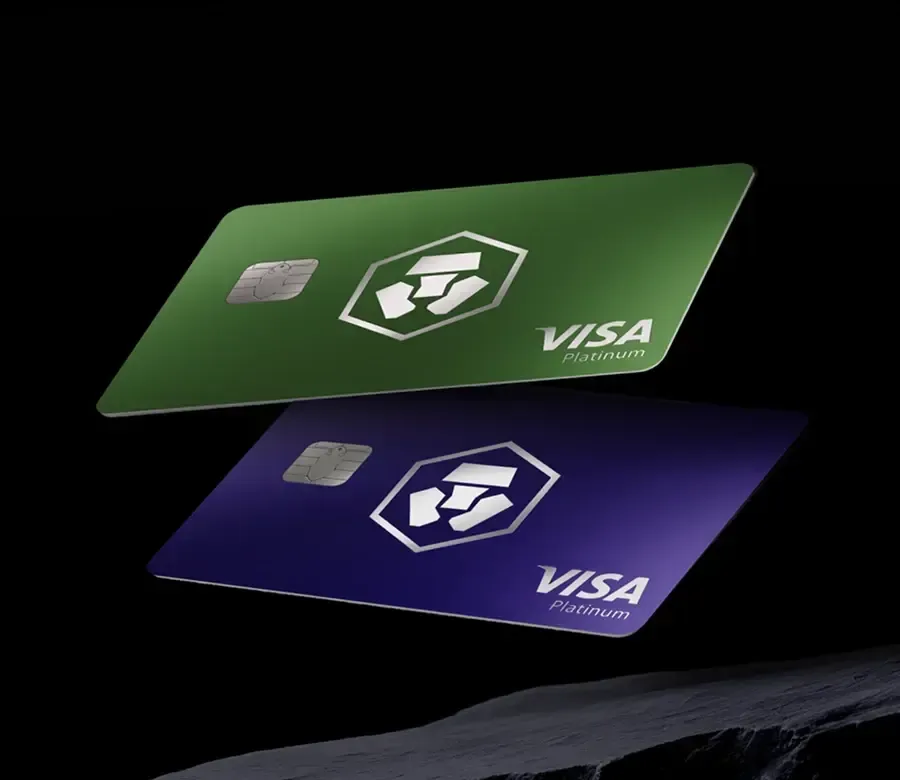
PRO
3.0%
back in crypto · on every spend
€24.99 / month
or €249.90/year (€20.82/month)
Zero trading fees up to $50K/month
3.0% back in crypto on card spend
0% foreign exchange fees
EUR Cash Yield up to 1.70% p.a.
CRO Yield up to 2.50% p.a.
Airport lounge access (Priority Pass)
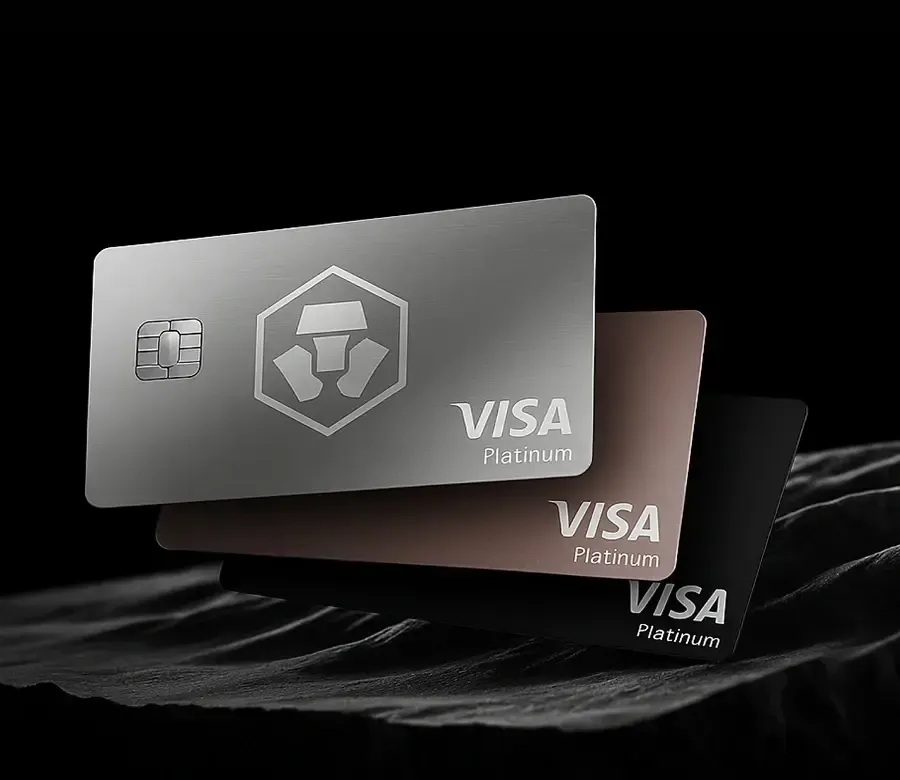
PRIVATE
4–6%
back in crypto · on every spend
CRO Lockup from €45,000
8.5% yield · 12-month staking · €450K tier at 9.5%
Zero trading fees · Unlimited volume
4.0%–6.0% back in crypto
0% foreign exchange fees
EUR Cash Yield up to 1.80% p.a.
Extra 1% p.a. on Earn allocations in CRO
VIP events · Exclusive experiences
8.5% CRO lockup rewards