
N26 vs Revolut
Founding story, key facts and history — side by side.
N26
The premier Berlin neobank darling that hit a $9 billion peak, retreated from America, and survived years of regulatory house arrest.
| Founded | 2013 |
| Founders | Valentin Stalf, Maximilian Tayenthal |
| HQ | Berlin, Germany |
| Symbol | PRIVATE |
VS
Revolut
Started with a prepaid card. Now 70 million users and eyeing a $200 billion IPO.
| Founded | 2015 |
| Founders | Nikolay Storonsky, Vlad Yatsenko |
| HQ | London, United Kingdom |
| Symbol | Private |
The Story — Side by Side
2013
The Berlin finlit card room pivot
N26 was founded in Berlin by childhood friends Valentin Stalf and Maximilian Tayenthal under the original concept name Papayer, a financial management card designed strictly for teenagers. They quickly realized that the true fundamental product opportunity was far larger: young European consumers absolutely hated the slow, bureaucratic experience of traditional German retail banking. They completely pivoted the startup to build a beautiful, 100% mobile-native bank account that could be opened digitally in under eight minutes, securing a full European banking license from BaFin.
2021
The $9 billion peak and the disastrous American retreat
Fueled by hyper-growth across Germany, France, and Italy, N26 became a major global venture capital darling, securing a massive Series E funding round that valued the Berlin startup at an astronomical $9.0 billion. Flush with capital, the founders launched an incredibly aggressive international expansion into the United States and the United Kingdom. The expansion turned into an absolute corporate disaster; outmatched by deeply entrenched domestic competitors, N26 was forced to make a humiliating, expensive strategic retreat, shutting down its US operations entirely to cut cash burn.
2022
The BaFin regulatory handcuffs and growth caps
N26's aggressive push for rapid user acquisition severely backfired when Germany's strict banking regulator, BaFin, intervened due to severe structural deficits in the neobank's anti-money laundering controls and customer verification systems. BaFin placed N26 under unprecedented regulatory house arrest, installing a permanent special monitor inside their Berlin headquarters and legally capping the bank's growth to a maximum of 60,000 new customers per month, completely freezing its ability to compete against a hyper-scaling Revolut.
2024
Breaking the regulatory chains and the AI pivot
After spending millions of dollars completely restructuring its compliance architecture, implementing rigorous internal audit standards, and building specialized transaction monitoring software, N26 successfully convinced regulators to completely lift the growth restrictions in mid-2024. The bank immediately shifted into product expansion mode, rolling out fractional stock trading, crypto access via Bitpanda, and joint accounts across 24 European markets to diversify away from basic interchange revenue.
2026
Surpassing half a billion in revenue and hitting net profitability
By mid-2026, N26 officially executed a historic financial turnaround, reporting its very first full fiscal year of net profitability with record annual revenues climbing past €501.6 million. Under optimized management strategies, the neobank successfully expanded its high-yield customer deposit base beyond €10.5 billion, taking full advantage of interest-rate spreads. While its compressed private valuation stabilized around $3.0 billion, the firm's strong Q1 net income of €9.8 million established a stable, independent long-term path.
2015
A forex fee too many
Nikolay Storonsky founded Revolut in July 2015 after becoming frustrated with the foreign exchange fees charged by traditional banks. Storonsky, a former derivatives trader at Credit Suisse and Lehman Brothers, launched Revolut with a prepaid card that offered interbank exchange rates with no markup. The product launched at a London fintech event. Three thousand people signed up in the first day. Within a decade, Revolut would become the most valuable fintech startup in European history.
2018
The culture controversy
A 2018 Wired investigation described Revolut's internal culture as one of the most intense in British tech — with employees expected to work unpaid trial periods, leadership described as confrontational, and an obsession with metrics over wellbeing. Storonsky disputed many of the claims but acknowledged that Revolut's early culture had been built for speed over sustainability. The controversy prompted changes to HR practices but did not slow growth. Revolut reached 2 million users that year without a significant marketing budget.
2021
$33 billion and the banking licence battle
Revolut raised funding at a $33 billion valuation in July 2021 — making it the most valuable private technology company in the United Kingdom. Simultaneously, its UK banking licence application stalled at the Financial Conduct Authority for over three years, with regulators reportedly concerned about corporate governance and financial controls. The wait became a symbol of European regulators' difficulty keeping pace with fast-growing fintech companies.
2024
The banking licence arrives — and the valuation jumps to $75 billion
Revolut received its UK banking licence in July 2024 after a three-year wait. In November 2025, a secondary share sale valued the company at $75 billion — with Nvidia's venture arm among the new investors. Full-year 2025 revenue hit $6 billion, up 50% from 2024, with pre-tax profit of $2.3 billion. Revolut processed $1.7 trillion in transaction volume. The company had reached 70 million users globally — more than HSBC and Barclays.
2026
Filing for a US bank charter and targeting $200 billion
In March 2026, Revolut filed for a U.S. national bank charter — a move that would allow it to offer insured deposits and lending to American customers directly. CEO Nikolay Storonsky told investors an IPO was "approximately two years away," with the company targeting a valuation of up to $200 billion when it eventually lists. The prepaid card that had launched to three thousand people in 2015 had become the foundation of one of the most ambitious financial services companies in the world.
Tools & Platforms
For Investors
The market doesn't care about your feelings.
But your broker's fees do.
But your broker's fees do.
Most people have a brokerage account. Fewer understand what it really costs them — in spreads, in fees, in missed instruments. Malta-regulated, direct market access, 600,000+ instruments.
Exante
Malta MFSA · 50 exchanges
Tickmill
Forex from 0.0 pips
Vantage
Multi-asset trading
Polymarket
Prediction markets
For Entrepreneurs
Opening a US company costs $300.
Most people think it's complicated. It isn't.
Most people think it's complicated. It isn't.
Most founders spend weeks on formation, banking and payments. The ones who move fast know which tools to use before they start. A US LLC, a real business account, and a way to pay people — in that order.
Mercury
Business finance · 300K+ founders
Doola
US LLC formation · YC backed
Melio
B2B payments
Xero 95% OFF
Accounting · 6 months
For C-Suite
Your competitor pays $200 less per month for EOR.
You're still on a spreadsheet.
You're still on a spreadsheet.
BVNK hired 20% of its workforce through Deel. The smartest operators aren't managing payroll complexity — they're outsourcing it. EOR in 150+ countries, multi-currency accounts, workforce payments at $200 less per month than competitors.
Deel
EOR · 150+ countries
Payoneer
$399/mo EOR · Save $200
Wise Business
40+ currencies · No hidden fees
Gusto
US payroll & benefits

PLUS
2.0%
back in crypto · on every spend
€3.99 / month
or €39.90/year (€3.32/month)
Zero trading fees up to $20K/month
2.0% back in crypto on card spend
0% foreign exchange fees
EUR Cash Yield up to 1.35% p.a.
CRO Yield up to 2.00% p.a.
Virtual Visa card · Flexible cancel

PRO
3.0%
back in crypto · on every spend
€24.99 / month
or €249.90/year (€20.82/month)
Zero trading fees up to $50K/month
3.0% back in crypto on card spend
0% foreign exchange fees
EUR Cash Yield up to 1.70% p.a.
CRO Yield up to 2.50% p.a.
Airport lounge access (Priority Pass)
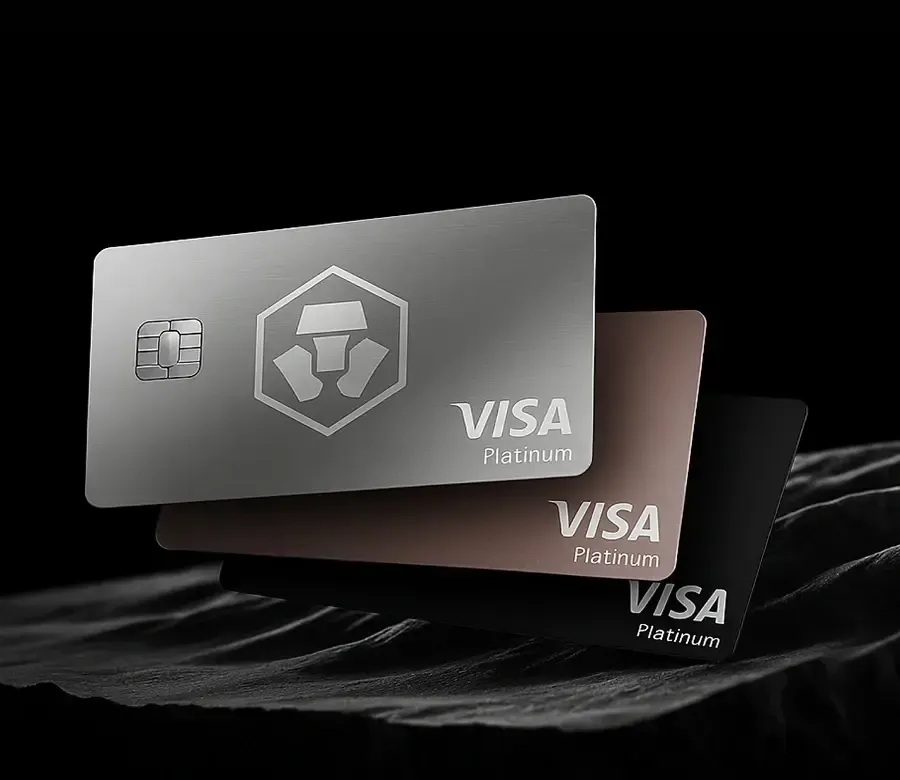
PRIVATE
4–6%
back in crypto · on every spend
CRO Lockup from €45,000
8.5% yield · 12-month staking · €450K tier at 9.5%
Zero trading fees · Unlimited volume
4.0%–6.0% back in crypto
0% foreign exchange fees
EUR Cash Yield up to 1.80% p.a.
Extra 1% p.a. on Earn allocations in CRO
VIP events · Exclusive experiences
8.5% CRO lockup rewards