
Nuvei vs Checkout.com
Founding story, key facts and history — side by side.
Nuvei
Philip Fayer took a small Montreal payment company and built a $3 billion revenue fintech. Then took it private. Then bought Payoneer for $2.75 billion.
| Founded | 2003 |
| Founders | Philip Fayer |
| HQ | Montreal, Canada |
| Symbol | Private (formerly TSX: NVEI) |
VS
Checkout.com
Bootstrapped in total obscurity by a Swiss surfer to a $40 billion peak, before a brutal valuation reality check.
| Founded | 2012 |
| Founders | Guillaume Pousaz |
| HQ | London, United Kingdom |
| Symbol | PRIVATE |
The Story — Side by Side
2003
A Montreal payment startup and the iGaming niche
Nuvei was founded in Montreal in 2003 by Philip Fayer, who became chairman and CEO. The company initially focused on payment processing for high-risk industries — particularly online gambling and iGaming — that major processors like Visa and Mastercard made difficult to service due to regulatory complexity. This niche positioning gave Nuvei deep expertise in cross-border payments, currency conversion, and the compliance requirements of regulated gambling markets. The company expanded its technology stack to serve e-commerce, sports betting, financial services, and digital goods as these sectors grew.
2021
TSX IPO at $7 billion — then taken private at $6.3 billion
Nuvei went public on the Toronto Stock Exchange in September 2020, raising approximately $833 million in one of Canada's largest tech IPOs. The company subsequently listed on Nasdaq as well. At its peak, Nuvei reached a market capitalisation of approximately $7 billion. In 2024, a consortium led by Philip Fayer and private equity firm Advent International took Nuvei private in a deal valued at $6.3 billion — one of the largest take-private transactions in Canadian tech history. The deal allowed Nuvei to restructure and make acquisitions without public market scrutiny.
2024
$3 billion in revenue — and the $2.75 billion Payoneer acquisition
The most significant development in Nuvei's history came in June 2026, when the company announced the acquisition of Payoneer — the platform used by freelancers, Amazon sellers, and global SMBs to receive and transfer money across borders — for $2.75 billion in cash. Payoneer had been publicly listed on Nasdaq (PAYO) and was a critical payment infrastructure layer for the gig economy and international e-commerce. The combined entity generated approximately $3 billion in annual revenue and processed over $500 billion in annual payment volume, serving merchants and platforms in over 200 markets. Nuvei had gone from a Montreal iGaming payment processor to one of the most significant fintech infrastructure companies in the world.
2025
The unified platform — from casino payments to freelancer payroll
The Nuvei-Payoneer combination created a payment infrastructure spanning the full spectrum of digital commerce: from regulated gambling operators receiving crypto deposits to YouTube creators receiving monetisation payments, from Amazon marketplace sellers to multinational corporations managing cross-border payroll. The company's technology covered acquiring (accepting payments), issuing (sending payments), currency conversion, localised payment methods (the critical capability for processing in markets like Brazil, India, or Southeast Asia), and compliance. Philip Fayer had built in Montreal what others had built in Silicon Valley — a global payments infrastructure company with a distinctive specialisation in the regulatory complexity that mainstream processors avoided.
2026
Post-Payoneer integration — targeting $500B+ in annual volume
Following the Payoneer acquisition, Nuvei disclosed combined annual processing volume exceeding $500 billion. The integration brought Payoneer's network of 5 million SMBs and freelancers in 190+ countries into Nuvei's enterprise and regulated sector client base. The company was competing directly with Stripe (for platform and marketplace payments), Adyen (for enterprise card processing), and PayPal (for cross-border freelancer payments) — while retaining its original advantage in high-risk regulated sectors where those competitors were less willing to operate. The Montreal startup that had begun as a payment processor for online casinos was now a legitimate challenger to the global payment giants.
2012
The Mauritius surfing sabbatical origin
Checkout.com was founded by Guillaume Pousaz, a Swiss economics dropout who abruptly packed his bags and moved to California to surf after failing his university exams. He eventually drifted into the payments industry, relocating to Mauritius to build an early processing gateway before officially incorporating Checkout.com in London in 2012. Pousaz made a radical corporate decision: he refused all external venture capital funding for the first seven years of the company's lifecycle, bootstrapping operations entirely on organic transaction revenues and flying completely under the radar of Silicon Valley.
2019
The record-breaking $230 million Series A debut
After remaining completely profitable in total obscurity, Checkout.com stunned the European tech ecosystem in May 2019 by closing a massive $230 million Series A investment round. Led by Insight Partners and DST Global, it represented the largest ever debut Series A funding round for a European fintech startup. The capital injection revealed that Pousaz had quietly built a cross-border payments powerhouse, processing billions of dollars for giant digital merchants like Shein, Grab, and Deliveroo by integrating payment processing, gateway, and fraud screening into a single API.
2021
The wild crypto processing engine
During the peak of the pandemic digital asset craze, Checkout.com grew exponentially by positioning its software infrastructure as the dominant payment gateway for the cryptocurrency industry. The firm signed up massive crypto platforms, including Binance, Coinbase, and Crypto.com, processing tens of billions of dollars in high-margin credit card transactions from retail consumers buying digital tokens. This highly specialized processing volume propelled Checkout.com's transaction metrics to historic highs, making it the primary financial bridge between fiat currency and the crypto world.
2022
The $40 billion peak and the immediate markdown
In January 2022, Checkout.com raised a massive $1 billion Series D round, pushing its private market valuation to an astronomical $40 billion and making Guillaume Pousaz the wealthiest self-made billionaire in Europe on paper. However, the victory was short-lived as the tech market turned hostile months later. As interest rates spiked and crypto volumes imploded, Checkout.com was hit by a wave of corporate markdowns, forcing management to internally slash its own valuation by over 70% down to $11 billion to match public market comps.
2026
The enterprise B2B transition post-crypto
By mid-2026, Checkout.com successfully completed a grueling corporate pivot away from high-risk cryptocurrency processing to focus entirely on institutional B2B enterprise marketplaces across the Middle East and Europe. Under Guillaume Pousaz's continued leadership, the company expanded its high-margin automated identity verification and fraud prevention software suites. With annualized processing volumes stabilizing past $250 billion, the private firm remained highly profitable, generating over $1.1 billion in net operational revenue while avoiding the public market listing route.
Tools & Platforms
For Investors
The market doesn't care about your feelings.
But your broker's fees do.
But your broker's fees do.
Most people have a brokerage account. Fewer understand what it really costs them — in spreads, in fees, in missed instruments. Malta-regulated, direct market access, 600,000+ instruments.
Exante
Malta MFSA · 50 exchanges
Tickmill
Forex from 0.0 pips
Vantage
Multi-asset trading
Polymarket
Prediction markets
For Entrepreneurs
Opening a US company costs $300.
Most people think it's complicated. It isn't.
Most people think it's complicated. It isn't.
Most founders spend weeks on formation, banking and payments. The ones who move fast know which tools to use before they start. A US LLC, a real business account, and a way to pay people — in that order.
Mercury
Business finance · 300K+ founders
Doola
US LLC formation · YC backed
Melio
B2B payments
Xero 95% OFF
Accounting · 6 months
For C-Suite
Your competitor pays $200 less per month for EOR.
You're still on a spreadsheet.
You're still on a spreadsheet.
BVNK hired 20% of its workforce through Deel. The smartest operators aren't managing payroll complexity — they're outsourcing it. EOR in 150+ countries, multi-currency accounts, workforce payments at $200 less per month than competitors.
Deel
EOR · 150+ countries
Payoneer
$399/mo EOR · Save $200
Wise Business
40+ currencies · No hidden fees
Gusto
US payroll & benefits

PLUS
2.0%
back in crypto · on every spend
€3.99 / month
or €39.90/year (€3.32/month)
Zero trading fees up to $20K/month
2.0% back in crypto on card spend
0% foreign exchange fees
EUR Cash Yield up to 1.35% p.a.
CRO Yield up to 2.00% p.a.
Virtual Visa card · Flexible cancel

PRO
3.0%
back in crypto · on every spend
€24.99 / month
or €249.90/year (€20.82/month)
Zero trading fees up to $50K/month
3.0% back in crypto on card spend
0% foreign exchange fees
EUR Cash Yield up to 1.70% p.a.
CRO Yield up to 2.50% p.a.
Airport lounge access (Priority Pass)
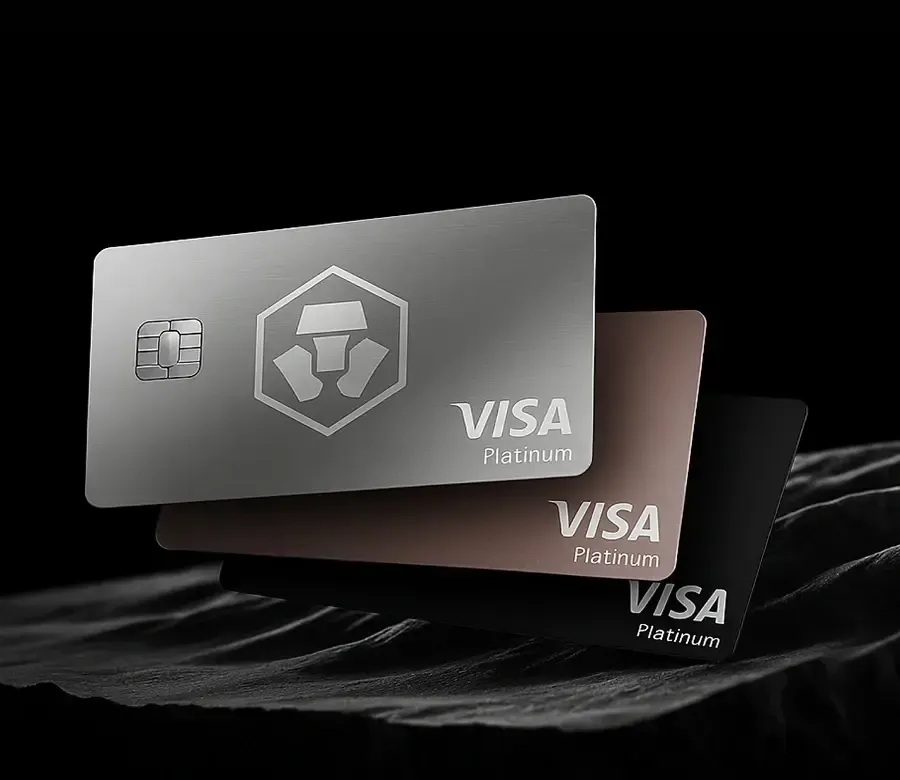
PRIVATE
4–6%
back in crypto · on every spend
CRO Lockup from €45,000
8.5% yield · 12-month staking · €450K tier at 9.5%
Zero trading fees · Unlimited volume
4.0%–6.0% back in crypto
0% foreign exchange fees
EUR Cash Yield up to 1.80% p.a.
Extra 1% p.a. on Earn allocations in CRO
VIP events · Exclusive experiences
8.5% CRO lockup rewards