
NVIDIA vs Intel
Founding story, key facts and history — side by side.
NVIDIA
Designed for gaming. Accidentally built the engine of the AI revolution.
| Founded | 1993 |
| Founders | Jensen Huang, Chris Malachowsky, Curtis Priem |
| HQ | Santa Clara, California |
| Symbol | NVDA |
VS
Intel
Gordon Moore predicted the future in 1965. Intel spent 50 years proving him right. Then fell behind.
| Founded | 1968 |
| Founders | Robert Noyce, Gordon Moore, Andrew Grove |
| HQ | Santa Clara, California |
| Symbol | INTC |
The Story — Side by Side
1993
Founded at a Denny's diner
Jensen Huang, Chris Malachowsky, and Curtis Priem founded NVIDIA in 1993. The founding meeting took place at a Denny's restaurant in San Jose — a detail Huang has since made famous in dozens of interviews. The company's original mission was simple: build better graphics chips for video games. Nobody at that table was thinking about artificial intelligence.
1995
First chip, first failure
NVIDIA's first product, the NV1, was a commercial disaster. It used a quadratic texture mapping approach that was incompatible with the emerging Direct3D standard from Microsoft. Sega, NVIDIA's primary customer, cancelled its contract. The company nearly went under. Jensen Huang has said that the near-death experience of the NV1 taught NVIDIA to make bets that were irreversible — and to make them early.
1999
The GPU is born
NVIDIA introduced the GeForce 256 in 1999 and coined the term "GPU" — Graphics Processing Unit. The GeForce 256 could perform 50 million triangles per second, a figure that had previously required a supercomputer. NVIDIA went public the same year at $12 per share. Nobody predicted what the GPU would eventually become.
2006
CUDA: the accidental revolution
NVIDIA released CUDA in 2006 — a programming platform that allowed developers to use the GPU for general computation, not just graphics. Almost nobody cared at first. Then researchers used CUDA to train a neural network called AlexNet in 2012, dramatically outperforming every other approach in an image recognition contest. The AI era had begun, and NVIDIA had accidentally built its engine.
2024
The Blackwell era: $215 billion in a single year
NVIDIA's Blackwell GPU architecture, launched in 2024, became the most in-demand piece of hardware in history. Every major cloud provider — Amazon, Google, Microsoft, Meta — was queuing for Blackwell chips. In fiscal year 2026 (ending January 2026), NVIDIA generated $215.9 billion in revenue, up 65% from the prior year. Data centre revenue alone hit $62.3 billion in a single quarter. Jensen Huang announced visibility into $500 billion in Blackwell and Rubin revenue through end of 2026.
2025
$3 trillion and the most valuable company on earth
By late 2025, NVIDIA had crossed $3 trillion in market capitalisation, briefly overtaking Apple and Microsoft as the world's most valuable company. The H200 and Blackwell chips were sold out across every major cloud provider. Q3 fiscal 2026 revenue hit a record $57 billion — up 62% year-over-year — with Jensen Huang declaring: "Blackwell sales are off the charts, and cloud GPUs are sold out. We've entered the virtuous cycle of AI." The company that had been founded to make video game graphics had become the backbone of the entire AI industry.
1965
Moore's Law
Gordon Moore published a paper in 1965 observing that the number of transistors on a microchip doubled approximately every two years, while the cost halved. He predicted this trend would continue. "Moore's Law" proved to be one of the most reliable predictions in the history of technology, holding for over fifty years. Intel's entire business strategy was built around the predictable improvement curve that Moore had identified: make chips faster and cheaper at a rate that customers could anticipate and plan around.
1968
The Fairchild refugees who changed everything
Robert Noyce and Gordon Moore founded Intel in July 1968, having left Fairchild Semiconductor. Noyce had co-invented the integrated circuit. Their initial investor, Arthur Rock, raised $2.5 million in two days. Andrew Grove, who joined as employee number three, would eventually become Intel's most transformational CEO.
1971
The first microprocessor
Intel introduced the 4004 in 1971 — the world's first commercially available microprocessor: a complete CPU on a single chip. It had been commissioned by a Japanese calculator company. Intel engineer Ted Hoff proposed putting the entire computing logic on one chip rather than multiple chips. The 4004 contained 2,300 transistors. A modern chip contains tens of billions. The 4004 made the personal computer possible in principle; a decade of further development made it possible in practice.
1981
The IBM deal and the Wintel duopoly
IBM chose Intel's 8088 processor for the IBM PC in 1981. IBM's open architecture allowed other manufacturers to clone the PC using Intel chips. The "Wintel" ecosystem — Windows operating system on Intel processors — became the dominant computing platform for three decades. Intel's revenues grew from $800 million in 1980 to $33 billion in 2000 as personal computer adoption spread globally.
2021
The manufacturing crisis — and the $100 billion comeback attempt
Intel spent years falling behind in semiconductor manufacturing, failing to advance to smaller transistor sizes at the pace that Taiwan's TSMC and South Korea's Samsung had achieved. Competitors including Apple, AMD, and Qualcomm were having their chips made by TSMC using processes more advanced than Intel's own factories. CEO Pat Gelsinger, who returned to Intel in 2021, announced an ambitious plan to rebuild Intel's manufacturing capability and become a contract chip manufacturer — directly competing with TSMC. The programme required $100 billion in investment. Gelsinger was replaced in December 2024 after the stock fell 60% and the turnaround stalled. Intel remained the processor inside approximately 70% of the world's PCs — but the AI era was running on Nvidia GPUs and TSMC silicon, and Intel was in danger of becoming a passenger in the industry it had created.
Tools & Platforms
For Investors
The market doesn't care about your feelings.
But your broker's fees do.
But your broker's fees do.
Most people have a brokerage account. Fewer understand what it really costs them — in spreads, in fees, in missed instruments. Malta-regulated, direct market access, 600,000+ instruments.
Exante
Malta MFSA · 50 exchanges
Tickmill
Forex from 0.0 pips
Vantage
Multi-asset trading
Polymarket
Prediction markets
For Entrepreneurs
Opening a US company costs $300.
Most people think it's complicated. It isn't.
Most people think it's complicated. It isn't.
Most founders spend weeks on formation, banking and payments. The ones who move fast know which tools to use before they start. A US LLC, a real business account, and a way to pay people — in that order.
Mercury
Business finance · 300K+ founders
Doola
US LLC formation · YC backed
Melio
B2B payments
Xero 95% OFF
Accounting · 6 months
For C-Suite
Your competitor pays $200 less per month for EOR.
You're still on a spreadsheet.
You're still on a spreadsheet.
BVNK hired 20% of its workforce through Deel. The smartest operators aren't managing payroll complexity — they're outsourcing it. EOR in 150+ countries, multi-currency accounts, workforce payments at $200 less per month than competitors.
Deel
EOR · 150+ countries
Payoneer
$399/mo EOR · Save $200
Wise Business
40+ currencies · No hidden fees
Gusto
US payroll & benefits
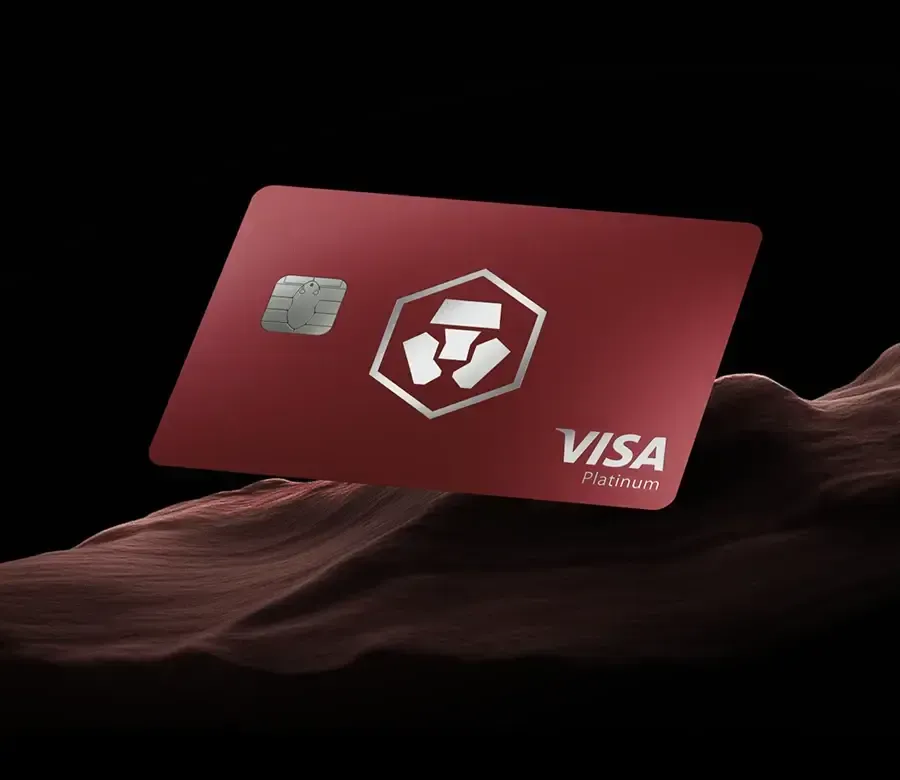
PLUS
2.0%
back in crypto · on every spend
€3.99 / month
or €39.90/year (€3.32/month)
Zero trading fees up to $20K/month
2.0% back in crypto on card spend
0% foreign exchange fees
EUR Cash Yield up to 1.35% p.a.
CRO Yield up to 2.00% p.a.
Virtual Visa card · Flexible cancel
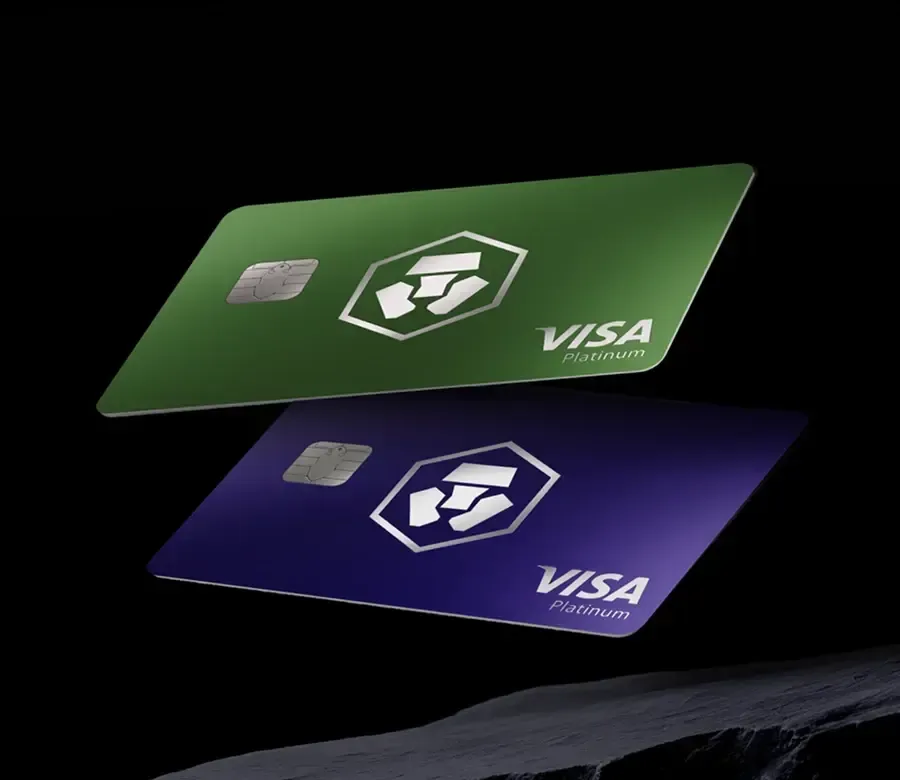
PRO
3.0%
back in crypto · on every spend
€24.99 / month
or €249.90/year (€20.82/month)
Zero trading fees up to $50K/month
3.0% back in crypto on card spend
0% foreign exchange fees
EUR Cash Yield up to 1.70% p.a.
CRO Yield up to 2.50% p.a.
Airport lounge access (Priority Pass)
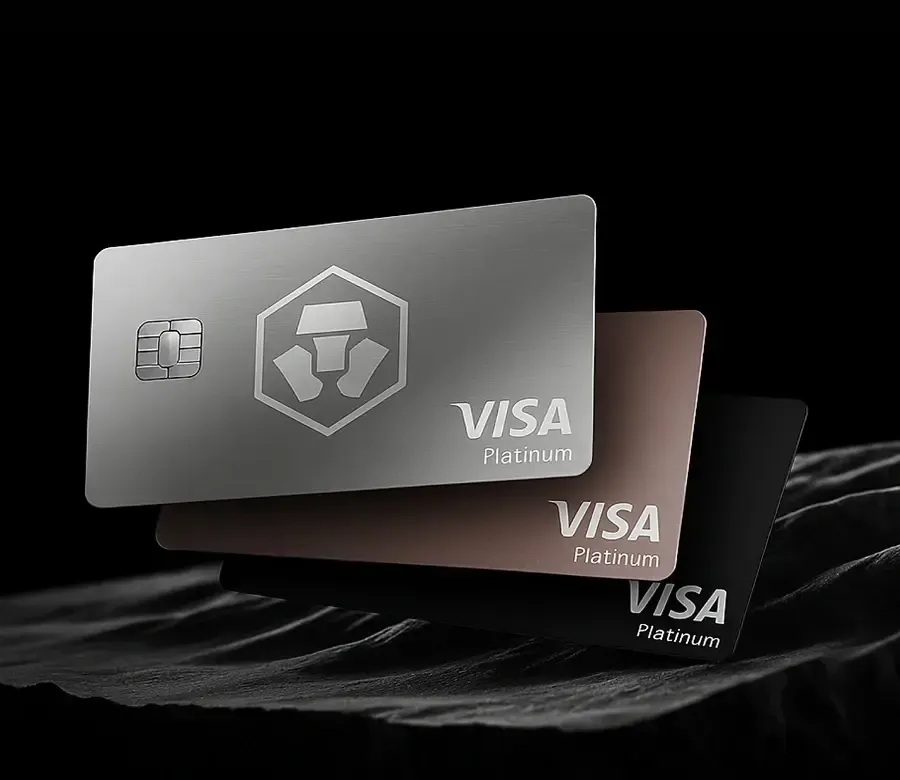
PRIVATE
4–6%
back in crypto · on every spend
CRO Lockup from €45,000
8.5% yield · 12-month staking · €450K tier at 9.5%
Zero trading fees · Unlimited volume
4.0%–6.0% back in crypto
0% foreign exchange fees
EUR Cash Yield up to 1.80% p.a.
Extra 1% p.a. on Earn allocations in CRO
VIP events · Exclusive experiences
8.5% CRO lockup rewards