
NVIDIA vs TSMC
Founding story, key facts and history — side by side.
NVIDIA
Designed for gaming. Accidentally built the engine of the AI revolution.
| Founded | 1993 |
| Founders | Jensen Huang, Chris Malachowsky, Curtis Priem |
| HQ | Santa Clara, California |
| Symbol | NVDA |
VS
TSMC
One company makes the chips inside everything. Almost nobody knows its name.
| Founded | 1987 |
| Founders | Morris Chang |
| HQ | Hsinchu, Taiwan |
| Symbol | TSM |
The Story — Side by Side
1993
Founded at a Denny's diner
Jensen Huang, Chris Malachowsky, and Curtis Priem founded NVIDIA in 1993. The founding meeting took place at a Denny's restaurant in San Jose — a detail Huang has since made famous in dozens of interviews. The company's original mission was simple: build better graphics chips for video games. Nobody at that table was thinking about artificial intelligence.
1995
First chip, first failure
NVIDIA's first product, the NV1, was a commercial disaster. It used a quadratic texture mapping approach that was incompatible with the emerging Direct3D standard from Microsoft. Sega, NVIDIA's primary customer, cancelled its contract. The company nearly went under. Jensen Huang has said that the near-death experience of the NV1 taught NVIDIA to make bets that were irreversible — and to make them early.
1999
The GPU is born
NVIDIA introduced the GeForce 256 in 1999 and coined the term "GPU" — Graphics Processing Unit. The GeForce 256 could perform 50 million triangles per second, a figure that had previously required a supercomputer. NVIDIA went public the same year at $12 per share. Nobody predicted what the GPU would eventually become.
2006
CUDA: the accidental revolution
NVIDIA released CUDA in 2006 — a programming platform that allowed developers to use the GPU for general computation, not just graphics. Almost nobody cared at first. Then researchers used CUDA to train a neural network called AlexNet in 2012, dramatically outperforming every other approach in an image recognition contest. The AI era had begun, and NVIDIA had accidentally built its engine.
2024
The Blackwell era: $215 billion in a single year
NVIDIA's Blackwell GPU architecture, launched in 2024, became the most in-demand piece of hardware in history. Every major cloud provider — Amazon, Google, Microsoft, Meta — was queuing for Blackwell chips. In fiscal year 2026 (ending January 2026), NVIDIA generated $215.9 billion in revenue, up 65% from the prior year. Data centre revenue alone hit $62.3 billion in a single quarter. Jensen Huang announced visibility into $500 billion in Blackwell and Rubin revenue through end of 2026.
2025
$3 trillion and the most valuable company on earth
By late 2025, NVIDIA had crossed $3 trillion in market capitalisation, briefly overtaking Apple and Microsoft as the world's most valuable company. The H200 and Blackwell chips were sold out across every major cloud provider. Q3 fiscal 2026 revenue hit a record $57 billion — up 62% year-over-year — with Jensen Huang declaring: "Blackwell sales are off the charts, and cloud GPUs are sold out. We've entered the virtuous cycle of AI." The company that had been founded to make video game graphics had become the backbone of the entire AI industry.
1987
The idea that changed manufacturing forever
Morris Chang founded TSMC in 1987 at age 55, after being passed over for the top job at Texas Instruments. His idea was radical: a semiconductor company that only manufactured chips designed by other companies, never competing with its own customers. Every chip company at the time designed and manufactured its own products. Chang's "pure-play foundry" model was considered bizarre. It became the foundation of the entire modern technology industry.
1994
Enabling the fabless revolution
TSMC's model enabled an entirely new category of company: the "fabless" semiconductor firm — companies that design chips but own no factories. Qualcomm, NVIDIA, AMD, Apple, and eventually hundreds of other companies became fabless, outsourcing all manufacturing to TSMC. Without TSMC's foundry model, none of these companies could have existed in their current form. The chip inside your iPhone was designed by Apple in California and manufactured by TSMC in Taiwan.
2022
The silicon shield
Russia's invasion of Ukraine in 2022 focused global attention on Taiwan's security in an entirely new way. Analysts calculated what a Chinese military action against Taiwan would mean for the global chip supply. The answer was stark: a disruption to TSMC's operations would halt production of smartphones, cars, medical devices, and military equipment worldwide within months. TSMC had become what analysts called "the silicon shield" — simultaneously Taiwan's most valuable strategic asset and the world's most critical piece of industrial infrastructure.
2025
$122 billion in revenue and the Arizona ramp
TSMC reported $122.4 billion in total revenue for 2025 — up 36% year-over-year — driven by AI chip demand. High-performance computing, which includes AI, accounted for 58% of revenue, up from 51% in 2024. North America contributed 75% of revenue. TSMC's first Arizona fabrication plant — Fab 21 Phase 1 — entered volume production in late 2024 and earned $514 million in profit during its first full year of operation. TSMC announced plans to invest $165 billion total in Arizona across six fabs, including advanced packaging facilities. The company that had been described as impossible to replicate outside Taiwan was proving its critics partially wrong.
2026
2nm production and the AI packaging bottleneck
TSMC began volume production of its 2nm (N2) process technology — the most advanced semiconductor node ever manufactured — in late 2025, using gate-all-around nanosheet transistors for the first time. The 2nm node delivers 10-15% speed improvements or 25-30% power reductions versus 3nm. Simultaneously, TSMC's CoWoS advanced packaging — the technology that connects AI accelerator chips to high-bandwidth memory — became the single most constrained resource in the global AI supply chain. TSMC was scaling CoWoS capacity from 65,000 wafers per month in 2025 to a target of 120,000-130,000 per month in 2026. NVIDIA held the largest allocation. Without TSMC's packaging capacity, the AI boom could not proceed.
Tools & Platforms
For Investors
The market doesn't care about your feelings.
But your broker's fees do.
But your broker's fees do.
Most people have a brokerage account. Fewer understand what it really costs them — in spreads, in fees, in missed instruments. Malta-regulated, direct market access, 600,000+ instruments.
Exante
Malta MFSA · 50 exchanges
Tickmill
Forex from 0.0 pips
Vantage
Multi-asset trading
Polymarket
Prediction markets
For Entrepreneurs
Opening a US company costs $300.
Most people think it's complicated. It isn't.
Most people think it's complicated. It isn't.
Most founders spend weeks on formation, banking and payments. The ones who move fast know which tools to use before they start. A US LLC, a real business account, and a way to pay people — in that order.
Mercury
Business finance · 300K+ founders
Doola
US LLC formation · YC backed
Melio
B2B payments
Xero 95% OFF
Accounting · 6 months
For C-Suite
Your competitor pays $200 less per month for EOR.
You're still on a spreadsheet.
You're still on a spreadsheet.
BVNK hired 20% of its workforce through Deel. The smartest operators aren't managing payroll complexity — they're outsourcing it. EOR in 150+ countries, multi-currency accounts, workforce payments at $200 less per month than competitors.
Deel
EOR · 150+ countries
Payoneer
$399/mo EOR · Save $200
Wise Business
40+ currencies · No hidden fees
Gusto
US payroll & benefits
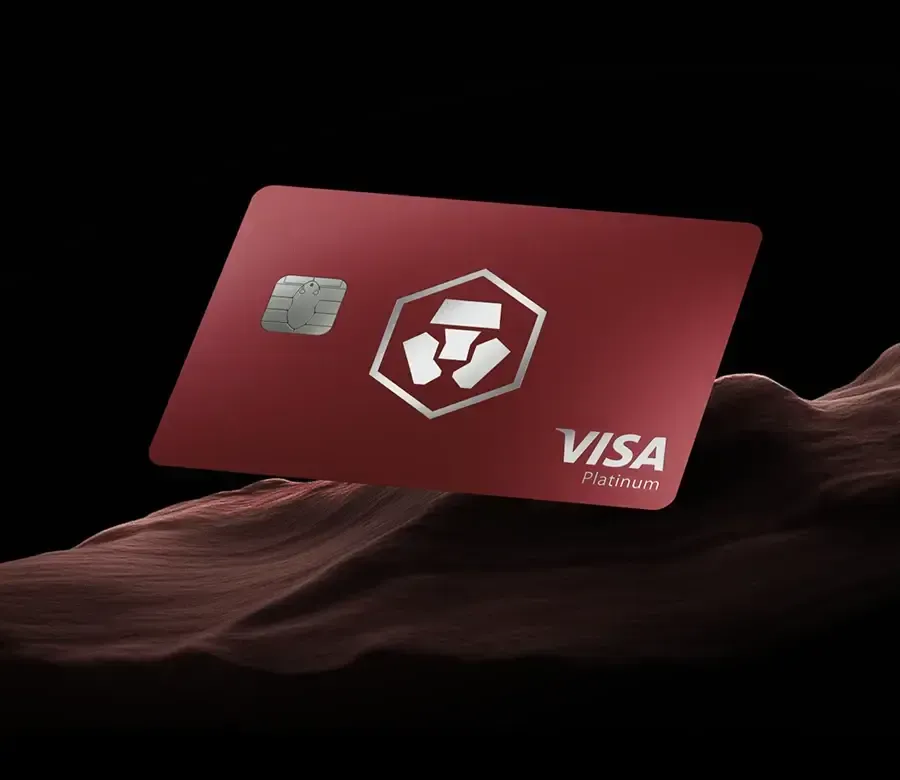
PLUS
2.0%
back in crypto · on every spend
€3.99 / month
or €39.90/year (€3.32/month)
Zero trading fees up to $20K/month
2.0% back in crypto on card spend
0% foreign exchange fees
EUR Cash Yield up to 1.35% p.a.
CRO Yield up to 2.00% p.a.
Virtual Visa card · Flexible cancel
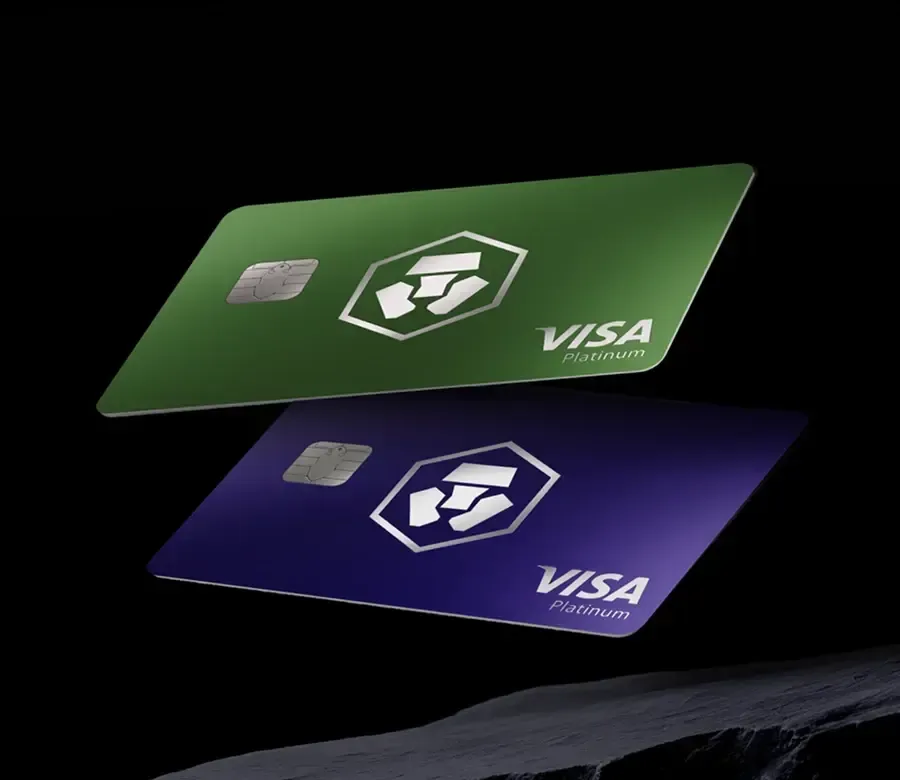
PRO
3.0%
back in crypto · on every spend
€24.99 / month
or €249.90/year (€20.82/month)
Zero trading fees up to $50K/month
3.0% back in crypto on card spend
0% foreign exchange fees
EUR Cash Yield up to 1.70% p.a.
CRO Yield up to 2.50% p.a.
Airport lounge access (Priority Pass)
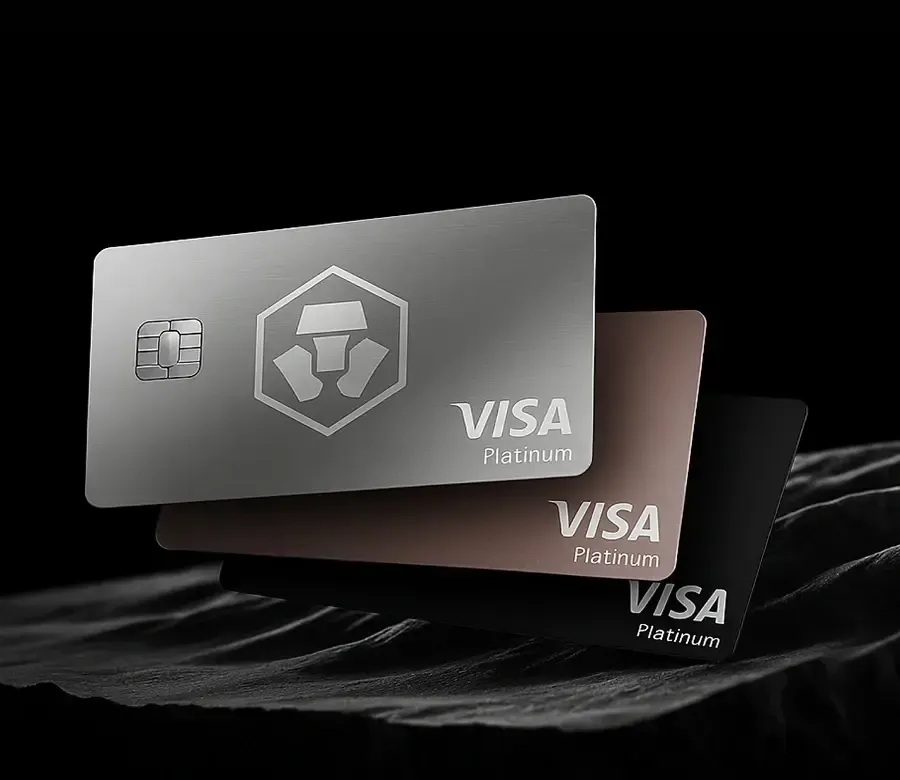
PRIVATE
4–6%
back in crypto · on every spend
CRO Lockup from €45,000
8.5% yield · 12-month staking · €450K tier at 9.5%
Zero trading fees · Unlimited volume
4.0%–6.0% back in crypto
0% foreign exchange fees
EUR Cash Yield up to 1.80% p.a.
Extra 1% p.a. on Earn allocations in CRO
VIP events · Exclusive experiences
8.5% CRO lockup rewards