
Shell vs Exxon Mobil
Founding story, key facts and history — side by side.
Shell
Started as a seashell import business. Built the world's largest oil company to fight Standard Oil. Now doing the same thing to itself with the energy transition.
| Founded | 1907 |
| Founders | Marcus Samuel, Henri Deterding (merger) |
| HQ | London, United Kingdom |
| Symbol | SHEL (LSE / NYSE) |
VS
Exxon Mobil
Rockefeller built a monopoly. The government broke it. Both halves became giants. One acquired Pioneer.
| Founded | 1870 |
| Founders | John D. Rockefeller |
| HQ | Spring, Texas |
| Symbol | XOM |
The Story — Side by Side
1833
Seashells, kerosene, and the Caspian Sea
Shell's origin story is improbably humble. In 1833, Marcus Samuel Sr. founded an import business selling seashells to London collectors — the origin of the Shell name. His son, Marcus Samuel Jr., was collecting shell specimens in the Caspian Sea region in 1892 when he recognised the opportunity in exporting lamp oil from the Baku oilfields. He commissioned the world's first purpose-built oil tanker — the Murex, named for a type of snail shell — to transport kerosene through the Suez Canal to East Asian markets. By 1907, the Samuel family's Shell Transport and Trading Company had a fleet of oil tankers and was competing directly with John D. Rockefeller's Standard Oil for the Asian kerosene market.
1907
The merger that was built to fight Standard Oil
In April 1907, Shell Transport and Trading merged with Royal Dutch Petroleum Company — a Dutch firm that had been developing oil fields in Sumatra's Pangkalan Brandan region since 1890. The merger was arranged by British-Armenian oil magnate Calouste Gulbenkian, who emerged as a major shareholder. The 60-40 structure favoured Royal Dutch on economic ownership. The combined company was deliberately built to match the scale of Standard Oil, which was attempting to dominate global petroleum markets. By 1920, the Royal Dutch Shell Group had become the world's largest oil producer.
1960
The Seven Sisters — Shell as the backbone of global energy
Shell was one of the "Seven Sisters" — the seven major oil companies that dominated global petroleum from the mid-1940s to the mid-1970s. Shell pioneered the world's first commercial LNG sea transportation in 1964, establishing liquid natural gas as a tradeable commodity that would eventually become essential to global energy supply. The company's global reach — with refineries, petrol stations, and exploration operations on every continent — gave it a scale of physical infrastructure that no single government or competitor could easily replicate.
2016
The BG Group acquisition and the LNG empire
Shell acquired BG Group in 2016 for approximately $50 billion — one of the largest energy acquisitions in history. BG's assets included major LNG contracts and production positions in Australia, Brazil, East Africa, and the North Sea. The deal transformed Shell into the world's largest LNG trader and significantly increased its exposure to natural gas at the expense of oil. CEO Ben van Beurden argued that natural gas — cleaner than coal, more flexible than renewables — was the essential transition fuel that the world needed. The deal reshaped Shell's portfolio and strategy for the following decade.
2024
$289 billion in revenue — the energy transition dilemma — Hague climate case won
Shell reported $289 billion in revenue for 2024, with free cash flow of $39.5 billion. The company held market capitalisation exceeding $210 billion. In November 2024, Shell won a landmark case in the Hague Court of Appeal against Friends of the Earth, which would have required Shell to cut carbon emissions by 45% in line with the Paris Climate Accords — the court ruled the original ruling had been wrong. CEO Wael Sawan revised Shell's near-term carbon reduction targets, reducing its 2035 ambition from 45% to 15%, while reaffirming the 2050 net-zero commitment. The company that Marcus Samuel Jr. had built to sell kerosene around the Caspian Sea was now the most visible symbol of the global argument about fossil fuels and the climate.
1870
Standard Oil and the first monopoly
John D. Rockefeller founded Standard Oil of Ohio in 1870 and built the most dominant corporate monopoly in American history. Through aggressive pricing, secret railroad rebates, and systematic acquisition of competitors, Standard Oil controlled 90% of U.S. oil refining by 1879. Rockefeller became the wealthiest person in American history — his fortune, adjusted for inflation, was larger than those of Bill Gates and Jeff Bezos combined.
1911
The Supreme Court breaks Standard Oil into 34 pieces
The U.S. Supreme Court ruled in 1911 that Standard Oil violated the Sherman Antitrust Act and ordered it broken into 34 separate companies. Among the successors were Standard Oil of New Jersey — which became Exxon — and Standard Oil of New York — which became Mobil. The breakup was intended to reduce Rockefeller's power. Instead, the separate companies' combined value quickly exceeded Standard Oil's as a whole, making Rockefeller even wealthier.
1989
The Exxon Valdez and the $5 billion lesson
On March 24, 1989, the Exxon Valdez oil tanker ran aground in Alaska's Prince William Sound, spilling 11 million gallons of crude oil. Exxon's response was widely criticised as slow and inadequate. The company was eventually ordered to pay $5 billion in punitive damages — later reduced to $507.5 million by the Supreme Court after 19 years of litigation. The disaster remains the defining corporate environmental crisis in American history.
1999
Exxon and Mobil reunite after 88 years apart
Exxon acquired Mobil in 1999 for $81 billion — at the time, the largest corporate merger in history. The two companies, separated by antitrust regulators 88 years earlier, were reunited as ExxonMobil. The merger created the world's largest publicly traded company by market capitalisation.
2024
The $60 billion Pioneer acquisition and the shale empire
ExxonMobil completed its $60 billion acquisition of Pioneer Natural Resources in May 2024 — the largest oil and gas deal in over two decades. The acquisition doubled ExxonMobil's presence in the Permian Basin, the most productive oil field in the United States, adding 850,000 barrels per day of production capacity. ExxonMobil simultaneously expanded its investments in carbon capture and low-emissions energy — while producing more oil than at any point in its post-Rockefeller history. The company that activists had attempted to disrupt with a board campaign in 2021 had responded by growing larger.
Tools & Platforms
For Investors
The market doesn't care about your feelings.
But your broker's fees do.
But your broker's fees do.
Most people have a brokerage account. Fewer understand what it really costs them — in spreads, in fees, in missed instruments. Malta-regulated, direct market access, 600,000+ instruments.
Exante
Malta MFSA · 50 exchanges
Tickmill
Forex from 0.0 pips
Vantage
Multi-asset trading
Polymarket
Prediction markets
For Entrepreneurs
Opening a US company costs $300.
Most people think it's complicated. It isn't.
Most people think it's complicated. It isn't.
Most founders spend weeks on formation, banking and payments. The ones who move fast know which tools to use before they start. A US LLC, a real business account, and a way to pay people — in that order.
Mercury
Business finance · 300K+ founders
Doola
US LLC formation · YC backed
Melio
B2B payments
Xero 95% OFF
Accounting · 6 months
For C-Suite
Your competitor pays $200 less per month for EOR.
You're still on a spreadsheet.
You're still on a spreadsheet.
BVNK hired 20% of its workforce through Deel. The smartest operators aren't managing payroll complexity — they're outsourcing it. EOR in 150+ countries, multi-currency accounts, workforce payments at $200 less per month than competitors.
Deel
EOR · 150+ countries
Payoneer
$399/mo EOR · Save $200
Wise Business
40+ currencies · No hidden fees
Gusto
US payroll & benefits
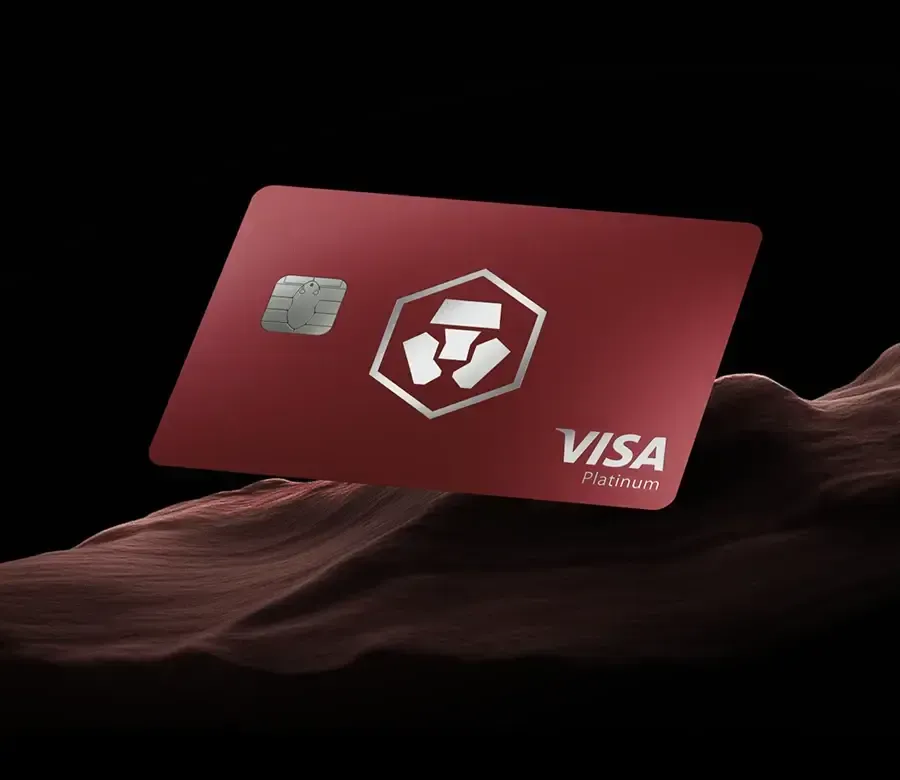
PLUS
2.0%
back in crypto · on every spend
€3.99 / month
or €39.90/year (€3.32/month)
Zero trading fees up to $20K/month
2.0% back in crypto on card spend
0% foreign exchange fees
EUR Cash Yield up to 1.35% p.a.
CRO Yield up to 2.00% p.a.
Virtual Visa card · Flexible cancel

PRO
3.0%
back in crypto · on every spend
€24.99 / month
or €249.90/year (€20.82/month)
Zero trading fees up to $50K/month
3.0% back in crypto on card spend
0% foreign exchange fees
EUR Cash Yield up to 1.70% p.a.
CRO Yield up to 2.50% p.a.
Airport lounge access (Priority Pass)
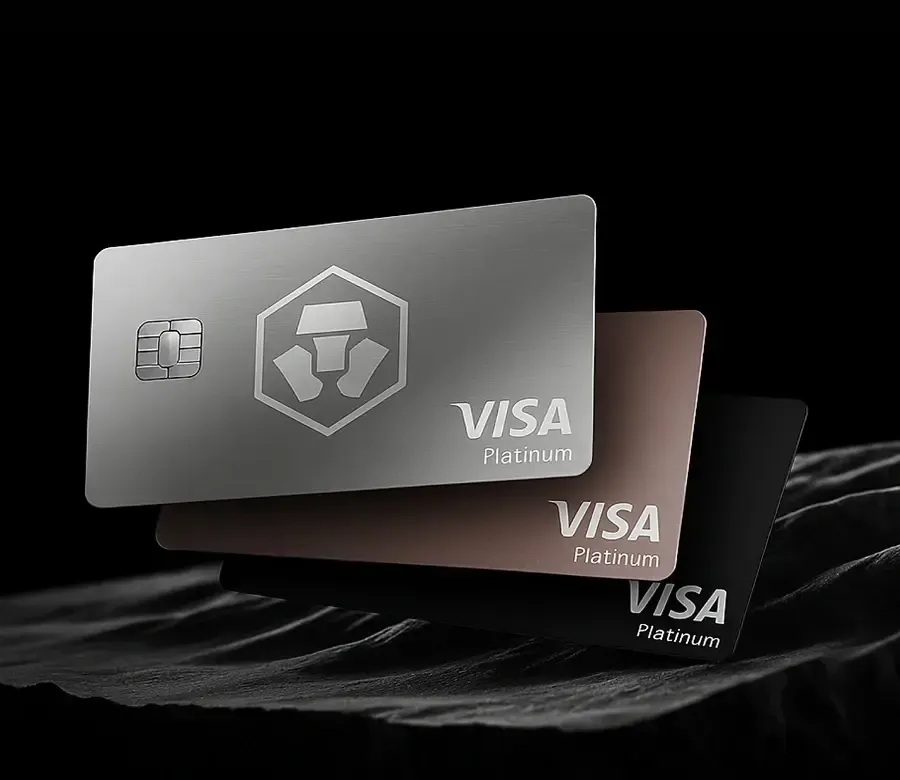
PRIVATE
4–6%
back in crypto · on every spend
CRO Lockup from €45,000
8.5% yield · 12-month staking · €450K tier at 9.5%
Zero trading fees · Unlimited volume
4.0%–6.0% back in crypto
0% foreign exchange fees
EUR Cash Yield up to 1.80% p.a.
Extra 1% p.a. on Earn allocations in CRO
VIP events · Exclusive experiences
8.5% CRO lockup rewards