
Stability vs Adobe
Founding story, key facts and history — side by side.
Stability
The radical champion of open-source image generation that survived an executive collapse, cloud debts, and a private equity bailout.
| Founded | 2020 |
| Founders | Emad Mostaque |
| HQ | London, United Kingdom |
| Symbol | PRIVATE |
VS
Adobe
Two Xerox engineers started it in a garage. Steve Jobs wanted to buy it. They said no. Invented PostScript, PDF, and Photoshop.
| Founded | 1982 |
| Founders | John Warnock, Charles Geschke |
| HQ | San Jose, California |
| Symbol | ADBE |
The Story — Side by Side
2020
The hedge fund veteran's open compute vision
Stability AI was founded in 2020 by Emad Mostaque, a charismatic former hedge fund analyst who envisioned an open-source alternative to the walled gardens of Big Tech AI systems. Mostaque used his personal capital to bankroll massive compute clusters for academic researchers, stepping in to fund the development of latent diffusion architectures at LMU Munich, which laid the direct engineering groundwork for the release of Stable Diffusion.
2022
The Stable Diffusion release and the $1 billion peak
In August 2022, Stability AI released Stable Diffusion to the public under an open-source license, allowing anyone to download and run powerful text-to-image software directly on consumer hardware. The release completely revolutionized the global open-source community, triggering a massive wave of innovation. Weeks later, Mostaque leveraged this phenomenal hype cycle to raise a $101 million funding round, instantly valuing the London startup at $1 billion.
2023
The catastrophic cash burn and the compute bill wall
By late 2023, the startup's idealistic open-source business model fell into severe financial distress. Stability AI was burning through cash at an alarming rate—spending tens of millions of dollars to rent computing power from Amazon Web Services—while generating virtually no sustainable enterprise software revenue. Prominent researchers resigned en masse, and institutional investors aggressively demanded structural corporate audits amid growing scrutiny over Mostaque's erratic management style.
2024
The Emad Mostaque ouster and emergency rescue bailout
The simmering corporate crisis culminated in March 2024 when Emad Mostaque officially resigned as CEO under intense pressure from primary venture backers. Facing imminent corporate liquidation due to unpaid cloud computing bills, the firm secured a dramatic, high-stakes emergency restructuring and cash injection package led by a consortium of specialized investment firms including Greycroft and Coatue, completely resetting its corporate leadership team.
2026
The enterprise B2B shift and open commercial licensing
By mid-2026, Stability AI operated under a completely restructured, highly disciplined enterprise model designed to monetize its core technical assets. Moving far away from pure open-source charity, the firm successfully scaled a multi-tier commercial licensing framework for its state-of-the-art Stable Diffusion 3 infrastructure and text-to-video capabilities, stabilizing its annualized revenue stream past $45 million under new executive management.
1982
Walking out of Xerox PARC
John Warnock and Charles Geschke were researchers at Xerox PARC — the legendary laboratory that had invented the graphical user interface, the mouse, and Ethernet, and commercialised almost none of it. Warnock had developed a page description language called Interpress that could precisely describe how text and graphics should appear on a printed page. Xerox showed no interest in commercialising it. In December 1982, Warnock and Geschke resigned from Xerox and founded Adobe Systems in Warnock's garage in Los Altos, California.
1983
Steve Jobs, the license, and the 19%
Steve Jobs visited Adobe in early 1983 and was shown PostScript — the page description language that Warnock and Geschke had developed. Jobs wanted to acquire Adobe outright. The founders declined. Jobs reportedly became extremely angry. He settled for a license to use PostScript in Apple's LaserWriter printer and invested in Adobe, acquiring approximately 19% of the company. The LaserWriter, combined with Adobe's PostScript and Aldus PageMaker software, created desktop publishing — the ability to produce professional print materials without a print shop. It transformed publishing, advertising, and graphic design.
1993
PDF and the document revolution
Adobe launched the Portable Document Format — PDF — in 1993, along with the free Adobe Acrobat Reader. PDF solved a fundamental problem: documents created on one computer could not reliably be viewed on another without the same fonts and software. Adobe distributed the Reader for free, generating revenue from the professional tools needed to create PDFs. The strategy established PDF as the universal document standard. Over 2.5 trillion PDF files exist today.
2012
The Creative Cloud subscription pivot
Adobe announced in 2012 that it would move its creative software — Photoshop, Illustrator, InDesign, Premiere — from perpetual licences to a subscription model called Creative Cloud. Customers who had paid once for software would now pay monthly or annually. The backlash was intense: designers and photographers who had used Adobe software for decades felt they were being forced into a perpetual payment. Adobe's stock fell. Then it rose — dramatically. The subscription model created predictable, recurring revenue that the market valued far more highly than lumpy software sales.
2024
$24 billion in revenue — Firefly, and the $20 billion deal regulators killed
Adobe reported FY2025 revenues of $24.05 billion — up 11% — with Firefly, its generative AI platform, producing 22 billion asset generations by April 2025 and contributing $400 million in direct revenue between 2024 and 2025. Adobe had attempted to acquire Figma — the dominant interface design tool — for $20 billion in September 2022, but regulators in the United States and European Union blocked the deal in December 2023, concluding it would eliminate a significant competitive threat. Adobe paid Figma a $1 billion termination fee. Figma remained independent and began preparing for its own IPO. The company that had invented PostScript, PDF, and the Creative Cloud subscription model was now racing to prove that AI would deepen its competitive moat rather than erode it.
Tools & Platforms
For Investors
The market doesn't care about your feelings.
But your broker's fees do.
But your broker's fees do.
Most people have a brokerage account. Fewer understand what it really costs them — in spreads, in fees, in missed instruments. Malta-regulated, direct market access, 600,000+ instruments.
Exante
Malta MFSA · 50 exchanges
Tickmill
Forex from 0.0 pips
Vantage
Multi-asset trading
Polymarket
Prediction markets
For Entrepreneurs
Opening a US company costs $300.
Most people think it's complicated. It isn't.
Most people think it's complicated. It isn't.
Most founders spend weeks on formation, banking and payments. The ones who move fast know which tools to use before they start. A US LLC, a real business account, and a way to pay people — in that order.
Mercury
Business finance · 300K+ founders
Doola
US LLC formation · YC backed
Melio
B2B payments
Xero 95% OFF
Accounting · 6 months
For C-Suite
Your competitor pays $200 less per month for EOR.
You're still on a spreadsheet.
You're still on a spreadsheet.
BVNK hired 20% of its workforce through Deel. The smartest operators aren't managing payroll complexity — they're outsourcing it. EOR in 150+ countries, multi-currency accounts, workforce payments at $200 less per month than competitors.
Deel
EOR · 150+ countries
Payoneer
$399/mo EOR · Save $200
Wise Business
40+ currencies · No hidden fees
Gusto
US payroll & benefits
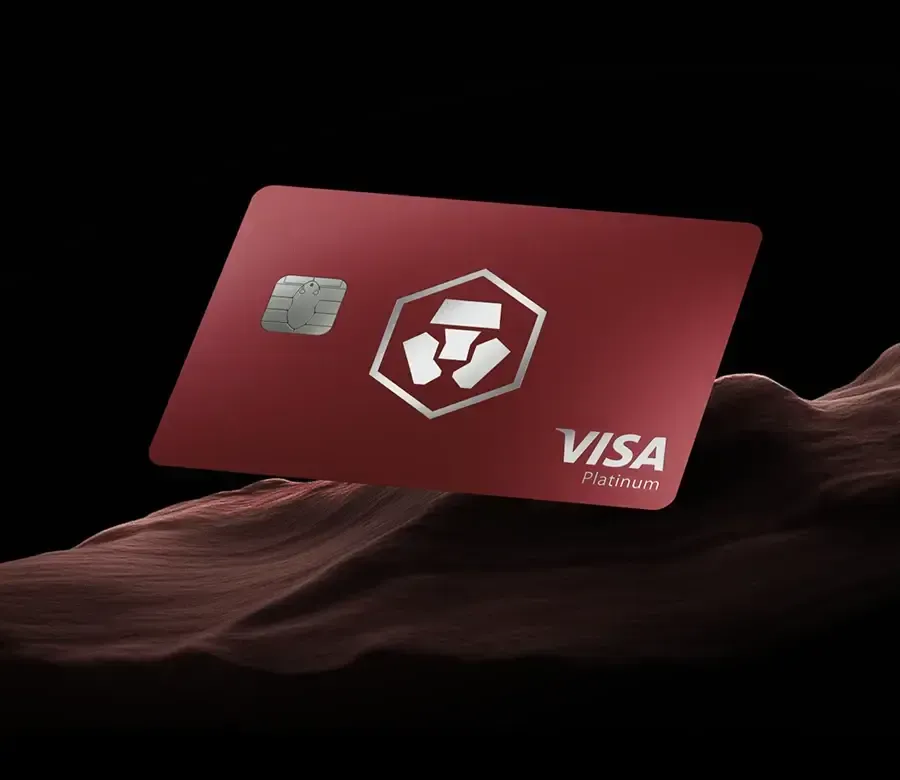
PLUS
2.0%
back in crypto · on every spend
€3.99 / month
or €39.90/year (€3.32/month)
Zero trading fees up to $20K/month
2.0% back in crypto on card spend
0% foreign exchange fees
EUR Cash Yield up to 1.35% p.a.
CRO Yield up to 2.00% p.a.
Virtual Visa card · Flexible cancel

PRO
3.0%
back in crypto · on every spend
€24.99 / month
or €249.90/year (€20.82/month)
Zero trading fees up to $50K/month
3.0% back in crypto on card spend
0% foreign exchange fees
EUR Cash Yield up to 1.70% p.a.
CRO Yield up to 2.50% p.a.
Airport lounge access (Priority Pass)
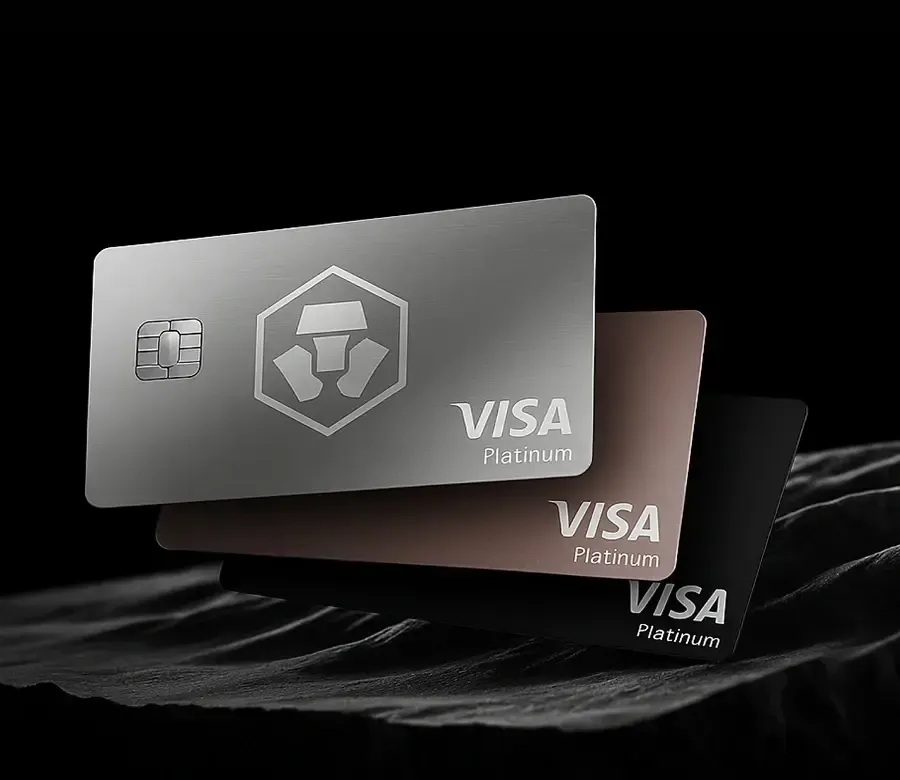
PRIVATE
4–6%
back in crypto · on every spend
CRO Lockup from €45,000
8.5% yield · 12-month staking · €450K tier at 9.5%
Zero trading fees · Unlimited volume
4.0%–6.0% back in crypto
0% foreign exchange fees
EUR Cash Yield up to 1.80% p.a.
Extra 1% p.a. on Earn allocations in CRO
VIP events · Exclusive experiences
8.5% CRO lockup rewards