
Thales Group vs Airbus
Founding story, key facts and history — side by side.
Thales Group
Europe's sovereign high-tech brain, embedding deep encryption, flight avionics, and space radar across global civil and military networks.
| Founded | 2000 (Rebranded from Thomson-CSF) |
| Founders | Pioneered by Thomson-Houston origins |
| HQ | Paris, France |
| Symbol | Euronext: HO |
VS
Airbus
Four governments decided to challenge Boeing. Everyone said it was impossible. Now Airbus delivers more planes than Boeing.
| Founded | 1970 |
| Founders | France, Germany, UK, Spain (consortium) |
| HQ | Leiden, Netherlands |
| Symbol | AIR.PA |
The Story — Side by Side
1998
The historic privatization and the Thomson-CSF restructuring
Emerging from the corporate roots of the Thomson-Houston Electric Company, the French defense electronics powerhouse underwent a massive privatization wave, absorbing the defense assets of Alcatel and Dassault Electronique. This structural consolidation forged Europe's largest sovereign military sensor and electronics supplier.
2000
The philosophical rebranding to honor polymath Thales of Miletus
To permanently escape its historical image as a rigid, purely French state military supplier, the corporation rebranded itself as Thales Group, honoring the ancient Greek polymath and philosopher Thales of Miletus. The move marked a global expansion push into international civil aerospace, satellite rail signaling, and digital identity security.
2019
The €4.8 billion Gemalto acquisition and the digital identity pivot
Thales won an intense, high-profile corporate bidding war to acquire digital security provider Gemalto for €4.8 billion. This massive integration combined Thales' enterprise encryption with Gemalto's global biometrics and SIM card technologies, positioning the company as an absolute powerhouse in modern civilian cyber security.
2026
The Imperva integration and the European defense electronics expansion
By mid-2026, Thales Group successfully closed and fully integrated its high-profile acquisition of application security provider Imperva, creating a massive, highly competitive cloud cybersecurity division. The enterprise expanded production lines for its advanced tactical communications systems to fulfill massive new procurement cycles.
1967
Three governments and a handshake
In 1967, the governments of France, Germany, and the United Kingdom signed a memorandum of understanding to jointly develop a wide-body commercial aircraft. The American aerospace industry — Boeing, McDonnell Douglas, and Lockheed — dominated commercial aviation so completely that no single European company could afford the investment required to compete. The European governments decided that cooperation was the only option. The UK subsequently withdrew from the project before rejoining. Spain joined in 1971. The consortium was named Airbus Industrie.
1972
The A300: the world's first twin-engine wide-body
The A300 made its maiden flight on October 28, 1972 — the world's first twin-engine wide-body commercial aircraft. The fuel efficiency advantage of two engines was significant, particularly after the 1973 oil crisis drove aviation fuel costs dramatically higher. Early sales were slow — airlines were suspicious of a consortium aircraft assembled from parts made in multiple countries. Eastern Airlines' decision to lease A300s in 1977 gave Airbus its first American customer and proved the aircraft to the industry.
1988
Fly-by-wire and the computer takeover
Airbus introduced fly-by-wire technology in the A320, launched in 1988 — replacing mechanical control cables with electronic signals and allowing a computer to intervene if a pilot's inputs would exceed the aircraft's structural limits. The technology was controversial but proved correct. The A320 became the world's best-selling single-aisle aircraft and the fly-by-wire standard was eventually adopted across the entire industry.
2000
The A380: the magnificent commercial failure
Airbus launched the A380 programme in 2000 — a double-deck, 555-passenger aircraft intended to challenge the Boeing 747. The A380 was six years late, $6 billion over budget, and required airports to invest heavily in larger infrastructure. Airbus announced it would stop producing the A380 in 2019 after delivering 251 aircraft — far below the 751 needed to break even. Emirates, which operated 115 A380s, was essentially the only airline that made the programme viable. The aircraft was magnificent. The business case was not.
2024
Leader in commercial aviation — 8,000 aircraft backlog
Airbus had established itself as the world's largest commercial aircraft manufacturer by the early 2020s, delivering more aircraft than Boeing in consecutive years as Boeing grappled with manufacturing quality issues at its 737 MAX and 787 programmes. Airbus's A320neo family — the successor to the best-selling A320 — had a backlog of over 8,000 aircraft as of 2024, representing approximately 10 years of production at current rates. Airbus reported revenues of €75 billion for 2023. The consortium that four European governments had created to challenge American aviation dominance had not just survived — it had won.
Tools & Platforms
For Investors
The market doesn't care about your feelings.
But your broker's fees do.
But your broker's fees do.
Most people have a brokerage account. Fewer understand what it really costs them — in spreads, in fees, in missed instruments. Malta-regulated, direct market access, 600,000+ instruments.
Exante
Malta MFSA · 50 exchanges
Tickmill
Forex from 0.0 pips
Vantage
Multi-asset trading
Polymarket
Prediction markets
For Entrepreneurs
Opening a US company costs $300.
Most people think it's complicated. It isn't.
Most people think it's complicated. It isn't.
Most founders spend weeks on formation, banking and payments. The ones who move fast know which tools to use before they start. A US LLC, a real business account, and a way to pay people — in that order.
Mercury
Business finance · 300K+ founders
Doola
US LLC formation · YC backed
Melio
B2B payments
Xero 95% OFF
Accounting · 6 months
For C-Suite
Your competitor pays $200 less per month for EOR.
You're still on a spreadsheet.
You're still on a spreadsheet.
BVNK hired 20% of its workforce through Deel. The smartest operators aren't managing payroll complexity — they're outsourcing it. EOR in 150+ countries, multi-currency accounts, workforce payments at $200 less per month than competitors.
Deel
EOR · 150+ countries
Payoneer
$399/mo EOR · Save $200
Wise Business
40+ currencies · No hidden fees
Gusto
US payroll & benefits
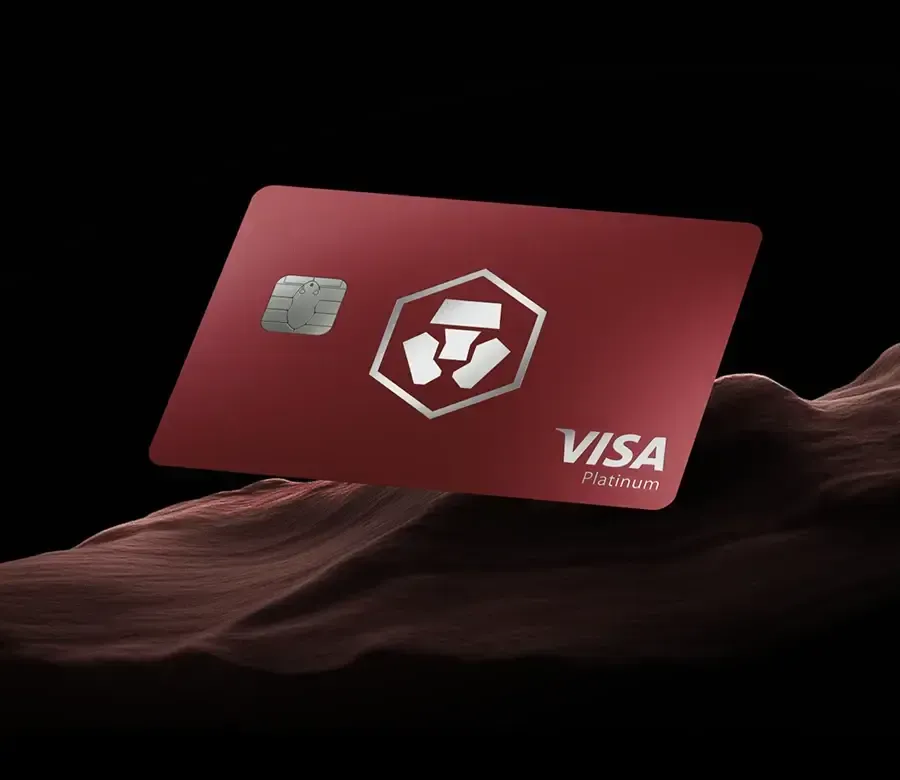
PLUS
2.0%
back in crypto · on every spend
€3.99 / month
or €39.90/year (€3.32/month)
Zero trading fees up to $20K/month
2.0% back in crypto on card spend
0% foreign exchange fees
EUR Cash Yield up to 1.35% p.a.
CRO Yield up to 2.00% p.a.
Virtual Visa card · Flexible cancel
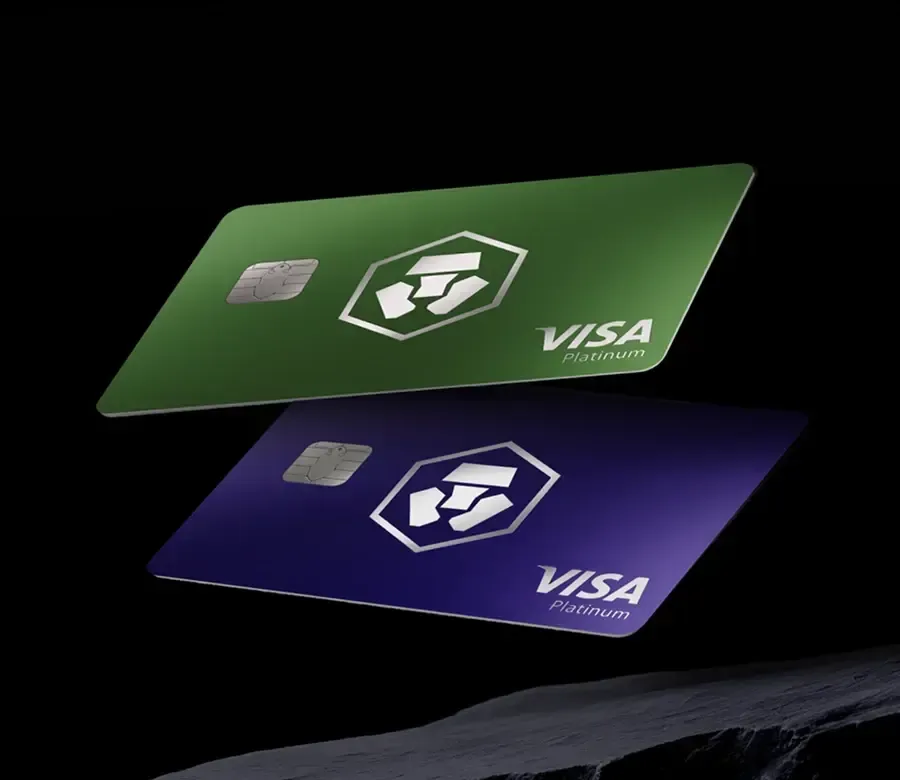
PRO
3.0%
back in crypto · on every spend
€24.99 / month
or €249.90/year (€20.82/month)
Zero trading fees up to $50K/month
3.0% back in crypto on card spend
0% foreign exchange fees
EUR Cash Yield up to 1.70% p.a.
CRO Yield up to 2.50% p.a.
Airport lounge access (Priority Pass)
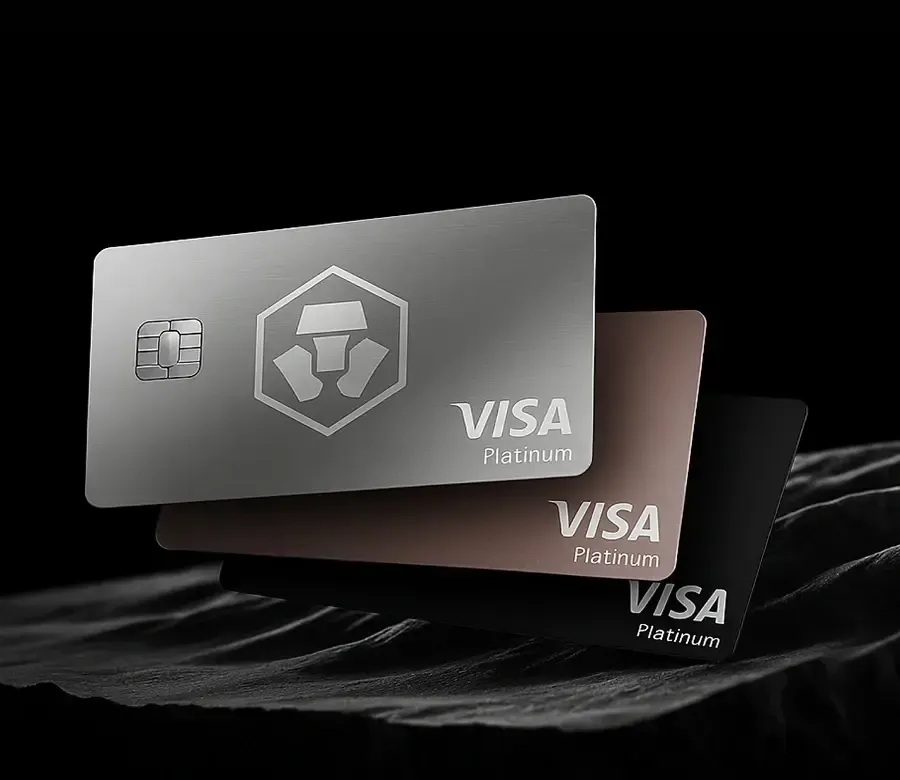
PRIVATE
4–6%
back in crypto · on every spend
CRO Lockup from €45,000
8.5% yield · 12-month staking · €450K tier at 9.5%
Zero trading fees · Unlimited volume
4.0%–6.0% back in crypto
0% foreign exchange fees
EUR Cash Yield up to 1.80% p.a.
Extra 1% p.a. on Earn allocations in CRO
VIP events · Exclusive experiences
8.5% CRO lockup rewards