
The Economist vs Bloomberg
Founding story, key facts and history — side by side.
The Economist
Written entirely without bylines, owned by elite banking dynasties, and shaping global policy for 180 years.
| Founded | 1843 |
| Founders | James Wilson |
| HQ | London, United Kingdom |
| Symbol | PRIVATE |
VS
Bloomberg
Fired with a $10 million check, he built a private data empire that Wall Street physically cannot live without.
| Founded | 1981 |
| Founders | Michael Bloomberg, Duncan Macmillan, Thomas Secunda, Charles Zegar |
| HQ | New York City, New York |
| Symbol | PRIVATE |
The Story — Side by Side
1843
Fighting the Corn Laws with raw data
The Economist was founded in September 1843 by Scottish hat manufacturer and businessman James Wilson to campaign aggressively against the British Corn Laws, a set of high import tariffs that protected wealthy domestic landowners but starved the poor. Wilson argued that free trade, open markets, and hard mathematical data were the only ways to ensure global prosperity. The publication quickly became the definitive handbook for the rising British merchant class, establishing a data-heavy, analytical style that treated global economics as an exact science.
1943
The cult of absolute anonymity
During its centenary in 1943, The Economist formalized its highly unusual editorial policy: no article ever carries an individual author byline. The magazine operates under the strict philosophy that all content must speak with a single corporate voice, reflecting a collective editorial identity rather than individual egos. This anonymity granted its journalists immense freedom to write blunt, highly critical analysis of powerful world leaders and corporate executives without facing personal retaliation, transforming the "anonymous Economist writer" into a powerful archetype in global journalism.
2015
The Rothschild and Agnelli buyout buyout
For decades, the ownership of The Economist was quietly split between independent families and the financial news giant Pearson. In 2015, when Pearson decided to sell its 50% stake to focus on education, elite European business dynasties launched a massive corporate buyout. The Agnelli family's investment vehicle, Exor, paid £287 million to scale up its stake to 43.4%, while the Rothschild banking family increased their historic position. This highly private ownership structure kept the publication entirely immune to public market fluctuations and hostile takeover attempts.
2020
The premium paywall survival blueprint
While the rest of the print magazine industry collapsed due to the migration of advertisers to digital platforms, The Economist executed a flawless transition to a premium digital subscription model. The company refused to lower its pricing, charging subscribers over $250 annually for access to its elite paywall. They targeted a highly loyal global audience of executives, politicians, and academics who viewed the publication as an essential business intelligence expense. By 2020, subscription revenues accounted for over 60% of total corporate profits, completely neutralizing the drop in print print ad sales.
2026
The executive B2B intelligence engine
By mid-2026, The Economist Group grew its global digital and print subscriber base past a record 1.3 million users, leveraging its high-margin corporate consulting division, the Economist Intelligence Unit (EIU). The group aggressively weaponized its pristine historical data archive, launching customized AI-driven geopolitical risk engines sold directly to multi-national corporations for seven-figure annual licensing fees. Total corporate revenues climbed past £410 million, proving that un-bylined, elite editorial authority remained one of the most resilient business models in premium modern media.
1981
The $10 million pink slip
In 1981, Michael Bloomberg was a partner at Wall Street investment bank Salomon Brothers. When the firm was acquired, he was abruptly fired and handed a $10 million severance package. Instead of retiring, he used the money to build a company called Innovative Market Systems. His core thesis was that Wall Street was desperately inefficient because traders lacked real-time, transparent financial data. He built a proprietary computer terminal that could analyze financial markets instantly, changing finance forever.
1982
The Merrill Lynch ultimatum
Bloomberg's first big break came when Merrill Lynch ordered 22 of his experimental terminals, investing $30 million into the young company for a 30% stake. However, the contract included a brutal exclusivity clause that prevented Bloomberg from selling his terminals to Merrill's direct competitors for five years. Bloomberg cleverly worked around this limitation by aggressively targeting smaller firms, boutique funds, and international clients, rapidly expanding the network. By the time the exclusivity restriction expired, the terminal had become the definitive industry standard.
1990
The open-door hostage crisis
Michael Bloomberg instituted a radical, highly strict open-office layout with absolutely no private offices, even for senior executives. He famously banned internal titles on business cards and prohibited staff from locking office doors. In the early 1990s, when a disgruntled former employee entered the New York office armed with a gun, the lack of private walls made it impossible for executives to hide. The situation was defused safely, but rather than adding security walls, Bloomberg reinforced the open-office culture, arguing it forced absolute corporate transparency.
2001
The billionaire mayor's blind trust
When Michael Bloomberg ran for Mayor of New York City in 2001, he faced intense scrutiny over massive conflicts of interest regarding his media empire. Upon winning, he stepped down as CEO but refused to sell his majority stake, placing his wealth into a heavily managed blind trust. Throughout his three consecutive terms, the city's financial institutions grew increasingly dependent on Bloomberg terminals, quietly expanding his net worth by billions while he earned a symbolic salary of $1 per year as mayor.
2026
The $24,000 digital addiction
By 2026, the Bloomberg Terminal remained the most profitable legal monopoly in modern business history, with an annual subscription price climbing past $24,000 per user. Even with intense competition from AI-driven startups and open-source data platforms, the global terminal count surpassed 375,000 active subscriptions. Michael Bloomberg, maintaining his 88% ownership, firmly rejected all acquisition offers from tech giants, keeping the empire private. The platform's proprietary instant messaging system, Instant Bloomberg (IB), functioned as an irreplaceable, highly secure social network for the global financial elite.
Tools & Platforms
For Investors
The market doesn't care about your feelings.
But your broker's fees do.
But your broker's fees do.
Most people have a brokerage account. Fewer understand what it really costs them — in spreads, in fees, in missed instruments. Malta-regulated, direct market access, 600,000+ instruments.
Exante
Malta MFSA · 50 exchanges
Tickmill
Forex from 0.0 pips
Vantage
Multi-asset trading
Polymarket
Prediction markets
For Entrepreneurs
Opening a US company costs $300.
Most people think it's complicated. It isn't.
Most people think it's complicated. It isn't.
Most founders spend weeks on formation, banking and payments. The ones who move fast know which tools to use before they start. A US LLC, a real business account, and a way to pay people — in that order.
Mercury
Business finance · 300K+ founders
Doola
US LLC formation · YC backed
Melio
B2B payments
Xero 95% OFF
Accounting · 6 months
For C-Suite
Your competitor pays $200 less per month for EOR.
You're still on a spreadsheet.
You're still on a spreadsheet.
BVNK hired 20% of its workforce through Deel. The smartest operators aren't managing payroll complexity — they're outsourcing it. EOR in 150+ countries, multi-currency accounts, workforce payments at $200 less per month than competitors.
Deel
EOR · 150+ countries
Payoneer
$399/mo EOR · Save $200
Wise Business
40+ currencies · No hidden fees
Gusto
US payroll & benefits

PLUS
2.0%
back in crypto · on every spend
€3.99 / month
or €39.90/year (€3.32/month)
Zero trading fees up to $20K/month
2.0% back in crypto on card spend
0% foreign exchange fees
EUR Cash Yield up to 1.35% p.a.
CRO Yield up to 2.00% p.a.
Virtual Visa card · Flexible cancel

PRO
3.0%
back in crypto · on every spend
€24.99 / month
or €249.90/year (€20.82/month)
Zero trading fees up to $50K/month
3.0% back in crypto on card spend
0% foreign exchange fees
EUR Cash Yield up to 1.70% p.a.
CRO Yield up to 2.50% p.a.
Airport lounge access (Priority Pass)
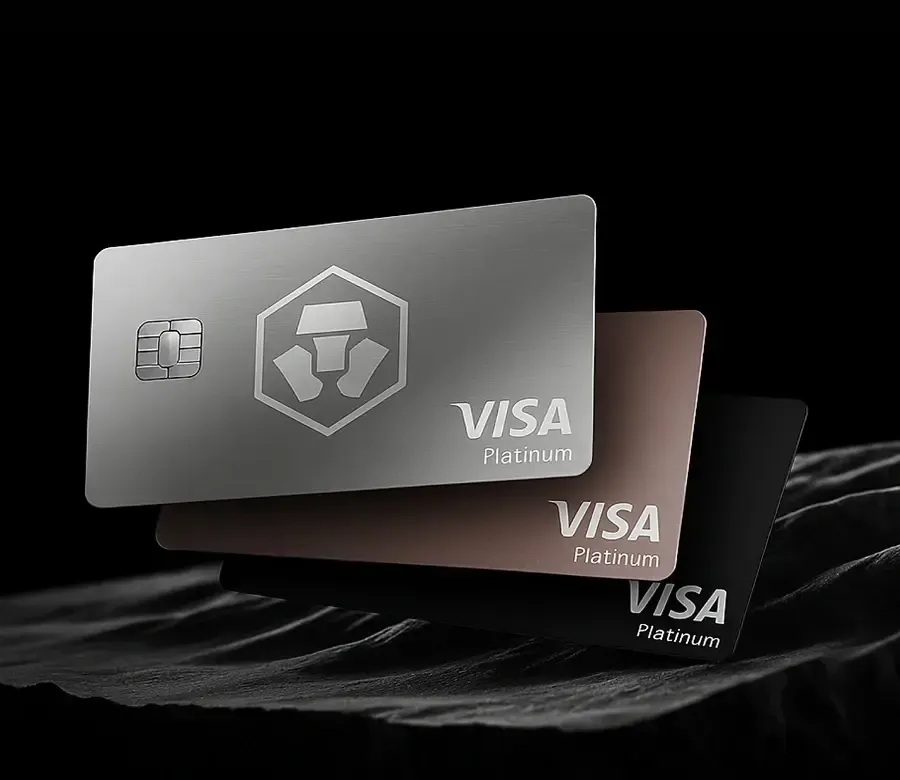
PRIVATE
4–6%
back in crypto · on every spend
CRO Lockup from €45,000
8.5% yield · 12-month staking · €450K tier at 9.5%
Zero trading fees · Unlimited volume
4.0%–6.0% back in crypto
0% foreign exchange fees
EUR Cash Yield up to 1.80% p.a.
Extra 1% p.a. on Earn allocations in CRO
VIP events · Exclusive experiences
8.5% CRO lockup rewards