
TSMC vs Samsung
Founding story, key facts and history — side by side.
TSMC
One company makes the chips inside everything. Almost nobody knows its name.
| Founded | 1987 |
| Founders | Morris Chang |
| HQ | Hsinchu, Taiwan |
| Symbol | TSM |
VS
Samsung
Started selling dried fish. Now makes the chips inside your iPhone. Q4 2025 profit tripled on AI demand.
| Founded | 1938 |
| Founders | Lee Byung-chul |
| HQ | Suwon, South Korea |
| Symbol | 005930.KS |
The Story — Side by Side
1987
The idea that changed manufacturing forever
Morris Chang founded TSMC in 1987 at age 55, after being passed over for the top job at Texas Instruments. His idea was radical: a semiconductor company that only manufactured chips designed by other companies, never competing with its own customers. Every chip company at the time designed and manufactured its own products. Chang's "pure-play foundry" model was considered bizarre. It became the foundation of the entire modern technology industry.
1994
Enabling the fabless revolution
TSMC's model enabled an entirely new category of company: the "fabless" semiconductor firm — companies that design chips but own no factories. Qualcomm, NVIDIA, AMD, Apple, and eventually hundreds of other companies became fabless, outsourcing all manufacturing to TSMC. Without TSMC's foundry model, none of these companies could have existed in their current form. The chip inside your iPhone was designed by Apple in California and manufactured by TSMC in Taiwan.
2022
The silicon shield
Russia's invasion of Ukraine in 2022 focused global attention on Taiwan's security in an entirely new way. Analysts calculated what a Chinese military action against Taiwan would mean for the global chip supply. The answer was stark: a disruption to TSMC's operations would halt production of smartphones, cars, medical devices, and military equipment worldwide within months. TSMC had become what analysts called "the silicon shield" — simultaneously Taiwan's most valuable strategic asset and the world's most critical piece of industrial infrastructure.
2025
$122 billion in revenue and the Arizona ramp
TSMC reported $122.4 billion in total revenue for 2025 — up 36% year-over-year — driven by AI chip demand. High-performance computing, which includes AI, accounted for 58% of revenue, up from 51% in 2024. North America contributed 75% of revenue. TSMC's first Arizona fabrication plant — Fab 21 Phase 1 — entered volume production in late 2024 and earned $514 million in profit during its first full year of operation. TSMC announced plans to invest $165 billion total in Arizona across six fabs, including advanced packaging facilities. The company that had been described as impossible to replicate outside Taiwan was proving its critics partially wrong.
2026
2nm production and the AI packaging bottleneck
TSMC began volume production of its 2nm (N2) process technology — the most advanced semiconductor node ever manufactured — in late 2025, using gate-all-around nanosheet transistors for the first time. The 2nm node delivers 10-15% speed improvements or 25-30% power reductions versus 3nm. Simultaneously, TSMC's CoWoS advanced packaging — the technology that connects AI accelerator chips to high-bandwidth memory — became the single most constrained resource in the global AI supply chain. TSMC was scaling CoWoS capacity from 65,000 wafers per month in 2025 to a target of 120,000-130,000 per month in 2026. NVIDIA held the largest allocation. Without TSMC's packaging capacity, the AI boom could not proceed.
1938
Dried fish and noodles
Lee Byung-chul founded Samsung — meaning "three stars" in Korean — in 1938 in Suwon, South Korea as a small trading company selling dried fish, vegetables, and noodles. The company had 40 employees. Korea was under Japanese colonial rule. Lee expanded into sugar refining, wool, and insurance in the 1940s and 1950s, building Samsung into one of Korea's first major conglomerates — known as a chaebol — through relationships with the postwar South Korean government.
1969
Electronics and the government partnership
Samsung entered the electronics business in 1969, initially making black-and-white televisions under licence from Japanese manufacturers. The South Korean government's industrial policy actively supported chaebol expansion into strategic industries, providing cheap loans and trade protection. Samsung Electronics grew rapidly by producing consumer electronics for export — initially as an OEM manufacturer for foreign brands. The relationship between Samsung and the South Korean state has remained close and occasionally controversial ever since.
1983
The semiconductor bet that changed everything
Lee Byung-chul announced Samsung would enter the semiconductor business in 1983 — a decision that Korean banking analysts considered reckless. Samsung had no semiconductor expertise, no technology, and would be competing against Japanese and American companies with decades of advantage. Lee invested $100 million of his personal fortune and sent engineers to study American chip manufacturers. Within a decade, Samsung was the world's largest producer of DRAM memory chips. The bet became one of the most successful industrial strategy decisions in economic history.
2016
The Apple supplier that became Apple's rival — then the Note 7 exploded
Samsung had manufactured components for Apple — processors, displays, and memory — since the original iPhone. In 2010, Samsung launched the Galaxy S smartphone directly competing with the iPhone, while remaining Apple's largest supplier. The two companies spent years simultaneously as each other's biggest customer and biggest competitor. In 2016, Samsung launched the Galaxy Note 7 to acclaim — until batteries began catching fire. Samsung recalled 2.5 million devices, replaced them, then recalled the replacements when they also caught fire. Airlines banned the Note 7. Samsung permanently discontinued it, writing off $5.3 billion. CEO Lee Jae-yong was arrested on bribery charges months later.
2025
KRW 333.6 trillion revenue — and AI chips triple the profit
Samsung reported full-year 2025 revenues of KRW 333.6 trillion — approximately $230 billion — and operating profit of KRW 43.6 trillion, up 33% from 2024. The Q4 2025 performance was historic: quarterly revenue of KRW 93.8 trillion and operating profit of KRW 20.1 trillion — tripling year-on-year — driven by surging AI data center demand for memory chips. Samsung's chip division alone generated KRW 16.4 trillion in Q4 operating profit. Samsung had finally received Nvidia approval for its HBM3E high-bandwidth memory chips after lagging behind SK Hynix, and had begun sampling its next-generation HBM4. The company that had started selling dried fish in 1938 was now the world's largest memory chip manufacturer, supplying the AI infrastructure that was remaking the global economy.
Tools & Platforms
For Investors
The market doesn't care about your feelings.
But your broker's fees do.
But your broker's fees do.
Most people have a brokerage account. Fewer understand what it really costs them — in spreads, in fees, in missed instruments. Malta-regulated, direct market access, 600,000+ instruments.
Exante
Malta MFSA · 50 exchanges
Tickmill
Forex from 0.0 pips
Vantage
Multi-asset trading
Polymarket
Prediction markets
For Entrepreneurs
Opening a US company costs $300.
Most people think it's complicated. It isn't.
Most people think it's complicated. It isn't.
Most founders spend weeks on formation, banking and payments. The ones who move fast know which tools to use before they start. A US LLC, a real business account, and a way to pay people — in that order.
Mercury
Business finance · 300K+ founders
Doola
US LLC formation · YC backed
Melio
B2B payments
Xero 95% OFF
Accounting · 6 months
For C-Suite
Your competitor pays $200 less per month for EOR.
You're still on a spreadsheet.
You're still on a spreadsheet.
BVNK hired 20% of its workforce through Deel. The smartest operators aren't managing payroll complexity — they're outsourcing it. EOR in 150+ countries, multi-currency accounts, workforce payments at $200 less per month than competitors.
Deel
EOR · 150+ countries
Payoneer
$399/mo EOR · Save $200
Wise Business
40+ currencies · No hidden fees
Gusto
US payroll & benefits
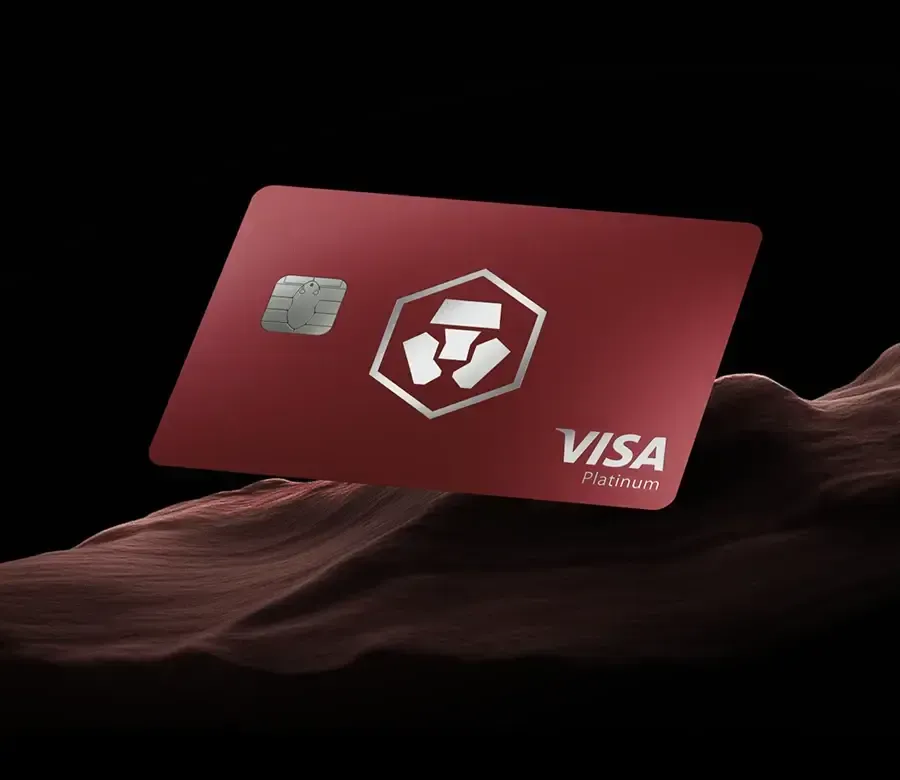
PLUS
2.0%
back in crypto · on every spend
€3.99 / month
or €39.90/year (€3.32/month)
Zero trading fees up to $20K/month
2.0% back in crypto on card spend
0% foreign exchange fees
EUR Cash Yield up to 1.35% p.a.
CRO Yield up to 2.00% p.a.
Virtual Visa card · Flexible cancel
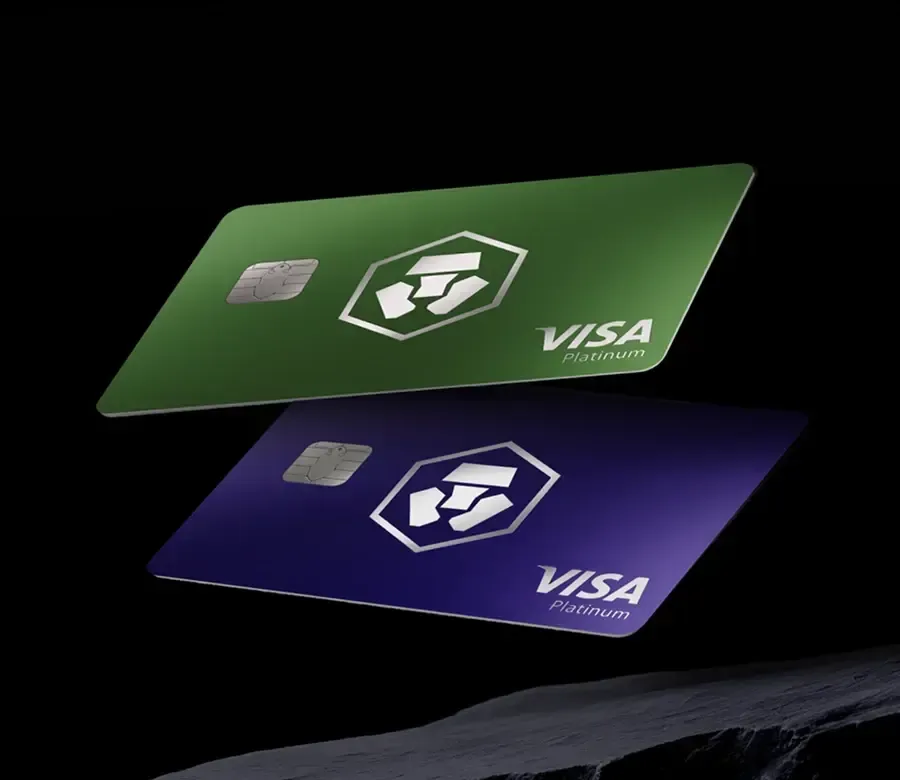
PRO
3.0%
back in crypto · on every spend
€24.99 / month
or €249.90/year (€20.82/month)
Zero trading fees up to $50K/month
3.0% back in crypto on card spend
0% foreign exchange fees
EUR Cash Yield up to 1.70% p.a.
CRO Yield up to 2.50% p.a.
Airport lounge access (Priority Pass)
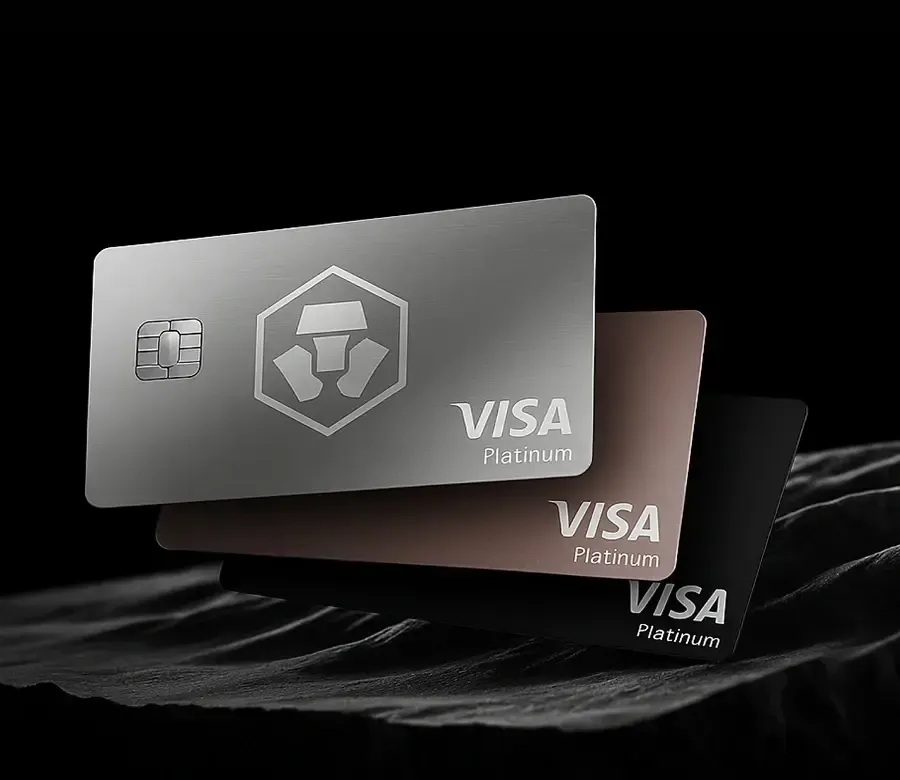
PRIVATE
4–6%
back in crypto · on every spend
CRO Lockup from €45,000
8.5% yield · 12-month staking · €450K tier at 9.5%
Zero trading fees · Unlimited volume
4.0%–6.0% back in crypto
0% foreign exchange fees
EUR Cash Yield up to 1.80% p.a.
Extra 1% p.a. on Earn allocations in CRO
VIP events · Exclusive experiences
8.5% CRO lockup rewards