
Vrbo (Expedia Group) vs Booking.com
Founding story, key facts and history — side by side.
Vrbo (Expedia Group)
Invented the digital vacation rental industry long before Airbnb, only to lose the culture war to a Silicon Valley upstart.
| Founded | 1995 |
| Founders | David Clouse |
| HQ | Austin, Texas |
| Symbol | EXPE |
VS
Booking.com
Started in a small Enschede office to fix Dutch hotel bookings, it weaponized conversion rate optimization to conquer the planet.
| Founded | 1996 |
| Founders | Geert-Jan Bruinsma |
| HQ | Amsterdam, Netherlands |
| Symbol | BKNG |
The Story — Side by Side
1995
The original Colorado ski condo directory
Vrbo (originally styled as VRBO, standing for Vacation Rentals By Owner) was created in 1995 by David Clouse in Aurora, Colorado. Clouse wanted to rent out his personal ski resort condominium in Breckenridge without paying extortionate commission rates to local property management companies. He coded a basic online classifieds board where property owners could upload a handful of low-resolution digital photos and pay a flat annual subscription fee of $67 to display their homes directly to internet vacationers.
2006
The massive HomeAway consolidation roll-up
Vrbo grew steadily into a massive, highly profitable network of second-home owners, completely dominating the traditional vacation beach house market. In 2006, rival vacation rental platform HomeAway acquired VRBO, weaponizing the brand as part of a massive, venture-backed consolidation sweep designed to corner the global alternative lodging market. The combined entity went public in 2011, establishing a powerful digital real estate monopoly long before Airbnb achieved mainstream global scale.
2015
The $3.9 billion Expedia acquisition and the Airbnb trap
In December 2015, Expedia Group acquired HomeAway and VRBO for a massive $3.9 billion in cash and stock to defend against the rapid rise of Airbnb. However, Expedia inherited a massive cultural and technical headache: while Airbnb had popularized frictionless, instant-book urban apartments for millennials, Vrbo was still trapped in a legacy mindset where owners manually approved guests and payment systems were clunky, causing it to lose the definitive culture war.
2020
The grand rebrand and the rural getaway windfall
In a massive attempt to modernize the asset, Expedia officially retired the HomeAway brand name completely, rolling all properties under a newly rebranded, single entity called Vrbo (now pronounced as a word rather than an acronym). During the chaotic pandemic lockdowns of 2020 and 2021, Vrbo experienced an unprecedented financial windfall; as millions of urban families fled locked-down cities seeking isolated, whole-home rural rentals, Vrbo's gross bookings completely skyrocketed to historic records.
2026
The unified technical platform and loyalty integration
By mid-2026, Vrbo was completely integrated into Expedia Group's unified backend architecture, sharing a single technological engine with Hotels.com. Operating under strict strategic alignment, Vrbo defended its core niche by focusing exclusively on premium, whole-home family vacation rentals while actively avoiding shared urban apartments. Backed by heavy promotional distribution through the OneKey shared rewards program, the asset generated over $2.4 billion in high-margin transactional service fees.
1996
The Enschede student room birth
Booking.com was founded under the original name Bookings.nl by Dutch entrepreneur Geert-Jan Bruinsma, a graduate of the University of Twente. Operating out of a small office in Enschede, Bruinsma noticed that finding and booking independent hotels online was an absolute nightmare of broken email threads and phone confirmations. He built a simple internet directory connecting travelers directly to local Dutch hotels, introducing a highly disruptive innovation: instead of forcing hotels to pay expensive upfront listing fees, he charged a low, performance-based commission only when a room was successfully occupied.
2005
The dirt-cheap $135 million Priceline buyout
In July 2005, US travel giant Priceline Group quietly acquired Bookings.nl for a mere $135 million, combining it with another European acquisition called Active Hotels. In retrospect, Wall Street institutional analysts widely consider this transaction to be one of the most wildly profitable corporate acquisitions in the entire history of the internet. Priceline completely abandoned its own convoluted "Name Your Own Price" bidding model to double down entirely on the clean, friction-free European merchant framework, scaling the platform across the global travel market under the unified Booking.com brand.
2012
Weaponizing A/B testing and conversion psychology
Booking.com achieved an absolute monopoly over global travel booking by turning its software architecture into a ruthless psychological optimization factory. The tech team deployed continuous, relentless A/B testing, running thousands of simultaneous site mutations to trick user brains into completing reservations. By mastering artificial urgency notifications—such as flashing red text shouting "Only 1 room left!" or "5 people are looking at this property right now"—the company drove its digital conversion rates to metrics that left traditional legacy travel agencies completely unable to compete.
2020
The devastating pandemic structural freeze
The global outbreak of the COVID-19 pandemic in early 2020 dealt a near-fatal blow to Booking.com's core business model as international aviation and tourism ground to an absolute halt overnight. The company was hit by a catastrophic multi-billion dollar wave of cancellations, forcing corporate management to execute a massive, painful restructuring that resulted in laying off roughly 25% of its entire global workforce. To survive the multi-year travel drought, the organization pivoted sharply, expanding heavily into the domestic alternative accommodation sector to compete directly against Airbnb.
2026
The AI travel planner era and record merchant growth
By mid-2026, Booking Holdings completely recovered from its pandemic crisis, driving annual gross travel bookings past an astronomical $155 billion. Under the long-term leadership of CEO Glenn Fogel, the firm successfully completed a multi-year migration of its core backend from legacy agency processing to an integrated merchant model, capturing billions of dollars in float interest. The company deployed its proprietary generative AI travel concierge across all mobile applications, seamlessly automating multi-city itineraries and pushing corporate net revenue past $22.5 billion.
Tools & Platforms
For Investors
The market doesn't care about your feelings.
But your broker's fees do.
But your broker's fees do.
Most people have a brokerage account. Fewer understand what it really costs them — in spreads, in fees, in missed instruments. Malta-regulated, direct market access, 600,000+ instruments.
Exante
Malta MFSA · 50 exchanges
Tickmill
Forex from 0.0 pips
Vantage
Multi-asset trading
Polymarket
Prediction markets
For Entrepreneurs
Opening a US company costs $300.
Most people think it's complicated. It isn't.
Most people think it's complicated. It isn't.
Most founders spend weeks on formation, banking and payments. The ones who move fast know which tools to use before they start. A US LLC, a real business account, and a way to pay people — in that order.
Mercury
Business finance · 300K+ founders
Doola
US LLC formation · YC backed
Melio
B2B payments
Xero 95% OFF
Accounting · 6 months
For C-Suite
Your competitor pays $200 less per month for EOR.
You're still on a spreadsheet.
You're still on a spreadsheet.
BVNK hired 20% of its workforce through Deel. The smartest operators aren't managing payroll complexity — they're outsourcing it. EOR in 150+ countries, multi-currency accounts, workforce payments at $200 less per month than competitors.
Deel
EOR · 150+ countries
Payoneer
$399/mo EOR · Save $200
Wise Business
40+ currencies · No hidden fees
Gusto
US payroll & benefits

PLUS
2.0%
back in crypto · on every spend
€3.99 / month
or €39.90/year (€3.32/month)
Zero trading fees up to $20K/month
2.0% back in crypto on card spend
0% foreign exchange fees
EUR Cash Yield up to 1.35% p.a.
CRO Yield up to 2.00% p.a.
Virtual Visa card · Flexible cancel

PRO
3.0%
back in crypto · on every spend
€24.99 / month
or €249.90/year (€20.82/month)
Zero trading fees up to $50K/month
3.0% back in crypto on card spend
0% foreign exchange fees
EUR Cash Yield up to 1.70% p.a.
CRO Yield up to 2.50% p.a.
Airport lounge access (Priority Pass)
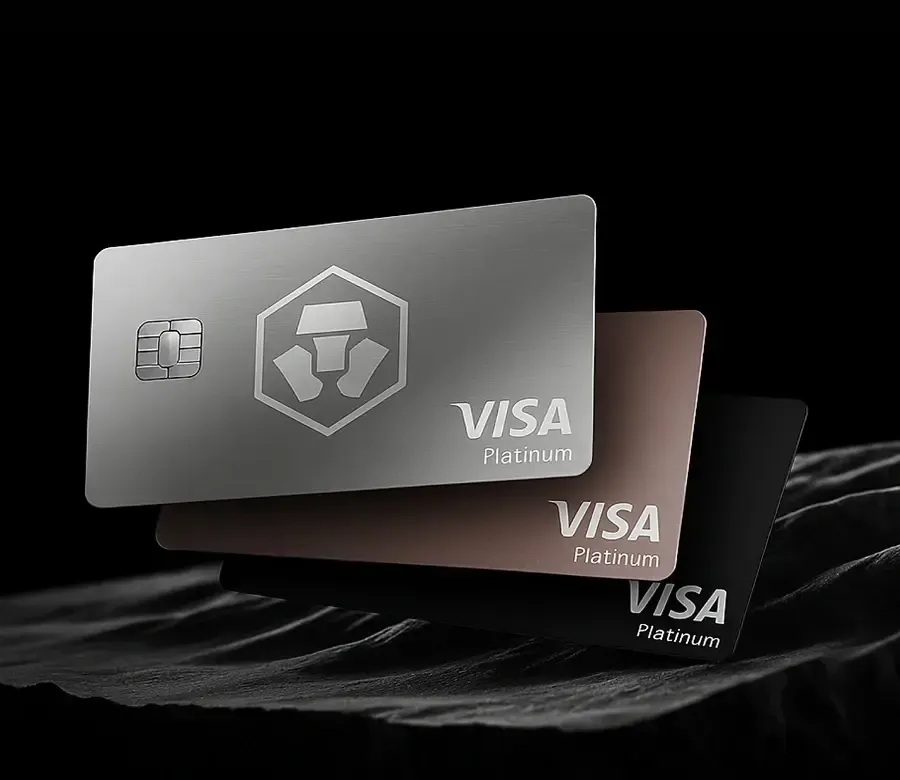
PRIVATE
4–6%
back in crypto · on every spend
CRO Lockup from €45,000
8.5% yield · 12-month staking · €450K tier at 9.5%
Zero trading fees · Unlimited volume
4.0%–6.0% back in crypto
0% foreign exchange fees
EUR Cash Yield up to 1.80% p.a.
Extra 1% p.a. on Earn allocations in CRO
VIP events · Exclusive experiences
8.5% CRO lockup rewards