
Worldpay vs Checkout.com
Founding story, key facts and history — side by side.
Worldpay
Pioneered the world's very first internet store transaction in 1994, becoming a pawn in a $43 billion corporate chess game.
| Founded | 1989 |
| Founders | Nick Ogden (Founder of original electronic platform) |
| HQ | Cincinnati, Ohio / London, United Kingdom |
| Symbol | PRIVATE |
VS
Checkout.com
Bootstrapped in total obscurity by a Swiss surfer to a $40 billion peak, before a brutal valuation reality check.
| Founded | 2012 |
| Founders | Guillaume Pousaz |
| HQ | London, United Kingdom |
| Symbol | PRIVATE |
The Story — Side by Side
1994
Processing the planet's first online shop purchase
The technological foundation of Worldpay was laid by UK tech pioneer Nick Ogden, who launched the world's first electronic bookstore system, intermediate, in 1994. To process payments over the early, unregulated web, he developed Worldpay, which executed the planet's very first secure online credit card transaction. The platform grew rapidly as thousands of nascent dot-com companies flooded onto the web, prompting the Royal Bank of Scotland (RBS) to purchase the processing company in 2002 to turn it into their core electronic acquiring engine.
2010
The financial crisis forced antitrust spin-off
Following the near-collapse of the Royal Bank of Scotland during the 2008 global financial crisis, the European Commission hit the bailed-out bank with strict antitrust penalties. RBS was legally ordered to spin off Worldpay to promote market competition, leading to a buyout by private equity firms Advent International and Bain Capital for £2 billion in 2010. The private equity owners aggressively stripped out legacy bank overhead, upgraded the merchant software systems, and took Worldpay public on the London Stock Exchange in 2015.
2019
The historic $43 billion mega-acquisition bubble
In March 2019, US financial technology giant FIS (Fidelity National Information Services) executed one of the largest acquisitions in global fintech history by purchasing Worldpay for a jaw-dropping $43 billion in cash and stock. FIS aimed to create a massive, end-to-end global processing monopoly combining merchant acquiring, banking rails, and card issuing. However, the corporate integration was plagued by immense administrative friction, and the rise of agile, cloud-native tech competitors like Stripe heavily eroded Worldpay's market share.
2024
The humiliating multi-billion dollar corporate divorce
Just four years after buying the processing company at the top of the market cycle, FIS management admitted the acquisition was a massive mistake. In early 2024, under severe pressure from activist hedge fund investors, FIS completed a dramatic corporate divorce, fire-selling a 55% majority stake in Worldpay back to private equity giant GTCR at a total implied valuation of $18.5 billion. This massive multi-billion dollar asset write-down represented a devastating blow to FIS's balance sheet but allowed Worldpay to break free from banking bureaucracy.
2026
The standalone infrastructure scale-up
By mid-2026, operating as a standalone corporate entity backed by GTCR's aggressive capital deployment, Worldpay stabilized its core merchant acquiring infrastructure, processing over $2.3 trillion in annualized transaction volume across 140 countries. Under CEO Charles Drucker, the firm completely modernized its point-of-sale hardware software layers, migrating brick-and-mortar legacy merchant terminals to cloud-native systems. Total operational revenue reached $4.9 billion, maintaining a solid monopoly over massive global physical retail and gaming enterprise networks.
2012
The Mauritius surfing sabbatical origin
Checkout.com was founded by Guillaume Pousaz, a Swiss economics dropout who abruptly packed his bags and moved to California to surf after failing his university exams. He eventually drifted into the payments industry, relocating to Mauritius to build an early processing gateway before officially incorporating Checkout.com in London in 2012. Pousaz made a radical corporate decision: he refused all external venture capital funding for the first seven years of the company's lifecycle, bootstrapping operations entirely on organic transaction revenues and flying completely under the radar of Silicon Valley.
2019
The record-breaking $230 million Series A debut
After remaining completely profitable in total obscurity, Checkout.com stunned the European tech ecosystem in May 2019 by closing a massive $230 million Series A investment round. Led by Insight Partners and DST Global, it represented the largest ever debut Series A funding round for a European fintech startup. The capital injection revealed that Pousaz had quietly built a cross-border payments powerhouse, processing billions of dollars for giant digital merchants like Shein, Grab, and Deliveroo by integrating payment processing, gateway, and fraud screening into a single API.
2021
The wild crypto processing engine
During the peak of the pandemic digital asset craze, Checkout.com grew exponentially by positioning its software infrastructure as the dominant payment gateway for the cryptocurrency industry. The firm signed up massive crypto platforms, including Binance, Coinbase, and Crypto.com, processing tens of billions of dollars in high-margin credit card transactions from retail consumers buying digital tokens. This highly specialized processing volume propelled Checkout.com's transaction metrics to historic highs, making it the primary financial bridge between fiat currency and the crypto world.
2022
The $40 billion peak and the immediate markdown
In January 2022, Checkout.com raised a massive $1 billion Series D round, pushing its private market valuation to an astronomical $40 billion and making Guillaume Pousaz the wealthiest self-made billionaire in Europe on paper. However, the victory was short-lived as the tech market turned hostile months later. As interest rates spiked and crypto volumes imploded, Checkout.com was hit by a wave of corporate markdowns, forcing management to internally slash its own valuation by over 70% down to $11 billion to match public market comps.
2026
The enterprise B2B transition post-crypto
By mid-2026, Checkout.com successfully completed a grueling corporate pivot away from high-risk cryptocurrency processing to focus entirely on institutional B2B enterprise marketplaces across the Middle East and Europe. Under Guillaume Pousaz's continued leadership, the company expanded its high-margin automated identity verification and fraud prevention software suites. With annualized processing volumes stabilizing past $250 billion, the private firm remained highly profitable, generating over $1.1 billion in net operational revenue while avoiding the public market listing route.
Tools & Platforms
For Investors
The market doesn't care about your feelings.
But your broker's fees do.
But your broker's fees do.
Most people have a brokerage account. Fewer understand what it really costs them — in spreads, in fees, in missed instruments. Malta-regulated, direct market access, 600,000+ instruments.
Exante
Malta MFSA · 50 exchanges
Tickmill
Forex from 0.0 pips
Vantage
Multi-asset trading
Polymarket
Prediction markets
For Entrepreneurs
Opening a US company costs $300.
Most people think it's complicated. It isn't.
Most people think it's complicated. It isn't.
Most founders spend weeks on formation, banking and payments. The ones who move fast know which tools to use before they start. A US LLC, a real business account, and a way to pay people — in that order.
Mercury
Business finance · 300K+ founders
Doola
US LLC formation · YC backed
Melio
B2B payments
Xero 95% OFF
Accounting · 6 months
For C-Suite
Your competitor pays $200 less per month for EOR.
You're still on a spreadsheet.
You're still on a spreadsheet.
BVNK hired 20% of its workforce through Deel. The smartest operators aren't managing payroll complexity — they're outsourcing it. EOR in 150+ countries, multi-currency accounts, workforce payments at $200 less per month than competitors.
Deel
EOR · 150+ countries
Payoneer
$399/mo EOR · Save $200
Wise Business
40+ currencies · No hidden fees
Gusto
US payroll & benefits
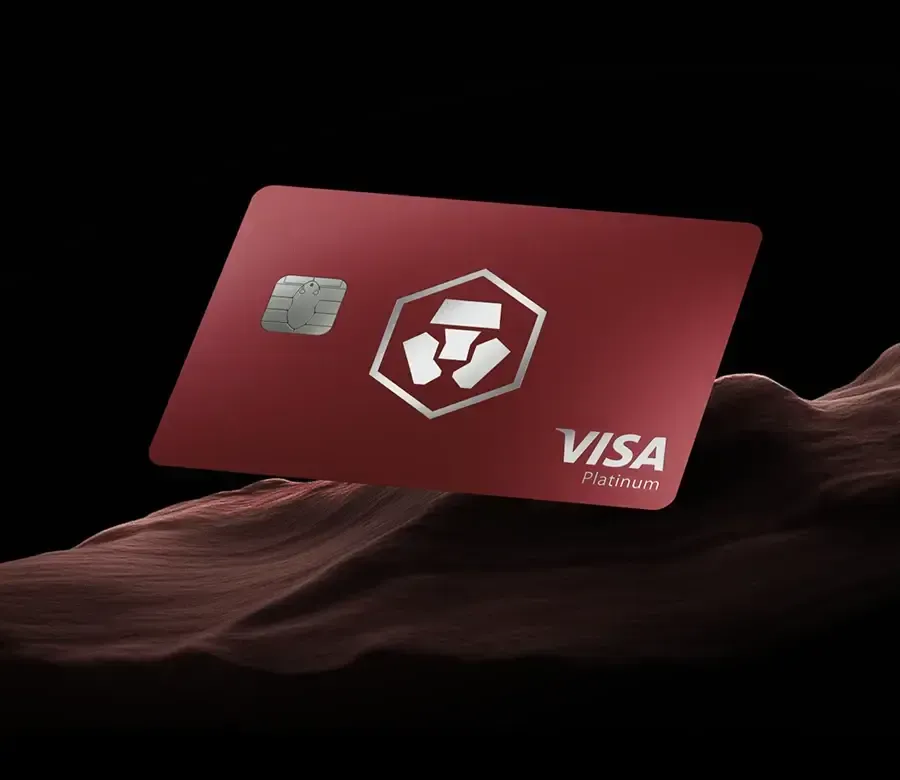
PLUS
2.0%
back in crypto · on every spend
€3.99 / month
or €39.90/year (€3.32/month)
Zero trading fees up to $20K/month
2.0% back in crypto on card spend
0% foreign exchange fees
EUR Cash Yield up to 1.35% p.a.
CRO Yield up to 2.00% p.a.
Virtual Visa card · Flexible cancel
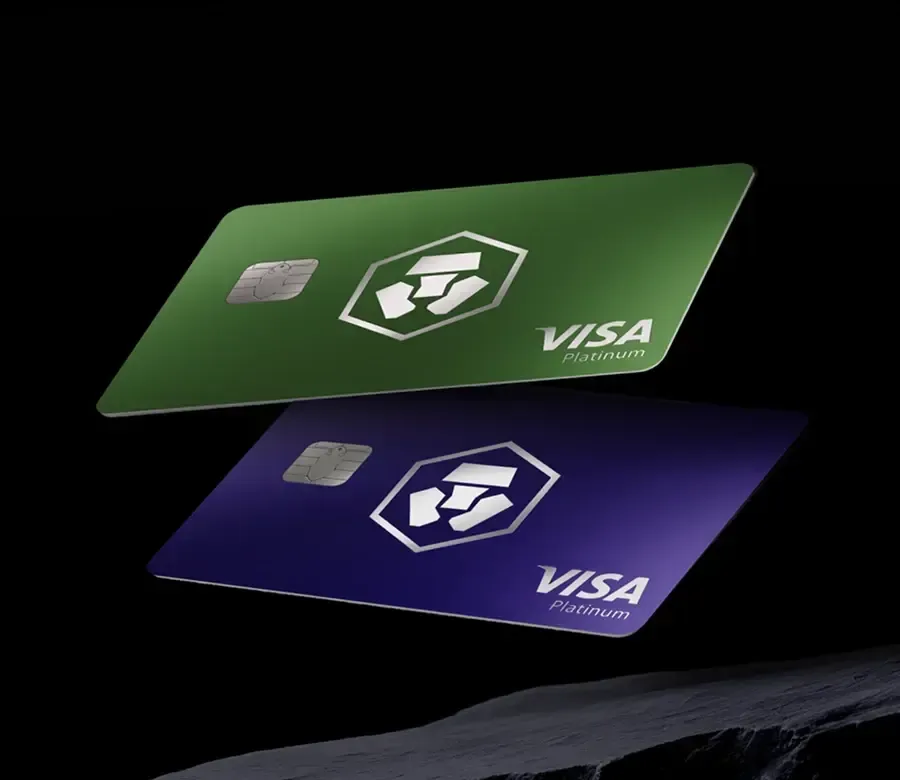
PRO
3.0%
back in crypto · on every spend
€24.99 / month
or €249.90/year (€20.82/month)
Zero trading fees up to $50K/month
3.0% back in crypto on card spend
0% foreign exchange fees
EUR Cash Yield up to 1.70% p.a.
CRO Yield up to 2.50% p.a.
Airport lounge access (Priority Pass)
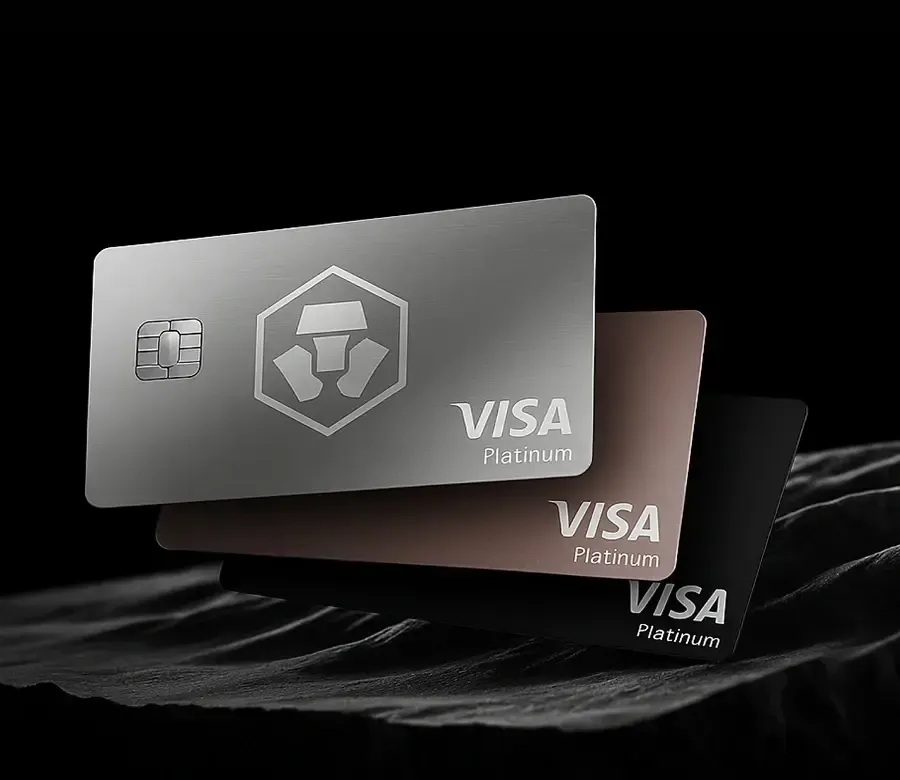
PRIVATE
4–6%
back in crypto · on every spend
CRO Lockup from €45,000
8.5% yield · 12-month staking · €450K tier at 9.5%
Zero trading fees · Unlimited volume
4.0%–6.0% back in crypto
0% foreign exchange fees
EUR Cash Yield up to 1.80% p.a.
Extra 1% p.a. on Earn allocations in CRO
VIP events · Exclusive experiences
8.5% CRO lockup rewards