
600519.SS (Shanghai Stock Exchange) · Maotai Town, Renhuai, Guizhou, China
Kweichow Moutai
A Chinese state distillery makes a single sauce-flavoured spirit in a remote Guizhou town. Became the world's most valuable liquor brand. A bottle is a luxury good, a financial asset, and diplomatic currency.
Live Price
—
Today
—
Symbol
600519.SS (Shanghai Stock Exchange)
206
2,000 years of distilling in Maotai Town
The history of baijiu production in Maotai Town (Renhuai, Guizhou province) stretches back over 2,000 years. The town sits at the confluence of the Chishui River with the Dalou Mountains — a microclimate with specific humidity, temperature, and microbial conditions that distillers consider essential to Moutai's distinctive character. Archaeological evidence suggests large-scale spirit production in the region during the Han Dynasty. By the Qing Dynasty (1644-1912), Maotai-style baijiu had become renowned across China. The spirit is a "sauce-aroma" (jiangxiang) style — one of the twelve formal baijiu aroma categories — characterised by complex earthy, fermented notes that develop through a multi-year production process using sorghum and specific regional yeasts.
1951
Nationalisation and the three-distillery merger
The modern Kweichow Moutai Company was established in 1951 when the People's Republic of China nationalised and merged three private distilleries in Maotai Town: Chengyi, Ronghe, and Hengxing. The state ownership gave the distillery both protection and purpose: Moutai became a tool of Chinese diplomacy, served at every significant state banquet and diplomatic occasion. When Richard Nixon visited China in 1972, Zhou Enlai served Moutai at the state banquet. When Deng Xiaoping began economic reforms, Moutai became the drink associated with China's rising confidence. Every significant moment in Chinese political and business culture was marked by Moutai.
2001
The Shanghai IPO — and the luxury investment thesis
Kweichow Moutai listed on the Shanghai Stock Exchange in August 2001, raising approximately 2.25 billion yuan. The listing price was 31.39 yuan per share. Over the following two decades, Moutai shares would increase approximately 200-fold — making it one of the best-performing stocks in Chinese history. The investment thesis was simple and extraordinarily durable: Moutai's production was physically constrained by the geography of Maotai Town (the specific microclimate could not be replicated elsewhere), its brand was protected by two millennia of reputation, its customer base was Chinese Communist Party officials and business elites who had unlimited disposable income, and demand for genuine Moutai consistently exceeded the amount the distillery could produce.
2012
The anti-corruption crackdown — and the second act
When Xi Jinping launched his anti-corruption campaign in 2012, the immediate effect was severe: government officials could no longer expense Moutai at banquets, and gifting bottles to officials became legally dangerous. Moutai's sales fell significantly; the stock declined. Industry observers expected the brand to be permanently diminished. Instead, consumer demand recovered as China's private sector wealth expanded — businesspeople and affluent consumers adopted Moutai as a status symbol independent of the official banquet circuit. A bottle of Kweichow Moutai 'flying fairy' (fēitiān) 500ml became a secondary market investment: the price at state-controlled retail (approximately 1,499 yuan) bore no relation to the black market price (often 2,000-3,000 yuan per bottle) due to supply scarcity.
2024
$500 billion market cap — world's most valuable liquor brand — 60B yuan net profit
Kweichow Moutai reported revenue of approximately 174 billion yuan ($24 billion) for 2024, with net profit of approximately 86 billion yuan ($12 billion) — making it one of the most profitable consumer companies on Earth with margins exceeding 50%. At its peak, the company's market capitalisation exceeded $500 billion, making it the most valuable spirits company in the world by a significant margin, surpassing LVMH's wines and spirits division, Diageo, and Pernod Ricard combined. A single production facility in a small Guizhou town produced the world's most profitable bottle of alcohol. The sauce-aroma spirit that had been drunk for two millennia in Maotai Town was now a global luxury asset.
Frequently Asked Questions
Who founded Kweichow Moutai?
Kweichow Moutai was founded by Chinese state (Guizhou provincial government).
When was Kweichow Moutai founded?
Kweichow Moutai was founded in 1951.
Where was Kweichow Moutai founded?
Kweichow Moutai was headquartered in Maotai Town, Renhuai, Guizhou, China.
Why was Kweichow Moutai created?
The history of baijiu production in Maotai Town (Renhuai, Guizhou province) stretches back over 2,000 years. The town sits at the confluence of the Chishui River with the Dalou Mountains — a microclimate with specific humidity, temperature, and microbial conditions that distillers consider essential to Moutai's distinctive character. Archaeological evidence suggests large-scale spirit production in the region during the Han Dynasty. By the Qing Dynasty (1644-1912), Maotai-style baijiu had become renowned across China. The spirit is a "sauce-aroma" (jiangxiang) style — one of the twelve formal baijiu aroma categories — characterised by complex earthy, fermented notes that develop through a multi-year production process using sorghum and specific regional yeasts.
What does Kweichow Moutai do?
A Chinese state distillery makes a single sauce-flavoured spirit in a remote Guizhou town. Became the world's most valuable liquor brand. A bottle is a luxury good, a financial asset, and diplomatic currency. A Chinese state distillery in a remote Guizhou town makes one spirit. Became the world's most valuable liquor brand. $24B revenue, 50%+ net margins, $500B market cap. The full story of Moutai.
How did Kweichow Moutai grow?
Kweichow Moutai reported revenue of approximately 174 billion yuan ($24 billion) for 2024, with net profit of approximately 86 billion yuan ($12 billion) — making it one of the most profitable consumer companies on Earth with margins exceeding 50%. At its peak, the company's market capitalisation exceeded $500 billion, making it the most valuable spirits company in the world by a significant margin, surpassing LVMH's wines and spirits division, Diageo, and Pernod Ricard combined. A single production facility in a small Guizhou town produced the world's most profitable bottle of alcohol. The sauce-aroma spirit that had been drunk for two millennia in Maotai Town was now a global luxury asset.
Tools & Platforms
For Investors
The market doesn't care about your feelings.
But your broker's fees do.
But your broker's fees do.
Most people have a brokerage account. Fewer understand what it really costs them — in spreads, in fees, in missed instruments. Malta-regulated, direct market access, 600,000+ instruments.
Exante
Malta MFSA · 50 exchanges
Tickmill
Forex from 0.0 pips
Vantage
Multi-asset trading
Polymarket
Prediction markets
For Entrepreneurs
Opening a US company costs $300.
Most people think it's complicated. It isn't.
Most people think it's complicated. It isn't.
Most founders spend weeks on formation, banking and payments. The ones who move fast know which tools to use before they start. A US LLC, a real business account, and a way to pay people — in that order.
Mercury
Business finance · 300K+ founders
Doola
US LLC formation · YC backed
Melio
B2B payments
Xero 95% OFF
Accounting · 6 months
For C-Suite
Your competitor pays $200 less per month for EOR.
You're still on a spreadsheet.
You're still on a spreadsheet.
BVNK hired 20% of its workforce through Deel. The smartest operators aren't managing payroll complexity — they're outsourcing it. EOR in 150+ countries, multi-currency accounts, workforce payments at $200 less per month than competitors.
Deel
EOR · 150+ countries
Payoneer
$399/mo EOR · Save $200
Wise Business
40+ currencies · No hidden fees
Gusto
US payroll & benefits

PLUS
2.0%
back in crypto · on every spend
€3.99 / month
or €39.90/year (€3.32/month)
Zero trading fees up to $20K/month
2.0% back in crypto on card spend
0% foreign exchange fees
EUR Cash Yield up to 1.35% p.a.
CRO Yield up to 2.00% p.a.
Virtual Visa card · Flexible cancel

PRO
3.0%
back in crypto · on every spend
€24.99 / month
or €249.90/year (€20.82/month)
Zero trading fees up to $50K/month
3.0% back in crypto on card spend
0% foreign exchange fees
EUR Cash Yield up to 1.70% p.a.
CRO Yield up to 2.50% p.a.
Airport lounge access (Priority Pass)
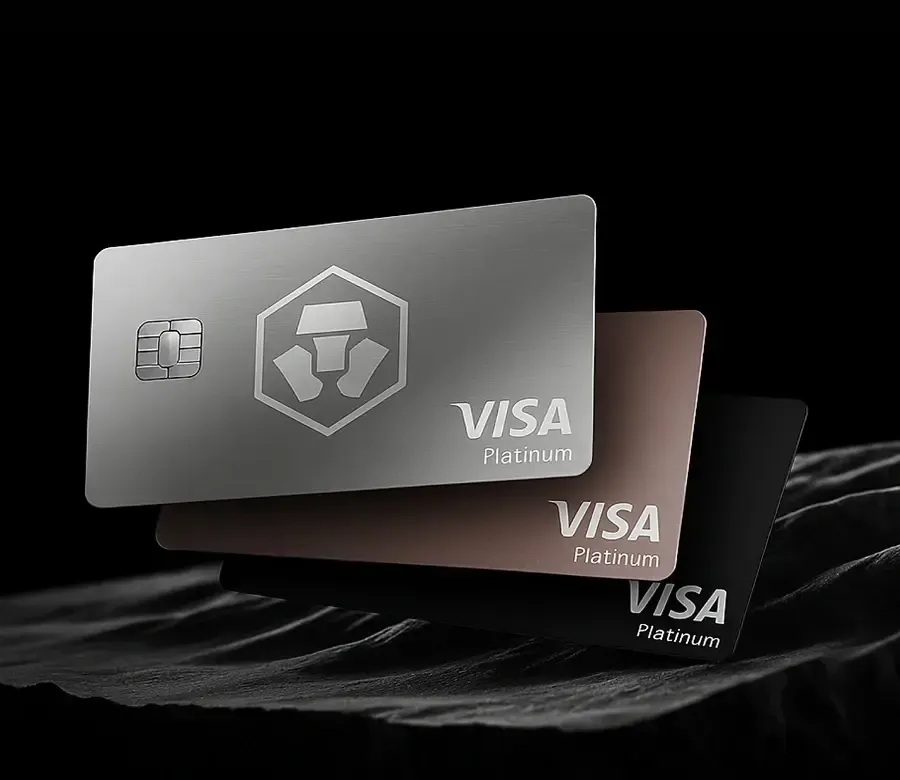
PRIVATE
4–6%
back in crypto · on every spend
CRO Lockup from €45,000
8.5% yield · 12-month staking · €450K tier at 9.5%
Zero trading fees · Unlimited volume
4.0%–6.0% back in crypto
0% foreign exchange fees
EUR Cash Yield up to 1.80% p.a.
Extra 1% p.a. on Earn allocations in CRO
VIP events · Exclusive experiences
8.5% CRO lockup rewards