$36 Billion and a Simple Question Nobody Can Answer: Is This Gambling or Not?

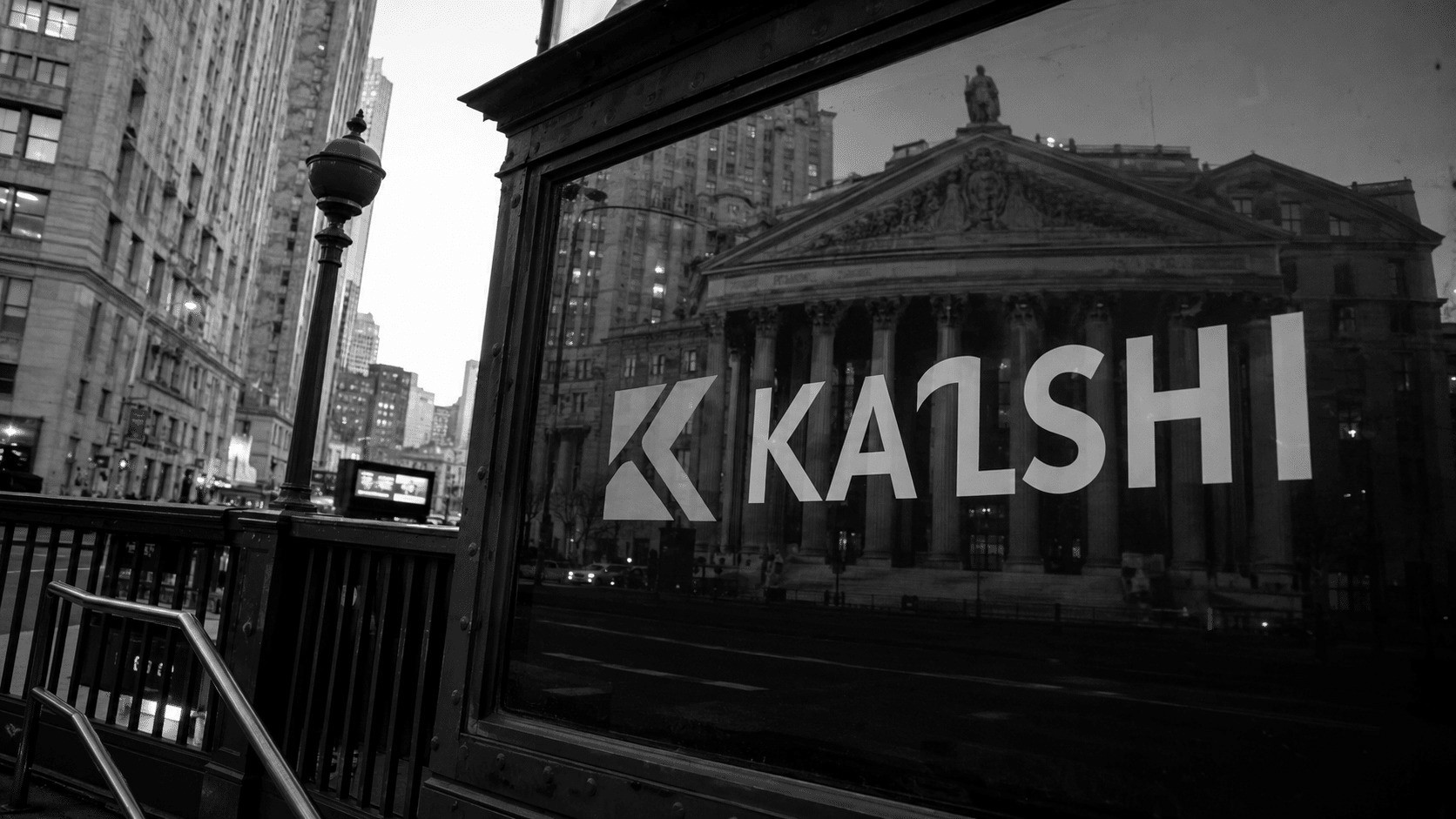
I have been watching the prediction markets space for a while now.
FreeMalta has a prediction markets page. Polymarket is featured there. I have written about Kalshi. I have applied for a role at Kalshi. I know Luana Lopes Lara's story — the Brazilian ballerina who co-founded a billion-dollar financial platform — because I found it interesting enough to write about it at two in the morning.
So when New York filed a $36 billion lawsuit against Kalshi on July 31, calling it an "illegal gambling operation," I was paying attention.
Let me explain what is actually happening here, because the coverage has been loud and the detail has been thin.
Kalshi is a federally licensed exchange. It holds a Designated Contract Market licence from the Commodity Futures Trading Commission — the same licence held by the CME Group, the same licence held by ICE Futures, the exchanges where professional traders buy and sell futures contracts worth trillions of dollars every year. Kalshi fought for that licence for years. It launched in 2021 after a multi-year regulatory battle. It is, by any reasonable definition, a regulated financial product operating within the federal framework.
New York says: we don't care.
New York's position is that prediction markets based on sporting events are gambling, and gambling in New York requires a state licence from the New York Gaming Commission, and Kalshi does not have one. The state wants $36 billion in penalties, three times Kalshi's gains from operating in the state, plus $100,000 for every instance of offering unlicensed sports wagering. It also wants Kalshi to pay full restitution to every New York user who ever placed a trade.
Kalshi's response was immediate and pointed. "States can't just shut down a federally licensed exchange," said Elisabeth Diana, Kalshi's head of communications. "This is political theater."
Hours after New York filed, the CFTC filed its own lawsuit — against New York — arguing that federal law preempts state gambling regulation when it comes to licensed derivatives exchanges. The federal government and New York are now suing each other, with Kalshi in the middle.
This is where it gets interesting.
Polymarket is watching this from a different position. Polymarket launched in 2020 as a crypto-native, blockchain-based prediction market. In 2022, it settled with the CFTC and agreed to block US IP addresses — meaning American users technically cannot access the international platform. In 2025, Polymarket bought two CFTC-licensed companies for $112 million and rebranded them as Polymarket US, its regulated American product. The New York Stock Exchange's parent company, ICE, invested billions.
The result is that Polymarket now runs two parallel operations: a regulated US platform and a much larger international platform that most of its volume comes from. Kalshi runs one platform, fully regulated, fully in the US, trying to operate in all 50 states on the strength of its federal licence.
Kalshi has the cleaner regulatory story. It is also the one getting sued for $36 billion.
The irony is exquisite and the precedent is enormous. In 2018, the Supreme Court struck down the federal law that prevented states from offering sports betting, ruling that gambling was a state matter and the federal government was overreaching by preventing it. Now, in 2026, states are suing to prevent a federally licensed exchange from offering what they consider to be gambling — and the federal government is suing the states back. The same constitutional principle is being invoked in the opposite direction.
Kalshi and Polymarket together face at least 20 lawsuits from state regulators, tribal gaming authorities, and individual bettors. Nevada reached an agreement requiring Kalshi to use geolocation to block its trades. Wisconsin sided with the state. Minnesota temporarily sided with Kalshi. Ohio sided with the state. Tennessee sided with Kalshi. The Sixth Circuit has heard arguments and not yet ruled. This will go to the Supreme Court. The only question is when.

Now. Here is the part that nobody is saying out loud.
The iGaming industry is watching this very carefully.
I have spent twelve years in Malta, surrounded by iGaming. I know the companies, the conferences, the language, the logic. And I can tell you with complete confidence that there are people in this industry — operators, affiliates, investors — who look at prediction markets and see not a threat but an opportunity. A new vertical. A new distribution channel. A way to reach the same customers through a different regulatory wrapper.
Because here is what prediction markets offer that traditional sports betting does not: the language of finance. You are not placing a bet. You are trading an event contract. You are not a gambler. You are a trader. The product is functionally identical — you put money on an outcome, you win or lose based on whether the outcome occurs — but the vocabulary is different, and in a regulated industry, vocabulary matters enormously.
iGaming operators in Malta have spent years navigating MGA licensing, responsible gaming requirements, KYC procedures, advertising restrictions. If prediction markets can offer the same product under CFTC regulation, with fewer state-level constraints and a different public narrative, the appetite is obvious. The only thing standing between Malta's iGaming sector and a prediction markets pivot is the legal question that New York just forced into a courtroom.
Is this gambling?
Kalshi says no. New York says yes. The CFTC says the states don't get to decide. The states say the federal government is overreaching. The Supreme Court, which ruled in 2018 that gambling was a state matter, will eventually have to explain what happens when the federal government creates a new category of product that states consider to be gambling.
I do not know how this resolves. Nobody does. That is why $44.8 billion traded on Kalshi and Polymarket in June 2026 alone — not despite the uncertainty, but partly because of it. The market is pricing the outcome before the courts get there.
That is prediction markets doing exactly what prediction markets are supposed to do.
The iGaming industry has been very quiet about all of this. It will not stay quiet. The question of whether prediction markets are gambling is also, implicitly, a question about whether the thirty-year regulatory framework that iGaming has built around itself is the only framework available — or whether there is a federal door that leads to the same room through a different entrance.
New York just tried to nail that door shut.
The CFTC just pried it back open.
And 20 more lawsuits are still in progress.