
Hub
Off The Record
A System Without Supabase Is Like a Party That Ends at 11. You Leave, But You're Not Ready.
ai · Off The Record
A System Without Supabase Is Like a Party That Ends at 11. You Leave, But You're Not Ready.

A System Without Supabase Is Like a Party That Ends at 11. You Leave, But You're Not Ready.
I've been in Malta for eleven years. Long enough to know that the best nights here don't end — they just move somewhere else. You're at a restaurant in Valletta, then you're on a rooftop in Sliema, then somehow it's 4am and you're watching the harbour turn grey and you don't remember agreeing to any of this. A system without Supabase is like the party that ends at 11. The host is tired. The music stops. You stand outside wondering where to go next, and the answer is: nowhere. Everything you needed was in that room. I didn't expect to feel this way about a database.How it started
The first thing I built on Supabase was the Hospitality Index — a restaurant and hotel rating system for Malta. The idea was straightforward: a place where real reviews from real people could live, separate from the noise of TripAdvisor, without the algorithmic manipulation that makes every restaurant look like it has exactly 4.2 stars. The technical problem was not complicated in concept and completely exhausting in practice. I needed a database that stored reviews, linked them to businesses, let me query by location and category, and could be updated without me writing a migration script every time someone wanted to add a field. I had used Firebase. I had looked at PlanetScale. I had read the documentation for things I don't want to name because they made me feel stupid for not already knowing how they worked. Then I tried Supabase. The first thing I noticed was that the console looked like something a human being had designed. Not a human being who wanted to impress other engineers — a human being who wanted someone who was not an engineer to be able to look at their data and understand what they were looking at. Tables that looked like tables. Rows that looked like rows. A query interface that didn't require me to remember syntax I learned once and immediately forgot. I set up the Hospitality Index schema in an afternoon. That had never happened before.What I actually fell in love with
It wasn't the technology. I want to be precise about this because I think the tech industry confuses these things constantly. Supabase is not impressive because of what it does under the hood — PostgreSQL has been around since 1996 and it works. Supabase is impressive because of what it decided not to make complicated. The authentication layer. The storage buckets. The real-time subscriptions. The REST API that generates itself from your schema. Each of these is a thing that, in another context, would be a week of configuration, a third-party service, a bill from three different vendors, and a stack of documentation written by someone who forgot that not everyone has been thinking about this problem for five years. Supabase collapsed all of that into a single dashboard and a single API key. I remember the specific moment I understood what I was dealing with. It was late — this is Malta, most things happen late — and I was adding a column to the reviews table. In a previous life, this would have been a migration file, a deployment, a prayer that nothing broke in production. In Supabase, I clicked "Add column," named it, chose the type, and clicked save. The REST API updated automatically. My frontend picked it up on the next request. I sat there for a moment doing nothing, because I was waiting for something to break. Nothing broke.FreeMalta runs on this
The Hospitality Index was the beginning. Now Supabase holds the Off The Record library — every article, every piece of metadata, every cover image URL, every reading time calculation. It holds the BOARDROOM profiles. It holds the user authentication layer for FreeMalta Hub. It holds the `malta_history` table that I almost built before realising I didn't need a database for forty static moments written once and updated never. That last decision is important. One of the things Supabase taught me — by being so easy to use that I started using it for everything — is that not every problem needs a database. Sometimes a PHP array is the right answer. Sometimes the complexity you're reaching for is not complexity that serves the user. It's complexity that serves your need to feel like you're building something serious. FreeMalta is built on a principle I have come to believe more strongly with every system I build: the goal is not to create complexity. The goal is to simplify it. The most sophisticated thing you can build is often the thing that looks, from the outside, like it should have been obvious all along. Supabase looks obvious. It took years of people fighting with Firebase and DynamoDB and self-hosted Postgres installations to understand why that obviousness is actually difficult to achieve.The $10.5 billion party
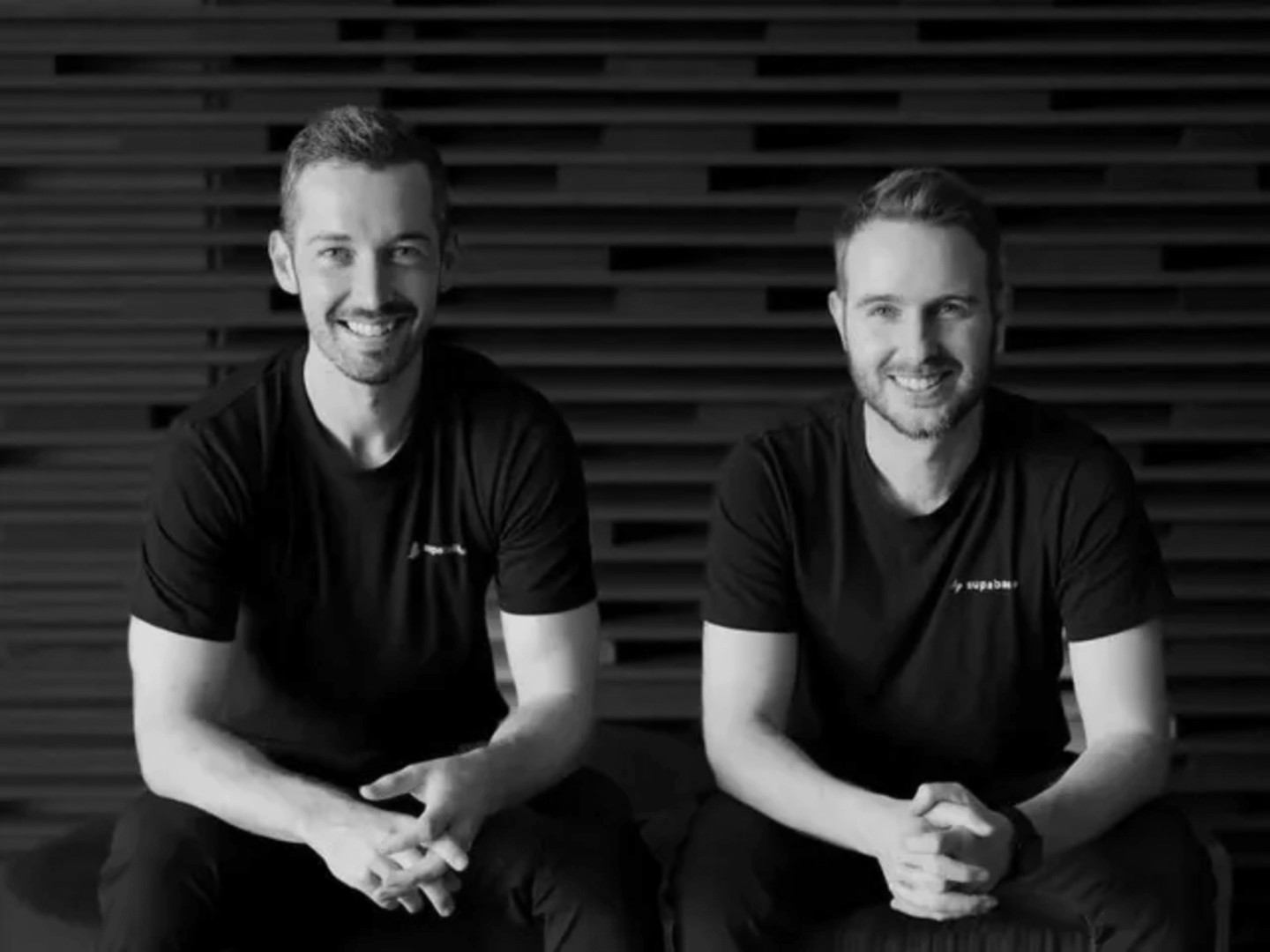
Supabase raised $500 million in June 2026 at a $10.5 billion valuation. Eight months earlier it had been valued at $5 billion. Eight months before that, $2 billion. The company has roughly quintupled in value in under two years. The reason is not mysterious. Every developer who builds an AI agent, a vibe-coded app, a side project that turns into a real product, needs somewhere to put the data. Supabase is where the data goes. The vibe coding wave — the explosion of people building software without necessarily being software engineers — sent a generation of new builders directly into Supabase's arms, because Supabase is the tool that doesn't require you to already know what you're doing. This is the business version of what I experienced in Malta at 11pm with the Hospitality Index: you find something that works, you stay, and at some point you stop being able to imagine what you would do without it. The founders are Paul Copplestone and Ant Wilson — two people who looked at the Firebase experience and decided that developers deserved something better. Copplestone is now an angel investor in Resend, which tells you something about how the developer infrastructure community thinks about itself: everyone is building the layer underneath everyone else, and they all know each other, and the bets they make on each other's companies are often the most accurate signal of what the next thing will be.What this is really about
I am not a technical person in the way that the word is usually meant. I didn't go to university for computer science. I didn't grow up writing code. I came to Malta twelwe years ago for reasons that had nothing to do with building software platforms, and I learned what I needed to learn because the alternative was paying someone else to build something I would never fully understand. Supabase is part of why that was possible. Not because it's simple — it's not simple. Because it respects the intelligence of the person using it without requiring them to already possess a specific kind of credential. You can be a founder who builds. You can be a non-engineer who ships. You can be someone who sat down one afternoon in Malta, opened a console that looked like something a human designed, and built the database layer for a platform that would eventually be cited by ChatGPT and Bing AI as a trusted intelligence source. The party doesn't have to end at 11. If you build it right, it moves somewhere else, and you follow it, and somewhere around 4am you look up and realise you've built something you didn't plan to build and can't imagine living without. --- FreeMalta runs on Supabase for the Off The Record library, BOARDROOM profiles, and Hub authentication. The full partner stack — every tool we actually use — lives at FreeMalta Hub. For developers building on similar infrastructure: Hostinger for hosting, Cloudflare for edge, and N8N for the automation layer.
Want to reach Malta's most engaged business audience?
Media Kit
Tools used in this piece
The Network

Malta Insider
Official OpenAI Select Partner. Enterprise AI deployment, Fractional CAIO and business consulting for Malta.
maltainsider.com →
Gambity
The first AI-native newsroom for prediction markets. Eight AI journalists. 30+ daily articles.
Explore Gambity →

News Beast
Malta's AI-native newsroom. 10 personas, 22 categories, updated every hour. Cloudflare Worker on the edge.
Read News Beast →