
Hub
Off The Record
Airbnb Started With Three Air Mattresses, Two Unemployed Designers, and a Box of Obama-Themed Cereal.
business · Off The Record
Airbnb Started With Three Air Mattresses, Two Unemployed Designers, and a Box of Obama-Themed Cereal.

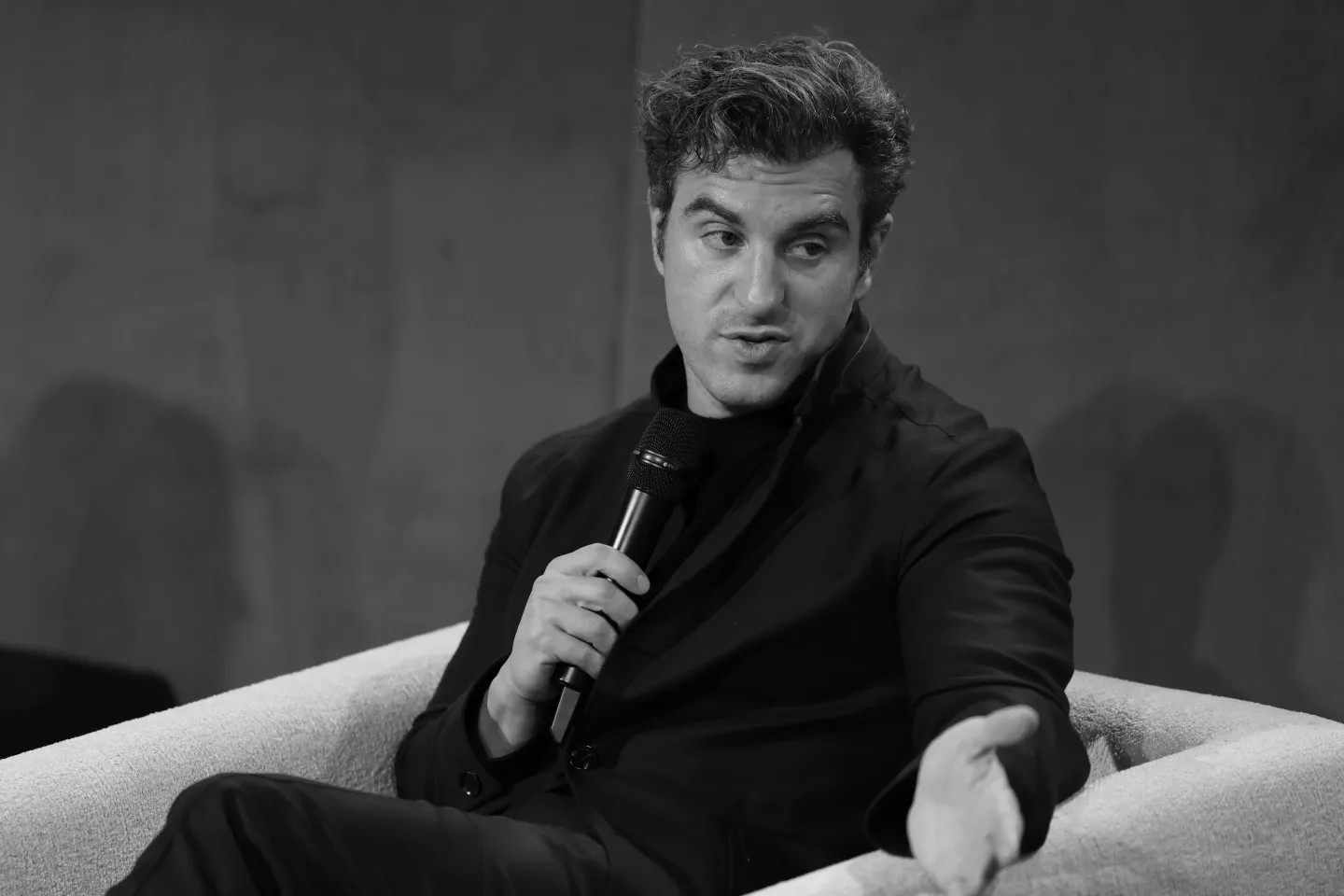
Airbnb Started With Three Air Mattresses, Two Unemployed Designers, and a Box of Obama-Themed Cereal.
There's a scene in every startup documentary where the founder looks into the camera and says something like "we had nothing, but we believed in the idea." It's always said calmly, from a very nice chair, in a very nice office, years after the believing-in-the-idea part turned into the having-a-lot-of-money part. Brian Chesky's version of that scene involves a box of cereal with Barack Obama's face on it.San Francisco, 2007. Two designers can't pay rent.
Brian Chesky graduated from the Rhode Island School of Design — RISD, the art school that produced various celebrated designers and at least one extremely famous hospitality company. He moved to San Francisco with his classmate Joe Gebbia. They had design degrees, creative instincts, and a problem: the rent on their apartment was more money than they had. In October 2007, a large design conference was coming to San Francisco and local hotels were fully booked. Chesky and Gebbia saw an opportunity. They bought three air mattresses, put them on the living room floor, set up a rudimentary website, and offered accommodation plus breakfast for $80 a night. Three guests booked. One was a 45-year-old Mormon father of five from Utah who wanted to sleep on an air mattress on someone's kitchen floor. One was a woman from Boston. One was from India. None of them were who Chesky expected, which was the first sign that the idea was onto something. They called it "Air Bed and Breakfast." The "Air" did not refer to the internet. It referred to the actual inflatable mattresses on the actual floor of an actual apartment. This is the part of the Airbnb story everyone thinks they know. Here's the part they usually leave out.The cereal
By 2008, Chesky, Gebbia, and their new technical co-founder Nathan Blecharczyk had a website, a concept, and almost no money. Investors were not interested. The idea of strangers sleeping in other strangers' homes struck most of the venture capital community as either a niche novelty or an active safety hazard. The 2008 US presidential election was approaching. Obama vs. McCain. The whole country was paying attention. Chesky and Gebbia, using their RISD design skills, created two limited-edition cereal boxes: "Obama O's: The Breakfast of Change" and "Cap'n McCain's: A Maverick in Every Bite." They bought the cheapest generic cereal available, hand-folded the boxes in their apartment using a hot-glue gun, and sold them as collector's items for $40 each. They sold $30,000 worth of cereal. Obama O's sold out. Cap'n McCain's did not. The founders lived on leftover Cap'n McCain's for weeks. This is not a metaphor — they were literally eating unsold John McCain cereal to survive while trying to build a company. Then came the Y Combinator interview.The moment Paul Graham almost said no
Y Combinator is the startup accelerator that launched Dropbox, Stripe, Reddit, and Airbnb, among others. Getting in is competitive. The interview is brief. First impressions matter. The YC interview was not going well. Paul Graham's first question to Chesky was "People are actually doing this?" — not the most encouraging opening. As the interview wound down, Chesky could tell they weren't landing. Then Joe Gebbia pulled out the Obama O's and Cap'n McCain's boxes and handed them to Graham. Graham's reaction: "Guys, I'm very impressed. I can tell you're not going to die." That sentence — "you're not going to die" — is the highest compliment Paul Graham pays to founders. It means: these people will find a way. Airbnb was accepted into Y Combinator's Winter 2009 batch. The cereal got them in.What happened after the cereal
In March 2009, Air Bed and Breakfast officially became Airbnb. In April, Sequoia Capital invested $600,000 in seed funding. By 2011, Airbnb was in 89 countries with 1 million nights booked. By 2020, it went public in one of the largest IPOs in US history, valuing the company at over $75 billion. Brian Chesky, who had been eating leftover McCain cereal in a San Francisco apartment in 2008, was worth approximately $10 billion on IPO day. He has since been named an Ambassador of Global Entrepreneurship by Barack Obama — the same Barack Obama whose face was on the cereal box that funded the company. There is something almost unreasonably poetic about that.The thing about Airbnb that Malta understands
I live in Malta, which is an island of 590,000 people and approximately 40,000 Airbnb listings. Those numbers don't quite add up in the way you'd expect — the ratio of short-term rental properties to permanent residents here is one of the highest in Europe, which has created both a thriving tourism economy and a housing market that locals find increasingly difficult to navigate. Airbnb is, in Malta, both beloved and controversial. The tourists it brings fill restaurants and bars and boat trips. The properties it attracts remove housing stock from the long-term rental market and push prices up for the people who actually live here. Chesky has wrestled with this tension in cities around the world. His answer — usually — is that Airbnb is a tool and the regulation of that tool is a question for governments, not platforms. This is the standard tech company response to the consequences of scale. It is also, arguably, not wrong. The air mattresses are long gone. The platform that replaced them is now one of the defining forces in global tourism and urban housing. And somewhere in a box in a San Francisco archive there are probably a few remaining Cap'n McCain's, which, unlike the company, did not scale. --- Malta's hospitality ecosystem is tracked on the FreeMalta Hospitality Index — real ratings, real places, no algorithm. For business travel and accommodation partnerships, GetYourGuide and Hotels.com are FreeMalta's recommended partners.
Want to reach Malta's most engaged business audience?
Media Kit
Tools used in this piece
The Network

Malta Insider
Official OpenAI Select Partner. Enterprise AI deployment, Fractional CAIO and business consulting for Malta.
maltainsider.com →
Gambity
The first AI-native newsroom for prediction markets. Eight AI journalists. 30+ daily articles.
Explore Gambity →

News Beast
Malta's AI-native newsroom. 10 personas, 22 categories, updated every hour. Cloudflare Worker on the edge.
Read News Beast →