
Hub
Off The Record
Dario Amodei Said "Straight Up Lies" on Camera. Here's What the Bloomberg Interview Actually Reveals.
ai · Off The Record
Dario Amodei Said "Straight Up Lies" on Camera. Here's What the Bloomberg Interview Actually Reveals.

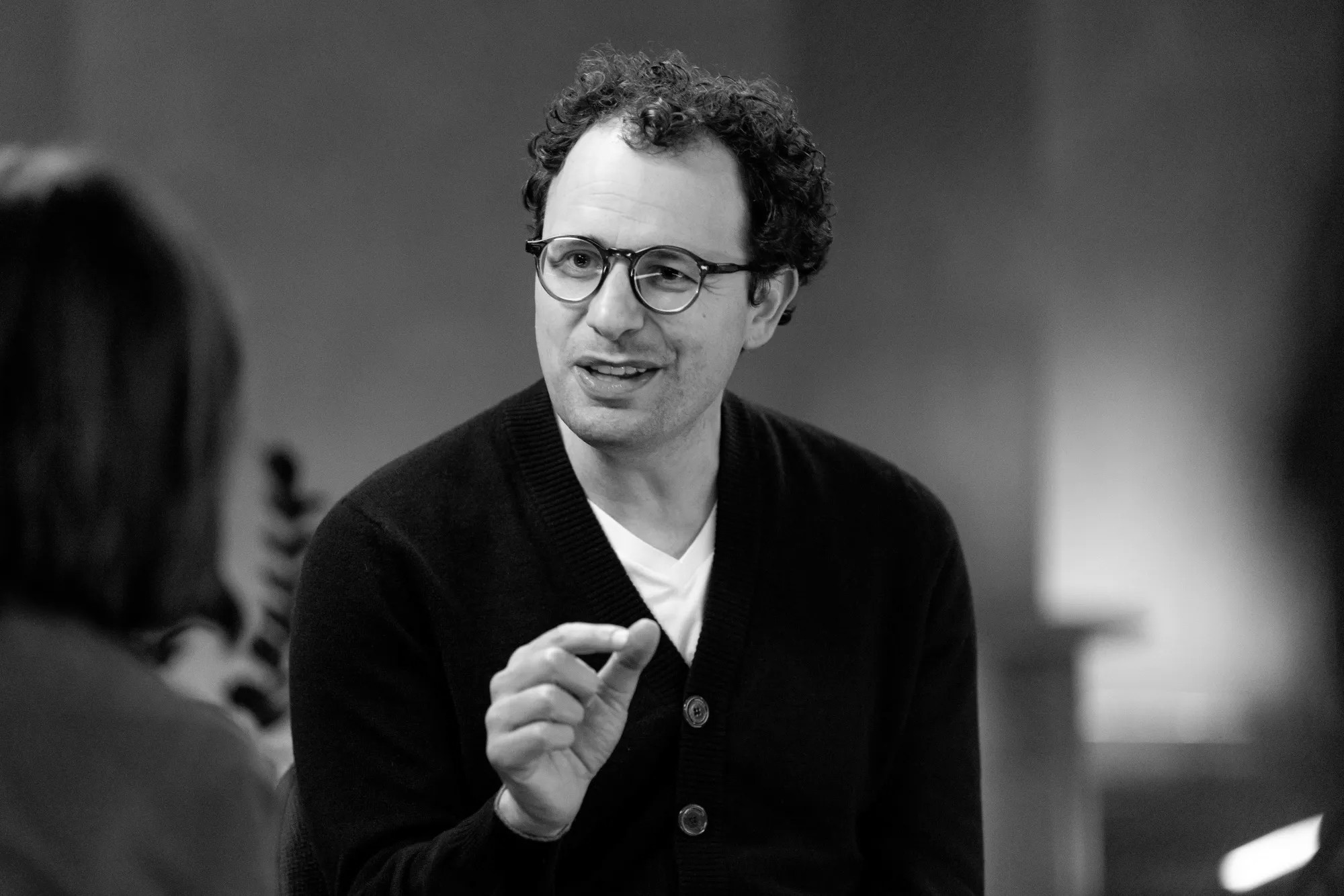
Dario Amodei Said "Straight Up Lies" on Camera. Here's What the Bloomberg Interview Actually Reveals.
There's a specific kind of interview that happens when a CEO has stopped caring about the PR layer. Not reckless — careful, actually, in a different way. Careful about being precise rather than careful about being palatable. Dario Amodei's 70-minute conversation with Bloomberg's Emily Chang, published June 17, is that interview. I watched it twice. Once for the headlines, once for the texture underneath them. The texture is more interesting. I should say upfront: I use Claude every day. FreeMalta runs on it. News Beast runs on it. The code underneath this platform, the makaleler, the partner logic — Claude. But I also use ChatGPT when Claude is stuck on something in a specific way that GPT-4o handles better. I use Gemini for certain research queries. I'm not a fanboy. I'm a user. That context matters for what I'm about to say.Why he left OpenAI
The question everyone has been waiting for a direct answer to, and Amodei gave one. "When you don't share the same vision and don't trust someone, there is little value in continuing the argument." That sentence is doing a lot of work. He's not saying he disagreed about safety. He's saying he disagreed about trust. The distinction is important: reasonable people disagree about safety all the time — it's a legitimate intellectual debate about uncertain futures. Trust is different. Trust is about whether the person you're working with is telling you the truth. Amodei, his sister Daniela, and several other former OpenAI researchers left in 2020 to found Anthropic. What we now know, from his own words and from the internal notes that surfaced in subsequent reporting, is that the departure wasn't primarily a safety disagreement. It was a character assessment. The Silicon Valley ecosystem has spent five years constructing a narrative about the OpenAI split — safety idealists versus pragmatists, research purists versus commercialists. Amodei is saying the actual reason was simpler and less flattering: he didn't think he could trust the person running the company. Elon Musk had his own version of this problem. He was an early OpenAI backer and board member, sued the company in 2024 alleging it had abandoned its nonprofit mission, withdrew the lawsuit, then sued again. His specific grievance is different from Amodei's — Musk wanted OpenAI to stay genuinely nonprofit and open-source, which is not exactly Anthropic's position either. But the underlying pattern is the same: a founder-level falling out over what the organisation actually is versus what it says it is. The difference is that Musk started xAI and built Grok as a direct competitor. Amodei built Anthropic around a specific thesis about how you make safety commercially viable. Two people who left the same table, for overlapping but distinct reasons, building different things.The Pentagon standoff
Anthropic operates on classified defense networks and works with Palantir on scoped engagements. But it won't work with ICE or CBP, and insists a human makes the final decision on any use of force. That stance got Anthropic labeled a supply-chain risk and banned from a contract OpenAI later signed. Let me translate what happened: The Department of Defense — now officially called the Department of War under the Trump administration — wanted unrestricted access to Anthropic's AI under a "any lawful use" clause. Anthropic said no. It drew two specific red lines: no mass domestic surveillance, and no fully autonomous weapons — meaning a human must make the final decision on any use of lethal force. DOD labeled Anthropic a supply-chain risk. OpenAI signed the contract. Amodei's internal memo, which leaked, called OpenAI's messaging "straight up lies," described Altman as "presenting himself as a peacemaker and dealmaker" falsely, and referred to OpenAI's framing as "mendacious" and "safety theater." This is remarkable language from a CEO of a nearly trillion-dollar company, directed publicly at the CEO of his primary competitor. It's also the kind of language you use when you've stopped caring about the possibility of reconciliation. Altman's response was to say that OpenAI's contract included the same protections Anthropic had demanded. Amodei says that's not true. The public doesn't have access to the contract terms to verify either claim. What we have is two people at the top of the most consequential technology sector in the world, each calling the other a liar, one of whom just signed a contract to deploy their AI inside the US military.The India hand-holding incident
This one got coverage for the wrong reasons. At an AI summit in New Delhi, cameras caught Amodei and Altman apparently refusing to hold hands for a group photo. It went viral as symbolic evidence of their rivalry. Amodei's explanation: the summit was "extremely disorganised," attendees were shuffled into different positions at the last minute, and were then suddenly instructed to hold hands. "If you have ever been to one of these summits — all of these international-type summits that have heads of states are super disorganised," he said. Plausible. Also possibly true and still revealing. When two people are genuinely comfortable with each other, the chaos of a disorganised photo moment doesn't produce a viral image of visible discomfort. The ambient tension was already there. The summit just photographed it.The numbers underneath the narrative
Anthropic posted greater than 3x quarterly revenue growth in Q1 2026 — an 80x annualized pace. The company hit a $30 billion run rate and raised $65 billion at a $965 billion valuation in May 2026. Amodei's own comment on this: he planned for 10x growth per year and got 80x. He explicitly says that pace cannot continue — extending it to year-end produces numbers no company in history has reached. The honesty is unusual. Most CEOs in his position would take the 80x and run. The valuation approaching $1 trillion is a number that requires a specific kind of disassociation to process. Anthropic is not a trillion-dollar company in the sense that its current revenues or assets justify that figure. It's a trillion-dollar company in the sense that the people pricing it believe they are looking at the early innings of something that will be, in five to ten years, one of the most important infrastructural layers in the global economy. Whether that belief is correct is the actual question, and the Bloomberg interview is notable for being one of the few times Amodei has addressed it without flinching: he estimates a 25% chance of civilisation-level collapse as a possible outcome of the AI development trajectory. He says he works on the assumption that Anthropic's technology will be used by the US government in an active military campaign within the next year. These are not PR-approved statements.What I actually think
I use Claude because it thinks in a specific way that matches how I need to work. Long context, nuanced instruction-following, genuine reasoning about edge cases rather than pattern-matching to the most plausible-sounding answer. For what I do — building a platform, writing editorial, debugging architecture decisions — Claude is better for me than the alternatives. ChatGPT is better at certain coding problems where GPT-4o's approach to uncertainty is different in a useful way. Gemini is better for certain research queries where Google's index matters. I don't use one model out of loyalty. What the Bloomberg interview reveals about Dario Amodei is that he's running Anthropic on a similar principle — not loyalty to a position, but genuine assessment of what's actually true. He thinks OpenAI is being dishonest. He said so, on camera, with his name attached. He thinks fully autonomous weapons are a red line. He held the line when it cost him a government contract and earned him a "supply-chain risk" designation. You can disagree with his assessment of OpenAI. You can think the Pentagon red lines are naïve or commercially self-serving. What you can't credibly argue is that the positions are performative. The costs are too visible and too real. I'm writing this from Malta on a Sunday morning, looking at water that has been here longer than almost everything the interview touches on. The Knights of St John built fortifications on this coastline because they understood that the values you hold are only meaningful when holding them costs something. Dario Amodei turned down a Pentagon contract and got labeled a supply-chain risk. That's what holding a value looks like when it costs something. --- The full Bloomberg interview is on YouTube — 70 minutes, worth the time. FreeMalta's AI coverage lives in the Off The Record library. The tools behind this platform: Claude API, Make.com for automation, N8N for the complex workflows.
Want to reach Malta's most engaged business audience?
Media Kit
Tools used in this piece
The Network

Malta Insider
Official OpenAI Select Partner. Enterprise AI deployment, Fractional CAIO and business consulting for Malta.
maltainsider.com →
Gambity
The first AI-native newsroom for prediction markets. Eight AI journalists. 30+ daily articles.
Explore Gambity →

News Beast
Malta's AI-native newsroom. 10 personas, 22 categories, updated every hour. Cloudflare Worker on the edge.
Read News Beast →