McDonald's Doesn't Sell Burgers. The Burgers Are Just Bait.

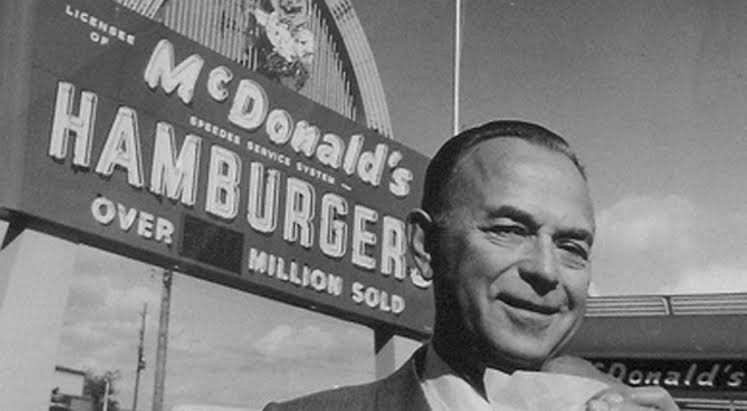
There are two things I know about McDonald's with absolute certainty.
The first is that a Chicken Mayo, consumed at approximately eleven in the morning after a night that went longer than planned, is one of the most reliable experiences available to a human being. Not the best experience. Not the most sophisticated. But reliable in a way that almost nothing else is — the same temperature, the same texture, the same ratio of chicken to mayonnaise, whether you are in Malta or Munich or Manila. There is a deep comfort in that consistency that no amount of artisanal alternatives has ever managed to replicate for me.
The second is that McDonald's is not, in any meaningful financial sense, a restaurant.
McDonald's is a real estate company. The burgers are a distribution mechanism for rent.
Here is how it works.
When someone wants to open a McDonald's franchise, they do not simply buy the right to use the name and the menu. McDonald's — the corporation — typically acquires or leases the land and the building first. The franchisee then leases the location from McDonald's. They pay the corporation rent, and they pay the corporation a percentage of sales as a royalty fee. The franchisee is, in effect, a tenant who has been given permission to operate a specific business inside a property owned or controlled by their landlord.
The landlord is McDonald's.
This structure was not the original vision. The McDonald brothers — Richard and Maurice, who invented the system in San Bernardino, California in the 1940s — were interested in hamburgers. The assembly-line kitchen, the limited menu, the focus on speed and consistency: these were genuine innovations in food service, and they worked. What the brothers were not particularly interested in was franchising, or real estate, or the financial architecture that would eventually turn their name into one of the most valuable assets on the planet.
Ray Kroc was.
Kroc was a milkshake machine salesman who visited the McDonald brothers' restaurant in 1954 and saw something they had not seen themselves. Not a restaurant. A system. A system that could be replicated, again and again, anywhere there were people who needed to eat quickly and cheaply. He convinced the brothers to let him franchise the concept nationally. They agreed, taking a modest royalty on every franchise sale. They thought they were licensing a food business.
Kroc was building something else entirely.
In 1956, Kroc's financial advisor Harry Sonneborn explained the model with a clarity that has not been improved upon in the sixty years since. "We are not technically in the food business," Sonneborn told a group of investors. "We are in the real estate business. The only reason we sell fifteen-cent hamburgers is because they are the greatest producer of revenue from which our landlords can pay us our rent."
Read that again. The hamburgers exist to generate revenue for the franchisees. The franchisees generate revenue so they can pay rent. The rent is the product. The Chicken Mayo is the mechanism by which the rent is collected.
McDonald's currently owns or controls real estate in over one hundred countries. The corporation's property portfolio — the land and buildings that underlie the global franchise network — is one of the largest private real estate holdings in the world. When analysts value McDonald's, they are not primarily valuing a chain of restaurants. They are valuing a property empire that happens to have restaurants sitting on top of it.
The financial numbers make this impossible to ignore. McDonald's operating profit in a typical year comes roughly 40% from company-operated restaurants and roughly 60% from franchise revenues — which are primarily rent and royalties. The franchise business has margins of approximately 80%. The restaurant business has margins of approximately 20%. If you strip out the real estate, McDonald's is a moderately profitable fast food company. With the real estate, it is one of the most durable business models ever constructed.
Ray Kroc bought out the McDonald brothers in 1961 for $2.7 million. It was, by any measure, one of the most asymmetric transactions in business history. The brothers got a comfortable sum for a business they had built. Kroc got the name, the system, and the right to build a real estate empire on top of both.
Richard McDonald later said that if he had known what the business would become, he would not have sold. This is probably true. It is also, as a statement, perfectly useless — the thing Kroc saw in their business was precisely the thing they couldn't see, because they were inside it looking at hamburgers while he was outside it looking at land.
The next time you walk into a McDonald's — whether it is for a Chicken Mayo or something more defensible — look at the building. Look at the location. Ask yourself who owns the ground you are standing on.
Almost certainly, it is not the person who made your food.
The burger is the experience. The land is the business. The genius of McDonald's is that most people never stop to notice the difference, because the Chicken Mayo is good enough that they are not thinking about commercial real estate.
That, too, is by design.