Melita Is Acquiring Epic. They Tried This in 2017. The Regulator Said No.

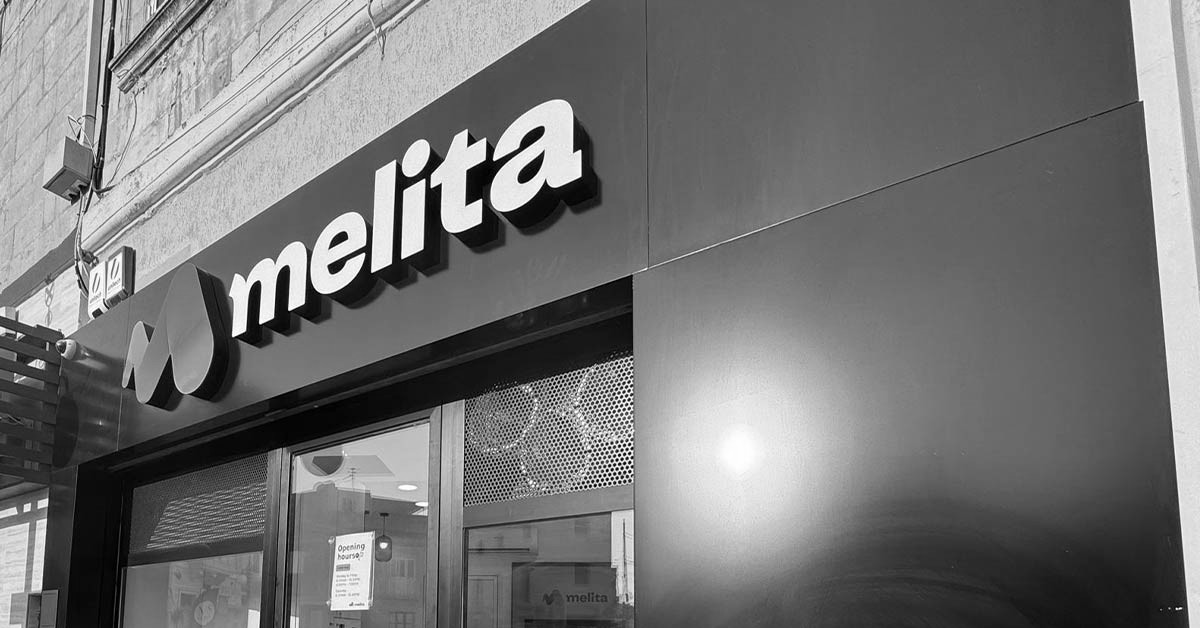
I live on Bisazza Street in Sliema. For years, I was an Epic customer. I left — not dramatically, just quietly, the way you leave a service provider when the frustration accumulates past a threshold you can't quite identify. I switched to Melita. The two companies have offices close enough that the distance between them is the kind you walk without thinking about it.
This morning, those two companies announced they are becoming one.
Melita will acquire 100% of Epic's shares from Monaco Telecom, the French group that bought Vodafone Malta in 2020 and rebranded it Epic. Goldman Sachs Infrastructure, which acquired Melita in 2025, will be the new combined entity's ultimate owner. The deal value was not disclosed. Regulatory approval — from the Malta Competition and Consumer Affairs Authority — is required before the combination can proceed. Until it is obtained, the two companies will continue to operate and compete independently.
The companies say the deal will deliver better networks, faster speeds, improved cybersecurity, and the scale required for long-term investment that neither could sustain independently. These are the things telecom companies always say when they merge. The question is whether the regulator agrees.
Why This Has Happened Before
This is not the first time Melita and Vodafone Malta — Epic's predecessor — have attempted to combine. In 2017, the two companies announced a merger that would have created Malta's dominant fixed and mobile operator. GO, Malta's third major telecom player and a subsidiary of Emirates Telecom Group, objected. The MCCAA ultimately blocked the merger, concluding that it would harm competition in the Maltese market.
Nine years later, the same two companies are trying again, under different ownership. The market context has changed — Goldman Sachs owns Melita, Monaco Telecom owns Epic, and both companies have argued that the investment requirements of next-generation network infrastructure have made the combination economically necessary rather than merely convenient.
GO's response to today's announcement has not yet been made public. In 2017, GO's objection was decisive. Whether it will be again depends on how the MCCAA assesses the current competitive landscape and whether the arguments about investment necessity carry more weight than they did nine years ago.
Malta's market history is full of consolidations that looked inevitable and regulators that disagreed. The MCCAA said today it was not in a position to comment on the transaction, and that the scope and duration of its assessment could not be determined with certainty. That is regulator language for: this will take time, and the outcome is not predetermined.
What the Market Looks Like
Malta's telecom market has three meaningful players: Melita, Epic, and GO. Melita serves more than 75% of Maltese households on fixed broadband. Epic has a meaningful mobile presence, particularly in business segments. GO operates its own fixed and mobile networks and has historically been the most aggressive opponent of Melita-Epic consolidation.
If the merger is approved, Malta will have two telecom operators instead of three. The combined Melita-Epic entity would be significantly larger than GO in fixed broadband. The mobile market is more balanced, but a combined entity would have scale advantages in infrastructure investment, spectrum, and the ability to offer seamless fixed-mobile packages that neither Melita nor Epic can currently offer at the same level.
The cybersecurity and digital infrastructure arguments the companies are making are not without merit. Malta's status as a financial services and iGaming hub means the island's digital infrastructure carries unusual economic weight for its size. The demands on network resilience, speed, and security have grown considerably since 2017. The investment case for consolidation is more credible today than it was then.
Whether that credibility is enough to change the MCCAA's calculus — given that the fundamental competition concern, a duopoly replacing a three-player market, remains the same — is the central question.
What This Means for Customers
In the short term: nothing changes. The companies have committed to operating independently until regulatory approval is obtained, with no impact on customers or employees in the interim.
If the merger is approved, the realistic outcomes for customers are mixed. Consolidation in small telecoms markets has a pattern: initial investment in network quality, followed by gradual price increases once competitive pressure from the absorbed entity is removed. The companies will point to the investment commitments. Customers should watch the pricing.
I left Epic because I wasn't satisfied. I switched to Melita. The reason competition exists is to give customers that option — to leave one provider for another when the service falls short. A two-player market is not the same as a three-player market. The option to leave still exists, but the destination changes.
For businesses operating in Malta — particularly those in financial services, iGaming, and digital infrastructure — reliable, competitive connectivity is not a background consideration. It is operational. The merger's impact on enterprise pricing and service quality will be watched closely by the business community, for whom Malta's operating environment is already under scrutiny on multiple dimensions.
The 2017 Question
The MCCAA blocked this combination once. The arguments for doing so again are structurally identical — two of three meaningful competitors merging in a small market, leaving one independent player. The arguments against blocking it are newer — investment necessity, the scale required for next-generation infrastructure, the changed ownership context.
GO will almost certainly object again. Whether the regulator decides that nine years and a different economic environment change the answer is the question that will define Malta's digital infrastructure landscape for the next decade.
Two companies on my street. One announcement. The rest is up to the MCCAA.
FreeMalta covers Malta's business and technology ecosystem. This article reflects the personal perspective of the author.